Shock Treatment

Mark 7:24-30

Wendy Kelly is the owner of a thriving Human Resources consulting firm, Kelly’s HR Services in West Palm Beach, Florida.  She has helped hundreds of people find meaningful employment, a job she does with special sensitivity because she vividly remembers her own experience the first time she applied for a “real” job.   

She was responding to an ad for a receptionist in a medical practice.  She arrived early and sat in the waiting room with the other applicants, mostly young Black women, who were waiting to be interviewed.  Wendy remembers listening as the hiring manager, one of the doctors in the practice, called the candidates in one-by-one for their interviews:  Keisha,  La Quitta, Otishia, Tishia.  Wendy watched as one after another the women went in for what was, at most, a five minute interview with the doctor.

Finally the doctor called her name. “Wendy Kelly.”  Then he added,  “Finally a person whose name I can pronounce.”  Then as Wendy approached, he looked at her in surprise and said, “I thought you were white.”  He didn’t take her resume and simply laid her application on the stack with all the others on his desk.   He asked her a few perfunctory questions, but it really wasn’t much of an interview.  She could tell that he wanted to cut it short and move on.  Wendy left with mixed emotions.  She still wanted the job.  But would she be able to work for someone who, she had realized, was a racist?

Fast forward a number of years.  Wendy was working as a Senior Manager in a well-known management company.  She had been asking for a raise for about a year but her raise kept being postponed even though she was handling some of the company’s most important clients.  One day a new woman was hired to work on Wendy’s team.  Even though this new worker would report directly to her, Wendy had not had any say in her hiring.  

When the new woman had been there about a week, one of Wendy’s co-workers on another team asked her, “Did you see what they’re paying Sonia?”  Wendy was shocked to discover that Sonia, this new person who reported to her, was being paid $11,000 more than she was.  Naturally, she was furious.  She headed straight for her manager to tell him what she had learned and to demand that something be done.   “Wendy, I am sorry,” he said.  “I have been trying to get you a raise, but it is being shot down. This is wrong.”  When Wendy asked him, “Is this because I’m black?” he had no response.[1]

Racism takes many forms, and it’s not always as blatant as Klansmen marching in the streets or redlining of neighborhoods.  Racism has insinuated itself into our culture in ways we don’t even see.  But we need to see it.  If we’re going to change it, we need to face it.  “Not everything that is faced can be changed,” said James Baldwin, “but nothing can be changed until it is faced.”   

Racism isn’t going to disappear until we have named it in all its names and unraveled it from all the ways it has woven itself into the fabric of our lives.  Racism isn’t going to stop being a blight on our  present and a shadow over our future until we acknowledge and confront its shameful past.  Racism isn’t going to disappear until we learn to silence all the voices it speaks with, especially the racist voices and ideas that live inside us, that keep popping into our heads even against our will because we grew up in a racist world and a racist culture.  “Ours is not the struggle of one day, one week, or one year,” said John Lewis.  “Ours is not the struggle of one judicial appointment or presidential term. Ours is the struggle of a lifetime, or maybe even many lifetimes, and each one of us in every generation must do our part.”

Racism, bigotry, prejudice—whatever you want to call it—is an insidious and foul fact of life.  We’re far too familiar with it here in America, but it raises its ugly head in one form or another in every human society.  

Every group of humans seems to have a culturally built-in opinion that some other group of humans is somehow inferior or dangerous or maybe even not really human.  

Bigotry has played an enormous role in history.  It has negatively impacted politics, economics, and even religion. “At the heart of racism,” wrote Friedrich Otto Hertz, “is the religious assertion that God made a creative mistake when He brought some people into being.”

Even Jesus seems to have been tainted with a hint of bigotry.  At least at first glance.  When a Syrophoenician woman in Tyre came to him begging for help, asking him to free her daughter from an unclean spirit that was tormenting her,  Jesus replied, “Let the children be fed first, for it is not fair to take the children’s food and throw it to the dogs.”  

His response was perfectly in keeping with the attitudes of his culture.  That’s how Jews thought about Gentiles.  The Babylonian Talmud states, “As the sacred food was intended for men, but not for the dogs, the Torah was intended to be given to the Chosen People, but not to the Gentiles.”[2]

“Let the children be fed first, for it is not fair to take the children’s food and throw it to the dogs.”  It’s shocking to hear that kind of bigotry coming from Jesus.  And I would like to suggest that that is exactly why he said it. 

In the Gospel of Mark, Jesus begins his ministry by announcing that the Reign of God is arriving.  He then embodies that ministry by healing people, freeing them from demonic or other spiritual oppression, and gathering a diverse community of followers to teach them what Mark calls The Way.  He includes outcasts, like tax collectors and “sinners” in that community.  And then, to make it clear that this Beloved Community, this Companionship of the Way, is for all people, he starts repeatedly taking his disciples across the Sea of Galilee to the other side, to where the Gentiles are so he can proclaim the reign of God to them, too, and bring God’s healing to them, too, and invite them as well to join in the Companionship of the Way.  

Shortly before this episode in Tyre, deep in the heart of Phoenician Gentile territory—shortly before he said that shocking, bigoted thing to this woman, he had fed a multitude including Gentiles.  In Gentile territory.  He gave bread to the Gentiles—the bread of his teaching, the bread of healing, and real bread to feed their physical hunger.  To use the ugly language of their cultural bigotry, he had already thrown bread to the dogs.

He had made it clear in every way he could that Gentiles are included in the Beloved Community, the Companionship of the Way. He had made it clear that the Reign of God embraces everyone.  Period.

When Jesus says this ugly thing, when he for all intents and purposes calls this woman and her daughter dogs—and okay, the word in the Greek means “little dogs,” puppies—but is that really any better?—when he calls them dogs, he’s really just voicing what his disciples are thinking.  Because that’s what their culture has taught them to think about Gentiles—these other people from this other culture, these non-Jews.  

I think he wants them to hear how ugly, how ungodly that kind of thinking is, how dehumanizing those words are.   I think he knows that they will be taken aback to hear him say such a thing because it’s exactly the kind of thing he would not usually say.

Sometimes we have to hear our own less than loving thoughts and ideas come out of someone else’s mouth before we can really hear how offensive, destructive or poisonous they might be.  Sometimes we have to be shocked by hearing our own bigotry coming from someone else.  And it’s especially powerful and shocking if it’s not consistent with what that other person would usually say.  

Jesus said an ugly, bigoted thing that day in Tyre.  I don’t think he wants us to excuse it or minimize it or explain it away.  I think he wants us to hear it in all its ugliness.  I think he wants to shock us into listening more closely to hateful, offensive and divisive words and ideas that have been culturally implanted in our own thoughts…that even, sometimes, come out of our own mouths.  I think he wants to shock us into doing the long, hard work of completely and utterly rooting out racism starting with our own hearts and minds.  Even if it takes lifetimes.  


[1] Is This Because I’m Black?,  Wendy Kelley, TLNT Online Journal, August 5, 2020

[2] Mark; The Augsburg Commentary, Donald Juel; p. 108

Image by UK artist Michael Cook

Watch Your Language

Thoughts Along the Way…

A few weeks ago while I was working on a sermon, I remembered that I had written a paper on the subject years ago when I was in seminary.  I kind of half-remembered some of the points I had made in the paper and what some of the authors I had read for the paper had to say, but I thought it would be good to call it up from my old backup hard drive to re-read it.  

I went spelunking through my old backup hard drives until I found the paper in question.  I double clicked on it and…nothing.  Well, not exactly nothing.  A notice popped up on my screen.  “Unable to open.  Please choose another application.”  This confused me.  What application was I supposed to try?  I was using MS Word.  The document I was trying to open was created in Word.  I’ve always used Word.  I wrote that paper on an Apple Macintosh.  I’ve always used Macs.  So why wouldn’t it open?

I tried other files, other documents from the same era.  Same problem.  Was there something wrong with my Mac?  Had the file become corrupted?

It turns out that the problem is that the version of Word that I used so long ago is so vastly different from the versions we use today that the paper might as well have been written in a different application altogether.  In point of fact, it was written in a different application altogether.  That’s how much the software has changed.  And the hardware has changed in some pretty big ways, too.  

After googling through several articles, I discovered that there is a way to retrieve those old files, but it’s rather complicated.  Essentially I need to find a way to translate the old “language” those files were written in into today’s language for today’s machine.  And I had to ask myself it those old files are really worth all the time and trouble.  They might be.  Or they might not be anything like as good as I remember.  In the end I decided to save that project for when I retire.  If then.

“Time keeps on slipping, slipping, slipping into the future,” sang the Steve Miller Band.  That song came out in 1976. Forty-five years ago.  And I still think of it as a fairly recent song because in my mind it’s still fresh.  Just like that paper I wrote thirty years ago on a machine I no longer have using a software that for all intents and purposes no longer exists.  Time keeps on slipping into the future.  The world around us keeps changing.  Ideas change.  Tastes change.  Our understanding of things changes.  The software has been updated.  The hardware is different, faster, and more complex.  

We read in Hebrews that “Jesus Christ is the same yesterday and today and forever.”  Jesus is the same.  The Good News of Christ as Emmanuel, God With Us, is the same.  But sometimes the old language we use to tell the ever-new-and-renewing story simply doesn’t connect to the language the world around us is speaking.  

The story is still good.  The greatest story ever told.  We just need to translate it into the language the world can process now.

When Tradition Becomes an Obstacle

Mark 7:1-8, 14-15, 21-23

During my first year in seminary, we took a trip to Naperville, Illinois during spring break so that we could attend the baptism of my nephew and serve as his godparents.  He was being baptized at a large Lutheran congregation that my sister and her husband had joined because it had some great programs for their kids and it was fairly close to their new house, and they liked the pastor.  

The baptism was scheduled to happen during Sunday morning worship, but the pastor had asked that we meet on Saturday afternoon so he could talk us through how things would go during the service.  He had us walk through the service, talked very briefly about the meaning and importance of baptism, then turned to Meri and me and informed us that, unfortunately, we wouldn’t be allowed to receive communion.  See, this was a Lutheran Church Missouri Synod congregation—LCMS—and we are the other kind of Lutherans,  Evangelical Lutheran Church in America—ELCA.   

The LCMS has a rule that only LCMS members may receive communion in their churches.  That’s their tradition.  Some LCMS congregations or pastors are not rigorous about enforcing this rule, but some take it very seriously.  Some, in fact, will only allow members of their own congregation to receive communion, just to be sure they’re conforming to the rule.  

Their reasoning for this rule is based on chapter 11 of First Corinthians where St. Paul talks about eating the bread and taking the cup in an unworthy manner.  “For all who eat and drink without discerning the body,” he writes, “eat and drink judgment against themselves.”[1]  Based on their interpretation of this one scripture, the LCMS has decided that the only way to be certain that no one is receiving communion in “an unworthy manner” is to only commune people they have vetted by means of membership.  The end result of this is that they end up excluding a lot of people from the table of fellowship.  

The irony here is that these verses they reference come at the end of a section where Saint Paul has been chastising the Corinthians because not only have they neglected to make the sacrament of bread and wine the centerpiece of their agape feast, but some people are going hungry while others feast on what they’ve brought with them.  People who have plenty are not sharing with those who have nothing.  Some are being excluded at the feast of inclusion, and that is what Saint Paul is talking about when he says that some are failing to discern the body of Christ.  Yes, Christ is present in, with, and under the bread and wine, but in a more substantial way, the body of Christ is all those who gather to share at the table.  Saint Paul makes that crystal clear in the next chapter when he writes, “Now you are the body of Christ and individually members of it.”[2]  

My point in all this is not to pick on the LCMS.  They’re not the only church body with an exclusionary practice of communion, and critiquing denominations is a game where no one wins.  My point is that sometimes tradition gets in the way of inclusion and participation.  Sometimes traditions become an obstacles.

That’s the issue here in the 7th chapter of Mark when Jesus once again is confronted by the Pharisees and scribes.  They ask Jesus, “Why do your disciples not live according to the tradition of the elders, but eat with defiled hands?”  The tradition in question here is that the disciples did not practice ritual hand washing before eating.

Now in Exodus 30:18, there are Levitical instructions for the priests and Levites to wash their hands and feet before going into the tabernacle for worship.  Other than that there is no mention in all of the Tanakh about washing one’s hands or feet or pots and pans.  

Somewhere along the way, the Pharisees took this instruction that was intended only for the priests and Levites and only for going into the place of worship, and made a rule out of it for everybody every day before every meal.  It became their tradition.  Based on what we know now about germs, it’s actually a good rule.  A healthy rule.  Washing your hands is a good idea.  It’s a good way to reduce bacteria.  But the Pharisees and scribes didn’t know that.  They didn’t know anything about bacteria or good practices of asepsis.  They did all this washing of hands and vessels because it was their tradition.  Period.  And they wanted everyone else to keep their tradition because it was a way to maintain boundaries.  It was a way to easily see who was clean and who was unclean, who was acceptable and who was not.

All of this handwashing business was part of the Pharisees elaborate social code of table fellowship.  Ched Myers describes it this way:

“In Mark the Pharisees represent the guardians of social  orthodoxy.  They believe the boundaries of the body politic can best be policed though control of political bodies.  Thus they seek to maintain gender, ethnic, and class divisions by stressing fidelity to their ‘traditions.’  At issue here were the rules of table fellowship that functioned socially (maintaining Jewish group identity), politically (who you ate with reflected your status in the hierarchy), and economically (control over production, distribution, and consumption of food.)”[3]

Jesus isn’t bothered by their rule or their tradition.  Jesus is addressing the way they usetheir tradition.  Their rule has an impact on the people around them.  They use it to decide who is in and who is out, who is worthy and who is unworthy, who is clean and who is defiled.  They use it to decide who they will buy from and who they will sell to.  They use it to create a caste system, to determine who can associate with whom.  They use it as a pretense for criticism of others.  They use it to exclude.  That’s what Jesus is objecting to.  It gives them a platform for declaring that some people are unclean—and that saddles people with a lot of social and economic consequences.  The Pharisees’ tradition had become an obstacle for others.

Jesus wants to make it clear that “clean and unclean” are not determined by whether or not someone has washed their hands.  Touching your food with unwashed hands does not make the food ritually unclean and eating food that has been touched by unwashed hands does not make the person unclean.  

According to Jesus, the Pharisees have been coming at this whole clean/unclean business from the wrong direction with their tradition.

“Jesus called the crowd again and said to them, ‘Listen to me, all of you, and understand:  there is nothing outside a person that by going in can defile, but the things that come out are what defile.’  For it is from within, from the human heart, that evil intentions come: fornication, theft, murder, adultery, avarice, wickedness, deceit, licentiousness, envy, slander, pride, folly.  All these evil things come from within, and they defile a person.”

For the ancients, the human heart represented the seat of rationality and will.  Jesus is saying if you want to talk about what defiles a person, what makes someone “unclean,” start there.  That’s where evil begins.  In the human heart.  

Joel Marcus wrote, “The basic problem Christians should be concerned about… is not how or what one should eat but the internal corruption of [the human person][4]. It is this malignancy that chokes the life out of tradition, turns it into an enemy of God, contorts it into a way of excusing injustice, and blinds those afflicted by it to their own culpability for the evils that trouble the world.”[5]

It makes me wonder…how much harm and even evil has been done in history in the name of “that’s the way we’ve always done it.”?

Evil starts in the human heart.  It’s there, in the heart, that the seeds of fear and greed take root and grow and blossom into evil intentions.  They don’t always look evil.  Often it just looks like we’re trying to protect our own interests.  But doing that—just that, protecting our own interests—sets a boundary between us and them, or you and me.  It draws a line in our thinking and tilts us toward looking out for Number One instead of looking out for the needs of the neighbor, the other.  That’s why we need to keep examining our hearts—our intentions, our thinking, our will—especially our inclination to exclude.  It’s important to keep examining our traditions to make sure that we aren’t turning them into obstacles or even weapons.  

Evil starts in the human heart.  But evil is more complex than just my own negative thoughts and habits.  It goes beyond us individually to affect the world at large.  Matthew Skinner wrote, “We know enough about the human condition to say that evil is about more than an individual’s selfishness or bad decisions. It roams our collective existence, our social, economic, and familial systems. We are at once perpetrators and victims. And our victimization furthers our capacity to perpetrate. ‘The human heart,’ or the human will, remains a complex thing. Our kin and culture usually keep us ingrained in patterns of defiling self-destructiveness and idolatry.”

Ingrained patterns of defiling self-destructiveness and idolatry.  From a cynical point of view, that could be the history of the human race in a nutshell.  But it’s not the whole story.  

Evil comes from within… but so does goodness.  Love, generosity, mercy, forgiveness, grace…these things come from the heart, too.  The love and mercy of God is poured out for each and every one of us so that we can learn to nurture these life-giving qualities in our own human hearts.  Love, generosity, mercy forgiveness and grace can grow in our hearts until they displace the greed and fear that lead to evil.  We have the promise, the love, and the guidance of Christ to change our hearts, to heal them, and thereby to change and heal the world.  We have the grace of Christ to teach us new patterns and new ways of being.  We have the transformative power of Christ to remake our traditions so they can become doorways of invitation instead of obstacles of exclusion.  Most of all, we have the love of Christ and the power of the Holy Spirit to fill our hearts and give us a will to open our arms and embrace the world.  


[1] 1 Corinthians 11:29

[2] 1 Corinthians 12:27

[3] Ched Myers, Who Will Roll Away the Stone; p.310

[4] anthrōpos

[5] Joel Marcus, Mark 1-8 (Anchor Bible 27; New York: Doubleday, 2000), 460-61.

Crazy Bread

John 6:56-69

When you think about it objectively, religion is kind of strange.  The whole idea of it, if you step back and look at it from a certain perspective, is just king of odd.  The idea that if we meet regularly and perform certain rituals and pray a certain way and sing certain songs in a certain way, somehow God, the almighty, all powerful, omniscient Maker of the Universe, will like us better or come closer to us or overlook our bad behavior or give us things—that whole idea is, on the face of it, kind of bizarre.  And yet, that seems to be the way a great number of people understand God and church and faith and religion in general.  

Years ago, the late George Carlin had a very funny routine about all this.  I’m going to change one or two of his words because I don’t want to say them in church, but here’s what he said:

“When it comes to [bull puckey], big-time, major league [bull puckey], you have to stand in awe of the all-time champion of false promises and exaggerated claims, religion. No contest. No contest. Religion. Religion easily has the greatest [bull puckey] story ever told. Think about it. Religion has actually convinced people that there’s an invisible man living in the sky who watches everything you do, every minute of every day. And the invisible man has a special list of ten things he does not want you to do. And if you do any of these ten things, he has a special place, full of fire and smoke and burning and torture and anguish, where he will send you to live and suffer and burn and choke and scream and cry forever and ever ’til the end of time!

“But He loves you. He loves you, and He needs money! He always needs money! He’s all-powerful, all-perfect, all-knowing, and all-wise, somehow just can’t handle money! Religion takes in billions of dollars, they pay no taxes, and they always need a little more. Now, you talk about a good [bull puckey] story.” 

I have to tell you, if I thought for half a minute that God was anything like that, I’d be an atheist, too.  And the sad fact is, that this is exactly how a lot of religion and the Christian faith is presented and represented.  You think I’m exaggerating?  Go watch religious TV for a day and get back to me.  The picture you get is that God is distant, generally ticked off and inclined to be cranky, and it’s a good thing Jesus is there as our go-between because he keeps talking the Father down when he’s just itching to wipe us out altogether.  Except that in a lot of these “Christian” broadcasts, they think Jesus, himself, is going to come back any minute now  to settle our hash.  

Yikes!  He’s making a list, checking it twice, and you better believe he knows who’s naughty and who’s nice.  That’s not God!  That’s Santa Claus—and not in a fun way.  That’s Zeus throwing thunderbolts from Olympus!    

Richard Rohr said, “Jesus did not come to change God’s mind about us.  Jesus came to change our minds about God.  God did not need Jesus to die on the cross to decide to love humanity. God’s love was infinite from the first moment of creation; the cross was just Love’s dramatic portrayal in space and time.”[1]  

Instead of responding to our violence with more violence, God, in Jesus, endured our violence and responded with grace, love, forgiveness and resurrection.  Jesus came to give us a new understanding of who God is and how God is at work in the world so we could have a fresh start in our relationship with God and with each other.

If God and Jesus are not punishing, vindictive, or violent, then we have no excuse for being that way.  Ever.  

Jesus is the human face of the Cosmic Christ—the nexus where spirit and matter intersect.  The Gospel of John[2] tells us that “all things came into being through him.”  In Colossians we see it spelled out a different way.  “He is the image of the invisible God, the firstborn of all creation; for in him all things in heaven and on earth were created, things visible and invisible…—all things have been created through him and for him. He himself is before all things, and in him all things hold together.[3]

This is not an invisible, cranky old Sky Man watching from a distance.  This is not Zeus or Santa Claus keeping score to determine rewards and punishments.  This is God who has poured the divine self into all of creation to infuse everything with love and goodness.  This is Christ in, with, and under not only the bread and wine of the table, but all things.  In him all things hold together.

In other words, there’s more than meets the eye in everything you see or touch.  There’s more than meets the eye in everything.  Period.  As it says in Ephesians, Christ is in all and through all.[4]

It’s like Crazy Bread at little Caesar’s.  If you just glance at it, you’ll just see breadsticks.  If you pick one up, though, you’ll find it kind of slippery because it’s slathered in butter and dusted with granules of Parmesan.  And if it happens to be a piece of stuffed Crazy Bread, the minute you bite into it you’ll discover a surprise because it’s filled with melted mozzarella.  There’s more to it than meets the eye.  If you pass it up because you think it’s just a breadstick, you’ll miss the surprise. You’ll miss the experience.

When Jesus was teaching in the synagogue at Capernaum, he said, “Those who eat my flesh and drink my blood abide in me, and I in them. Just as the living Father sent me, and I live because of the Father, so whoever eats me will live because of me. This is the bread that came down from heaven, not like that which your ancestors ate, and they died. But the one who eats this bread will live forever.”[5]  

He wanted us to understand that he is incarnate, God is incarnate, in all things. The world is full of the life and light of Christ.  Yes, Christ is absolutely present in the bread and wine of communion.  But also in the soil where the wheat grew, and in the stalk of the plant and in the grains that were ground into flour.  He wants us to understand that he was incarnate in the vine and the grape and the yeast that ferments it into wine.  He wants us to understand that he is present in our coming together at the table in the same way he is present when water that bonds with flour to make dough, creating a new thing altogether—a thing that is still water and flour but also something different, something greater, something more.  He wants us to understand that he is present in the trials and troubles we share the same way he is present in the fire and heat that bakes the bread.  He wants us to understand that “taste and see the goodness of the Lord”[6] is more than a poetic metaphor—it’s an invitation to open our eyes and broaden our understanding so we can see Christ, so we can begin to see that in him all things hold together.  It’s an invitation to hold all life more dearly—not just ours, all life—because in him was life, and life is the light of humanity[7].  And by that light we understand that the life of Christ is infused into all living things and the planet itself.  By that life we participate in the eternal cycle of life, death, and resurrection—like the grains of wheat that fall to the earth and die but rises again in the fullness of a new existence.

“The words I have spoken,” said Jesus, “are spirit and life.”[8]  He went on to acknowledge that some people had difficulty with what he was saying.  Some took him far too literally when he talked about eating his flesh and blood.  They were offended.  They didn’t understand that it was his words that carried spirit and life.  They didn’t understand that he was the Word—the Word that became incarnate, embodied, living among us full of grace and truth.  The things he said didn’t fit the context of their religion—or at least not as they understood their religion.  So they turned away.

As I said at the beginning, religion is an odd thing.  It can help us understand or it can get in the way of our understanding.  It can open our hearts and minds, or it can close them.  It’s important to remember that Jesus didn’t come to give us a religion.  He came to show us the love of God in person.  He came so that we may have life in all its abundance.[9]


[1] A Nonviolent Atonement (At-One-Ment); Fr. Richard Rohr, Center for Action and Contemplation; 10/12/16

[2] John 1:3 ff

[3] Colossians 1:15 ff

[4] Ephesians 1:23; 4:6

[5] John 6:56 ff

[6] Psalm 34:8

[7] John 1:3

[8] John 6:63

[9] John 10:10

Our Mothering God in a World On Fire

John 6:51-58; Luke 1:46-55; Proverbs 9:1-6

There’s a prayer I pray every Monday as I read the lectionary texts for the week:  “Lord, what is it that you want to say to these people in this time and this place through these texts?”  I hold that prayer in my mind and heart all week. And then I listen.

I listen to the life of the congregation.  I listen to the world.  I listen to theologians, commentators and scholars in the things I read.  I listen to my colleagues.  I listen to my own heart.  I listen for the Holy Spirit.  I learned a long time ago that God speaks to us in a multitude of ways as we walk through the world.  So I listen.

This week, we had a choice between two different sets of lectionary readings. In the texts for the 12th Sunday after Pentecost, the focus in the Gospel lesson was on Jesus saying, “I am the living bread that came down from heaven. Whoever eats of this bread will live forever; and the bread that I will give for the life of the world is my flesh.”   But this Sunday is also a day set aside to remember and lift up Mary, the mother of Jesus.  As I bounced back and forth between the two different themes and the two different sets of texts I found things in both that tugged at me, things that opened doors to things we need to think about and talk about as a community and people of faith… and, frankly, as a nation and as a world.  But I didn’t feel a definite pull to go with one over the other.  

So I kept listening.

One of the problems that pastors face is that there is just so much going on in the world and in our churches that God has been calling us to address that it’s hard to know where to start.  As one of my colleagues said in a meeting this week, the world is on fire, and I don’t know where to start to put it out.  

The world is, quite literally, on fire.  And we, the human race, collectively, can’t seem to find the will to put out the fire that threatens to destroy us and all the rest of the earth along with us.  With droughts and fires and floods and hurricanes, the change in our climate has become so manifestly real that anyone who still denies it sounds like they’ve been living in an alternate reality.  We have the science.  We know what needs to be done.  But the changes we need to make are so substantial, pervasive and dramatic that we can’t find the will to make a meaningful start.  We know that we need to radically change the way we live, in ways that are going to involve each and every one of us.  No one can sit this one out.  The change that has to happen if our children and grandchildren are going to have half a chance of living in a habitable world are scary.  And expensive.  So we’ve been dragging our feet.  We’ve been rationalizing.  But we can’t afford to do that anymore.  The world is on fire.

Our relationships are on fire, too.  In our purple church, our purple nation, our purple world, we keep trying to find the middle path between red and blue, but there’s been so much friction from the two sides rubbing each other the wrong way that the middle ground has become scorched and unstable.  So many bridges have been burned.  And if you try to discuss that simple fact, the finger-pointing starts all over again and plans and hopes for new bridges are set ablaze before foundations can even be laid.  

Red and blue, black and white—these are the binary patterns we know, and any suggestion of a world that’s broader and more colorful, a world that doesn’t fit the patterns we’re used to living in, raises our hackles.  There are whole states in our country right now where politicians are working to make sure that teachers are not allowed to address the historical fact that within our nation’s history one race of people held another race of people captive and brutally enslaved them.  That’s a wound that our nation will never recover from if we can’t open it up and cleanse it.  But it’s too hard to talk about.  There’s too much guilt festering in it.  So even though that wound is on fire with infection, we can’t seem to find the will to do what it takes to heal us.  We can’t seem to find the will to simply speak truth to each other with grace and humility.

Fear has such a hold on us that we stand frozen even as our world is on fire.  Fear—it gets expressed in denial, and greed, and in an aggressive assertion of individualism, an assertion of so-called “rights” at the expense of our mutual responsibility.  

We have bought into the lie of limitation.  We have bought into the idea of scarcity.  We have been taught to look out for number one first and let others take care of themselves if they can.  And all of this is a profound contradiction of what Jesus taught.  

In his book A Gospel of Hope, Walter Brueggemann wrote, “We baptized people are the ones who have signed on for the Jesus story of abundance.  We are the ones who decided that this story is the true story, and the four great verbs—he took, he blessed, he broke, he gave—constitute the true story of our lives.  As a result, we recognized that scarcity is a lie, a story repeated endlessly in order to justify injustice in the community.”  

Gandhi said, “The world has enough for everyone’s need.  But not for everyone’s greed.”

Jesus gives us a living example of how it can be different.  He calls us to take, to bless, to break and to give—to take responsibility and treasure the resources God has placed in our hands, to recognize the goodness that God has provided, to divide things fairly among those who need them, and to give, to share, in order to meet the needs of the world.  

When Jesus called himself the bread of life, he was inviting us to take his way of thinking, seeing, living and being in the world into ourselves.  To swallow him whole—all that he is and all that means—his way of doing life in all its fullness.  His language was graphic and shocking so we would pay attention.  “The bread that I give is my flesh for the life of the world…Those who eat my flesh and drink my blood will have eternal life.”  For the life of the world.  He was telling us that he was all in, willing to pour out his life for the life of the world.  And he was inviting us all to be all in, too.

He didn’t talk about his “rights.”  He embraced a responsibility.  He didn’t complain about his discomfort.  He embraced the pain of a broken world and endured unspeakable torture in order to heal it.  He personally volunteered to show us in no uncertain terms that scarcity thinking—greed, fear and an insatiable hunger for control and power—lead inexorably to the innocent being crucified.  

When he called himself the bread of life, Jesus was also reminding us of the abundant generosity of God.  Jesus was reminding us of all the ways that God nurtures us and provides for us.  He was reminding us that everything that sustains us comes from God, that God is constantly mothering us.

On this day when we also remember Mary, the Mother of Jesus, it seems appropriate that we should stop and think about all the ways God has mothered us.  

Some people are uncomfortable thinking about God as our mother.  But the scriptures aren’t.  In Deuteronomy 32, God chides the people of Israel saying, “You forgot the God who gave your birth.”  In Isaiah 42, God compares Godself to a woman in labor.  In Isaiah 49 God is compared to a nursing mother.  In Isaiah 66, God says, “As a mother comforts her child, so I will comfort you.”  

The scriptures describe God as a mother bear and a mother eagle.  Jesus likened himself to a mother hen protecting her chicks and told a parable in which God was like a woman looking for a lost coin.  

Some of the saints of the early church returned repeatedly to the image of God as a nursing mother.  Saint Augustine wrote, “When all is well with me, what am I but an infant suckling your milk and feeding on you?”  Ephrem of Syria wrote, “He has given suck — life to the universe.”  Teresa of Avila exclaimed, “Oh Life of my life!  Sustenance that sustains me!  For from those divine breasts where it seems God is always sustaining the soul there flows streams of milk bringing comfort to all the people….”  Mary, herself, in her Magnificat sang out, “He has filled the hungry with good things and sent the rich away empty.”

In the late 3rd or early 4th century, a collection of hymns called the Odes to Solomon had this verse in it:  

“A cup of milk was offered to me

And I drank with sweetness of the Lord’s kindness.

The Son is the cup,

And he who was milked is the Father,

And she who milked him is the Holy Spirit.”

The world is on fire.  And one of the flames we need to extinguish is the domineering inferno of patriarchy that has needlessly silenced and oppressed half of humanity for far too long.  God long ago gave us the imagery to go another way and the colors we need to paint outside the frame of male domination in the church and in the world.

In our first reading this morning from Proverbs, we heard this:

“Wisdom has built her house…

She has sent out her servant girls, she calls

                  from the highest places in the town,

         “You that are simple, turn in here!”

                  To those without sense she says,

         “Come, eat of my bread

                  and drink of the wine I have mixed.

         Lay aside immaturity, and live,

                  and walk in the way of insight.”  –Proverbs 9:1-6

The world is on fire.  But God, our mothering father, our fathering mother, has given us the everything we need to put out the fire, to live with cooler heads and warmer hearts.  We have Jesus, the bread of life, who gives his life for the life of the world.  We have God, our mothering father, our fathering mother who gives us all good things to take, to bless, to break and to share.  We have the Holy Spirit who guides us with the voice of Wisdom:  “Come, eat of my bread and drink of the wine I have mixed.  Lay aside immaturity, and live.  And walk in the way of insight…”  for the life of the world. 

Asking the Wrong Questions

John 6:24-35

When I read this morning’s gospel lesson, I couldn’t help but think of something Annie Dillard wrote in A Pilgrim at Tinker Creek.  It’s a wonderful and thought-provoking little book, by the way, full of wisdom and pithy nuggets that get right to the heart of things as she thinks about life, and nature, and God.  Anyway, here’s the part that came to mind as I read this morning’s gospel.  She had been listening to a mockingbird singing from her chimney, and she found herself wondering, “What is she saying in her song?”  But then she paused and thought,  “No; we have been as usual asking the wrong question. It does not matter a hoot what the mockingbird on the chimney is singing. If the mockingbird were chirping to give us the long-sought formula for a unified field theory, the point would be only slightly less irrelevant. The real and proper question is: Why is it beautiful?”  

Why is it beautiful?  That’s a transcendent question.  That’s a question that leads us more directly into an encounter with Christ’s presence in the song the mockingbird sings.  Why is there something in me that finds that lilting melody beautiful?  Why is there something built into me that thrills to life when I encounter beauty?  Why does anything that’s truly beautiful—the song of the mockingbird, the colors of sunrise or sunset—why is it that something that’s truly beautiful creates in us a sense of longing?  If you start to ask those kinds of questions, you are on your way to encountering the sublime presence of Christ that surrounds us all the time and everywhere; you’re on your way to what Richard Rohr calls “falling upward” into the Ground of All Being in whom we live, and move and have our being.

You can’t find the right answers if you’re asking the wrong questions.  

That’s one of the things that’s happening in today’s gospel.  The crowd is asking Jesus the wrong questions.  They had followed him across the lake to the outskirts of Tiberius, and when they got hungry, Jesus fed them—the whole multitude—by sharing out 5 loaves and two fish that a young boy had brought with him.  At nightfall, Jesus slipped off into the hills to be alone for a while and the disciples quietly sailed off for Capernaum.  

The next morning, when the crowd saw that Jesus and the disciples were gone, they headed back across the lake to Capernaum to look for Jesus.  When they found him, the first thing they asked him was, “Rabbi, when did you come here?”

It’s the wrong question.  It doesn’t lead to anything—at least not to anything Jesus is interested in discussing.  So he cuts to the chase. “I tell you the solemn truth,” he says.  “You are looking for me not because you saw miraculous signs, but because you ate the loaves and had all you wanted.”  

He sees right to the heart of their motives.  Our motives.  How often do we seek out God, how often do we come to Christ saying, “Take care of my needs.  Satisfy my hunger.  Fulfill my desire.”?  We may not be saying it out loud, or we may be saying it in very prayerful language, but how often when we come to Jesus are we basically saying, “Jesus do the magic again.  Solve my problem.  Fill my belly.”

“Do not work for the food that perishes,” says Jesus, “but for the food that endures for eternal life, which the Human One will give you. For it is on him that God the Father has set his seal.”  Change your focus, says Jesus.  You’re overlooking what matters.

But do they say, “Tell us more about that food that endures for eternal life.  What is that?  Who is the Human One—is that you?  What are you talking about exactly?”  No, they don’t say any of those things.  Instead, when they realize he’s not going to do the bread trick again and give them a late breakfast, they ask him, “What do we have to do to perform the works of God?” 

Once again, they ask the wrong question.  It’s a controlling question.  They want to know how they can get God to do what they want.  They want Jesus to teach them the magic trick.  It’s clear that they don’t really understand what they’re asking.  They ask how they can do the works of God, but they don’t even know what the work of God is.

So Jesus once again redirects.  “This is the work of God,” he says.  “Believe in him whom God has sent.” 

And now they’re finally starting to catch on that he’s talking about himself.  So they say to him, “What sign are you going to give us then, so that we may see it and believe you? What work are you performing?”  And then they go on about Moses giving their ancestors manna in the wilderness.  “Bread from heaven” they call it.   It’s more than a little ironic, really.  You want a sign?  Did you not eat your fill at yesterday’s picnic—that little miracle that started with 5 loves and 2 fish?  Have you not seen all the healings?  Once again Jesus has to redirect.

“I tell you the solemn truth,” says Jesus, “it was not Moses who gave you the bread from heaven, but it is my Father who gives you the true bread from heaven.  For the bread of God is that which comes down from heaven and gives life to the world.”  

“Well then give us this bread all the time!” That’s their response.  And it sure sounds like they’re still thinking about, well, bread.  Magic bread, maybe.  But bread.  They asked for the right thing this time, but they’re still thinking of it in the wrong way.  They’re missing the point.  So Jesus spells it out for them.

Jesus said to them, “I am the bread of life; the one who comes to me will never go hungry, and the one who believes in me will never be thirsty again.”

Blaise Pascal once said, “There is a God-shaped vacuum in the heart of every person, and it can never be filled by any created thing. It can only be filled by God, made known through Jesus Christ.”  Jesus is the bread of life who fills that hunger.  Jesus is the living water who quenches that thirst.  But we won’t come to a useful understanding of what that means if we’re asking the wrong questions or getting distracted with trains of thought that don’t go anywhere.  If we’re just thinking about physical food, we’re going to completely miss the spiritual nutrition that Jesus is providing.

You are what you eat.  When Jesus says that he is the bread of life, he is telling us to swallow him whole, to take him completely into ourselves so that we can be completely complete in him.  That’s what the sacrament is all about.  It’s a sign—not merely a symbol, but a sign.  It points to Christ.  It tells us what to do.  Take and eat.  Taste and see the goodness of the Lord.  He wants the deepest level of intimacy possible with us.  He wants us to be completely infused with who he is and what he is about and how he lives in and loves us, and how he lives in and loves the world through us.  He wants to be part of our very cells so that wherever we go, he goes, too.

But we won’t get to that level of intimacy and understanding if we’re always asking Jesus the wrong questions or focusing on the wrong things.  Learning to ask the right questions is vitally important in your own relationship with Jesus, and it’s also hugely important in our life together as the church.

What are some of the wrong questions we’ve been asking as a church?   I know I’ve been asking, “Lord, how can we get more people into the church?”  Maybe what I really should be asking is, “Lord, how can we bring the church to more people?” or simply “Lord, who are we missing and why?”  

Or maybe we should be asking for something even more basic and broader than that.  Maybe we should be asking, “Jesus, help us to see you more clearly in, with, and under all things.  Help us to see the image and likeness of God in every face we face.  Help us to love them as deeply and completely as you love them.  Help us to fall upward into the fullness of you.  

And when we hear the mockingbird sing, help us to understand why we find it so beautiful and what it is we’re longing for.

This Moment

Thoughts Along the Way…

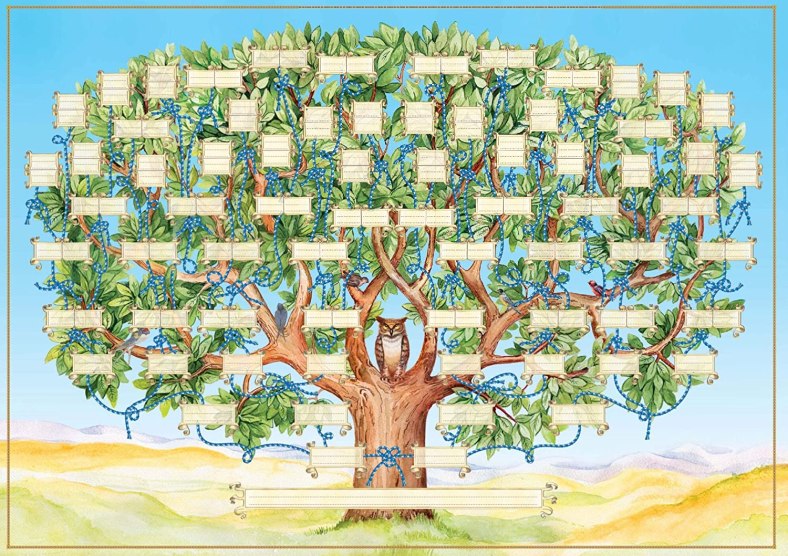
I came across a meme today on Facebook that really made me stop and think.  The heading was Ancestral Mathematics.  Here’s what it said:

“In order to be born, you needed:

2 parents

4 grandparents

8 great-grandparents

16 second great grandparents

32 third great-grandparents

64 fourth great-grandparents

128 fifth great-grandparents

256 sixth great-grandparents

512 seventh great-grandparents

1,024 eighth great-grandparents

2,048 ninth great-grandparents

For you to be born today from 12 previous generations, you needed a total of 4,094 ancestors over the last 400 years.  Think for a moment—How many struggles?  How many battles?  How many difficulties?  How much sadness?  How much happiness?  How many love stories?  How many expressions of hope for the future?—did your ancestors have to undergo for you to exist in this present moment…”

Some of my cousins connected me to a website called Family Search.  I’m not nearly as involved in exploring our family tree as some of them, but I do find it interesting to trace things back a few generations.  I’ve become curious about the lives of these people to whom I am directly related.  I’ve heard bits and snatches of some of their stories, but I know nothing at all about most of them.  I’ve been surprised by all the surnames that I didn’t know even though their DNA is part of me and their story is part of my story.  Beckham, I know, of course.  But there is  also Curtis, Casey, Owen, Whitely, Moody, Maynard, Wayne, Stapleton, Lawrence, Malmgren, Davidson, Larm, Carlson, Andersdotter, Flykt…  The names take me on a journey not only back in time but to other parts of the continent and other parts of the world.   I have inherited something, however small, from each of them.  

As I thought about all of this, I realized two things.  First, the universe, and Christ who is in, with, and under everything the universe does, has worked long and hard to bring us here.  All the generations before us with all their struggles and all their joys have brought us, you and me, to this place and this time.  That’s got to mean something.  And if it doesn’t mean anything existentially in and of itself, then we can bring meaning to it.  We can bring love to it.  We can see the moment and we can love the moment.  And we can love each other in the moment.  We can love God in the moment.  That’s part of what being the Beloved Community is all about: honoring the moment and honoring everything it took to bring us here.

And that brings me to the second thing I realized.  We have inherited our faith, too.  Whether you grew up in a home where faith in Christ was part of the atmosphere or whether you came to faith in Christ in some other circumstances in some other context, by some unexpected path, faith was handed down to you by others.  It was a gift of grace.  It has been passed down to us in a steady succession of believers all the way back to the apostles.  “For I handed on to you as of first importance what I in turn had received,” wrote St. Paul to the saints in Corinth (1 Cor 15:3),  and they in turn handed it on to their children and their friends.  And so on through the ages.

“Therefore, since we are surrounded by so great a cloud of witnesses, let us also lay aside every weight and the sin that clings so closely, and let us run with perseverance the race that is set before us,  looking to Jesus the pioneer and perfecter of our faith.” (Hebrews 12:1-2)   But first, let’s take a moment to appreciate all those who have given us this moment.

A Tale of Two Daughters

Mark 5:21-43

In her book The Dream of God, Verna Dozier writes,  “The important question to ask is not, ‘What do you believe?’ but ‘What difference does it make that you believe?’ Does the world come nearer to the dream of God because of what you believe?”

In today’s Gospel lesson we have a dramatic story of two desperate people from very different circumstances who acted in faith.  They reached out to Jesus because they believed he could help them.  Both of them act on their desperate hopes in public, and take significant risks in doing so, but to understand what’s at stake for them, we need to understand more about two important dynamics in  their culture.  

Ancient Palestine, like most of the ancient world, operated socially as what cultural anthropologists call an “honor culture.”  Sometimes it’s called an “honor/shame” culture.”  This was a highly formal system based on one’s status in society.  Your position and place in society determined with whom you could associate and how you could speak and interact with them.  Male roles and female roles were governed by rigid boundaries and those boundaries were strictly observed.  Shame was the tool that was used to enforce those boundaries.   A person’s reputation and status were vitally important.  One could quite literally take them to the bank,  and if you had any kind of status and reputation at all you were always careful not to do anything to risk your standing in the community.

The other dynamic that’s important in this Gospel lesson is the concept of “clean and unclean” as it was defined by Levitical law in Torah.  I think after 15 months of “social distancing” and Covid-19 precautions we might understand this one a little better than we did in the past.

Most common things were assumed to be “clean” but there were a number of ways to become “unclean.”  Any scaly skin condition made one unclean.  Psoriasis, for instance.  Any discharge of bodily fluids, including menstruation, made one unclean.  Touching a non-kosher animal, touching a dead animal or touching a human corpse made one unclean.  Touching a clay pot that had been touched by an unclean person could make you unclean.  Touching a garment worn by an unclean person could make you unclean.  Unclean was contagious.  So persons who were unclean were isolated.  And persons who were long-term unclean, such as lepers or the hemorrhaging woman in today’s Gospel story, were outcast—they were forbidden to put themselves in any kind of situation where they might “contaminate” others.  

So now with all of that as background, maybe we can begin to see that these two stories, especially as Mark has woven them together, would have been absolutely shocking to those who were originally reading or hearing them.

The two main characters could not be more different, in fact, they stand in sharp contrast to each other.  Jairus is male, wealthy, president of the synagogue.  He is at the top of the “honor” ladder.  For what it is worth, he is one of the few characters other than the disciples who is named in Mark’s gospel.  The hemorrhaging woman is female, impoverished, excluded from the synagogue because of her condition.  She is anonymous. 

But both of them break rules and cross boundaries because they are desperate and they believe Jesus can help them.

When Jairus saw Jesus, he fell at his feet and begged him repeatedly, “My little daughter is at the point of death. Come and lay your hands on her, so that she may be made well, and live.”  Remember those rules of honor culture and social standing?  A man in Jairus position would be expected to bow deeply to Jesus when making a request if he regarded Jesus as an equal.  With the whole crowd looking on, Jairus falls at Jesus’ feet and begs repeatedly for Jesus to come heal his daughter.  In doing this, he puts all his social currency on the line.  If things don’t go well, the crowd will remember how he put his dignity aside and shamed himself.  

For the hemorrhaging woman, it’s another story altogether.  She’s trying to remain invisible, blending into the crowd.  She’s not supposed to be there at all.  But after twelve years of being an outcast, after losing all her money to quack physicians who only made things worse, she had nothing left to lose.  You can imagine her thinking here:  “If touching my clothes can make someone unclean, maybe touching Jesus’ clothes can heal me.”  So she reached out as Jesus was passing by and touched his cloak.

Can you imagine how Jairus feels, what Jairus is thinking, when Jesus suddenly stops.  They’re on the way to his house so Jesus can heal his daughter.  “My little daughter,” he had called her, a term of endearment and affection.  My baby girl.  Time is of the essence.  She is “at the point of death.”  And now, suddenly, Jesus stops and says, “Who touched my clothes?” 

Poor Jairus has got to be going out of his mind.  He must be getting frantic.  He’s got to be thinking what the disciples are saying: “Look at the crowd pressing in on you.  Who didn’t touch you?”  

But Jesus knew that this touch was different.  This touch had faith in it.  And desire.  And hope.  And longing.  And Jesus isn’t taking another step until he knows who it was who reached out to him with all that in her heart. 

“The woman, knowing what had happened to her, came to him with fear and trembling, fell down before him, and told him the whole truth.”  

Fear and trembling.  Even if she were whole and healthy, it was inappropriate in their culture for her to touch him.  As it was, in her condition, it had been a flagrant violation of the Torah.  Would he rebuke her?  Would he somehow revoke her healing?  Would Jairus, the president of the synagogue demand that she be punished? Would the crowd become indignant and drag her off and stone her?  

Jesus said to her, “Daughter, your faith has made you well; go in peace, and be healed of your disease.” 

He called her daughter.  He gave her status and identity.  She would forever be the one Jesus had called daughter.  A daughter of Israel.  A daughter of the kingdom.  A daughter of Jesus.  He told her to go in peace—a word not just to her, but to the crowd in case they had any ideas about punishing her.  He protected her with a word of peace, a safe passage.  He commended her faith and reaffirmed that she was healed.  He returned her to wholeness.  He returned her to community.

And that’s when the bottom fell out of Jairus’ world.  While Jesus was still speaking, some people came from his house to tell him that his daughter had died and there was no point in troubling the teacher any further.  I wonder what he thought, then, when Jesus turned to him and said, “Do not fear, only believe.”  Did he still believe at that point that Jesus could save his little daughter?

When they got to Jairus’ house all the wailing and weeping and noise of Palestinian mourning was already in progress, and when Jesus asked, “Why are you weeping and making all this noise?  She’s not dead, only sleeping,” they laughed at him.  But he shooed them all outside then took Jairus and the child’s mother in to where the child was laid on her bed.  

He took her hand and said to her, “Talitha cum,” which means.  “Little girl, get up!”  And immediately the girl got up and began to walk about. And they were overcome with amazement.

There are all kinds of boundaries that are crossed in these two stories.  All kinds of rules that are broken.  All kinds of traditions that are ignored.

Jesus is on his way to help an important person from the top rung of the social ladder with a life-and-death emergency, but he stops to help a “nobody” who has been removed from the social ladder entirely.  

The hemorrhaging woman touched him, making him unclean.  But he ignores this law and restores her to health, restores her cleanness, and protects her with a word of peace. 

When he takes the dead girls’ hand, he is technically unclean yet again.  Yet again he ignores the whole clean/unclean business.

Jesus is teaching his disciples and teaching us that sometimes for the sake of healing, for the sake of compassion, for the sake of simply doing the right thing, boundaries have to be crossed, traditions have to be ignored, and laws may even have to be broken.  When faith reaches out in hope asking for help, then we do what we have to do, following the example of Jesus.

And that brings us back around to Verna Dozier’s question: “The important question to ask is not, ‘What do you believe?’ but ‘What difference does it make that you believe?’ Does the world come nearer to the dream of God because of what you believe?”

Is your faith moving you to do what needs to be done for those who are reaching out in hope and asking for help, even if it means  you have to cross some boundaries?

Cross to the Other Side

Mark 4:35-41

  On that day, when evening had come, he said to them, “Let us go across to the other side.” 36 And leaving the crowd behind, they took him with them in the boat, just as he was. Other boats were with him. 37 A great windstorm arose, and the waves beat into the boat, so that the boat was already being swamped. 38 But he was in the stern, asleep on the cushion; and they woke him up and said to him, “Teacher, do you not care that we are perishing?” 39 He woke up and rebuked the wind, and said to the sea, “Peace! Be still!” Then the wind ceased, and there was a dead calm. 40 He said to them, “Why are you afraid? Have you still no faith?” 41 And they were filled with great awe and said to one another, “Who then is this, that even the wind and the sea obey him?”

Welcome back!  Welcome back to the world!  Welcome back to gathering together!  Welcome back to seeing each other’s faces without masks—well in most cases anyway. Welcome back to church in church!  Welcome back to life as almost normal.  Almost.  

I think today’s Gospel lesson from Mark is a good one for us to think about as we sail into a new reality.  And let’s face it, we’re not going to simply sail back into our old reality.  Too much has changed in the past 15 months.  

In today’s Gospel lesson, Jesus and his disciples set out in the evening, of all things, to sail across the Sea of Galilee.  A great windstorm blows up and the boat is being swamped.  We know it’s a serious storm because even the fishermen who are out on this water all the time are frightened. Through all of this, Jesus is sleeping soundly on a cushion in the stern of the boat. Finally, the disciples cry out, “Teacher, do you not care that we are perishing?!?” At that point, Jesus gets up, rebukes the storm, the sea becomes dead calm, and the disciples are left wondering just who Jesus is, now that they’ve seen this new dimension of his power and abilities.

When we read or hear these stories, these episodes from the life and ministry of Jesus, it’s natural for us to ask ourselves, “Okay, what does that mean for me or for us?”  Yes, we’re also supposed to try hear it in its original context if we’re able, but we also hope there’s something in the story that we can take home with us, some lesson that fits our lives right here and right now.  That’s why we do this little exercise with the Gospel every week.

With this particular story, it has been far too tempting for far too long to personalize it a little too much.  And I confess I’ve been as guilty as any preacher out there in doing this.  That message goes something like this:  “When storms arise in your life, just remember that Jesus is in the boat with you…even if he’s taking a nap at the moment.  He has the power to quiet the storm.  Maybe he’s asking you, ‘Why are you afraid?  Have you still no faith?’  Muster up some courage.  Maybe it’s your turn to stand up and tell your storm, ‘Peace!  Be still.’”  I have preached that sermon.

Listen, there are probably worse ways to go with this story.  We’ve all had moments in our lives when we’ve wanted to join the disciples in yelling, “Teacher, don’t you care that we’re perishing?!?”  I know I’ve been there a few times.  But the fact is, there is something greater at stake in this story than a bromide to help us face our fears.  There is something greater at stake here not just for them in their time, but for us in our time.  But to know what that is, we have to range beyond the boundaries of these six verses.

From the very beginning of the Gospel of Mark, Jesus has been announcing that the Kingdom of God is imminent.  Actually, imminent is not quite the right word.  The Greek word is engikken.  It’s often translated as “has come near,” but there is an even greater sense of immediacy in the word.  Think of it as a train coming into the station.  It’s not all the way into the station yet but the engine has already reached the edge of the platform.  That’s the sense of it.  The kingdom of God’s engine has already reached the platform.  Get ready to board.

Everything Jesus says and does in the Gospel of Mark is said and done to demonstrate the power and presence of this new reality he calls the kingdom of God.  He is not just telling people about the kingdom, he is showing them what it looks like and how it acts.  When Jesus calls the disciples, he is recruiting them to build a new community, a Beloved Community, based on the ideals and principles of “The Way,” which is another name Mark uses for the kingdom of God.  

Another thing to understand about the Gospel of Mark is that everything that happens in the Gospel is heavily weighted with myth and symbolism.  That’s not to say that the events in the Gospel didn’t happen, but that it is important to pay attention to how Mark is describing and using them as he tells the story of Jesus, and what kind of language he is using.  We need to ask questions.  What other scriptural connections does he make—or expect us to be making?  What apocalyptic expectations and understandings are at  work in their culture?  What mythic stories are at work in the background as he tells the story of Jesus?  What cultural boundaries and expectations are being crossed?  If we don’t catch all these clues, then we might not get the point Mark is trying to make. We’ll get some other point instead.

When we see the disciples and Jesus set off from the shore in a boat in the evening, Mark wants us to be nervous.  We’re supposed to remember that in their mythic understanding the sea is the home of Chaos and Destruction.  Dread, unpredictable, cosmic forces hide in its depths and the only thing that could tame it at creation was the Spirit of God hovering over it.  That they are setting out as night falls with the intention of crossing all the way to the other side—well, if we were Mark’s first readers or listeners we would know they’re heading for trouble.

As the story unfolds, Mark assumes that somewhere in the back of our minds we are maybe remembering Psalm 107: “Some went down into the sea in boats…then they cried to the Lord in their trouble, and he delivered them from their distress; he made the storm be still, and the waves were hushed.” (107:23,39)  When we read that Jesus was asleep on a cushion in the stern of the boat, Mark wants us to remember how Jonah slept as his boat was about to break up in a mighty tempest. (Jonah 1:4, 10).  Mark puts all these things together so that we will understand that this storm that the disciples face out there on the sea of Chaos is not just a metaphor for the troubles of life.  This is a Cosmic storm.  They are pitted against cosmic forces.  Some great elemental power wants very much to keep them from getting to the other side of the lake.  But what?  And why?

To understand that, it’s important to understand why Jesus wanted to cross the lake in the first place.  

The Sea of Galilee, was also called Lake Gennesaret or Lake Tiberias.  It depended on who was talking about it.  It served as a clear geographic boundary between the territories of Philip and Agrippa in the tetrarchy when the Emperor Augustus divided up the region between the sons of Herod the Great, and it continued to serve as a clear social boundary between the Jews of Galilee on the south side and the Hellenized Jews and Gentiles of various nationalities of the Decapolis on the north side. 

Why did Jesus want to go to the other side of the lake?  Quite simply because that’s where the gentiles were.  

Jesus was fighting racism.  He wanted his new kingdom community to embrace everyone—Jew, Gentile, people of all nationalities and types.  People who had differences in how they worshipped. So he took his mission of healing and exorcism and teaching across the sea to invite them to be part of “the way.” He also wanted to teach his disciples that in the kingdom of God there simply is no room for such nonsense as racial division or historical division or anything like that.  In the kingdom of God no one can call anyone else “unclean.”  

That storm that rose up against them was symbolic of all the storms that rise up to resist our attempts at reconciliation and renewal.  It was the elemental, cosmic something in our world that wants to resist healing and unifying humanity.  And I want you to notice something here.  The words that Jesus speaks to that storm are the words of exorcism.  Most of our translations make those words prettier than they actually are, but they are the same words that Jesus speaks when he casts out the demon in Mark 1:25.  “Peace.  Be still.”  Sure.  But the full force of the words is more like “Silence!  Shut up!  I muzzle you!”  

Maybe  this is how we need to speak to racism.  Maybe this is how we need to speak to the forces that try to dissuade and discourage us from reaching out to each other to make new bonds of friendship.  Maybe this is how we need to speak to those voices who keep dragging up tradition and history as reasons to preserve symbols of hatred and violence in public display.  Maybe this is the plain kind of speech we need to use with those who continue to pursue paths that have done nothing but separate us and poison us against each other.  Maybe instead of trying to be reasonable and persuasive against such divisive winds it’s time to simply say, “Silence!  I muzzle you. I will not let you speak hate.  I will not let you keep us from getting to the other shore.  I will not let you stop us from building the Beloved Community.”

We have had fifteen months to sit apart and consider all the things that are dividing us.  We have had fifteen months to witness as 600,000 people have died from a disease that could have been curtailed much more easily and much earlier if we had been more  unified.  We have had 15 months to watch as unreasonable political forces have assaulted the foundations of our democracy and truth, itself.  We have had 15 months to see racial tensions repeatedly exacerbated by hate and violence and unfortunate systemic conditioning.  We have had fifteen months to sit apart in our homes and miss each other and think about what it means to be friends, to be church, to be disciples of Jesus, to be people of The Way.  

And now the doors are open.  We’re back together.  We get to be “us” again.  But there are people “not like us” across the road, across town, across the lake.  And Jesus is saying, “Let’s go across to the other side.”  So how about it?  Shall we take this boat out for a ride?

Scattering Seeds

Mark 4:26-34

With what can we compare the kingdom of God…  

What do you think of when you hear or read that phrase: the kingdom of God?  I think it’s hard for us to really grasp what Jesus was talking about when he talked about the kingdom of God not only because he described it in metaphors and parables, but because a kingdom, itself, is a thing entirely outside of our experience for almost all of us.

Most of us think of kingdoms in terms of physical territory, but clearly Jesus is talking about something that transcends mere physical boundaries.  Kingdom can also mean a sphere of authority or rule, and that might be closer to what Jesus is getting at.  The rule of God.  The authority of God.  But most of us can’t relate too well to that because we have never lived under the authority of a monarch or a lord or a master.  And those monarchies that are still active in our world are either almost entirely symbolic or wildly dysfunctional or utterly despotic, and I don’t think we want to attribute any of those qualities to God.

Also, words like authority and rule can have a coercive edge to them, and the kingdom, as Jesus describes it, seems to be much more about influence, persuasion and cooperation.  It’s more organic.  It’s something that grows in us and around us and among us.  I have often used the phrase “kin-dom of God” for that reason—to try to capture some of the cooperative, love-based nature of God’s sovereign rule as Jesus describes it in the beatitudes and parables, and I think that might be more in the right direction.  Maybe.  But it’s also important to remember that the kingdom of God is not a democracy.  God is sovereign.  God’s rule is absolute.  Fortunately for us, so is God’s love, and that love is the very fabric of this thing Jesus is trying to describe as “the kingdom of God.”  The kin-dom of God.

When Jesus told these parables, and thirty-some years later when Mark wrote them down, trouble was brewing in Galilee and Judah and pretty much throughout all of Palestine.  Landowners were putting pressure on tenant farmers for rents they could barely pay.  Scribes from the temple in Jerusalem were demanding a crushing and complex levy of tithes from those same farmers.  Herod Antipas was demanding taxes from the landowners because Rome was demanding taxes from him.  Unemployment was high.  Bandits roamed the highways.  Soldiers patrolled everywhere.  Rome’s colonial government was heavy-handed and oppressive.  People wanted a heavenly anointed messiah to step in and fix things before they exploded—or maybe to light the fuse. It’s no wonder that the disciples kept asking Jesus, “Is this the time when you will bring in the kingdom?”

Jesus kept trying to tell them and all the crowds following him, “No, the kingdom of God is not like that.  It’s not what you’re thinking.  It won’t do any good to simply replace one coercive external system with another one even if the ruler is God!”  

The change has to be internal.  It has to be organic.  Seeds have to be planted.  Human hearts and minds have to be changed. It’s not about imposing a new kind of law and order.  It’s about implanting a new kind of love and respect.  That’s what will fix the world.

“The kingdom of God is as if someone would scatter seed on the ground, and would sleep and rise night and day, and the seed would sprout and grow, he does not know how.”

For generations we had a family farm in Kansas—my  mother’s family farm—where we grew winter wheat.  Winter wheat is planted in late September or early October, depending on the weather.  Not long after it’s planted, it starts to sprout.    Beautiful little shoots that look like blades of grass start to poke their heads up out of the soil.  And then just as they’re getting started, the cold hits them.  And it looks like it’s killed them.  They slump back down to the dirt and go dormant, and they’ll just lie there all through the winter.  The ground will freeze.  Snow will drift and blanket over them.  And there’s nothing you can do.  All winter long you go about your business.  You sleep and rise night and day.  And then you get up one spring morning and notice that the weather is a bit warmer, and the snow is patchy or mostly gone, and you look out the window to see that you suddenly have a field full of beautiful green wheat starting to rise from the earth.  It’s an amazing thing to see, and if you have half a sense of wonder, you thank God for the natural everyday miracle of it and marvel at it for at least a moment before you get on with your work.  

The kingdom of God is like that, says Jesus.  It is seeds, scattered on the earth.  Seeds of ideas and vison. And sometimes it looks like they’ve died.  Or been crushed.  Or been frozen out or buried.  Or simply forgotten.  But they’re there, just waiting for their moment.  

The kingdom of God is seeds of ideas and vision and understanding.  They are ideas about fairness and justice and cooperation.  They are an understanding about fuller and more generous ways to love each other and take care of each other.  The kingdom is a resolve to make a world that is healthier for everyone.  It’s a resolution to embrace God’s vision for how the world is supposed to work—a world where everyone is housed and everyone is fed and everyone can learn and everyone is safe and everyone is free to be their true self.  The kingdom is a determination to repair the damage we’ve done and restore creation so that we and all the creatures who share this world with us can breathe clean air and have clean water.

The kingdom of God, the rule of God, the reign of God, the kin-dom of God is a commitment to do justice and to love kindness and to walk humbly with God and with each other.  It is a continual correction of our vision so we keep learning how to see the image and likeness of God in each other—in each and every face we face so that racism and classism and every other kind of ism evaporate from the earth.  It is the seed of courage taking root in our hearts and minds so that we learn not to be afraid of something or someone simply because it or they are different from us or from what we know or what we expect or what we are used to.

“With what can we compare the kingdom of God, or what parable will we use for it?,” said Jesus.  “It is like a mustard seed, which, when sown upon the ground, is the smallest of all the seeds on earth; yet when it is sown it grows up and becomes the greatest of all shrubs, and puts forth large branches, so that the birds of the air can make nests in its shade.”

The mustard seed!  That tiny seed that produces the most egalitarian, most democratic of plants!  That’s what the kingdom is like.  It shares itself and all it has most freely.  Given half a chance it spreads itself everywhere.  The mustard plant doesn’t care if you are rich or poor.  You don’t have to buy one.  It will come to you and give you and your family food and medicine and spices for your cuisine and healing oils for what ails you.  A most amazing, versatile and humble plant.  And it starts with such a small seed.

The kingdom of God is the planting of seeds. The seeds don’t have to be eloquent preaching or brilliant explanations of theology—probably better if they’re not.  “Preach the gospel at all times,” said St. Francis. “When necessary, use words.”  At a time when the city of Assisi was a rough and dangerous place, he would walk through the town from the top of the hill to the bottom and say as he went, “Good morning, good people!”  When he got to the bottom of the hill he would say to the brother who accompanied him, “There.  I have preached my sermon.”  He planted a seed—the reminder that the day was good and that they had it in them to be good people.

The seeds of the kingdom may be little acts of habit, like bowing your head for a moment to say grace before a meal in a restaurant, even if you don’t say it out loud.  That simple thing might remind those around you to pause, to be thankful, to remember all the connections that bring food to our tables, to remember the goodness of the earth, to remember the presence of God.

The seeds of the kingdom might be small acts of kindness.  When Oscar Wilde was being brought down to court for his trial, feeling more alone and abandoned than he had ever felt in his life, he looked up and saw an old acquaintance in the crowd.  “He performed an action so sweet and simple that it has remained with me ever since,” wrote Wilde. “He simply raised his hat to me and gave me the kindest smile that I have ever received as I passed by, handcuffed and with bowed head. Men have gone to heaven for smaller things than that. It was in this spirit, and with this mode of love, that the saints knelt down to wash the feet of the poor, or stooped to kiss the leper on the cheek. I have never said one single word to him about what he did … I store it in the treasure-house of my heart … That small bit of kindness brought me out of the bitterness of lonely exile into harmony with the wounded, broken, and great heart of the world.”

The seeds of the kingdom might be a word of affirmation and encouragement when it’s needed most.  Helen Mrsola was teaching ninth graders new math years ago.  They were struggling with it.  The atmosphere in the classroom was becoming more tense and irritable every day.  So one Friday afternoon Helen decided to take a break from the lesson plan.  She told her students to write down the name of each of their classmates on a piece of paper, then to also write down something nice about that student.  She collected the papers, and over the weekend Helen compiled a list for each student of what the other students had written. On Monday, she gave each student a paper with list of what the other students liked about them.  The atmosphere in the class changed instantly; her students were smiling again. Helen overheard one student whisper, “I never knew that I meant anything to anyone!” 

Years later, a number of the students, all young adults now, found themselves together again at a school function.  One of them came up to Helen and said, “I have something to show you.”  He opened his wallet and carefully pulled out two worn pieces of notebook paper that had obviously been opened and folded and taped many times.  It was the list of things his classmates liked about him.  “I keep mine in my desk at work,” said another classmate.  Another classmate pulled hers out of her purse, saying she carried it with her everywhere she went.  Still another had placed his in his wedding album.

The kingdom of God.  The rule of God.  The reign of God.  The kin-dom of God.

To what shall we compare it?

It’s like seeds scattered on the earth, says Jesus.  It’s like mustard seeds.  Seeds of righteousness.  Seeds of justice. Seeds of vision.  Seeds of kindness.  Seeds of help.  Seeds of hope.  Seeds of mercy.  Seeds of peace.  Seeds of affirmation.  Seeds of goodness.  Seeds of love.  

You don’t know how they grow.  But they do.

On earth as in heaven.