Withdrawing to Galilee

Matthew 4:12-23

“Now when Jesus heard that John had been arrested, he withdrew to Galilee.” 

In Matthew’s telling of the life and work of Jesus, the arrest of John is the trigger that launches Jesus into his ministry of proclamation, teaching, healing and non-violent resistance.   John’s arrest sets him on a path that will eventually lead him to his death in Jerusalem.

When Jesus launches his ministry, the timing is political.  The arrest of John the Baptist is the catalyst that sets him in motion.  Herod Antipas had John arrested because John had been speaking out forcefully against Herod’s abuses of power and other moral failings, including his adulterous marriage to his sister-in-law which was forbidden under Jewish law.  As he railed against Herod, John had been attracting hundreds of followers, which made him dangerous.  So Herod did what authoritarianism always does.  He silenced the inconvenient voice of truth and criticism.  He disappeared the leader of the potential resistance.

When Jesus heard that John had been arrested, he withdrew to Galilee.   “Withdrew” is an interesting word choice here.  It’s an accurate translation, but one that’s apt to give us the wrong idea.  Jesus isn’t retreating.  He’s pivoting.  He is intentionally relocating to a more strategic position.

Why Galilee?  Matthew saw Jesus fulfilling a prophecy from the 9th chapter of Isaiah, but there were other very good reasons for Jesus to begin his work in Galilee. 

Historically, Galilee had been a hotbed of anti-Roman and anti-Herodian sentiment.  Long before Jesus arrived, Galilee had given rise to episodes of armed resistance and tax revolts.  In 37 BCE Hasmonean insurgents from Galilee waged a 2-year guerilla war against Herod and his Roman  overlords, hiding out in caves in Galilean hills between engagements.  In 6 BCE, Judas of Galilee led a revolt against the Quirinius census.   The city of Gamla, near the Sea of Galilee, had become a stronghold for Zealot extremists who had no qualms about using violence in their ongoing fight against the empire.  Galileans even practiced economic resistance when, beginning around 4 BCE, they initiated a 70-year boycott against mass produced clay lamps and red-slip pottery tableware which was used everywhere in the empire and taxed to help support the Roman military machine.

“Galilee of the Gentiles” had an ethnically diverse population.  Jews were the dominant group, but in an attempt to subvert Jewish resistance, the Romans had offered economic incentives for people from other parts of the empire to settle there.  Matthew tells us that Jesus made his home in Capernaum, a bustling, multi-ethnic hub from which other Galilean towns and villages could easily be reached either by boat or by road.  Because it was a garrison town and customs station, Capernaum had a highly visible Roman presence which meant that it would also give Jesus more opportunities to encounter travelers and settlers from other parts of Palestine, Syria, Greece, Egypt, Gaul and elsewhere.

“From that time Jesus began to proclaim, ‘Repent, for the kingdom of heaven has come near.’” (4:17).   That’s the good news, the gospel, that Jesus proclaims from his strategic base in Capernaum. 

“Repent” really is not a good translation.  “Repent,” in English, has overtones of penance and sorrow and regret, but the Greek word Metanoia means a change of heart, a change of thinking, a change of direction, a change of behavior.  Metanoieteis the word Jesus speaks in the Greek text.  It’s a command.  An imperative.  From that time Jesus began to proclaim, “Time for a change.  The commonwealth of God’s justice and kindness has come near.  It’s in reach.  Change your heart.  Change your thinking.  Change the way you do things.”  

When Jesus proclaims that the kingdom of God is in reach, he is not speaking metaphorically.  He is calling for a spiritual transformation, yes, but that is just the beginning.  He’s also calling for social, political and economic transformation because the commonwealth of God’s justice and mercy does not operate by the same rules as the empire.

As he walks by the Sea of Galilee, Jesus sees Peter, Andrew, James and John casting their nets into the sea.  He calls out to these Galilean fishermen and says, “Follow me, and I will make you become (literally) fishers of people.”  The translation here is a little tricky because the preposition is implied.  It could be “I will make you become fishers of people,” or “fishers for people,” or even “fishers on behalf ofpeople.”  But any way you translate it, Jesus is issuing a not-so-subtle invitation to Peter and Andrew and James and John to throw off the yoke of Rome.

In The Galilean Fishing Economy and the Jesus Tradition, K.C. Hanson explained that Simon, Andrew, James and John were only semi-independent.  The Galilean fishing industry was very tightly controlled by the Roman Empire.  Caesar owned every body of water in the empire.  Fishing was state-regulated.  Fishermen had to pay a hefty fee to join a syndicate.  Most of what was caught in the Sea of Galilee was dried and exported at a regulated price and heavily taxed, and it was illegal to catch even one fish outside this system.

So how does it sound now… “Follow me and I will make you Fishers for people.”?  Especially when you remember that this is in the context of Jesus proclaiming that the Basilea, the commonwealth of God’s mercy and justice is happening now?  

“I will make you Fishers for People.  For your fellow human beings.  Not just for the empire.  Not just for the elite, the wealthy, the powerful, the 1%, the people who reap all the profits but do none of the work.”

And of course Jesus uses a fishing metaphor to issue this commanding invitation because he’s talking to fishermen.  

Follow me, said Jesus.

Follow me and I will make you the you that you were meant to be

for the good of all God’s people.

Barbara Brown Taylor reminds us that this is a miracle story.  These Galilean fishermen don’t drop everything and “immediately” follow Jesus because of their extraordinary courage.  They do it because of who it is that calls them.

Jesus makes it possible for them.  Jesus captivates them with his vision and his presence and his words…and the Holy Spirit.  In the same way Jesus can make it possible for us.

Last week we took time to remember Dr. Martin Luther King, Jr, a man who clearly followed Jesus as he led and inspired others to keep reaching for that better reality called the kingdom of God—the commonwealth of God’s kindness and justice.  In a speech at Riverside Church in New York City, exactly one year before he was assassinated, he said this:

“Our only hope today lies in our ability to recapture the revolutionary spirit and go out into a sometimes hostile world declaring eternal hostility to poverty, racism, and militarism. With this powerful commitment we shall boldly challenge the status quo and unjust mores and thereby speed the day when every valley shall be exalted, and every mountain and hill shall be made low, and the crooked shall be made straight and the rough places plain . . .Now let us begin. Now let us rededicate ourselves to the long and bitter — but beautiful — struggle for a new world.”
“When Jesus heard that John had been arrested, he withdrew to Galilee.”  That sentence at the beginning of today’s gospel reading sits heavy in my heart.  It would be easy to write off John’s arrest as just one more authoritarian act of oppression in a land where authoritarian oppression was the norm.  It would be easy to skim past it and go straight to the calling of the fishermen, a story we can easily spiritualize if we don’t think too much about what it is that they gave up to follow Jesus and what it cost them and their families.  It would be easy, even, to just not see it.  But it is the thing that sets the work of Christ in motion.  

It would be easy to think, well that was then and this is now—that’s just how things were.  But this week, this month, while the streets of our cities are filled with armed and masked federal agents who are kidnapping and killing our neighbors, while resistance to authoritarian thuggery in Minneapolis and elsewhere is met with violence it is simply not possible to ignore that sentence.  Where do we withdraw to?  Where is our Galilee, our place of resistance? Where do we go to stand up with Jesus and say, “Time for change.  The Commonwealth of God’s justice and mercy is at hand.”

When Jesus heard that Rene Nicole Good, a 37-year-old mother of three had been shot and killed, he withdrew to Galilee.  

When Jesus heard that Liam Conejo Ramos, a 5-year-old preschooler in a blue bunny hat had been abducted outside his home, he withdrew to Galilee.  

When Jesus heard that Alex Jeffrey Pretti, an ICU nurse was shot and killed by government agents who are long on hostility but short on training, he withdrew to Galilee.  

When Jesus heard that 100 clergy had been arrested at the Minneapolis airport while protesting the presence and tactics that government agents are using to oppress our neighbors, he withdrew to Galilee.  And stood with them.

Minneapolis is our Galilee.

Chicago is our Galilee.

Portland is our Galilee.

Wherever our neighbors are being assaulted and oppressed, that is our Galilee.  That is where we hear Jesus calling us to follow him, even if it means stepping away from life as we’ve always known it.  

Jesus is telling us it’s time for a change.  The kingdom of heaven, the commonwealth of God’s justice and mercy is in reach.  “Now let us begin. Now let us rededicate ourselves to the long and bitter — but beautiful — struggle for a new world.”  
Taking the Plunge

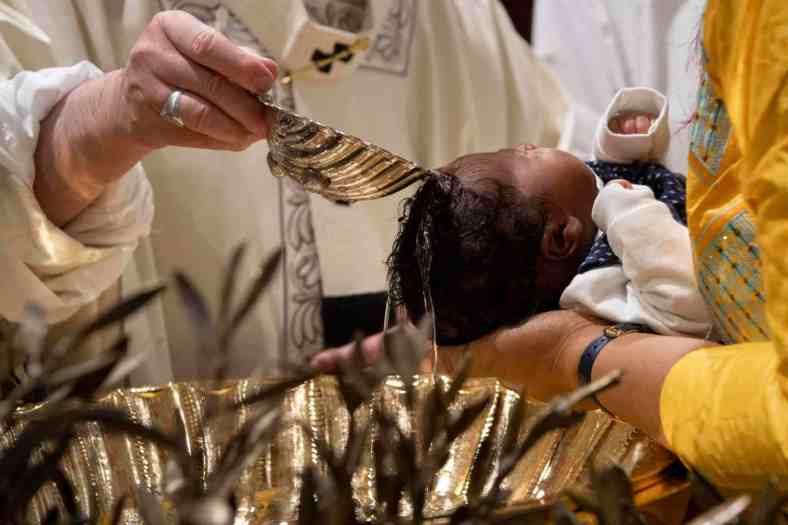
One Sunday morning when a newborn baby was being baptized during the worship service, there was a little five-year-old girl who was watching everything very intently from the front pew.  She was utterly fascinated by the baptism ceremony, but didn’t really understand what it was all about, and as pastor began to scoop water from the font and pour it onto the baby’s head, she turned to her father and in a very loud voice asked, “Daddy, why is he brainwashing the baby??”

Baptism isn’t brainwashing, of course, but over a lifetime it is supposed to change the way you think, the way you see the world, and the way you interact with the world.  We baptize people, including babies, as a sign that they are included in God’s grace and in God’s mission to transform the world.  We baptize because Jesus told us to baptize.[1]  And we baptize because Jesus, himself, was baptized.

The baptism of Jesus is covered in all four gospels.  Sort of.  John’s gospel has a scene where Jesus is at the river while John is baptizing, and  John says he saw the Spirit descend on Jesus like a dove, but the Gospel of John never actually describes Jesus being baptized.  

My favorite version of the Baptism of Jesus is in the Gospel of Matthew because it starts out with John and Jesus arguing.  Can you imagine it?  There they are, hip deep in the water, and Jesus says to John, “Do you have to dunk me all the way under?  Can’t you just scoop up a handful of water and pour it over my head?” And John says, “Dude!  No!  Are you crazy?  I’m John the Baptist, not John the Episcopalian!” (rim shot)

Actually, what they were arguing about was that John didn’t want to baptize Jesus—at least according to Matthew’s account.  Jesus came to John to be baptized, and Matthew tells us that John would have prevented him.  It didn’t feel right to John.  It didn’t feel appropriate to him because he knew that Jesus was more important than he was.  For him to baptize Jesus seemed upside down and backwards.  “I need to be baptized by you!” he told Jesus.  

need to be baptized by you.  That’s an interesting choice of words.  The wording in Greek implies that John felt he was lacking something that he thought Jesus could give him.  What could that be?

Jesus finally persuaded John to go ahead and baptize him when he said, “Let it be so now; for it is proper for us in this way to fulfill all righteousness.”  Today’s English Version translates that as “Let it be so for now. For in this way we shall do all that God requires.”  The Contemporary English Bible says, “For now this is how it should be, because we must do all God wants us to do.”

Basically, Jesus was saying to John, “let’s go ahead with this because it’s the right thing to do.”

So there’s another reason we baptize:  it’s the right thing to do.  It’s what God wants us to do.

The word “baptism” comes from the Greek verb baptizein which means “to dip,” or “to dip frequently or intensively, to plunge or to immerse.”[2]  It’s also the verb that’s used to describe putting dressing on a salad, though, so you could say it also means “to sprinkle.”  

Because early Christian baptisms were usually by immersion, some have insisted that you have to be fully immersed or it’s not a real baptism.  But The Didache, a manual for good church practice written in the late 1st or very early 2nd century said, “If you have not living water (running water, such as a stream or river), baptize into other water; and if you cannot in cold, in warm. But if you have not either, pour out water three times upon the head into the name of Father and Son and Holy Spirit.”  

That practice of pouring out water on the head is called afflusion, by the way, and as The Didache attests, it has been one of the ways the church has baptized people since its earliest days.

Yes, our word baptism does come from the Greek verb which means to immerse.  But what is it that we are immersed into?   The water is an important sign.  It speaks to us physically, spiritually and psychologically in a powerful way.  But even if there is only a little water poured onto our heads, we are being immersed, plunged into the life and love of the Triune God, the vision and mission of Christ.

Martin Luther said that the amount of water is never an issue.  Water is the physical sign of what God is doing in baptism; it is the Word of God that makes baptism effective.  One drop of water is enough because it’s the  Word of God that has all the power.  The water and the Word together become a sign of what Christ has done and is doing for us.  

Luther described baptism as one of the means of grace through which God creates and strengthens “saving faith.”  He borrowed language from Titus 3:5 to depict baptism as a “washing of regeneration” in which infants and adults are reborn.  In that rebirth, said Luther, we are clothed with the righteousness of Christ. 

“Baptism, then,” he went on to say, “signifies two things—death and resurrection, that is, full and complete justification. When the minister immerses the child in the water it signifies death, and when he draws it forth again it signifies life. Thus Paul expounds it in Romans 6: ‘We were buried therefore with Christ by baptism into death, so that as Christ was raised from the dead by the glory of the Father, we too might walk in newness of life.’ This death and resurrection we call the new creation, regeneration, and spiritual birth. This should not be understood only allegorically as the death of sin and the life of grace, as many understand it, but as actual death and resurrection. For baptism is not a false sign.”

In other words, as Luther describes it, we actually die and are resurrected in our baptism.  Life—baptized life—is a brand new life.

Baptism is not a sign of my decision for Christ, it is a sign of Christ’s decision for me.  It is a sign of God’s grace—the grace that gives us life, the grace that sustains our life.  By the presence of Christ, the living Word, and by the power of the Holy Spirit who lives in us and works through us, that one drop of water can make all the difference in the world.

Baptism isn’t an event, it’s a way of life.  But if our baptism makes one drop of difference in our lives, then we nurture that new life so it can grow and mature. That’s what church is for. That’s what education is for. That’s what prayer and contemplation are for.  But church, prayer, education—these things are not our mission—they are things that prepare us for and empower us for our mission.  

The late Thomas Troeger who taught preaching at Yale Divinity School once said,  “When we follow Jesus into the waters of baptism, we are making a statement, a witness to our desire not only for a new life for our individual selves, but a new life for the whole world. We are renouncing Herod’s action of shutting up John, of shutting up hope, of shutting up the transformation of this world. We are affirming the opening of heaven, the opening of hope, the releasing of God’s renewing power into the world. 

“Every time we have a baptism in our churches, we are making a statement of the same good news that John preached. It is not good news to the Herods of the earth. It is not good news to those who want to shut up the transforming power of God, including those who do it in the name of narrowly doctrinaire religion. But it is good news for everyone who yearns and hungers for a new world, a new creation. When we follow Jesus into the baptismal waters or when we reaffirm our baptismal vows, we are giving testimony that the opening of heaven is greater than any human effort to shut up the power of God.”

What happened for Jesus in his baptism also happens for us in our baptism.  The heavens are opened to us so there is no barrier between us and the presence of God, no barrier between us and each other.  We are told that we are loved.  We are named as children of God in a world that wants to call us all kinds of other names, a world that encourages us to label ourselves in ways that alienate us from each other and to name others in a way that alienates them from us.  But baptism reminds us that we are all God’s children.  We are all in this together.

In a world full of bad news, baptism makes us the Good News people.  In our baptism we are called beloved.  In our baptism we are named children of God.  The Spirit of God descends on us and into us to empower us and to open our minds and hearts.  And our ears. In baptism we are given a new identity; we hear God proclaim You are my child.  I am pleased with you.  I like you!  Now…let’s go out and heal the world!


[1] Matthew 28:19

[2] Anchor Yale Bible Dictionary

Fleshing Out the Story

Could it be the most important idea in history?

John 1:1-18

I deeply and truly love Christmas, but the sheer enormity of it is almost overwhelming   I’m not talking about all the shopping or all the hustle and bustle and preparation at home and at church.  I’m not even grumbling about the over-the-top commercialism or all the different greeting card interpretations of the “true meaning of Christmas” which can put you in a psychological sugar coma if you try to swallow them all at once.   

The thing that is almost overwhelming for me is the daunting task of trying to convey the real true meaning of Christmas, the task of sharing a genuine and meaningful understanding of The Incarnation, the theological claim that Saint Francis thought was the most important doctrine of the church—the mind-stretching assertion that the mystery we call God, the Maker of Everything, came to us as one of us—the idea that God “became flesh and lived among us” from gestation to birth to death as a particular person in a particular place and in a particular time so that we could begin to more fully understand that God is with us in all persons, in all creatures, in all creation, and at all times.

That thought, that idea, that reality that we call The Incarnation is so enormous and mind-boggling that it’s really tempting to retreat into the less cosmic halo of ideas that hover around that manger in Bethlehem, ideas like innocence and love personified and new beginnings.  Those are all good, true and valuable things.  They are meaningful parts of the package.  But the goodness, truth, new beginnings and love we see in that holy child become even more potent when we begin to truly understand what God is doing in that manger in Bethlehem.

When the early followers of Jesus began to write down their understanding of who Jesus was and what he was about, when they began to explain what meant to them and what they meant when they called him Christ—Christos—the anointed one, it’s clear that they saw him as something more than just a great spiritual teacher or religious leader.   You don’t have to read very far in these early writings to discover that these followers of Jesus thought there was something of cosmic importance about him.  Early on they called him the Son of God but that description didn’t seem to be enough for many of them.  It didn’t seem to fully capture the all-encompassing  fullness of what they had experienced in Jesus the Christ.  

“He is the reflection of God’s glory and the exact imprint of God’s very being, and he sustains all things by his powerful word,” said the writer of Hebrews.[1]  “He is the image of the invisible God, the firstborn of creation,” said the author of Colossians, “for in him all things in heaven and on earth were created, things visible and invisible…all things have been created through him and for him…for in him all the fullness of God was pleased to dwell, and through him God was pleased to reconcile to himself all things, whether on earth or in heaven…”[2]

Late in the first century, a writer we’ve come to know as John sat down to write his account of Jesus.  He wasn’t interested in creating just another chronicle of the life of Jesus as others had done; he wanted to explore the meaning of Jesus.  He wanted to make it clear that Jesus the Christ was not someone who could be defined, contained or constrained by geography or time or even philosophy, because the God of all geography and time and philosophy was and is somehow present in him.  

John began his gospel like this:

In the beginning was the Word, and the Word was with God, and the Word was God.  He was in the beginning with God.  All things came into being through him, and without him not one thing came into being. What has come into being in him was life, and that life was the light of all humanity.  The light shines on in the darkness, and the darkness has not understood it…. And the Word became flesh and lived among us, and we gazed on his glory, glory as of the only Son from the Father, full of grace and truth.

The language of this prologue is pure poetry.  But it’s also philosophy.  And in a strange, farsighted way, John was brushing up against physics. 

The Greek word we translate as “Word” is logos.  Logos was a word that ancient philosophers loved to play with and because of that we have numerous ways to translate it.  One of the oldest meanings of logos was story or narrative.  Where does your mind go if you hear In the beginning was the story, and the story became flesh and lived among us?  

Logos could also mean content or reason or statement.  Other philosophical meanings included, orderideablueprintprimordial templateprimal thought, or intention.  

Logos became flesh and lived among us.  The metaphysical became physical.  If that sounds too esoteric, consider quantum physics. 

 Energy moves through quantum fields as abstract mathematical wave functions.  When wave functions are observed, they tend to collapse into particles.  Particles continually move through patterns in a kind of quantum dance, always moving toward closeness, joining, partnering, combining.  Fermions dance with bosons.  Neutrinos, muons, gluons, leptons and quarks assemble themselves into protons, neutrons and electrons which assemble themselves into atoms which assemble themselves into molecules we call elements.  Hydrogen and carbon molecules dance together to form the four essential organic compounds: nucleic acids, proteins, lipids and carbohydrates.  And out of all of this comes life.  The Word, the Story, the Pattern, the Intention, the Thought becomes flesh and dwells among us.  

The great British astrophysicist James Jeans wrote: “The universe begins to look more like a great thought than a great machine.  Mind no longer appears as an accidental intruder into the field of matter; we are beginning to suspect that we ought rather to hail it as a creator and governor of the realm of matter… We discover that the universe shows evidence of a designing or controlling power that has something in common with our own minds.”[3]

This is The Incarnation.  The great Thought of God expressed in the whole universe condensed itself into a singular human life and lived among us.  And why would God do that?  

Love.

Pierre Teilhard de Chardin saw love as the driving force of the universe. “For Teilhard, love is a passionate force at the heart of the Big Bang universe, the fire that breathes life into matter and unifies elements center to center; love is deeply embedded in the cosmos, a ‘cosmological force.’”[4]

God is Love, we read in 1 John.  “God is love, and those who abide in love abide in God, and God abides in them.”

Love became flesh and lived among us.  And still lives among us.  And within us.  And around us.  And beyond us.  

Love…God… was not content to be an abstract idea or a mere sentiment.  God, the Author of Life, the One in whom we live and move and have our being is Love with a capital L.  Love Personified…and Love is all about relationship.  Christmas is when God, the Love that founded the universe, showed up as one of us in order to show us in person just how much we are loved and in order to teach us to love each other more freely and completely. 

Love became flesh and lived among us so that we might learn to love God with all our heart, mind, soul and strength and love our neighbors as ourselves. 

Love didn’t come to us as a king or potentate to lord it over us.  Love came as a poor baby among a poor and oppressed people far from the centers of privilege and power in order to show us that “the fire that breathes life into matter and unifies elements center to center,” is alive in and breathing life into all of us and wants to unify us with each other center to center and heart to heart.  

It’s an enormous idea, this thing called Christmas, this Incarnation.  This idea that the Word became flesh encompasses everything we see and everything we don’t see.  It speaks in poetry then carries us into the depths of philosophy and physics and biology.  It warms the heart and boggles the mind.  It is, quite literally everything.  And the beating heart of it is love.

To even begin to understand the Incarnation, we have to open our minds and our hearts.  As another early follower of Jesus wrote: “I pray that you may have the power to comprehend, with all the saints, what is the breadth and length and height and depth, and to know the love of Christ that surpasses knowledge, so that you may be filled with all the fullness of God.”[5]

Merry Christmas


[1] Hebrews 1:3

[2] Colossians 1:15

[3] James Jeans, The Mysterious Universe, as quoted by Ilia Delio, The Unbearable Wholeness of Being, p. 40

[4] Ilia Delio, ibid., p.43

[5] Ephesians 3:18-19

The Shadow That Hangs Over Christmas

Matthew 2.13-23

There is a shadow that hangs over Christmas, a shadow that has dimmed the joy and wonder of the Incarnation since Christ was born.  It is the shadow of King Herod and all the Herods since Herod.  It is the shadow of all the authoritarians, past and present, who in their greed and their lust for power and their violent fear of losing power have sometimes made God’s great gift of life almost unlivable for some and distressingly unstable for the rest of us who simply want to live and let live—or, better than that, live and help others live.

Let’s talk about Herod the Great.  He is known for his massive building projects that transformed ancient Judea.  He expanded the temple mount and began an ambitious renovation of the temple in Jerusalem.  He also built the Antonia Fortress on the temple mount to garrison troops and quell dissent.  He fortified the port city of Caesarea Maritima and he built almost impregnable fortresses at Masada, Machaerus, Cypros, Alexandrium and Herodium—a city he named for himself by the way.  He also built for himself a lavish palace in Jerusalem and a winter palace in Jericho.  

Herod was quite the real estate developer.  But he was also violent, self-centered, deeply paranoid and he ruled with an iron fist.  At the beginning of his reign he secured his position as Rome’s client king of Judea by having his chief rival assassinated.  He sent his first wife, Doris, and their young son into exile so he could marry Mariamne I, the Hasmonean princess whose brother he had just assassinated.  He used secret police to spy on opponents and dissidents and used his private bodyguard of 2,000 soldiers to remove his enemies from the country—and sometimes from the land of the living.  He replaced the Sadducee priests of the temple with outsiders from Babylonia and Alexandria so he could have greater control over the temple’s operations and treasury.  He accused his sons Alexander and Aristobulus of treason and executed them.  And he accused his wife, Mariamne, of adultery and executed her because she stopped sleeping with him.

Herod’s ambition, greed and paranoia cast a shadow over all of Judea.  And now, in our gospel text for this first Sunday in the Season of Christmas the shadow of Herod’s insecurity falls across the small town of Bethlehem, six miles south of Jerusalem.  

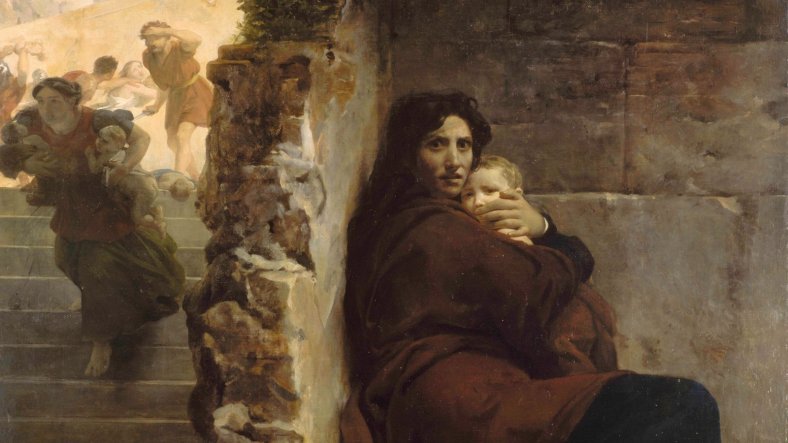
The Magi, who may have been Zoroastrian Astrologers from Persia, had followed a star to Jerusalem looking for the newly born King of the Jews but they made the mistake of stopping by Herod’s palace to ask for directions.  Herod asked them to report back on their way home and tell him where the child was “so I may go and pay him homage.”  But the Magi were warned in a dream that Herod’s intentions were anything but benevolent, so they “left for their own country by another road.”  When Herod saw that he had been tricked by the magi, he was so furious and fearful of being usurped by a baby that he killed all the children in and around Bethlehem who were two years old or under.

How deranged do you have to be, how fearful and insecure do you have to be to murder every single infant and toddler in a small town?    

Fortunately, an angel had warned Joseph about Herod in a dream and the holy family escaped to Egypt.  Jesus, Mary and Joseph became refugees.

Think about that for a minute.  Jesus was a refugee.  

Jesus, Emmanuel, God With Us, Jesus, the Word made flesh through whom all things came into being, Jesus in whom the fullness of God was pleased to dwell… became a refugee fleeing from political violence.

United Nations Statistics[1] tell us that as of the end of June this year, 117.3 million people in our world had been forced to flee their homes due to persecution, conflict, violence, or human rights violations.  Among those, 42.5 million are classified as refugees, meaning they fled to another country.  Another 67.8 million people were displaced within the borders of their own countries.  There are 8.42 million seeking asylum and another 4.4 million stateless people—persons with no nationality and no access to basic rights such as education, health care, employment  and freedom of movement.  What it all boils down to is that right now 1 in every 70 people on Earth has been forced to flee their home.

 According to Refugee Council USA[2], more than 100,000 refugees were resettled in the United States in 2024.  Almost 30% of those refugees, 29,483, were Christians from the 50 countries on the Open Doors World Watch List[3] which are noted for severe persecution of Christians.   Since January of this year, by Executive Order of the President, refugees and immigrants from most of those 50 countries are severely restricted or banned entirely from entering the United States and the Administration is planning to review the status of more than 200,000 who are already here.

Once again, a reminder:  Jesus was a refugee.  And since Bethlehem is a Palestinian city, we in this so-called Christian nation have to face the awkward fact that Jesus, Mary and Joseph would not be allowed to take refuge here in the United States under our current administration’s policies.

Clearly the shadow of Herod and all the Herods since Herod is still hanging over Christmas.  

This story of the magi, foreigners who traveled a great distance to find the child heralded by the stars, and Herod, the despotic king who felt so threatened that he murdered all the toddlers and infants in Bethlehem—this story only appears in the Gospel of Matthew.  The four gospels speak to each other and inform each other, but only Matthew has this story of star-guided faith juxtaposed with murderous malevolence.  

Only Matthew has the story of the holy family fleeing to Egypt as refugees, and I can’t help but think about why Matthew made a point of including this story in his narrative of the birth of Messiah.   I suspect it might be because Matthew is written for a community living in diaspora, a community of Jewish Jesus followers living far from their homeland.  I think we can safely assume that some in that community, maybe most, were refugees who had fled from the violence of the Romans when the legions of Titus destroyed Jerusalem and the temple, the heart of their homeland and the center of their religion.  These displaced people in this refugee community of faith would have found comfort in hearing that Jesus had also been a refugee whose family fled from political violence.  They would have felt an additional bond of common experience with their messiah.

Only Matthew tells us the story of Jesus becoming refugee shortly after his birth.  And, not coincidentally, only Matthew has Jesus, not long before his death, telling us the criteria for the last judgment.  

In Matthew 25[4], Jesus tells us, “When the Son of Man comes in his glory, and all the angels with him, then he will sit on the throne of his glory. All the nations will be gathered before him, and he will separate them one from another as a shepherd separates the sheep from the goats, and he will put the sheep at his right hand and the goats at the left.”   It’s important to note, here, that it is nations being judged.  Not individual persons—at least not in this passage.

Jesus tells us up front the criteria by which our nations are being judged.  The final test, it turns out, is a practicum. “I was hungry and you gave me food.  I was thirsty and you gave me something to drink.  I was a stranger and you welcomed me.  I was naked and you gave me clothing.  I was sick and you took care of me.  I was in prison and you visited me…Truly I tell you, just as you did it (or did not do it) to the least of these who are members of my family, you did it to me.”  The nations that have fed the hungry and brought water to the thirsty, clothing to the naked, health care to the sick, the nations that have welcomed the stranger—these nations inherit the kingdom.  The nations that did not practice these basic caregiving duties of our common humanity are accursed and relegated to the eternal fire prepared for the devil and all his angels.

So, what will be the judgment for a nation that cuts off medical aid to people around the world and even makes it unaffordable for its own citizens?   What will be the judgment for a nation that stops food aid to dependent people in other lands and curtails food assistance for its own citizens?   What will be the judgment for a nation that fills its streets with masked and armed agents who kidnap immigrants and deport them without a hearing or a trial?  What will be the judgment for a nation that closes its doors to refugees who are fleeing from violence and oppression?

I was a stranger and you welcomed me.  Or not.

This jarring story of Herod’s violence contrasts so starkly with the promise of Christmas but it is a reminder that Jesus was born into a world where the only peace was the coercive peace of oppression and violence.  It is a reminder that the fears of Herod and all the Herods since Herod still cast a shadow over the world, a reminder that the authoritarians of the world still use fear and violence to intimidate us into compliance and to deafen us to the voices of our better angels.  

There is a shadow that hangs over Christmas but there is also a light that pierces through that shadow, a light that shines through the darkness of our fears, even though the darkness has never understood it.   Christmas means that hope is born and reborn always and everywhere.  The refugee child fleeing to Egypt carries that hope in his very name.  “You shall name him Jesus,” the angel said to Joseph, “for he will save his people from their sins.”[5]   

May Jesus save us from our sins    and from our fears, which is much the same thing.

May hope, peace, joy and love united in the light of Christ’s love and forgiveness carry us through all the shadows that fall across our days and remind us that, in all things, God is with us.  May we remember that when we welcome the stranger we are welcoming Christ…in Jesus’ name.


[1] https://www.unhcr.org/us/about-unhcr/overview/figures-glance

[2] RCUSA.org

[3] https://www.opendoorsus.org/en-US/persecution/countries/?gad_source=1&gad_campaignid=22299634978&gbraid=0AAAAAqQP2OoSNK2Y9Hy6YyEtzNPjZFa0n&gclid=Cj0KCQiAr5nKBhCpARIsACa_NiM6yxnM8W84_SmibZdQg8KOkMZJDXGSwuA1fjT2DDA4JZNmQQhb9M0aAvVXEALw_wcB

[4] Matthew 25:31-45

[5] Matthew 1:21

Our Down To Earth God

Then an angel of the Lord stood before them, and the glory of the Lord shone around them, and they were terrified. –Luke 2:9 (NRSV)

It’s funny how you can look at something a hundred times or more and then one day someone will point out something you hadn’t noticed and the whole thing looks different to you.  That happened to me a few years ago when a colleague pointed out one simple word in Luke’s Christmas story that had always just flown right by me.

Stood.  That was the word.  Stood.

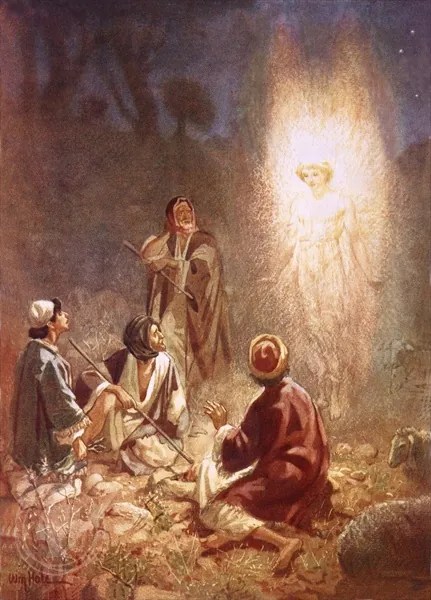
The angel stood before them.  On the ground.

In all the years of reading or hearing this Christmas story I had always imagined this angel and the multitude of the heavenly host hovering in the air.  I think the Christmas carols taught us to picture it that way.  Angels we have heard on high.  It came upon a midnight clear, that glorious song of old, from angels bending near the earth.  

But that’s not what it says in the Gospel of Luke.  The angel stood before them.

If you were a shepherd in a field on a dark night, it would be pretty unsettling to have an angel appear in the air above you making announcements, but at least if the angel is in the air there’s some distance between you—a separation between your environment and the angel’s.  But if the angel suddenly appears standing in front of you, standing on the same ground you’re standing on, shining with the glory of the heavens… well I think my knees would turn to rubber.  And then imagine what it feels like when the whole multitude of the heavenly host is suddenly surrounding you and singing Glory to God.

Angels in the air feels slightly safer than angels on the ground.  Slightly.  If the angels are above, that means that they came from above.  It means that heaven is “up there” somewhere.  It doesn’t mess with the way we understand the spiritual cosmos.  But if the angels appear standing in front of us or behind us or around us, what does that say about heaven?  Could it be that heaven, the dwelling place of God and the angels, is not just “up there” but also here, with us?  Around us?  Could it mean that the angels of God are standing near us all the time and they simply choose not to show themselves?  Or that we’re just blind to their presence? Could it mean that this ground we walk on and build on and live on is also part of the dwelling place of God—so holy ground?

The angels didn’t bend near the earth.  They stood on it.  

We have this tendency, we humans, to want to separate the material from the spiritual, the divine from the physical.  We are such binary, black and white thinkers in a universe that’s full of colors and shades of gray.  We want here to be here and there to be there.  We want to put borders even on the oceans and talk about territorial waters!  We want to draw a clear and well defended line between our country and the country next door.  So it’s not surprising that we’ve assumed that there is a border between heaven and earth.

We seem to be most comfortable when there’s a little distance between us and angels, a little distance between us and God.  That seems to be the way most people talk about it, anyway.  “Put in a good word with the man upstairs,” they say.  And then there’s that song: “God is watching from a distance.” 

But that’s not what Christianity says.  That’s not what Christmas says.  The Word became flesh and lived among us, and we have seen his glory, the glory as of a father’s only son, full of grace and truth.  In him the fullness of God was pleased to dwell.  Not from a distance, but right in front of us.  With us.  As one of us.

We have trouble seeing the presence of God, seeing Christ in creation.  We have trouble seeing Christ in each other.  We even have trouble understanding Christ in Jesus.  How can Jesus be both divine and human?  We struggle to wrap our minds around that idea, so we have a tendency to make him either all human or all divine.  We picture that baby in the manger with a halo, and it doesn’t cross our minds that he might need to breastfeed and be burped and he might need his diapers changed.

Christmas, the mystery of the incarnation, tells us that God is not a bearded old man watching us from the clouds, a deity who is willing to give us what we ask if we are really good or strike us down with a thunderbolt if we’re bad.  That’s not God.  That’s Santa Claus.  Or Zeus.   

God, the Author of Life, the One in whom we live and move and have our being is Love with a capital L.  Love Personified.  And Love is all about relationship.  Christmas is when God, the Love that created the universe, showed up as one of us in order to show us in person just how much we are loved and in order to teach us to how to love each other more freely and completely. 

“We need to see the mystery of incarnation in one ordinary concrete moment,” wrote Richard Rohr, “and struggle with, fight, resist, and fall in love with it there. What is true in one particular place finally universalizes and ends up being true everywhere.”  In other words, God is present everywhere, in, with, and under everything.  Including you.  And me.  And all those people we’re inclined not to like. But to really grasp this idea, we need to first see God fully present in one particular person.  We need to see God in this particular baby.  This human baby

That, in the end, is what Christmas, the incarnation, is trying to tell us.  Christmas is God’s way of teaching us that there never really was any distance between heaven and earth, between the divine and the human, between the spiritual and the material.  Christmas is God proving once again that Christ is in, with, and under all the things—all things—including all the things we think we oversee and all the things we overlook.  Christmas is angels standing on the earth singing to shepherds and surrounding them with the glory of the Lord to remind them that they, too, are spiritual beings immersed in a human experience.  

Christmas is God’s love made visible.  Pope Francis said, “What is God’s love? It is not something vague, some generic feeling. God’s love has a name and a face: Jesus Christ, Jesus.”  I would add that, if you open your heart and your mind to it, God’s love can have your face, too.

Love is vulnerable—and what’s more vulnerable than a baby?  God comes to us as a baby because it’s easy to love a baby.  It’s easy to be vulnerable with a vulnerable infant.

Christmas is homey and concrete and vulnerable.  It enters the world surrounded by the earthy aromas of animals.  It needs to be fed at a mother’s breast.  It needs its diapers changed.  It cries when it’s hungry and shivers when it’s cold.  It spits up a little bit on your shoulder.  It looks out at the world with brand new eyes and tries to see and understand what it sees.  Most of all, it reaches out to be picked up and held close to your heart.  Christmas wants to be loved and to give love.  

Christmas is our down-to-earth God made manifest.  Yes, gloria in excelsis deo, glory to God in the highest, but glory, too, to God on earth where the angels stand to sing to shepherds, because the Spirit of God is in them, too, and God loves them like crazy.  Just like God loves you.

My prayer for you this Christmas is that you would enter deeply into the concrete, down-to-earth, human and divine mystery of incarnation.  May your eyes and ears be opened to the angels who stand upon the earth and minister to all God’s children.  May you come to see Christ incarnate, permeating all creation.  May you come to see that you are always and everywhere standing on holy ground.  May you dispense with artificial borders in your heart, in your mind, and in this lovely world.  And may you come to see yourself and all the others who share this world with you as spiritual beings immersed in a human experience.  Most of all, though, may you know that you are loved. 

May Christ be born anew in your heart this day and every day.  In Jesus’ name.

Tonight’s the Night the World Begins Again

Christmas Eve 

I’ve been thinking about some Christmas  gifts…and by that I mean some of the gifts that Christmas gives us.

It is the season of giving, after all – and yes, it’s over-commercialized—but in the right spirit even that can help us develop a habit and spirit of generosity.  And that is a gift.

The months leading up to Christmas are a good time to practice delayed gratification.  Don’t buy that now…Christmas is coming.   I know I need to practice that a lot more than I do.  So that’s a gift.

For some it’s a change of habit just to be thinking about what to get for other people, thinking more about others—who they are, what they need, what they would like.  It can feel like an obligation but again, with the right frame of mind it can become a healthy, joyful, even life-giving habit.  That’s a gift.

At Christmastime we are intentional about asking people what they want.  That’s an excellent exercise that can help us learn not to be “curved in upon the self.” So, that’s a gift, too.

Christmas, itself, is a gift.  It’s a change of focus.  It comes with some built-in themes that are important.  Giving.  Receiving.  Gathering.  Family.  Peace.  Hope.  Joy.  Love.  Remembering.  Birth.  The Presence of God.  Wonder.

I don’t know about you, but I  really need the gift of Christmas, itself, this year.  It’s been that kind of year.  

I need to be reminded to stop and breathe and think about giving and receiving and gathering and family.  I need time to stop and remember.

I need to let words like hope and peace and light fill up my soul for awhile.  

I need a time to stop and listen to songs about beauty and joy and angels and promises fulfilled…and God showing up in surprising ways and surprising places.

I need the wonder of it all.

I need the songs.  That might sound strange for me to say since I can’t really hear them anymore, but I remember them—every note every word and even the harmonies. I may not hear them with my ears anymore, but I hear them perfectly in my mind and in my heart.  And I need the songs and carols… because the music that still lives in my heart heals me.  It rekindles my hope and my joy and my faith  faster than words alone can ever do.  “Those who sing pray twice,” said Martin Luther.  

Do you have a favorite Christmas song or carol?  Is there one—or maybe there are several?—that touch you in some particularly powerful way?

There are a lot of Christmas songs and carols that I dearly love and I listen to them over and over and over again.  But there’s one Christmas song in particular I keep coming back to these past few Christmases. And this year, especially, I’ve been listening to it—thinking about it—a lot.  In fact I’ve been listening to it off and on all year long.

It’s twenty years old now—it came out in 2005, but by Christmas Song standards it’s almost brand new.  It’s called Better Days by the Goo Goo Dolls, written by John Rzeznik.  Yeah, I know.  Goo Goo Dolls.  Silly name, but a great band.  And a powerful song.  Listen to these words:

And you asked me what I want this year

And I try to make this kind and clear

Just a chance that maybe we’ll find better days

‘Cause I don’t need boxes wrapped in strings

And designer love and empty things

Just a chance that maybe we’ll find better days

Better days.  When all is said and done, isn’t that what we all want?  For ourselves, for our families and friends?  For….  Everyone?  Better days.   

I need some place simple where we could live

And something only you can give

And that’s faith and trust and peace while we’re alive

Those are some pretty good gifts we can give to each other.  For Christmas.  For every day.  And the song is right… we will only have faith and trust and peace while we’re alive if we give those things to each other.  Faith.  Trust.  Peace.  But the song knows we need something else if we’re going to be able to give each other faith and trust and peace…

And the one poor child who saved this world

And there’s ten million more who probably could

If we all just stopped and said a prayer for them

The one poor child who saved this world.  That’s why we’re here tonight.  That’s what we’re here to celebrate.  But we’re also here to be reminded that because of that child, Jesus, Emmanuel, God With Us, we have the example and the power to save the world together.  God came in person to give us what we need so we can give each other the gifts of faith and trust and peace.  

I wish everyone was loved tonight

And we could somehow stop this endless fight

Just a chance that maybe we’ll find better days

The thing is, everyone is loved tonight—loved by God, at least.  But they don’t all know it and they certainly don’t all feel it.  If they did, if they all felt loved, if we all felt loved, maybe it would stop the endless fight that seems to be the curse of the human race.  But the only way for that to happen is if we take the love that God gives us and let it be real and meaningful and visible in our lives.  And then give it to each other in real and meaningful and visible ways.  

Brené Brown said,  “Jesus comes to show us what love looks like.  God is love.  But God knows that if God just comes down and says I am love and I want you to love each other, we’re going to go straight to hearts and unicorns.  We know it’s difficult and we don’t like difficult, so we’re going to romanticize it.  Hearts and unicorns.  But love is difficult.  So Jesus comes to show us how to do it.  He comes to show us that love doesn’t tolerate shaming.  Love doesn’t exclude people because they’re different.  Love reaches out and touches and embraces all the people we don’t want to touch or embrace. Love does the hard work.  Love does the hard things.”

But there’s something else that God shows us about love by coming as a baby, by coming, especially, as a poor baby.  Right at the beginning—Jesus shows us, God shows us, that love is willing to be vulnerable.  Love is willing to let down all its defenses.  

When you think of all the ways that God could have come to us–all the ways we imagined throughout history that God would come to us—most of that imagery is all about power and royalty and thunder and smoke and lightning.  But then God shows up as a baby.  A poor baby.  In a poor country.  A homeless baby.  A migrant born on the road on a journey his parents were forced to take.  A refugee baby forced to flee for his life.

One poor child who saved the world.   

I haven’t told you the refrain that runs through the song yet.  It’s repeated twice between the verses, but the song ends with it, too.  It’s both a promise and a call to action:

So take these words and sing out loud

‘Cause everyone is forgiven now

‘Cause tonight’s the night the world begins again

Take these words and sing out loud.  That’s the call to action.  

‘Cause everyone is forgiven now.  That’s the promise. It’s also another great gift of Christmas.  In this baby, who is God With Us, we are given a chance to start over with a clean slate. 

In this baby, who is love itself coming to us in its most human and dependent and vulnerable form, we can find forgiveness and we can learn to give forgiveness— and if we can forgive and be forgiven, if we can let go of old hurts and forgive others, then we really can give each other the gifts of faith and trust and peace while we’re alive.  And then there really is a chance that maybe we’ll find better days.

So take these words and sing out loud, 

‘Cause everyone is forgiven now.

And tonight’s the night the world begins again.

Tonight’s the night the world begins again.

What’s In A Name?

Matthew 1:18-25

She will bear a son, and you are to name him Jesus, for he will save his people from their sins. – Matthew 1:21

In Act II, scene II of Romeo and Juliet, Juliet is on the balcony lamenting the long-running feud between her family, the Capulets, and Romeo’s family, the Montagues.  Some ancient grudge that no one remembers keeps the two families at each other’s throats.  If you are born a Montague, any Capulet is your enemy.  And vice versa.  Their names are at war.  So Juliet, mooning over Romeo, protests to the night air:

‘Tis but thy name that is my enemy;

Thou art thyself, though not a Montague.

What’s Montague?  it is nor hand, nor foot,

Nor arm, nor face, nor any other part

Belonging to a man.  O, be some other name!

What’s in a name? that which we call a rose

By any other name would smell as sweet;

In one sense, of course, Juliet is absolutely right.  If you took away their warring surnames they would still be basically the same people—a couple of infatuated adolescents making bad decisions.  

In another sense, though, she’s absolutely wrong.  A rose by any other name might smell as sweet, but its name has power.  If I ask you to imagine a flower, you might imagine a daisy or a carnation or any number of other flowers.  But if I ask you to imagine a rose, you will not only see a rose in your mind’s eye, you might even smell its fragrance.  Names have power.

Do you have a nickname?  Most of the time—certainly not always—but most of the time we’re kind of fond of our nicknames.  A good nickname is a kind of gift.  You can’t make up your own nickname.  You really can’t even ask for one.  Nicknames just sort of happen, organically, or spontaneously.  One day friends or family just start calling you Goober or Dobie or Winkie or Duke and it just sort of sticks.

Nicknames are often descriptive in some way or have a story behind them.  And very often the use of that nickname is reserved for a certain circle of people.

My sister has a nickname.  It’s the name we in the family have always called her, in fact I sometimes have to think twice to remember her actual name.  All her close friends from high school and college know her by that nickname, but everybody else just knows her given name.  Her business name.  Not too long ago she was Facetiming with her best friend from high school and one of her work colleagues overheard her friend call my sister by her nickname.  The colleague said, “Oh!  That’s a great nickname!  I’m going to call you that from now on.”   This left my sister in a quandary.  On the one hand, she likes this colleague well enough, but on the other hand, she’s not “that kind of friend.”  She’s not part of the circle that uses that name.  That nickname belongs to a particular group of people from a particular time in her life.  That nickname belongs to family and certain long-standing friendships that are basically extended family.

Names don’t just label us as individuals, they can also socially locate us.  They carry context.  My dad, for instance, was known to everyone in his work life and social life as John or J.B.  But his brothers and sisters and all his nieces and nephews called him Norman or Uncle Norman.  He was always known by his middle name among family and among all the people who lived in the rural area of the Ozarks where he grew up.  But the military and the government and the business world don’t make allowances for people who are known by their middle names.  All the standard forms that you have to fill out at one time or another ask for first name and middle initial.  Those forms essentially renamed my dad.  In doing so, they not only changed his official identity, they changed his self-understanding.

The names people use for us can shape us.  They say something about how we relate to each other, about who we are and what we do in the world.   My wife’s students call her Dr. B.  Her grandsons call her Nani.  Same person, different roles, different contexts.  

Titles are something like nicknames.  If I talk about Professor Studious or Doctor Pokenprobe or Senator Foghorn or Judge Fairheart,  for instance, their titles immediately tell you something about them.  If nothing else, you know something about their role and function in society.  It’s interesting that both officially and in common practice, the title becomes attached to the name and can even function as the name.   

Messiah is a title.  So is Christ—and let’s be clear, Christ is not Jesus’ last name.  Originally Messiah and Christ meant the same thing.  Anointed.  Messiah is Hebrew and Christ is Greek.  

Some of the oldest Greek manuscripts of Mathew 1:18 read, “This is how the birth of Messiah happened…”  These older manuscripts don’t include the name of Jesus at this point, but everyone understood that Jesus is who the writer was talking about.  Ever since Peter’s confession, those who followed Jesus knew him as Messiah or Christ.  The Messiah, the Christ, is Jesus.  When Matthew introduces this story with the title of Christ or Messiah he is not only telling us that this is a story about the birth of Jesus, but that it’s also a story about God’s mission in the world through the person of Jesus and those around him.  It’s a story of how God works through people like us—people with doubts, fears, misgivings, but also hope and grace and a willingness to trust, even if it means suspending disbelief to believe the unbelievable.  The name Messiah, Christ, carries all that weight.

This is how the birth of Messiah happened.  Mary was betrothed to Joseph.  It was named a betrothal, but it was in fact a marriage.  It just hadn’t been consummated yet.  “But before they came together,” Matthew tells us,  “she was found to have a child in her womb from the Holy Spirit.”  Mary is pregnant but she’s a virgin.  And that circumstance gave her a new name.  She will be known forever as Virgin Mary, and just saying her name brings the whole birth story of Jesus to mind.

Because the marriage isn’t consummated, Joseph plans to divorce her quietly and privately so as not to expose her to all the cruelty, ridicule and meanness that she might experience if he were to denounce her publicly.  Certainly it’s his right in these circumstance to shame her and her family along with her—that would be regarded as perfectly righteous and just according to their law, tradition, and culture.  According to the law, she could even be stoned to death—although that was almost never actually done.  But Matthew tells us that Joseph is a just man.  A righteous man.  And now Joseph has another name:  Joseph the Just.  Fortunately for both Mary and Jesus, Joseph understands that there is more to being just and righteous than simply adhering to the letter of the law or meticulously observing cultural traditions.  Joseph understands that real justice, real righteousness requires compassion, understanding and mercy. 

The fact that he is unwilling to expose Mary to public shame says something really touching about his affection for her.  What he decides to do is, in fact, an act of love in its own way.  He decides to divorce her—to release her—but quietly.  Privately.  He doesn’t want to see her punished. 

It’s a good plan.  A grace-filled plan, but before Joseph can act on it, an angel intervenes in a dream and tells him to go ahead with the marriage because the child Mary is carrying was conceived by the Holy Spirit.  So now the unborn child has an additional name, a title:  Holy.

Joseph agrees to proceed with the marriage as instructed.  But the angel wants more from Joseph than just his forbearance.  The angel tells Joseph to name the child.

Naming a child is an act of adoption.  Even before the baby is born, the instruction to name the child creates a new relationship between the boy and Joseph.  Joseph will be his adoptive father.  The baby will be Joseph’s adopted son.

Joseph is told to name the boy Jesus.  Yeshua.  Which means God Saves.  That name will guide his destiny.  That name will define his relationship to all who follow him throughout history.  God saves.  Jesus saves.

What’s in a name?  Identity.  Relationships. History.  Even destiny.  Messiah is the long-awaited liberator who fulfills the hopes of the Jewish nation.  Christ is the savior of all humanity but also the very presence of God in, with and under all things in creation.  Jesus bears in his very name the message that God saves.

But Mary’s child, Joseph’s adopted son, has yet another name, and that name may be the most important one for all of us who long for the presence of God.  Matthew tells us that he will be called Emmanuel, which means “God with us.”  

To my mind, there is no name more meaningful, no rose as sweet as that one.  Emmanuel.  God with us.

The Beginning of the Middle of the Story

Matthew 11:2-11; Isaiah 35:1-10; James 5:7-10

Imagine poor John, locked in the dungeon of Herod’s fortress, his fate hanging on the whims of people who are notoriously immoral and impulsive.  Imagine him staring at the stone walls of his cell with nothing but time on his hands.  Time to reflect.  Time to remember.  Time to second-guess both his mission and his memory.  Time to doubt.

Did he really see the Holy Spirit descend on Jesus or was it just a trick of the light dancing on the water?  Did he really hear the voice of God or was it, as some said, only thunder bouncing off the hills?  

He knows he is going to die soon.  He knows that Herodias will find some reason to have him executed.  If at all possible, he would like to put his doubts to rest before that happens. So he sends two of his disciples to find Jesus and ask him:  “Are you the one who is to come, or are we to wait for another?”  

 It’s easy to brush past John the Baptist even though he comes up in our lectionary texts every year at this time.  It’s easy to think of him as a footnote in history, a wild man in the wilderness whose primary purpose was to point to Jesus.  The gospel accounts do tend to skew his story that way, but then the gospels are primarily interested in the story of Jesus, and in that story John is not the central character.

We forget that John, the son of Elizabeth and Zechariah, had hundreds, maybe even thousands of followers, so many that Herod Antipas saw him as a potential political threat.  The Roman historian, Josephus described John as “this good man, who had commanded the Jews to exercise virtue, righteousness towards one another and piety towards God.”  Many of John’s followers remained loyal to him after his death and even today the Mandaeans, an ethnoreligious group with roots going back to ancient Palestine, regard themselves as followers of John the Baptist whom they see as the greatest of the prophets.  

Muslims know John as Yahya ibn Zakariya, and venerate him as one of the great prophets.  John is also revered by people of the Bahai faith and the Druze.  Clearly his call to live a life of virtue, to treat each other with righteousness and generosity and to revere God resonated beyond his role in the gospels.  In the fullness of history, John is much more than just a prelude to Jesus.

I think one reason we tend to diminish John in our Christian traditions is that we come to him very late in his story and very early in the story of Jesus.  We forget that both of them come in the middle of a much, much larger and longer story, a story that began with God making a covenant with Abraham, a story that is carried through times of slavery and exile in Egypt and Babylon.  It is a story of a people who cling to their covenant and identity during times of foreign oppression by Assyria, Babylon, Greece and Rome.  It is the story of hope kept alive by the leadership, visions and prophetic voices of Moses, Jeremiah, Isaiah, Micah, Amos and others, including John the Baptizer.

It is a story of seeds planted as dreams of a better world, a world where creation, itself, is restored and renewed, where “the wilderness and the dry land shall be glad, the desert shall rejoice and blossom abundantly and rejoice with joy and singing.”  This longer, larger story plants the seeds of a vision of healing where “weak hands are strengthened” and “feeble knees made firm,” where “the eyes of the blind shall be opened and the ears of the deaf unstopped” and where “the lame shall leap like a deer and the tongue of the speechless sing for joy.”  These are the seeds of God’s vision for a world where captives, exiles and refugees return home, where migrants find a place to put down roots, where all wanderers find a safe place to “obtain joy and gladness,” a place where “sorrow and sighing shall flee away.”[1]  

This longer, larger story is the guiding vision of faithful generations scattering seeds of peace throughout the world until that much anticipated day when the flower of peace will bloom, that day when “they shall beat their swords into plowshares and their spears into pruning hooks,” when “nation shall not lift up sword against nation, nor shall they study war anymore.”[2]

This longer, larger story is the story of hope always on the horizon.  It is the story of a people waiting for the Anointed One who will inaugurate the fulfillment of the vision.

This is the longer, larger story that John inherits.  John enters the story knowing there is so much that still needs to be repaired before the vision he has inherited can become a reality.  He knows that the thing most urgently in need of repair is the human heart, the human way of seeing, the human way of being, the human way of thinking.  He sees the brokenness of the world clearly.  He sees the ways that those who wield power and authority are complicit in that brokenness.  He feels the anxiety and dissatisfaction of the people who bear the scars of living in that predatory and oppressive brokenness.  He sees the dissonance between the world as it is and the world as it should be.

And then he sees Jesus.  And that hope that was always on the horizon seems closer and more possible than ever before.

John points to Jesus.  But John is not done.  John sees the world, and he tells the truth about what he sees.  He calls people to change, to turn around and go a new direction because a reckoning is coming and the new day is dawning.  He speaks truth to power.  And when he publicly condemns Herodias, the wife of Herod Antipas for divorcing Herod’s brother, when he publicly denounces Herod for marrying his brother’s wife, he is arrested.

Languishing in prison, bedeviled by doubt, John sends his question to Jesus:  Are you the one… or should we wait for another?

Jesus doesn’t answer John with bravado or any kind of self-proclamation.  He simply tells John’s disciples “Go and tell John what you hear and see:  the blind receive their sight, the lame walk, the lepers are cleansed, the deaf hear, the dead are raised, and the poor have good news brought to them.  And blessed is anyone who does not stumble because of me.”  

Jesus is telling John that the things Isaiah foresaw are happening, the signs generations had hoped for are being performed.  Jesus is telling John that in his work the seeds of God’s vision are sprouting and peeking above the soil.  In him the kingdom has begun to arrive.

If you have times of doubt, if you have times when the brokenness of the world seems overwhelming, if you find yourself being punished for speaking truth, remember John.  John had tremendous faith. Among those born of women, said Jesus, there has been no one greater than John.   But when the walls were closing in, even John had his doubts.

If you have times when you wonder if humanity is a lost cause, take a moment to remind yourself that the seeds of God’s vision are still growing and still being planted.  It’s up to us to keep sowing them.  “The farmer waits for the precious crop from the earth,” wrote James, “being patient with it until it receives the early and the late rains.  You also must be patient. Strengthen your hearts, for the coming of the Lord is near.”[3]  

And finally, it’s always good to remember that we don’t know where we are in God’s longer, larger story.  Yes, the world is still broken, but there are signs of repair work in progress if you know where to look, and one of those signs is you and me.  We are partners in God’s work of repairing the world.  And that, alone, is cause for rejoicing.  


[1] Isaiah 35:1-10

[2] Isaiah 2:4; Micah 4:3

[3] James 5:7-10

Advent. The Brokenhearted Season.

“The extraordinary thing that is about to happen is matched only by the extraordinary moment just before it happens. Advent is the name of that moment.” – Frederick Buechner, Advent

Waiting.  It’s about waiting.  It’s about holding your breath as you pause for what’s coming.  It’s about remembering to breathe so you’re awake to see it arrive.  It’s about closing your eyes so you can hold on to the dream of what is possible, what might be.  It’s about opening your eyes to the beauty and pain and joy and sorrow and harshness and gentleness and passion and peace of everything that already is and everything that is about to unfold.  It is the excited pins and needles of anticipation.  It is the queasy uneasiness of suspense. Waiting.  We live in a season of waiting.

“The thing I love most about Advent is the heartbreak. The utter and complete heartbreak.” –Jerusalem Jackson Greer; A Homemade Year: The Blessings of Cooking, Crafting, and Coming Together

Yearning.  Feel the yearning.  Let yourself fall into it for a moment.  Wallow in it for a moment.  Let it break your heart that the world is not yet made whole.  Let it break your heart that the promise is not fulfilled.  Let your eyes well with unshed tears for all the tears shed in this world. Stare hard at the reality that our species seems to forever be a painful work in progress.  Feel the weighty disappointment of our failure to be what God made us to be and balance it on the sharp pinpoint of the promise that we, all of us, feel—the promise of what we could be, the promise of what we’re supposed to be.  Let yourself feel that deep knowing that things are not now as they are intended to be.  

Let it break your heart.  Then understand that it is through the broken heart that God enters the world.  It is through the broken heart that the promise is revived.  It is through the broken heart that the vision of what should be moves forward toward what will be.  It is through today’s broken heart that we see tomorrow’s vision of the world that God is calling us to build together.  It is the light aglow in the broken heart that illuminates the faces of those around us whose hearts are also breaking.  It is in the yearning of the broken heart that we find the Advent of Emmanuel, God With Us.   

 “Advent is the time of promise; it is not yet the time of fulfillment. We are still in the midst of everything and in the logical inexorability and relentlessness of destiny.…Space is still filled with the noise of destruction and annihilation, the shouts of self-assurance and arrogance, the weeping of despair and helplessness. But round about the horizon the eternal realities stand silent in their age-old longing. There shines on them already the first mild light of the radiant fulfillment to come. From afar sound the first notes as of pipes and voices, not yet discernable as a song or melody. It is all far off still, and only just announced and foretold. But it is happening, today.” –Alfred Delp; Advent of the Heart: Seasonal Sermons and Prison Writings, 1941-1944 

Advent. Arriving, but not yet.  Almost.  Get ready.  It’s coming.  It’s on the way.  But we are still in the midst of everything and in the logical inexorability and relentlessness of destiny.  Keep moving toward the moment.  Keep moving toward the encounter.  Keep still in the not-yetness of it all.  

Decorate.  From decoratus in the old poetic Latin that still connects our thoughts and words with those who decorated long before us, who handed down their most important and enduring ornaments.  Decorare – the verb that tells us to adorn, to beautify, to embellish.  From decus—to make fit, to make proper so that we might be ready with decorum.  Decorate your house.  Decorate your heart.  Decorate your language.  Decorate your greetings, your symbols, your understanding.  Decorate your soul. 

And yes, we need to decorate.  Yes, we need to fill the space around us, to fill our homes, our souls, our hearts with brighter things, to see more solid and enduring visions than the everyday shadow parade of destruction and annihilation.  We need to fill our ears with more stirring and touching melodies than shouts of self-assurance and arrogance, we need songs that lift the heart above the drone of lamentation, the weeping of despair and helplessness.  We need to keep moving toward the music and the light.  We need to lift our eyes to that first mild light of radiant fulfillment to come.  We need to fill our ears with the first notes of pipes and voices no matter how faint and far they may seem.  

We need to hum and sing and play the old familiar songs that move our hearts to that softer, readier place where the True Song will be born.  We need to light the ancient candles one at a time to guide our steps down the long corridor of waiting, the pathway of arrival.  We need to bring each flame to the heart until the soul is aglow with the depth of its meaning and power.  

We need to reignite the flame of Hope to show us our way through the numbing fog of sameness.  We need to internalize the flame of Peace to quiet our anxieties and give us patience.  We need to swallow whole the flame of Joy to whet our appetite for the feast to come.  We need to embody the flame of Love to warm us as we journey together, to show us again that we are walking arm in arm, to remind us that our fates are intertwined, to illuminate the purpose of life, to lead us to the Light of the World.

“For outlandish creatures like us, on our way to a heart, a brain, and courage, Bethlehem is not the end of our journey but only the beginning – not home but the place through which we must pass if ever we are to reach home at last.” –Frederick Buechner, The Magnificent Defeat

Arrive.  But understand in your arriving that even after the meaningful journey of Advent we don’t arrive at Christmas.  Christmas arrives to us.  

The Gift comes to meet us on the road to take us to a place we could never attain on our own. We celebrate.  We ponder.  We dance and revel in the laughing lights of Hope and Peace and Joy and Love that carried us and that we carried with us, the lights that guided us to this place.  

We gaze amazed at the Gift before us, almost comically humble and plain, artlessly displayed and wiggling inside its wrappings, laid out on a bed of straw in a manger, and yet more artistically subtle, more beautiful and precious than the Magi gifts of gold, frankincense and myrrh.  And if you take a moment to think about what this Gift really is, what this baby really means to the world and what this baby means to you, in particular,  you may just hear the voice of Emmanuel saying, “Now the journey begins in earnest.  Be not afraid.  I’m coming with you.”

The Song of John

Matthew 3:1-11

Do you know about Wassailing?  Maybe you’ve heard the old Christmas season song that still gets some airplay this time of year:

Wassail! Wassail! All over the town,

Our toast it is white and our ale it is brown;

Our bowl it is made of the white maple tree;

With a wassailing bowl, we’ll drink to thee.

That song originated in Gloucestershire in the 18th century, but the tradition of wassailing in Great Britain goes back to ancient times.

  Most people today associate Wassailing with Christmas Caroling, and indeed there is a very old tradition called House Wassailing that is very much like Caroling.  You probably know the song Here We Come A-Caroling:

Here we come a-caroling among the leaves so green,

Here we come a-wandering so fair to be seen.

That song was originally Here We Come A-Wassailing and sometimes it is still sung that way.

In that old tradition of House Wassailing, the servants and tenants of wealthy landowners or wealthy townspeople would prepare a large bowl of Christmas Punch made from cider or ale and on Twelfth Night, January 5th, the last night of the Season of Christmas, they would gather outside the door of their landlord, sing a song to the good health and prosperity of their lords and ladies, and offer them a cup of punch to drink to their health.  In return, the lords and ladies would give the wassailers gifts of various kinds, fruit cakes, figgy puddings, and maybe even a year-end bonus of a few coins.

The Wassail song was a kind of Christmas blessing which you can still hear in the chorus of the familiar carol:

Love and joy come to you

And to you your wassail too;

And God bless you and send you

A Happy New Year

God send you a Happy New Year.

So, door-to-door Christmas Caroling evolved from House Wassailing.  But House Wassailing arose from an even older tradition called Orchard Wassailing which may have been brought to England by Danish Vikings.

The word Wassail comes from ves heill, which is Old Norse for “Be healthy!”  The Saxon version in Old English was Vas Hael, with the same meaning.  Be healthy. 

In the parts of ancient Britain where fruit trees were grown for producing cider, the ancient Saxons would go out into their orchards during the deep days of winter and sing to the sleeping trees to wake them up and bless them and encourage them to produce good and bountiful fruit in the coming year. 

Our gospel text for this Second Sunday in Advent is Matthew’s version of the story of John the Baptist preaching and baptizing at the Jordan—the well-known “you brood of vipers” text.  It occurred to me that what John was doing in the wilderness by the Jordan was something like Orchard Wassailing—singing the people awake so they could produce good fruit for the coming kingdom.   And since I had the wassailing songs in my head, I began to play with what it might have sounded like if John had actually brought his message to the people in poetry or song.

When John Came A-Wassailing

In the fifteenth year of the sovereign rule of Emperor Tiberius,

a time of great oppression by the ruthless and imperious,

the Song of God fell into John, the son of Zechariah,

and he sang it out so strongly they thought he might be Messiah.

But he said, “No, I am not the one you all have been expecting.

I’m just the voice that sings out where our paths are intersecting.

I’m not worthy to receive him or to tie his sandal thong!

He’s the Maker of all Music.  I sing just one simple song.”

Like a-wassailing in the orchard to wake the cider trees,

the song of John cut through their pride and brought them to their knees.

As he showed them stark reality they began to realize

that the dream of God might now unfold before their very eyes.

So he sang them to the river, saying time was of the essence,

and immersed them in the cleansing flow of mercy and repentance.

His song filled up the wilderness with a tune to cleanse the heart

and wash away pretenses, and make hubris fall apart.

He sang, “Children of the covenant, you children of the promise,

you children of the circumstance and times that are upon us, 

all you questing, anxious seekers, all you folk both awed and flawed,

are you ready to stand naked in the searching gaze of God?

“All you tax-collecting schemers, all you servants of the sword,

all you noble trees and saplings in the orchard of the Lord,

sure, your roots go deep as Abraham and you’re clothed in your tradition,

but that’s not enough to save you on your pathway to perdition.

“O you brood of sneaky vipers, O you children of the snake,

Who warned you of the wrath to come? Who told you what’s at stake?

Did you think that life was something you could skate through or could fake?

Well, my sleeping trees of Zion, it’s time for you to wake.”

Then in dismay the people cried, “John, tell us what to do!

If our heritage means nothing is our fate left up to you?”

He said, “No that’s not in my hands, but it is somewhat in yours,

for the Winnower we’ve waited for is at the threshing floor.

“So now’s the time to change your ways, to make a course correction.

Now’s the time to turn around and go a new direction.

It’s time to change your heart and mind, not out of paranoia,

but because you’ve been immersed in the streams of metanoia.

“So give away your extra coat to the person who is shivering,

and give up half your sandwich to that hungry kid who’s quivering,

Don’t take more than what is rightful, do not lie, extort or cheat,

for the Winnower is coming and he’ll sift your soul like wheat.

“Look, the time has come to bear the fruit of new life and repentance

or you’ll reap the judgment that you’ve sown, you’re shaping your own sentence.

Even now the axe is at the root, even now your options dwindling,

so will you produce good cider?  Or will you be so much kindling?

“For the One who fashions every soul finds a use for each and all.

Will you be the cordial in the cup or the fire that warms the hall?

Will you be the sweet aroma drawing others to the table

or dissipate as so much smoke in a cautionary fable?

“And I know this all sounds frightening—to be assessed, appraised and weighed—

Every one of us has cause to fear, yet I sing, ‘Be not afraid!’

For the one who does the winnowing, the one who does the sifting,

Is the Soul of Grace and Love and Life, the Giver of all gifting.

“And I’m simply here to tell you in this wild and holy place

you have a chance to be made new, a chance to live in grace,

for the one who does the winnowing does not come to condemn

but to glean the seeds of love and good and make them grow again.

“So this song that sounds so ominous, it really is Good News!

for the God of second chances hopes that you will not refuse

to change your heart and mind and ways and show it by your fruits

with more loving and more honest and more generous pursuits.

The Word who will evaluate has not come to condemn

but to find the goodness in your soul and make it shine again,

for the one who does the winnowing, the one who does the sifting,

Is the Soul of Grace and Love and Life, the Giver of all gifting.

_____________

May the candles of Advent—Hope, Peace, Joy and Love—light our way to whole and healthy lives in a whole and healthy world. 

Vas Hael.