The Broken Hearted Season

Steve Beckham's avatarThoughts Along the Way

“The extraordinary thing that is about to happen is matched only by the extraordinary moment just before it happens. Advent is the name of that moment.” – Frederick Buechner, Advent

Waiting. It’s about waiting. It’s about holding your breath as you pause for what’s coming. It’s about remembering to breathe so you’re awake to see it arrive. It’s about closing your eyes so you can hold on to the dream of what is possible, what might be. It’s about opening your eyes to the beauty and pain and joy and sorrow and harshness and gentleness and passion and peace of everything that already is and everything about to unfold. It is the excited pins and needles of anticipation. It is the queasy uneasiness of suspense. Waiting. We live in a season of waiting.

“The thing I love most about Advent is the heartbreak. The utter and complete heartbreak.”Jerusalem…

View original post 1,039 more words

The Keys to Heaven

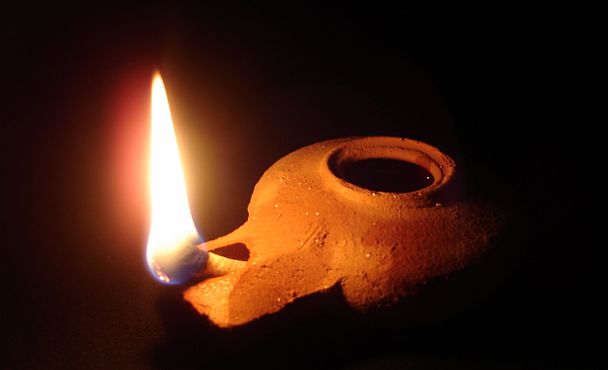
The body of the old man lay stretched out upon the table, prepared according to custom and covered with a shroud.  The priest, who had been gazing out the window, or perhaps deep into his own thoughts, broke from his reverie, stood up, and removed a papyrus scroll from the folds of his robe then moved to the body lying on the table and gently, reverently, lifted the edge of the shroud and took something from the right hand of the old man lying beneath it, and lifted it high in the lamplight for all to see.  Everyone reacted to the familiar object dangled before them.  Some smiled wistfully, a few nodded in recognition, one woman buried her face in her scarf and wept.  It was a plain thing, a simple leather thong suspending ten stones, seven smaller, three larger, each separated from the others by a knot in the leather.  They did not catch the light in any particular way.  They did not glow or sparkle.  There was no mystic aura about them.  But the faithful people in that gathering would not have traded those stones for rubies or diamonds or sapphires or pearls. “The Keys to Heaven,” said the priest.  With care bordering on ceremony he handed the odd artifact to the Deaconess who stood at the feet of the old man’s corpse.  She continued to cradle the leather strip and its stones in her hands so all could see it in the soft glow of the oil lamps.   The priest unrolled the scroll and began to read.

By vocation the priest was the chief reader at a busy scriptorium.  Six days of the week he would read aloud to a phalanx of copyists—reading slowly, distinctly, and loudly enough to be heard at the back of the room yet fast enough to keep up with the demands of the business, to meet its deadlines and keep it profitable.  The qualities that made him so very good at his job also made him an excellent public lector, a role which added to his income.  This talent also served him well, of course, in his role as priest in this small community of the faithful.  But now, as he began to read his dear friend’s last will and testament, he put aside his professional voice and tried to find in himself the deep wells of strength and gentleness that characterized his departed friend; he did his best to summon his friend’s voice for his friend’s words.  This is what he read:

My dear friends, my brothers and sisters, grace to you and peace in the name of the One we follow, who was, who is and who is to come.  Amen.  I pray you know how much you are loved.   I have so very little to leave to you in the way of earthly things.  My little house and my poor purse I entrust to this community.  Perhaps they may be used to benefit a widow or two.  Let the Deaconess administer these things as she is most capable.  Let the tools of my trade go Nathaniel, my apprentice.  I have no other possessions except the Keys to Heaven.  These I bequeath to you all for your common use and good, but I must tell you how I came to have them.

 I think that almost every one of you, most when you were children, but some when you were older, have asked me, “Andreas, what are those stones hanging from your belt?” and I would say, “They are the Keys to Heaven and I am giving them to you.”  Then you would say, “When can I have them?”  And I would say, “When you can tell me how they are made!”  So now, I will tell you their story.

For all the years I have lived among you, you have known me as Andreas the Leatherworker.  That was not always my name.  For that matter, working leather was not always my trade, but that is of no importance.  When I was much younger and full of anger at the world I did some dangerous and stupid things.  One thing in particular was even evil, though I did not think so at the time.  As a consequence, I found myself on the run, hiding from the patrols of soldiers that seemed to be everywhere on the road.  I cut my hair and shaved my beard.  I stole the tunic, mantle and belt of a tradesman while he was bathing in the river and left my very fine and costly clothes in their place.  Then I fastened a sword to my belt and kept on running.

 Three nights later, just at nightfall, I saw a man sitting by a campfire just to the side of the road.  Half mad with hunger and exhaustion, I moved toward him, drew my sword and said, “Give me your food and your money.”  I meant to growl it out in a menacing way but my throat was so parched I must have croaked like a raven.  “We will gladly share our food with you,” said the man, “but what money we have with us is not ours to give.”  I started to move toward him with my sword when his words pierced the fog of my hunger.  We.  He had said “we.”  I blinked, looked again, and could not believe I had not seen them the first time—four other men. Two of them were some small distance behind the man by the fire but were now walking briskly toward us.  Another man was emerging from the brush carrying an armload of wood for the fire, and another with a water skin was just coming up from the stream.  Five men altogether.  Even if I weren’t nearly dead from hunger and thirst I could never take on five men.  My head began to swim, my knees gave out and I fell, unconscious.

 I awakened to find one of the men bathing my forehead with a cool, wet cloth while another was bandaging my arm.  Apparently I had cut it with my own sword when I fell.  The man I had first seen, the one I had threatened and tried to rob, lifted a cup of cool water to my lips but urged me to drink it slowly.  As soon as I was able to sit up one of the men gave me a piece of bread and a piece of dried fish which I devoured immediately without a word.

I didn’t know what to expect next and I was too weak to try to run.  When the big man, the first man I had seen by the fire, picked up my sword I half expected him to kill me with it. Instead he laid it in front of me in the dirt.  “This is yours,” he said, “though I think you might be better off not to keep it.  That’s a Roman Gladius.  A soldier’s sword.  And you don’t strike me as a soldier. I think maybe that sword has already brought you trouble and if I were you I would just bury it here at the side of the road.” 

 I was dumbstruck.  That sword had been nothing but trouble.  That sword and my hot temper were the whole reason I had had to flee for my life. 

 I looked at the big man.  He was smiling at me, and I realized, looking at him, that there was no fear in him.  No anger.  “You must still be hungry,” he said.  “I tried to rob you!” I said, incredulous.  “I threatened you!”  “Yes.  You did,” he said.  “I forgive you.”  “But I…”  I started.  “Let it go,” he said, quietly.  “I have.  What you bind on earth is bound in heaven.  What you release on earth is released in heaven.  I release it.  I release you.  Let it go.”

 I sat staring at the ground for a long time, confused, not knowing what to think. 

I heard him chuckle, looked up and saw him smiling at me.  He leaned over and picked up a smooth agate pebble from the ground, walked over and placed it in my hand.  “Here,” he said. “Keep this.  This is the first Key to Heaven.  Forgiveness.”  “I don’t know if I can be forgiven.” I said. 

His expression became reflective and he gazed into the fire for a long moment. “I felt that way once,” he said at last. “I betrayed my best friend…my teacher…my master.  I betrayed him three times in one night to save my own skin.”  “What happened?” I asked.  “They crucified him,” he said simply.  “But I got away because I pretended that I didn’t know him. Three times in one night someone accused me of being one of his companions and three times I denied it.  And I didn’t think I would ever be forgiven for that.  But he forgave me.  And he helped me forgive myself.  He released me from my sin and he helped me let go of my sin—helped me to stop clinging to it..” 

“Wait a minute,” I said, “I though you said they crucified him.”  “They did,” he said.  “Well then how…when did he forgive you?”  The way he looked at me I could tell he was trying to decide something and it was another very long moment before he said, “That’s another story and if you would like to travel with us I will gladly tell it another day.  For now,” and here he smiled again, “hold on to that little piece of forgiveness and let that be enough for today.”

 And that, my beloved brothers and sisters is how I came to have the first of the Keys of Heaven, the Key of Forgiveness.  Having nowhere else to go and nothing to lose, I became a travelling companion of Petrus, the Fisherman, who taught me the ways of his Master and baptized me into a new life with a new name.  And along the way he gave me the Keys of Heaven and taught me how they are made, or where they can be discovered, so that each of us can have them and carry them with us and unlock Heaven around us wherever we are. 

 The first key is Forgiveness.  The Second is Gratitude.  The third is Generosity.  The fourth is Compassion. These four open your heart to the world God made, the world God loves.  The fifth key is Integrity.  The Sixth is Thoughtfulness.  These two open the soul and mind to look beyond yourself and deal fairly with all others.  The seventh is Be Not Afraid.  This key gives you the presence of mind to remember that you have all the others at your command and it helps you to use them wisely.

Then there are the three larger keys.  These give the first keys their power.  At the same time, the first keys can unlock the power of these three.  They are Faith, Hope and Love.

 So, my beloved friends, these are the Keys to Heaven.  I hope you can see that I spoke the truth all these years when I said, “I am giving them to you.”  I hope and pray that in my life you saw forgiveness, gratitude, generosity, compassion, integrity and thoughtfulness.  I hope you saw me live without fear.  I pray that you are gathering these keys for yourself by the example of our Master.  May you all continue to grow in Faith, Hope and Love until we are reunited in the Life to Come.

Peace be with you.  I am always your brother,

Andreas

The Broken Hearted Season

“The extraordinary thing that is about to happen is matched only by the extraordinary moment just before it happens. Advent is the name of that moment.” – Frederick Buechner, Advent

Waiting. It’s about waiting. It’s about holding your breath as you pause for what’s coming. It’s about remembering to breathe so you’re awake to see it arrive. It’s about closing your eyes so you can hold on to the dream of what is possible, what might be. It’s about opening your eyes to the beauty and pain and joy and sorrow and harshness and gentleness and passion and peace of everything that already is and everything about to unfold. It is the excited pins and needles of anticipation. It is the queasy uneasiness of suspense. Waiting. We live in a season of waiting.

“The thing I love most about Advent is the heartbreak. The utter and complete heartbreak.” Jerusalem Jackson Greer; A Homemade Year: The Blessings of Cooking, Crafting, and Coming Together

Yearning. Feel the yearning. Let yourself fall into it for a moment. Wallow in it for a moment. Let it break your heart that the world is not yet made whole. Let it break your heart that the promise is not fulfilled. Let your eyes well with unshed tears for all the tears shed in this world. Stare hard at the reality that our species seems to be forever a painful work in progress. Feel the weighty disappointment of our failure to be what God made us to be and balance it on the sharp pinpoint of the promise we, all of us, feel—the promise of what we could be, the promise of what we’re supposed to be. Let yourself feel that deep knowing that things are not now as they are intended to be. Let it break your heart. Then understand that it is through the broken heart that God enters the world. It is through the broken heart that the promise is revived. It is through the broken heart that the vision of what should be moves forward toward what will be. It is through today’s broken heart that we see tomorrow’s vision of the world God is calling us to build together. It is the light aglow in the broken heart that illuminates the faces of those around us whose hearts are also breaking. It is in the yearning of the broken heart that we find the Advent of Emmanuel, God With Us.

“Advent is the time of promise; it is not yet the time of fulfillment. We are still in the midst of everything and in the logical inexorability and relentlessness of destiny.…Space is still filled with the noise of destruction and annihilation, the shouts of self-assurance and arrogance, the weeping of despair and helplessness. But round about the horizon the eternal realities stand silent in their age-old longing. There shines on them already the first mild light of the radiant fulfillment to come. From afar sound the first notes as of pipes and voices, not yet discernable as a song or melody. It is all far off still, and only just announced and foretold. But it is happening, today.” –Alfred Delp; Advent of the Heart: Seasonal Sermons and Prison Writings, 1941-1944

 Arriving. But not yet. Almost. Get ready. It’s coming. It’s arriving. But we are still in the midst of everything and in the logical inexorability and relentlessness of destiny. Keep moving toward the moment. Keep moving toward the encounter. Keep still in the not-yetness of it all. Decorate. Decorate your house. Decorate your heart. Decorate your language. Decorate your greetings, your symbols, your understanding. Decorate your soul—from decoratus in the old poetic Latin that still connects our thoughts and words with those who decorated before us, who handed down their most important and enduring ornaments. Decorare – the verb that tells us to adorn, to beautify, to embellish. From decus—to make fit, to make proper so that we might be ready with decorum. And yes, we need to decorate. Yes, we need to fill the space around us, to fill our homes, our souls, our hearts with brighter things to see, more solid and enduring visions than the shadow parade of destruction and annihilation. We need to fill our ears with more stirring melodies than shouts of self-assurance and arrogance, songs that lift the heart above the drone of lamentation, the weeping of despair and helplessness. We need to keep moving toward the music and the light. We need to lift our eyes to that first mild light of radiant fulfillment to come. We need to fill our ears with the first notes of pipes and voices no matter how faint and far they may seem. We need to hum and sing and play the old familiar songs that move our hearts to that softer, readier place where the True Song will be born. We need to light the ancient candles one at a time to guide our steps down the corridor of waiting, the pathway of arrival. We need to bring each flame to the heart until the soul is aglow with the depth of its meaning and power. We need to reignite the flame of Hope to show us our way through the numbing fog of sameness. We need to internalize the flame of Peace to quiet our anxieties and give us patience. We need to swallow whole the flame of Joy to whet our appetite for the feast to come. We need to embody the flame of Love to warm us as we journey together, to show us again that we are walking arm in arm and our fates are intertwined, to illuminate the purpose of life, to lead us to the Light of the World.

“For outlandish creatures like us, on our way to a heart, a brain, and courage, Bethlehem is not the end of our journey but only the beginning – not home but the place through which we must pass if ever we are to reach home at last.” –Frederick Buechner, The Magnificent Defeat

Arrive. But understand in your arriving that even after the meaningful journey of Advent we don’t arrive at Christmas. Christmas arrives to us. The Gift comes to meet us on the road to take us to a place we could never attain on our own. We celebrate. We ponder. We dance and revel in the laughing lights of Hope and Peace and Joy and Love that we carried with us, that brought us to this place. We gaze amazed at the Gift before us, almost comically humble and plain, artlessly displayed and wiggling inside its wrappings, laid out on a bed of straw in a manger, and yet more artistically subtle, more beautiful and precious than the Magi gifts of gold, frankincense and myrrh. And if you take a moment to think about what this Gift really is, what this baby really means to the world and what this baby means to you, in particular, you may just hear the voice of Emmanuel saying, “Now the journey begins in earnest. Be not afraid. I am with you.”

Dear White People

Dear White Working-Class Persons—especially you White Working-Class Men:

I get to say this because I am one of you. I am white. I’m a Boomer. I’ve worked as a roofer and a liquor store clerk. I’ve harvested wheat in Kansas and tossed hay bales in Arkansas. I’ve also worked in advertising and in academia, and for the last 20 years I’ve been a pastor. That’s right, a clergy person—right now one royally, righteously pissed off and more than a little depressed clergy person. But I’m still the guy who puts new guts in the toilet at home when the parts wear out and the guy who knows how to patch the roof. I’m still the guy who struggles to balance the household budget. I still load up my motorcycle with a tent and a sleeping bag when I have to get away from it all and blow out the cobwebs. So I get to say this because I’m one of you.

Last night you screwed the pooch. Last night you took the final steps down a primrose path that is nothing but dust and feathers. You were led there as deftly as any pied piper ever absconded with the village children. And it didn’t just happen overnight or even during this latest election cycle.

You’ve been played.  For the past 35 years you’ve been listening to a very loud and very skewed story about how awful everything is for you. And yes, I know that things have been tough. Things have changed. The ground has shifted. Jobs have been tougher to come by and they pay less. You’ve got a legitimate beef.  But instead of looking at why all that is happening and what you can do about it and who maybe has some solutions, you just listened to the loud, sad, bad story of punditry which was really nothing more than a lot of finger-pointing in all the wrong directions.

Don’t you get it?  Well, clearly you don’t. It’s all been a big carnival trick of misdirection. All the Rush Limbaughs and Fox News Personalities convinced you that it was those nefarious (it’s a real word, you can look it up) Liberals who were to blame for all your troubles. And you bought their fertilizer by the bagful. And if any legitimate news source tried to give you some actual facts that didn’t agree with the story those windbags were spewing, they taught you to just dismiss it as “Liberal Media.” My God in Heaven, with all the competing information out there you had to choose to be ignorant.

And over and over again while you were memorizing their evil little song about how bad everything is, you let them guide you into making it worse. You let them lead you into electing people whose primary role has been to create schism and dysfunction. You let them pull you by the nose into electing people who manufactured the worst, longest-running war in our history out of nothing but fairy tales in the desert. You let them convince you that the people who were deepest in bed with the lobbyists, big money, big pharma, big oil and all the other special interests were, somehow, the best people to represent you!  You let them lead you into electing people who pulled the brakes and steering out of our financial industry so that they could crash the economy and make you pay for it!

You let them lead you into electing people who brought the whole government of the United States of America to a standstill. You let them tell you it’s a matter of principle, that you have to take a firm stand. Well guess what, compromise is also a principle. You can actually take a firm stand on that, too. Finding common ground is a principle. Finding a common vision is a principle. Opening doors so that everybody has a chance to enjoy those unalienable rights of life, liberty and the pursuit of happiness is a principle. And maybe if you had shut off the Angry Red channels for a week or two you would have heard a few interesting facts about where we stand and a few workable ideas about where we could go from here.

But no. You let them convince you that our government, itself, is at worst evil and at best incompetent. You swallowed their blame story about The President or The Party We Don’t Like. How could you not see how insane that is? Didn’t you study civics? Didn’t you learn about the balance of powers? Didn’t you understand that the balance of powers only works when there’s an effort to actually balance the powers? And didn’t you learn where the ultimate responsibility for all of this really lies? Didn’t you learn that WE ARE THE FREAKING GOVERNMENT??? Oh…you didn’t? Well that explains a lot.

So you let them make you angry. You let them take that cold little trickle of fear that everybody feels from time to time in our ever-changing world and convert it into a gleeful little flame of self-righteous anger. You let them take all the things that make you nervous—your discomfort with people of color, your discomfort with immigrants, your discomfort with different religions, your discomfort with LGBTQ people, your discomfort with women in positions of leadership, you discomfort with freakin’ CHANGE which is simply a fact of life—all your myriad little discomforts—you let them play on all those anxieties like a fiddle until they had you dancing down their lane right into the voting booth. And there you voted your fears instead of your hopes.

Don’t you ever ask yourself who wants you to believe what and why? Don’t you ever stop to think about the crap you’re hearing through your radio and TV and social media and ask who those pundits are working for and what’s their agenda? I’ve got news…your well-being is not their top priority.

But you followed them. Boy did you follow them. And this time they were led by the greatest showman since P.T. Barnum. Remember him? He’s the guy who said, “Nobody ever went broke underestimating the intelligence of the American People.” Yep. Last night you elected a showman. And face it, when all is said an done, that is all Donald Trump actually is. He sure isn’t a successful businessman, although he plays one on TV. He sure isn’t a family man, unless your idea of a good family man is a guy who blows through wives like candy and makes salacious comments about his own daughter. He sure isn’t a paragon of moral virtue. Do I even have to cite examples of how much he is NOT that? And for all his buddying up to the Fundagelical Religious Right, he sure as hell doesn’t look or smell much like a Christian to me. Yeah, I know. Judge not. I’m just saying, if I was his pastor, we’d have some words about the Word.

No, when all is said and done, Donald Trump is nothing more than a showman. He is P.T. Barnum writ larger than Barnum ever dared to portray himself and that’s saying something. Last night all y’all elected a huckster. A showman. I hope you like the show. The previews give me nightmares. May God forgive us all for electing entertainment over substance.

Make a Wish

Make a wish—

If you could make one wish, not for yourself, but for the world, what would it be? If you could make one wish for your significant other, your spouse, your kids, your grandkids, all your friends and neighbors and family, for your town, for your state, for your country, for the world—what would it be? What would you wish for?

How many of you would wish for Peace? That’s a pretty good wish. I think that’s what most people in the world want. Almost everybody wants to live in a world where we don’t have to worry about violence erupting around us at any moment. There aren’t too many people who actually enjoy conflict, and those who do usually end up getting some kind of professional help or incarceration, whichever comes first—although some seem to go into politics. A good debate is okay. Fighting not so much. Sometimes opposition can help us sharpen and clarify what we’re thinking or planning, but opposition can be friendly. It doesn’t have to disintegrate into aggression. Competition has it’s benefits. It can bring out the best in us, it can even be fun when you know it’s part of a game. But it’s pretty destructive as a lifestyle. Debate, opposition, competition, they all have their place but they can all too easily degenerate into conflict if we don’t learn how to rein them in. And we have to rein them in if we’re going to have peace.

What does it take to make peace? What does it take to remove the seeds of conflict? If you’re going to wish for peace, aren’t there other things you need to wish for first?

If you want peace, wouldn’t you first have to wish away greed? Wouldn’t you have to eliminate coveting? Wouldn’t you have to find a way to short-circuit the human tendency to always want more, even if it means that someone else gets less? Wouldn’t we have to find a way to fill that endlessly hungry place in the human heart that never feels like it has enough? Wouldn’t you have to remove the desire to keep score by means of money and possessions and status symbols? Wouldn’t you, in fact, have to eliminate the desire to keep score at all? And wouldn’t you need to find a way to take away the fear of running out of money before you run out of life?

And what about Tribalism? Wouldn’t we need to wish that away if we’re going to have peace? How about our tendency to be fiercely territorial? Wouldn’t we have to tone down nationalism? Wouldn’t we need to develop a healthier kind of patriotism, pride in our country that’s rooted in a deep respect for all that’s good and reveres the price that others have paid to create and sustain and maintain that goodness but at the same time a patriotism that isn’t blind to our faults and defensive about our shortcomings? And wouldn’t we need to open our eyes to what’s good and worth celebrating in other countries and cultures, in other histories? Shouldn’t we wish for all that if we’re going to wish for peace?

For peace to happen, what would we have to do with religion? Wouldn’t every religion have to dial back their tendency to insist that they’re the only ones—that we’re the only ones—who get it right, who understand God, who really get Jesus? Wouldn’t we have to learn to find some peace in our own ranks with the idea that our voice is a valuable and important instrument in the symphony, but it’s not the only instrument playing the music of heaven? Wouldn’t we all, for the love of God in whom we live and move and have our being, for the love of God who is among us and within us and beyond us, for the love of God who transcends all knowing and yet is more intimate with us than our most dearly beloved fellow passengers on this earth—shouldn’t we learn, for the love of God, to practice some sincere humility in our God talk? Shouldn’t we wish for understanding and cooperation between religions if we’re going to wish for peace?

To have peace, wouldn’t we have to first get rid of every last vestige of racism so that nobody feels put upon simply because of their color? Wouldn’t we have to acknowledge the existence of our own latent or not-so-latent bigotries?  Wouldn’t we all have to purge ourselves of all those lingering internal voices and habits and conditioning that want to assert that some people are better or even more human than others simply by virtue of the color of their skin?  Wouldn’t we have to acknowledge that some of us have blithely and blindly lived lives of privilege simply because of the color of our skin while others have had to develop stringent habits of caution for the same reason in another color?  Wouldn’t we have to take a hard look at the painful history of racism and not simply suppress it deep in our collective psyche if we want to be healed of it? If you want to have peace, wouldn’t you have to wish away all those ugly words we have used to describe each other when the other doesn’t look like us? To have peace, wouldn’t we have to wish for something the opposite of color blindness—a what?—a celebration of color? a gratitude for color? a love of color in every shade of humanity? Shouldn’t we wish for that if we’re going to wish for peace?

If we really want peace, if that’s our deepest, truest wish, wouldn’t we have to first wish away sexism and paternalism and patriarchy and every other ism and archy that wants to maintain systems in which half the human race has more value, more power, more rights, more freedom than the other half simply because of gender, as if that’s some kind of accomplishment? If we really want peace, doesn’t it mean that we have to discard archaic and primitive structures of our societies and cultures and religions that not only have outlived their usefulness, but that were, in fact, never really useful at all, structures that evolved simply because one half of humanity was generally more capable of physically dominating and subduing and forcing its will on the other half? Isn’t it time, for the sake of peace, for us to take a step above our cousins the chimpanzees in this particular matter? If we really want peace, should we not wish first for real parity between the sexes?

And doesn’t our endless focus on differing sexualities undermine our quest for peace? Doesn’t the fact that someone is always ready to hate or censure or exclude or diminish someone else because of who they are attracted to or who they love or even because they are still trying to understand who they are kind of get in the way of peaceful coexistence? Aren’t we all children of God even if some have different love interests? Just because some men wandering through Judea 4000 year ago found certain things distasteful, are we bound to their prejudices forever? They also didn’t care for shrimp, barbequed ribs and pulled pork and we seem to have got past that okay. So wouldn’t it be a step toward peace if we could all just stop worrying about sexuality and realize that in God’s creation it seems to come in a variety of flavors?

If we’re going to wish for peace, wouldn’t it make sense to also wish that there would not be so many weapons at large in the world and that they were not so readily at hand?

If we’re going to wish for peace shouldn’t we first wish away hunger and homelessness? Don’t people fight for food and shelter?  Wouldn’t you be tempted to if you didn’t have it? If we’re going to wish for peace shouldn’t we first wish for health and healthcare? And should we not wish for equal access to systems and medicines and technologies that heal and sustain life? If we’re going to have peace, shouldn’t we eliminate the possibility of people ruining their financial health just to maintain their physical health?

If we’re going to wish for peace, shouldn’t we first wish for justice? When the people are chanting “no justice, no peace” in the streets, isn’t it more than a slogan?  Isn’t it a prophetic voice calling us to make the rough places plain and the crooked straight so that peace has a straight and easy pathway to our hearts, our homes, our communities, our nation and our world?  If we’re going to wish for peace, don’t we first have to wish for equity and fairness and level playing fields? If we’re going to have peace, don’t we first need to eliminate injustice and replace it with restorative justice? In fact, isn’t justice the one word that encompasses everything we need to have peace?

Of course, there is another way. You can simply eliminate everyone who doesn’t see things the way you do. You can eliminate everyone who doesn’t look like you or think like you or worship like you or vote like you or love like you or contribute as much to society as you think you do, or isn’t the same sex as you, everyone who you think is competing with you simply because they want the same basic necessities that you want. In the end, if you’re really diligent, you would, in fact, eliminate everyone who is not you.

How peaceful would that be?

A Channel of Peace

Lord, make me an instrument of your peace.The Prayer of St. Francis

We are crossing the equinox once again. This is the time of year when we get busy again. The schedule shifts back into high gear. Meetings and classes resume. Choirs starts up again. Certain dates loom large on the calendar. Reformation. Advent. Christmas. Election Day. We begin to cram more things into less time and, while there’s a certain kind of comfort in all the momentum, there’s also the increased anxiety that comes from a fuller calendar. “Anxiety is the garden in which sin grows,” said St. Augustine, and it’s easy to see why. This year, especially, with all the violence that has filled the news and with an acrimonious election cycle building to a climax, anxiety seems to be washing over our world, our nation, and our communities in waves. “Do not be afraid, little flock, for it is your Father’s good pleasure to give you the kingdom,” says Jesus (Luke 12:32). I don’t know about you, but I find myself praying more fervently than ever, “Your kingdom come on earth as it is in heaven.”

Where there is hatred, let me sow love; where there is injury, pardon; where there is doubt, faith; where there is despair, hope; where there is darkness, light; where there is sadness, joy.

 Much as I would like for God to hurry up and simply give us the kingdom, it seems to me as I look at the long sweeps of human history that God has been giving us the kingdom all along, making God’s divine rule a reality on earth as it is in heaven in a very slow but inexorable process. Oh…so…slow, this process—more than two thousand years in the making so far. And it’s been precarious every step of the way. That’s because God, in God’s wisdom, knows that the systems by which we operate—the systems that tend to create winners and losers, insiders and outsiders, the systems that encourage us to see life as competition rather than collaboration—the systems of the world won’t be transformed into something that benefits everyone until the people of the world are transformed. God knows that if the divine values of love, joy, peace, patience, kindness, generosity, faithfulness, gentleness, and self-control were simply imposed on us they would be brittle and false; they would crumble and leave cynical bitterness behind. But when this fruit of the Spirit grows in each of us organically and naturally, when we cultivate it in our internal life it gives us a resilience and strength that enables us to meet the nastier currents of our time with deep-rooted grace. When antagonism, depression, conflict, impatience, meanness, stinginess, faithlessness, violence, and self-indulgence are abroad in the land we, as followers of Jesus, must stand against them, but we must draw from the deep wells of grace, love and truth in doing so. When the voices of misogyny, bigotry, racism, separatism, and scapegoating are loud and strident in the land, we who are disciples of Jesus must, as gently as possible but as firmly as necessary say No. That is not the way forward. That is not who we are called to be. That way lies dystopia—that road leads to hell, not heaven. “Beloved, whatever is true, whatever is honorable, whatever is just, whatever is pure, whatever is pleasing, whatever is commendable, if there is any excellence and if there is anything worthy of praise, think about these things.” (Philippians 4:8)

O, Divine Master, grant that I may not so much seek to be consoled as to console, to be understood as to understand, to be loved as to love. For it is in giving that we receive. It is in pardoning that we are pardoned. It is in dying that we are born to eternal life.

 Christ tells us that we are the light of the world and that idea is affirmed throughout the Scriptures. “For once you were darkness but now in the Lord you are light. Live as children of light.” (Ephesians 5:8) The work we do together, the thinking we do together, the lives we live together are God’s antidote to forces that would divide us and set us at each other’s throats. As we cross this Autumnal Equinox, as the days grow shorter and the nights grow longer, it’s easy to feel sometimes as if the darkness is winning. But we are children of light; we have the light within us and as the nights grow colder the light and love of Christ can keep our hearts warm if we remain conscientious and faithful in gathering together.

“Let us consider how to provoke one another to love and good deeds, not neglecting to meet together, as is the habit of some, but encouraging one another, and all the more as you see the day approaching.” (Hebrews 10:24-25) We gather together in all kinds of congregations.  We gather together in our places of worship.  We gather together, often spontaneously, in like-minded communities in social media.  We gather together in community events.  The important thing for us to remember as we gather, though, is that “provoking” each other to love and good deeds should be the highest priority.  It’s so easy to simply form echo chambers for our biases and pre-conceived ideas, but if that’s all we’re doing it would probably be better if we didn’t see each other so much, online or elsewhere. There is already more than enough acrimony, bigotry, and mutually reinforced deafness bouncing off the walls of the world without us adding to it.

“Be quick to listen, slow to speak, slow to anger; for your anger does not produce God’s righteousness.” (James 1:19-20)  I’m thinking of getting that tattooed on my right forearm where I’ll see it all the time.  My anger does not produce God’s righteousness.  On the contrary, when I release it into the blogosphere or let it bounce down the labyrinths of social media it simply adds to the strident blare that deafens us to each other.  The light of compassion, grace and honesty can illuminate and bring clarity to the dark corners of our collective psyche, but the glare of anger and opposition simply blinds us to each other.

I’m writing all this to myself  more than to anyone else.  I’ve needed to give myself a good talking-to for a while now.  This political season has not always brought out the best in me.  I have a tendency to do some of my most exquisitely pointed and logical writing when I’m good and pissed off.  Anger is my pony and I tend to ride that baby till it drops. I need to remind myself that “if I have prophetic powers and understand all mysteries and have all knowledge, if I have faith to move mountains but have not love, I am nothing.” (1 Cor. 13:2) My anger does not produce God’s righteousness.  There’s a time for anger.  It is sometimes a useful and necessary tool.  Sometimes.  But it’s not a safe place to live, and I, for one, have been spending far too much time in Angryland.  When your eyes adjust to the glare you begin to realize that it’s really a very dark place

“You are the light of the world. A city built on a hill cannot be hid. No one after lighting a lamp puts it under a bushel basket, but on the lampstand and it gives light to all in the house. In the same way, let your light shine before others, so that they may see your good works and give glory to your Father in heaven.” (Matthew 5:14-16)

Now is the time. Let your light shine.  Make me a channel of your peace.

(Written 9/16/2016, revised 10/5/16)

The Gospel According to Steinbeck

steinbeck_green_crop

“We don’t take a trip, a trip takes us.” – John Steinbeck, Travels with Charley

We parked our motorcycles at the curb in front of the John Steinbeck Public Library in Salinas and paused a moment to get our bearings. We had meant to stop at the Steinbeck Museum for our afternoon break, but Pastor Dave, the only one of us three motorcycling pastors who had his phone mounted on his handlebars and Bluetooth connected to a com unit in his helmet had entered a little bit of misinformation into the guidance system. So there we were at the library. Not at the museum. “Let’s walk,” said Dave. “It’s only a few blocks and it will be good to stretch our legs.” So, carrying our helmets, jackets draped over our arms, off we went. For a few blocks. Very. Long. Blocks. And more than a few. Or maybe it just felt like that because our footwear, ideal for long miles on motorcycle foot pegs was a little less well-adapted for city hiking. And yet, because we were on foot we saw the town differently than if we had simply motored through it.  The buildings stood out, each proclaiming both its individuality and the timeless, simple elegance of a bygone era.

 “Try to understand [each other]. If you understand each other you will be kind to each other. Knowing a [person] well never leads to hate and almost always leads to love.” –John Steinbeck

If you ever find yourself near Salinas with a little extra time on your hands, the Steinbeck Museum is worth every minute  you can spare. I confess that I have not read much of his work beyond what was required in high school. I have seen a few old movies adapted from his works or written by him for the screen, but it has been so long ago that I had forgotten, if I ever knew, just how much impact he had on this country. To walk through settings that evoke both the scenes of his life and work as well as the decades and social conditions of the time while surrounded by quotes from his writing and well-selected video clips of film and stage scenes from his pen was a powerful and moving experience. I learned long ago that the Word of God can come to us in unexpected ways and through unexpected voices. I was reminded once again that one persistent, prophetic person whose eyes are wide open, who is really thinking about what they see and why they are seeing it, a voice who is not afraid to name both the injustice and the beauty of the world can make a difference, can nudge the slow tide of transformation in the direction of God’s vision for us all.

“But the Hebrew word, the word timshel—‘Thou mayest’— that gives a choice. It might be the most important word in the world. That says the way is open. That throws it right back on a man. For if ‘Thou mayest’—it is also true that ‘Thou mayest not.” –East of Eden

Life is a journey. That little chestnut is such a cliché that we tend to file it under the pile of overdue bills in the unsorted stacks of “things we’ll deal with later” in the cluttered corners of our souls. Cliché or not, it’s still true, and sometimes it takes an actual journey to remind us of that truth. We make choices or we don’t—which is also a choice. We pay attention or we don’t. We follow the map or just follow the road we’re on because we’re not sure where we’re going anyway. And even if we’re very careful and sure of our route the truth remains: “We don’t take a trip. A trip takes us.” Stuff happens. People say things. People do things. We respond. Sometimes our responses are good and appropriate. Sometimes not so much. Sometimes we stand firmly in the life and love and light of Christ. Sometimes in our own shadows.

“I believe that there is one story in the world, and only one. . . . Humans are caught—in their lives, in their thoughts, in their hungers and ambitions, in their avarice and cruelty, and in their kindness and generosity too—in a net of good and evil. . . . There is no other story. A man, after he has brushed off the dust and chips of his life, will have left only the hard, clean questions: Was it good or was it evil? Have I done well—or ill?” –East of Eden

 “Be perfect as your heavenly Father is perfect,” said Jesus in Matthew 5:38, except that he probably didn’t intend to say that at all, at least not in the way we tend to hear it. Walter Wink in his book Naming the Powers points out that in both Hebrew and Aramaic there is no such word as “perfect” as in flawless. Even the Greek word which gets translated as “perfect” was only very rarely used to mean flawless. In all three languages the word that gets translated as “perfect” really means “whole” or “complete.” Be whole as your heavenly Father is whole. Be complete as your heavenly Father is complete. Be the person God made you to be. Have integrity, be consistent, be good, be generous and loving, be forgiving, but don’t delude yourself that you can ever be flawless…at least not in this life. Doesn’t that make more sense? How much evil has been perpetrated by people trying to obtain or enforce some kind of externally defined “perfection?” How many people have twisted their own souls out of shape by trying to be flawless in a world where flawlessness is a self-righteous trap?

“And now that you don’t have to be perfect, you can be good.” –East of Eden


A Nation Possessed

Last week was very difficult for me, as it was for a great many of us. I get up early on Sunday mornings, so the very first thing I saw when I turned on my computer at 4 a.m. was the news of the massacre in Orlando. It was still an unfolding story when I saw it; the body count was still being estimated. I confess that I was at a loss as to what to do with that horrible news at that early hour.

For a number of reasons I didn’t mention Orlando in worship that morning. The biggest reason was that I was pretty sure that few, if any, of the people attending would have heard the news yet and I didn’t want such horribly shocking news to cast a pall over worship and especially not over our farewell to two much-loved members who were moving across the country. Also, I needed time to process it before trying to deal with it pastorally and theologically.

By Monday morning Orlando was the stark lens through which I was seeing the whole world. I was filled with a deep sadness tinged by more than a little anger. In an effort to shift gears I clicked over to read a sermon written by my friend and colleague, Pastor Jennie Chrien who serves in Oxnard.   Her sermon was on the same lectionary text I had preached on the day before but she had taken a very different approach from mine. In addressing the Gospel of Luke’s account of the woman who washes and anoints Jesus’ feet (Luke 7:36-8:3), she had focused on the moment when Jesus turns to Simon the Pharisee and says, “Do you see this woman?” From that simple question Jennie had built an eloquent, powerful and moving sermon.

That important question, “Do you see?” wouldn’t leave me alone, jangling up against the ragged wound of Orlando as I turned my attention to the Gospel text for the coming week, the story of Jesus’ encounter with the wild, demon-possessed Gerasene man running naked among the tombs (Luke 8:26-39). I was also remembering anew the horror from almost exactly a year before when a crazy young white supremacist murdered 9 African Americans after sitting through Bible study with them.

Do you see? The question still hangs in the air.

As I read the Gospel for the week with all these things echoing in my heart, I realized that we, the good old US of A, we are the demon-possessed man. We are the man made crazy by fears and anxieties and bigotry and scapegoating. We are the man made crazy by blind rage and unreasoned hatreds.

We are the man with a hopelessly divided mind, made bipolar and schizophrenic by a cacophony of opposing inner voices—entrenched political parties with no common ground—conservatives vs. liberals and ne’er the twain shall meet on any common ground of common sense, putting our party identity or our ideology ahead of everything else that’s supposed to define us, making even our faith subservient to our chosen place on the ideological spectrum. We are so blinded by the ideological lenses we wear that we see only what we’ve decided in advance that we want to see. And since our biases rarely completely align with or truly resonate with the Gospel we hear and profess, our cognitive dissonance creates the first degree of our madness.

Do you see? Do you really see?

Oh, we have our moments of clarity but then the rage wells up in us and we explode in violence.

For most of us it’s just a violence of rhetoric and attitude, but it opens the door and for those who would turn it into a horribly tangible violence of death and destruction. Even among the most enlightened among us, our racism or our discomfort with sexualities that are different from our own our anxieties about those other religions—all these things creep out in unguarded words and give permission to the violence that is always waiting to happen. We breed the craziness.

Do you see?

We cloak our prejudices in our religions. We project our own craziness, our own fears and anxieties and hatred onto the most vulnerable and marginalized then drum up a sacred text or two to support our bigotry and give us permission to treat them horribly.We are so blinded by our own interpretation of our religions that we can’t see children of God standing right in front of us.

Do you see? Do you see that more than a little of our craziness comes from being caught in the middle of an epic struggle between love and hate?

Do you see that if you’re not actively and passionately on the side of love then you are at least passively on the side of hate? Do you see that if you are not generating light then you are opening the door to darkness?

Do you see that we are not just the crazy man among the tombs? Do you see that we are also the craven townspeople afraid of our own shadows. We recognize our own craziness and try to lock it up, to bind it with chains but we know, deep down that that’s not going to work.

Do you see that even when God works a miracle and restores one of us to our senses we respond with more anxiety because that is just so different from our usual experience?

Do you see a way out of all this?

Do you see how Jesus sees? Can you see the way Jesus sees? Can you put aside your politics, your ideology, your biases and prejudices, the less savory voices of your childhood, your inclination for self-protection, your fear of the “other,” your anxiety about a constantly changing world—can you put aside your own demons long enough to see the person in front of you?

Do you see how Jesus sees? Do you see that Jesus doesn’t see a prostitute washing his feet but a woman beaten down by the world who has had to make horrible choices in order to survive? Do you see that Jesus doesn’t see a crazy man running amok among the tombs but a human being bedeviled and enslaved by the legion craziness of the world?

Do you see that in Christ we are all children of God through faith, that in Christ there is no longer Jew or Greek, slave nor free, male or female, gay or straight or trans or bi, us or them?

Do you see that Jesus is our common ground even with our Muslim brothers and sisters? Yes, we understand Jesus very differently, but he is a central voice in both or our traditions and if we’re ever going to find peace with each other, Jesus, not Abraham, is our most likely common ground.

Do you see? Do you see that we are all going to have to learn to see differently?

No, we can’t afford to be stupid. No we can’t afford to be blind to real threats. But do you see that we are going to have to first recognize and deal with the real threats that arise from our own hearts and minds and souls?

Do you see that we’re going to have to stop listening to all the voices that divide us and pit us against each other? Do you see that we’re going to have to switch off the news channels and radio voices and web feeds and political voices that want to tell us how awful those “others” are, who want to tell us that “they” are not the real “us”?

Do you see that we’re going to have to really listen to Jesus—not the Old Testament—not even Paul, but Jesus—if we’re ever going to be freed from our own demons, our own contagious craziness?

Do you see that we are all of us, each of us, going to have to have at least one “come to Jesus” moment if we’re ever going to be freed from our demons?  Or to put it a more scriptural and Lutheran way, do you see that we are all, each of us, going to have to take off the lenses of our preconceptions and put down our guard long enough so that Jesus can come to us and cast our demons into the sea of God’s love?

Do you see? Can you see? Do you see that love—the love of Christ, the love exemplified and perpetually renewed by Jesus whether you know that’s where it comes from or not, is our only hope of ever being able to sit with each other calmly and in our right minds?

Do you see?

I Can Read it Myself. Sort of.

Every God-breathed writing is also useful for teaching, for reproach, for correction and restoration, and for instruction in righteousness and justice so that the person of God may be completely equipped for every good work. – 2 Timothy 3:16, (my translation)

“I have my own Bible and I can read it myself,” said the man, a little heatedly. “I don’t need anybody to tell me what it says.” Much as I wanted to respond, I knew it wasn’t the right moment. That discussion would have to wait for a calmer time. Besides, I knew exactly how he felt. I remember feeling that way, too.

When I first went to seminary I thought I was pretty darn well prepared, at least in the important qualification of Knowing My Bible. In 1980 I had worked as a line producer on the team that recorded and produced Zondervan’s NIV translation of The Bible for distribution on cassette. We would start recording the narrator at 6:00 a.m. Mid-day I would edit the tapes, cutting out mistakes and outtakes. In mid-afternoon we often recorded actors from the South Coast Repertory Theater voicing different characters in the text. I did some of the voice work, too. In the evening, more editing, then mixing with sound effects and music. Often we worked until midnight. Many nights I simply slept at the studio so I could start the cycle all over again at 6 the next morning. For nine months I was utterly immersed in the Bible. Genesis through Revelation. So when I entered seminary in the fall of 1992, I Knew My Bible.

I knew my Bible. Well, I knew that Bible, the NIV—and that was what set me up for my first shock in my first class on my first day at seminary. We were required to used a different translation! We were required to use the NRSV as our primary Bible, but also to use it in reference to other selected translations, commentaries and lexical materials. Not only that, but, at least in Dr. Victor Gold’s Old Testament class, the NIV was specifically NOT allowed. This did not sit well with me. When I asked why, he stated that there were several reasons and that he hoped that by the time I completed his class I would be able to answer that question for myself. Then he picked up my copy of the NIV from my desk, thumbed through a few pages and read from the forward, “One of the goals of this translation team was to adhere as strictly as possible to the traditional interpretation of the text.” The traditional interpretation of the text. “That’s code,” he said, “for the King James Version, and the King James, for all its poetic grandeur, is in many respects a very poor translation of the original texts.”

I thought I knew my Bible. I thought I could read it myself and didn’t really need anyone to tell me what it said. I was just beginning to learn how little I really knew. It was more than uncomfortable. Sometimes I felt something akin to anger as this thing I loved so much, this hard-won familiarity with the text in which I had taken so much pride and in which I had found some necessary self-assurance as I embarked on this adventure in seminary education was dismantled piece by piece to reveal a chasm of ignorance.

Thank God for my professors, my teachers, who managed to humble me without humiliating me so that they could spark a hunger for a deeper knowledge and more complex and meaningful relationship with the Bible and, more importantly, the God we encounter in its pages. Thank God for Bob Smith and Everett Kalin who taught us to read and translate the ancient Koine Greek of the New Testament and opened our eyes to myriad translation choices that must be made in doing so. Thank God, even, for curmudgeonly Victor Gold who set a very high bar for exegesis of the Old Testament, demanding that we understand the cultural context in which the texts were written, requiring us to compare translations and textual variants, and requiring us to compare the Hebrew stories to analogous stories from the ancient writings of the other neighboring ancient cultures. Thank God for Martha Ellen Stortz who boggled our minds in Church History with an overview of the astonishing diversity of beliefs that fell under the label of “Christian” in its first four centuries before Orthodoxy was officially established by imperial edict. Thank God for all of them for teaching us that The Bible, as such, didn’t even exist until Constantine ordered Eusebius to arrange production of 50 copies, and that, even then, the question of which books were in and which were out would not be “officially” closed for another 12 centuries and is, in fact, still an open question when different denominations and traditions discuss the matter. Thank God for Timothy Lull, that giant of a Luther scholar who helped us put all these pieces together in the context of Martin Luther’s writings, theology and interpretive paradigms. Thank God for Ted Peters, the systematic theologian, who opened our eyes to the ways that these sacred texts have created divergent theological rivers through history and are still branching new streams today because different people in different places living in different circumstances will hear the same text in very different ways—and God is speaking through all of them. Thank God for Gary Pence, the thoughtfully good-natured classics scholar/theologian/psychologist who helped keep our heads from exploding and steered our angst into what would eventually become deep pastoral channels. Thank God for all of them for reminding us, repeatedly, that this book we cherish and carry with us, this book which has quite literally shaped our world—this book is not a book at all, but a library, an aggregation of ancient pieces written at diverse times over a period of 3000 years by more than 40 authors in at least 3 languages—a collection of history, folk tales, poetry, laws and prophetic oracles that portray how these ancient peoples experienced God so that we can have some context for our own experience of God.

I have my own Bible. I can read it for myself. But oh, how much richer I am because I have learned to read it with others. And I still need others to help me discern more fully what it is saying. Thank God for those who have read with me, who taught me to read more deeply, who teach me still.

Each will be like a hiding place from the wind, a covert from the tempest, like streams of water in a dry place, like the shade of a great rock in a weary land. Then the eyes of those who have sight will not be closed, and the ears of those who have hearing will listen. –Isaiah 32.2-3

So…with whom are you reading your Bible?

The Hole in All Assumptions

It’s hard to believe that it has been 10 years since Dr. Bob died. Robert H. Smith was a theologian, Biblical scholar of the highest order, exceptional instructor and guide into the mysteries of ancient Koine Greek, the language of the New Testament, a Professor in every good sense of the word. You can read a brief bio on Wikipedia that will give you the highlights of his career but it won’t tell you how much he was loved by his students or how in his Christlike way he managed to include so many of us into his circle of friends and yet make each feel uniquely appreciated and held dear. That Wiki bio also won’t tell you about what it was like to be in class, reading and translating our way through a text with him—a text you know he had been through hundreds of times before—when suddenly he would pause, cock his head a bit, then share some “small” theological insight that would rock your world and forever change the way you perceive things.

I vividly remember just such a moment from 20 years ago, my last semester of seminary. We were comparing the different gospel accounts of the Resurrection and discussing why they were so different from each other. Naturally, everyone had a firm opinion on which gospel account was her or his favorite. We were seminary students. We had firm opinions about everything in those heady days before real life in the parish softened some of our edges and sharpened others. Dr. Bob listened thoughtfully as we debated the merits or drawbacks of each account until, inevitably, someone piped up and asked, “Dr. Smith, which is your favorite account?” After a moment’s thought he said, “The one that haunts me most is the original ending of the Gospel of Mark.”

In the oldest manuscripts Mark ends in the middle of verse 8 in chapter 16. Most scholars concur that everything that comes after that was added by a later hand, a person or persons who were just plain uncomfortable with the unresolved feeling of the original ending. In that orininal ending the women find the tomb empty. A “young man dressed in a white robe” tells them that Jesus has been raised and has gone ahead of them to Galilee and that they will see him there. But the women flee from the tomb “for terror and amazement had seized them; and they said nothing to anyone, for they were afraid.”

“Why is that your favorite Resurrection account?” we asked Dr. Bob. “I like it for what’s not there,” he replied after another thoughtful silence. “I can just picture those women, trembling and frightened as they stare into the empty tomb. There’s a young man dressed in white—and who is he? They don’t know, but he’s not Jesus. A young man dressed in white tells them Jesus is raised and that he has gone ahead of them to Galilee and they will see him there. But that’s how it ends, with trembling and fear and a promise. No emotional reunion. Just trembling and fear and a promise. In the end that’s all any of us have in the face of death—trembling, fear, maybe half a hope, and a promise. You either trust that promise or you don’t. I like this version because the empty tomb leaves a hole in all assumptions.”

A hole in all assumptions. Those words stuck with me. They have worked in me slowly and gently over the years, wearing down many of my adamantine assumptions like water polishing stones in a stream.

A week later I attended Easter worship at a small church in Oakland along with Dr. Smith, his wife, Dr. Donna Duensing, and several others. The pastor, a dear friend of us all, was fairly new to this congregation and was doing her excellent best to turn around a declining congregation with aging membership, but on this particular Easter Sunday it was clear that she had her work cut out for her. The pews were far from full.

This is a dying church I thought. But the hole in all assumptions was already at work in me. Well aren’t all churches dying churches? Isn’t every pew and seat in every church in the world filled with the dying? And isn’t this the day when we stand before the empty tomb, even our own empty tomb, with nothing more than fear, trembling, half a hope, and a promise? Faith equals trust. Look at these people who have come here today. Think of all the friends and loved ones who have filled these pews with them over the years. Think of not just their faith, but the faithfulness and love that brought them here today. Yes, this is a dying church in a dying world. But we have the promise, the Word of Resurrection. Jesus has gone ahead of us. You either trust that promise or you don’t.

Easter in a Dying Church
April 9, 1996

They come because they have always come…
and on this day of days,
not to pass through the beckoning door,
not to let their careful footsteps drum
old echoes from the wooden floor
would deny the pattern of their ways
and all the times that they have come before.

They sit where they have always sat…
each in the customary pew,
with room enough for all,
even for the visiting few
who do not hear the sweet, unearthly voices
singing Alleluia in memories so loud;
room enough for those who do not recall
the passings, the accidents, the choices
which have thickened the witnessing cloud
and left this sparse, embodied remnant of the hosts
surrounded by their ghosts.

They come to meet where they have always met…
to taste the wine with a beloved friend
who has faded from sight
but still shares the cup in the world without end,
to break bread with the cherished spouse
who, though swallowed by the light,
still prays beside each member of this house,
to meet children, uncles, sisters, mothers,
cousins, aunts, fathers, brothers,
in soul or body distanced from their common place—
to allow for them a sanctioned space.

They come to be seen with the unseen…
to testify to the most revered of their presumptions:
that before and beyond here and now
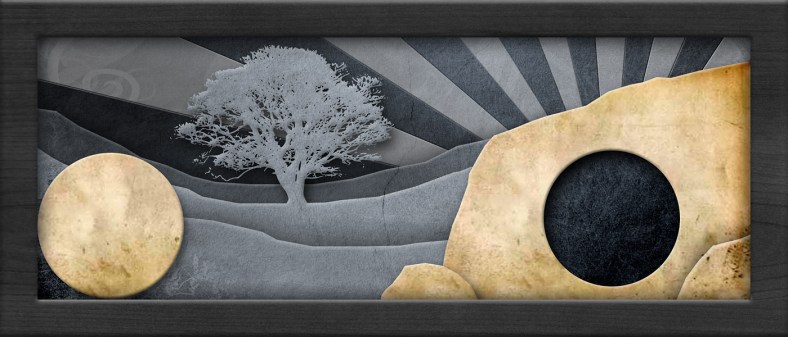
the empty tomb
leaves a hole in all assumptions.
——
Postscript: For what it’s worth (a lot, I think) that little “dying” church is still going.