The Gate Versus The Gatekeepers

The words don’t change. The way we hear them does.

John 10:1-10

The Revised Common Lectionary, which most pastors and preachers follow in our tradition, repeats every three years.  The texts don’t change, but the way we hear them is different every time so I always assume that God wants to say something through these texts to this people in this place at this time and in these current circumstances.  The text doesn’t change, but the circumstances do.

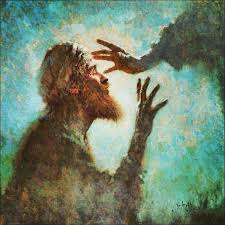
When John 10:1-10 came up three years ago on the 4th Sunday of Easter I was only a few weeks away from retiring.  As I prepared my sermon, knowing that the time was very near when I would be leaving The Little Church with a Big Heart, a congregation I had served for twelve years—a congregation that I deeply loved, a congregation that had loved me back in more ways than I can begin to tell you—I kept coming back to the part where Jesus says, “The gatekeeper opens the gate for him, and the sheep hear his voice. He calls his own sheep by name and leads them out.” 

The gatekeeper was opening the gate and I was being led out.  That meant that the time had come for the congregation to listen carefully to the Shepherd’s voice so they could discern who was being called to serve as their new sheepdog, which is what pastors really are if they’re listening to the Shepherd.

Six years ago, when this gospel text came up for the 4th Sunday of Easter, we were still in the very early days of the Covid 19 pandemic.  Hearing Jesus say, “I came that you may have life and have it abundantly” seemed like the apex of irony when we were locked down in our homes and hearing about thousands of deaths every day.  But in many of our faith communities, our abundant life together continued in spite of our enforced isolation.  We found ways to worship and hold classes online and even discovered that our after-worship fellowship time had an unexpected bonus because everyone was able see everyone and speak to everyone all at once on Zoom, taking turns in the conversation.  It really was remarkable.  Plus, there were no complaints about the coffee because everybody made their own.

The words of Jesus are the same every time we hear them, but we hear them differently each time because of what is going on in our lives and in our world.  

What’s influencing the way you hear the words of Jesus in this text this year?  Now?

One of the downsides of preaching the lectionary is that sometimes the selected text is isolated from its fuller context.  The fourth Sunday of Easter, for example, is traditionally known as Good Shepherd Sunday, so each year the lectionary gives us a different fragment of the shepherd and sheep imagery that Jesus is using as he verbally spars with the Pharisees and temple elders who are challenging him.  The thing we miss, though, is that all these fragments are parts of a larger unit, a larger story being told in John, a story that takes up all of chapter nine and more than half of chapter ten.  

Today’s gospel text is a continuation of the story of Jesus healing the man born blind. The events of that healing and the confrontation that follows all play out in chapter nine but they give meaning and weight to the shepherd imagery Jesus uses in chapter ten.   

When we read that story today, we don’t always look too far beyond the miraculous healing of the blind man—whose name by the way, according to both Eastern and Roman tradition, was Celidonius.  Maybe we pay some attention to the themes of light and darkness and true sight and spiritual blindness which are also part of the story, but what is not so readily apparent to us is that this is also a story about fear and boundaries and how people use and protect power.  Which raises the question: how were the people in this story hearing the words of Jesus?

Poor Celidonius had barely been given his sight when he was almost instantly confronted by the same group of self-appointed, conservative Judeans who had been repeatedly antagonizing and challenging Jesus.  Like detectives interrogating a criminal, they made the formerly blind man tell his story over and over again.  When some of them suggested that maybe he had never really been blind, his parents were brought in to affirm that yes, he was born blind, and no, they didn’t know who gave him his sight, and by the way he’s an adult and this has nothing to do with us.  When, after all this, they asked him to retell his story one more time, Celidonius was just plain exasperated. “I have told you already,” he said, “and you would not listen. Why do you want to hear it again? Do you also want to become his disciples?”   

That question really pushed their buttons.  They were supposed to be the authorities on all things sacred, and the suggestion, even if it was a bit facetious, that they might become disciples, students, of this Jesus who dared to do questionable things like healing on the Sabbath?  That really set them off.  They doubled-down on their commitment to Moses and Mosaic law, then circled back to their cultural assumption that Celidonius was born blind because of sin.  “You were born entirely in sin,” they said.   And then they expelled him from the synagogue.

Fear is a significant undercurrent in this story.  The blind man’s neighbors were anxious because acknowledging the miracle would mean that they would have to reevaluate who they thought Jesus was and also, no small thing, how the universe works and how God works.  The Pharisees were anxious for the same reason but with more at stake, so they not only tried to debunk the miracle but to discredit the miracle worker, Jesus.  The man’s parents were nervous for all the same reasons, but also because the Pharisees could bar them from the synagogue.  And that was a very frightening prospect to consider.  

According to the Jewish Encyclopedia, there were 394 synagogues in Jerusalem in the early first century.  These synagogues were places for religious study and debate but they also functioned as community centers and economic centers.  Business deals were hammered out in the synagogue.  Workers were hired in the synagogue.  Marriages were contracted there.  The synagogue was the center of community life and being thrown out or banned could be both economically and socially disastrous. 

So fear and anxiety made everyone except Jesus and Celidonius reluctant to acknowledge the extraordinary thing that God had done in their midst.  Before we get judgmental, though, it’s important to remember that everything that happens in the gospels happens under the watchful eye and oppressive shadow of the Roman Empire.  Everything Jesus said or did had to break through the atmosphere of fear that the Romans relied on to enforce the peace and the paranoia of the Jewish leaders who tried to prevent open rebellion by keeping a lid on the messianic hopes of the people.

Jesus made these Jewish leaders nervous when he was merely preaching and teaching.  When he did works of power like giving sight to a man born blind, he just plain scared them.  When he started talking about the sheepfold and the gate and the shepherd and bandits and thieves, he infuriated them.

This was their own symbolic language, but it had a very sharp edge when Jesus was using it.

The sheepfold was not private property.  It was a piece of communal economic infrastructure, a shared space that was crucial to the economic survival of a village.  In reality and as a metaphor it was a symbol of interdependence.  Several families would herd their flocks into the sheepfold to keep them safe through the night.  Shepherds took turns serving as the gatekeeper, often lying down or sitting stretched across the entrance of the sheepfold as a living gate, guarding the entrance with their bodies. The gatekeeper wasn’t just guarding his own sheep but all the sheep of the village.  A thief or bandit who might climb over the wall was threatening an entire community’s common life and security.

Shepherd imagery had political weight.  The Shepherd was a familiar political metaphor long before the time of Jesus.  Emperors, kings and religious leaders referred to themselves as shepherds to emphasize their claim that they guided and protected the people.  Prophets referred to these same powerful people as shepherds when they were critiquing or criticizing them.  On the other side of the same coin, the Shepherd was a messianic metaphor.  David had been a shepherd and it was commonly understood that Messiah would be a “Shepherd” from the line of David.  

When Jesus began to address his opponents with shepherding imagery, confronting them with the metaphors of the sheepfold and the gate and gatekeepers and thieves and bandits, his opponents, the gatekeepers of propriety who had just expelled Celidonius from the synagogue, undoubtedly heard his words as a sharp criticism. They would have remembered Jeremiah saying, “Woe to the shepherds who destroy and scatter the sheep of my pasture.”[1]  They would have remembered Ezekiel saying, “Woe, you shepherds of Israel who have been feeding yourselves!  Should not the shepherds feed the sheep?  You eat the fat; you clothe yourselves with the wool; you slaughter the fatted calves, but you do not feed the sheep.  You have not strengthened the weak; you have not healed the sick; you have not bound up the injured; you have not brought back the strays; you have not sought the lost, but with force and harshness you have ruled them.”[2]

The words of Jesus in the text don’t change, but the way we hear them changes every time.  We hear them through the filter of our circumstances.  Sometimes we hear comfort.  Sometimes we hear criticism.  How do you hear them?

“My sheep know my voice,” says Jesus.  Whose voice are you listening to?  What news sources do you read or watch or listen to?  What kind of message are they giving you about the world?  About yourself?  What kind of messages are you letting into your heart and mind and soul? 

Are they messages rooted in faith, hope and love?  Or are they messages rooted in fear?  Do they seek to enlarge your heart or shrink it?  Do they seek to open your embrace of others or do they tempt you to close yourself off from everyone who isn’t a whole lot like you?  

Who or what are the bandits in your life?  Who’s climbing over the wall to steal your peace?  Who or what is killing your joy?

Who is the gatekeeper for your heart and mind and soul?

“Very truly, I tell you,” said Jesus, “I am the gate for the sheep.  All who came before me are thieves and bandits, but the sheep did not listen to them.  I am the gate. Whoever enters by me will be saved and will come in and go out and find pasture.  The felon comes only to steal and kill and destroy. I came that you may have life and have it in all its fullness.”

The words are the same but we hear them differently every time.

Nine years ago, for instance, today’s gospel text spoke to me powerfully and deeply in ways I could never have foreseen.  

Only two days before preaching on this text, I presided over a memorial service for a young woman named Meghan, the daughter of some our closest friends, a young woman I had watched grow up as an extended-family sister to our kids.  

I had officiated at Meghan’s wedding two years earlier, which gave her death an extra layer of pain for me and a feeling of something like guilt, because she was killed by her husband, the man I had united her to in marriage.  

Nine years ago, when I came to the part of today’s gospel where Jesus says, “The thief comes only to steal and kill and destroy…” it just wrecked me.  I had to stop and take a long, deep breath before I could read the rest of what Jesus says here: “I came that they may have life and have it abundantly.”

As those words hung in the air, I thought about Meghan’s memorial service.  I thought about the church, our “home” church where I had met her parents when we were all teenagers, our church where she and her sister and our kids were all baptized, our church where our kids grew up together to become lifelong friends.  I thought about our church where so much life has happened—I thought about that church filled to capacity with people who had been touched by her, whose lives had interconnected with hers and with ours.  I thought about how they had all come “back to church” for her, back to the Christ-centered starting point where all our relationships and stories had begun.  

I thought about how in that service, despite the pain and anger and sadness that had brought us there, we experienced the joy and comfort of the abundant life we had all shared over the years.  And I realized that, despite our grief and pain, our abundant life continues.  I realized that Meghan’s abundant life continues, that she lives on in the hearts and memories of her friends and family and in the loving presence and heart of Christ.

On the 4th Sunday of Easter, nine years ago, I realized that, while it was Meghan’s tragic and untimely death that had brought us all together that day, it was Jesus, the Good Shepherd, who had originally brought us all together in the first place.  We had all met each other in the very beginning because we had come to church.  We had met in the company of Christ.  We had followed the voice of the Shepherd who called us all together into one great big flocking family—a family that is bigger than any one church building or any single congregation or any denomination, a family that is, truly, bigger than any one religion.  

Abundant life. Overflowing life.  This is the gift Christ gives us in our life together.


[1] Jeremiah 23

[2] Ezekiel 34

Sheep Without a Shepherd

The following was written on 7/20/24 and preached on the morning of 7/21/24 at Christ Lutheran Church in Orange, California mere hours before President Joe Biden announced that he was withdrawing from his campaign for a second term an endorsing Vice President Kamala Harris to be the Democratic Party’s candidate. I have profound respect for President Biden and I deeply appreciate his leadership over the past four years.

Mark 6:30-34, 53-56; Psalm 23; Jer. 23:1-6; Eph. 2:11-22

When the disciples regrouped with Jesus after their first solo mission, they were excited to tell Jesus, “all they had done and taught.”  Jesus, for his part, wanted time to debrief them and give them some more personal attention, plus, he realized that they were all due for a break, so he said, “Let’s get away by ourselves for a while. Take some time to rest, and you can tell me all about it.”  

So, they set off in a boat, heading for a deserted place up at the end of the lake, but the crowds spotted them, and by the time they beached the boat at the deserted spot it wasn’t deserted anymore;  a large crowd was waiting for them.  

When Jesus saw all those the people, he wasn’t angry or disappointed or frustrated, even though it was pretty clear that their private retreat wasn’t going to happen now.  Mark tells us, “As he went ashore, he saw the crowd, and he had compassion for them, because they were like sheep without a shepherd.  And he began to teach them many things.”

They were like sheep without a shepherd.  

The people were starving for guidance.  

Oh, there was no shortage of authority figures.  On the political level there was Herod Antipas functioning as their local “king,” and if that still left them with idle time on their hands, there were plenty  of Roman soldiers and functionaries ready to lord it over them.

On the religious side of things there were Pharisees admonishing them to rigorously keep Torah, scribes collecting their tithes and telling them how Torah was to be officially interpreted, and priests conducting sacrifices on their behalf.  

They had all kinds of authority figures.  But they had no guidance.  They didn’t need another overseer.  They needed a shepherd.  

Mark is specific in calling out the people’s need for a shepherd because shepherd was a term that had a deep resonance and rich history with his audience.  It was a term often associated with the patriarchs, monarchs and heroes of the nation. Abraham, Isaac and Jacob were shepherds.  Moses was working as a shepherd when he encountered the God in the burning bush.

David was the biblical paradigm of a shepherd and David, himself, wanted to make it clear that Israel’s first king, Saul, was not a good shepherd.  In the opening of his most famous psalm, Psalm 23, which was probably written while he was fighting to overthrow King Saul, David throws a clear jab at Saul with the opening line. “The Lord is my shepherd,” he writes.  Not Saul.  The Lord.  He goes on to describe all the comfort, nurture and protection that the Lord provides, all things which stand in sharp contrast to the abuse he suffered under Saul.  Later in the psalm David asserts his claim that he has been anointed by God to replace Saul, his enemy: “In the presence of my enemies,” he says, “you anoint my head with oil.”

If that reading of Psalm 23 sounds odd to you, I invite you to remember that there was no punctuation in the original Hebrew.  The line breaks and couplings we are familiar with come from the King James translation team who had an agenda quite different from King David’s.

The prophets often denounced bad or corrupt national leaders as unfaithful shepherds who had abused their flocks or even scattered them.  Jeremiah, writing as the Babylonians were bearing down on the Kingdom of Judah said, “Woe to the shepherds who destroy and scatter the sheep of my pasture! says the Lord!”  He clearly blamed the kings before and after Josiah for the fact that Israel was already lost and Judah was  about to be crushed by the might of Babylon.  He knew all was lost but he could also foresee a day when hope would be restored: “I will raise up shepherds over them who will shepherd them, and they shall no longer fear or be dismayed, nor shall any be missing, says the Lord.”  

In contrast to the failed or corrupt shepherds denounced by the prophets, the Good Shepherd becomes a figure repeated by the prophets as a symbol of messianic promise to carry the people through dark times.  “The days are surely coming, says the LORD, when I will raise up for David a righteous Branch,” wrote Jeremiah,  “and he shall reign as king and deal wisely and shall execute justice and righteousness in the land.  In his days Judah will be saved, and Israel will live in safety. And this is the name by which he will be called: “The Lord is our righteousness.”  

Isaiah continued the theme of the Good Shepherd.  “He will feed his flock like a shepherd; he will gather the lambs in his arms, and carry them in his bosom.”  The Good shepherd is sometimes envisioned as the new David. “I will set over them on shepherd, my servant David,” wrote Ezekiel. “He shall feed them and be their shepherd.  And I the Lord will be their God, and my servant David shall be prince among them.”

Jesus had compassion on the crowds who followed him so relentlessly.  He knew they were following him for the same reasons they had followed John.  They were looking for a shepherd.  

It would be easy to say they needed leadership, but they needed a special kind of leadership.  They didn’t want or need another leader making pronouncements from a throne or pontificating in the synagogue.  They needed a leader who walked among them, who shared their bread, who touched them with healing hands.  They needed a leader who could inspire them with a vision to make life meaningful and not just another plan to control them.  

They needed a shepherd.

I have to tell you, I feel such a connection to those people who ran ahead, that crowd that was waiting on the shore and hillside when Jesus stepped off the boat.  Those sheep without a shepherd.  They are us.  

We are in a strange and precarious state in our country right now.  We are barely keeping the lid on chaos and turmoil as we try to make our way through the riptides of this pre-election season.  For a host of reasons, many of them having to do with media, we find ourselves in a crisis of leadership at a moment when we need real leadership to guide us as we think through the process of selecting our future leaders.  We need candidates who will honor and guard the integrity of that process.  We need to feel confident that whomever we select will be a person of integrity because, as Dwight Eisenhower said, “The supreme quality of leadership is integrity.”

We need integrity and we need a vision.  We need a collective vision to bring us together in a healing peace with each other and the world, a vision of shalom to help us build a nation where there truly is “liberty and justice for all.”  We need a vision that promises the unalienable rights of “life, liberty and the pursuit of happiness” for all of us, not just some of us. 

Reverend Theodore Hesburgh, the former president of Notre Dame University said, “The very essence of leadership is that you have to have a vision.  It’s got to be a vision you articulate clearly and forcefully on every occasion.  You can’t blow an uncertain trumpet.”

We need a vision to guide us toward unity, not a false unity of coerced conformity, but a unity that honors our diversity and understands it as a strength.  

What we don’t need is a coercive plan that enriches some and deprives others.  We don’t need an “agenda” or “project” that increases rights and freedoms for some while taking rights and freedoms away from others. We don’t need a bullying scheme that marches us lock-step into enforced uniformity.  As Dwight Eisenhower also said, “You don’t lead by hitting people over the head—that’s assault, not leadership.”

The late, great Rosalynn Carter once said, “A leader takes people where they want to go.  A great leader takes people where they don’t necessarily want to go, but ought to be.”  We need a great leader.  We need a shepherd who can walk with us to where we ought to be.

When Jesus stepped off the boat into that great flock of sheep without a shepherd, Mark tells us that “he began to teach them many things.”  He began to tell them about the kingdom of God, the Commonwealth of God’s justice and kindness.

He shared with them his vision of the way things ought to be, the way they ought to be. 

Between 1933 and 1944, as the nation slowly climbed out of the Great Depression then found itself thrown into the chaos of World War II, President Franklin D. Roosevelt gave a series of 31 informal evening radio talks to the people of the nation.  In these Fireside Chats, Roosevelt kept people informed about what was happening in their nation.  He taught them more about how government and the economy works.  He kept them informed about what he and the rest of the government were doing to deal with the challenges people were facing.  He let them know that he knew what those challenges were and he understood how events that were far beyond their control were affecting their lives.  He let them know that they were not alone, that he was on their side.  Most importantly, he consistently inspired a hopeful vision of life beyond the crisis.  And in doing all of that he changed the relationship between the people and the president.  He became their companion, not just their leader.

John Quincy Adams said, “If your actions inspire others to dream more, learn more, do more and become more, you are a leader.” 

Jesus, our Good Shepherd, inspires us to dream more, learn more and do more, and teaches us to bring that kind of inspiration to others.  He leads us out of all the us vs. them dichotomies and binaries that lead to so much dissension and violence.  He brings us together in all our wonderful diversity so that, as St. Paul says, “he might create in himself one new humanity in place of two.”  

In the remaining days of this election year, I pray that our Good Shepherd will look on us with compassion and raise up for us a shepherd with integrity who inspires us to dream more, learn more and do more as we work to make the Commonwealth of God’s justice and kindness a reality on earth as it is in heaven.

To Know By Heart

John 10:11-18

You are one of a kind.  Even if you have an identical twin there is a lot about you that is unique.  Your fingerprints are unique, of course, but did you know that your toeprints are, too?  Your voiceprint is also unique and can be used to identify you.  The patterns in the irises of your eyes are yours and yours alone, and so are the patterns of the blood vessels in your retinas.  Your gait when you walk is uniquely yours and can be used to pick you out from a crowd.  You can be singled out from a multitude of other people online by patterns in the way you type on your keyboard or move your mouse, a little trick that’s been used, apparently, in espionage.  But here’s a new one—at least it was new to me.  Did you know you have a distinctive cardiac signature?   That’s right.  Your heart beats in a way that is unique to you and can’t be disguised.  The Pentagon has recently developed a laser-based tool called Jetson that can read your cardiac signature through your clothes from 200 meters away.  So now if somebody says they know your heart you might want to ask exactly what they mean by that.

“I know my own and my own know me,” said Jesus, “just as the Father knows me and I know the Father.”   Jesus knows your heart, although clearly not in the same way that the Pentagon’s invasive new toy does.  More importantly, though, we know the heart of Jesus.  We know he loves us and he cares for us enough to lay down his life for us.

Jesus calls himself the Good Shepherd.  I wonder how many of us really understand what he means by that.  I think what comes to mind for a lot of us when we hear “Good Shepherd” is a kind of greeting card image or something from a stained glass window.  We picture Jesus looking pristine in a white robe with a gentle, pure white lamb draped across his shoulders.  Gentle Jesus, meek and mild.  But that image is a far cry from what the people listening to Jesus on that long-ago day in Jerusalem would have been picturing when Jesus described himself as the Good Shepherd.

When Jesus was talking to people two thousand years ago in Galilee and Judea, he used metaphors that were part of their everyday lives.  Many of these metaphors also echoed their scriptures and history.  That’s one of the things that made him such an effective teacher, but it also made him controversial sometimes.  

Even people who had never been outside of Jerusalem’s walls knew about shepherds.  They were a common sight.  They had all seen shepherds bringing sheep into the city for the markets and for sacrifices in the temple.  

The Shepherd was also an image from their faith heritage.  Joseph, one of the 12 sons of Jacob, had been a shepherd.  Jacob worked as a shepherd for Laban so he could marry Rachel and Leah who had also tended sheep.  Zipporah, the wife of Moses, had tended flocks with her sisters.  Moses tended sheep before God called him to lead his people out of Egypt.  King David started out as a shepherd.  

The prophets spoke of the kings and religious leaders or Israel as shepherds—sometimes good, but sometimes not so much.  The prophet Jeremiah wasn’t pulling any punches when he wrote, “Woe to the shepherds who destroy and scatter the sheep of my pasture! says the Lord.  Therefore thus says the LORD, the God of Israel, concerning the shepherds who shepherd my people: It is you who have scattered my flock and have driven them away, and you have not attended to them. So I will attend to you for your evil doings, says the LORD.”

God was regarded as the ultimate shepherd and, through the prophets, often spoke of the people of Israel as “my flock.”   In Psalm 80, the Psalmist cries out, “Give ear, O Shepherd of Israel, you who lead Joseph like a flock! You who are enthroned upon the cherubim, shine forth!”  And, of course, there is Psalm 23 where David sings of his reliance on God with the words, “The Lord is my shepherd.”

When Jesus called himself the Good Shepherd, it brought a particular image to mind for those listening to him, but it wasn’t stained glass and greeting cards.  There was nothing particularly pristine in their picture of a shepherd.  They knew that shepherding was a very physical, dirty, and smelly job.  But they also knew that good shepherds were strong and  brave and tough when they had to be to protect the sheep.  When David was still young, he told  King Saul that he was tough enough to take on Goliath because, as a shepherd in the field, he had already killed a bear and a lion.  

At night, when a shepherd would bring the sheep in from the pasture into the safety of the fold, he would recline across the opening of the sheepfold, making his own body the gate of the sheep pen, a barrier between the sheep and any predators or thieves, so that anything or anyone that tried to get at the sheep would have to do it across his body.

Often several shepherds would bring multiple flocks into a large sheepfold for the night.  When it was time to lead them out again to pasture in the morning, each shepherd would simply start calling out to their sheep with a call that was familiar to their own flock.  Each flock knew their own shepherd’s distinct voice and would follow him and only him out to pasture.  So again, when Jesus says, “My sheep know my voice,” he is using a metaphor that’s familiar to all his listeners.  

So why is Jesus using this powerful image in that time and place?  He’s in the precincts of the temple.  He is already in hot water for healing on the sabbath, bringing sight to a man born blind.  This is all happening during the Feast of the Dedication, Hannukah, the feast that commemorates the rededication of the temple after the victory of the uprising led by Judas Maccabeus over Antiochus Epiphanes in 164 BCE.  Judas Maccabeus was a national hero, someone whom the Jews thought of, historically, as a good shepherd.  The temple was the place that more than any other symbolized the people’s covenant relationship with God.  So with all that as background, the Pharisees and temple authorities are listening to Jesus very carefully.  And what Jesus says is, to their ears, very provocative.

“I am the Good Shepherd,” says Jesus.  Just what is he saying?  Is he comparing himself to Moses?  To David? To Judas Maccabeus? Was he comparing himself to their great prophets and kings, the revered political and military leaders or the past, the heroes who had freed them from their oppressors and enemies? 

Was Jesus equating himself with God, the ultimate Good Shepherd?   Just what did he mean when he said, “I am the Good Shepherd.” They had to be wondering.  

And then he said this: “I have other sheep that do not belong to this fold. I must bring them also, and they will listen to my voice. So there will be one flock, one shepherd.”  Who was he talking about?  Could he be talking about gentiles?  Was he talking about bringing them into the covenant?  Into the temple?  This was both unsettling and provocative to the Pharisees and temple authorities.

Who would those other sheep be for us today?  Who are those who are “not of this sheepfold”—or not of this church, maybe?—who Jesus intends to bring into the flock?

“There will be one flock,” said Jesus.  One flock.  One shepherd.  None of the artificial distinctions we’re so fond of making.  No us.  No them.  The Good Shepherd has gone outside the sheepfold to call in all the sheep who know his voice.  All of them.  All of us.  Are we ready to be one big happy flock with sheep we don’t know? Even if some of them have different kinds of wool?  One flock.  One shepherd.

“I know my own and my own know me.”   I wonder about that statement.  Is it always that straightforward?  Especially the second part—“my own know me”?  The other day I saw a video on Facebook that made me really think about what happens when the sheep don’t really know the shepherd, when they’re not really attuned to the shepherd’s voice.  

The video was shot by a man who was taking a nice leisurely hike through a forest in France.  As he came around a bend in the trail he saw a woman in red shorts jogging toward him and behind her was a fairly sizable flock of sheep.  When she got up to the man, who captured all this on his phone, she stopped to talk to him and the sheep came to a full stop behind her.  He asked her if she always led her sheep through the forest and she told him that they were, in fact, not her sheep.  These sheep had all just been milling around near the beginning of the trail and when she jogged by them, they all just turned and began jogging along right behind her.  When she stopped, they stopped.  When she ran, they ran.  When she finished explaining this to the man, she started jogging back down the trail and the sheep swept past him, the whole flock, running along behind the woman they had mistaken for their shepherd. 

“I know my own and my own know me.”  We think we know our Shepherd, but sometimes we make mistakes.  Sometimes we go jogging off behind other shepherds.  

I know I’ve sometimes been misled into following other voices.  It’s easy to follow the voice of politics or partisanship or moralism or prestige or money.  It’s easy to get caught up by voices that try to flock us together around national or racial or cultural or generational or religious identity.  

It’s easy to follow someone who looks like they know where they’re going or sounds like they know what they’re doing.  It’s easy to be misled out into a forest  full of unseen dangers.  

It’s easy, sometimes, to think you’re following the Good Shepherd when it’s actually someone else mimicking his voice or borrowing his name for their own purposes.  We all saw those “Jesus” signs at the January 6th Capitol Insurrection.  I’m pretty sure that wasn’t really the Good Shepherd inspiring that activity.  We’ve all seen politicians standing in front of churches or holding up Bibles to buttress their authority or polish their image

“My own know me,” said Jesus.  Well, with practice, yes.  I think that’s our never-ending homework—to keep listening, to keep learning to hear the voice of the Good Shepherd in a world that so noisy with other voices, to discern the voice of Christ above all the pretenders and the racket and the misguided or misleading “shepherds” that try to distract us.  

“My own know me.”  Maybe Jesus states this so positively, so affirmatively, so that we have to take it as a goal and not make a liar out of him.  “My own know me.”  Okay, Jesus.  I will do everything I can to make that’s true, to make sure I know you.  

But that first part—that part where Jesus says “I know my own,” –-that’s where the good news is for us.  Even when we have wandered off through the forest following the wrong voice or our own stubborn inclinations, Jesus still knows us. Jesus still says to us, You belong to me.  You are mine.  I know you.  I know your going out and your coming in.  I know your fingerprints and your toeprints and the pattern of your irises.  I know your heart.  I have your cardiac signature.  You are mine.

There will be one flock.  One shepherd…who knows the heart of each and every one of us.  A Shepherd who has laid down his life for us.  That’s the Shepherd we can follow.  That’s the voice we can trust.