Of Sadducees and Tricky Questions

Luke 20:27-38

Jesus had finally arrived in Jerusalem.  Luke tells us in chapter 20 that Jesus was teaching in the temple every day.  A sizeable crowd gathered around him to listen as he taught about the kingdom of God,  but the scribes and temple authorities were continually trying to trip him up.  “So they watched him,” writes Luke, “and sent spies who pretended to be honest, in order to trap him by what he said and then to hand him over to the jurisdiction and authority of the governor.” (Luke 20:20)  

With that kind of framing from Luke, it’s natural to assume that the Sadducees in today’s gospel text have come to Jesus with a “gotcha” question.  “Teacher,” they ask, “Moses wrote for us that if a man’s brother dies leaving a wife but no children, the man shall marry the widow and raise up children for his brother.  Now there were seven brothers; the first married a woman and died childless; then the second and the third married her, and so in the same way all seven died childless.  Finally the woman also died.  In the resurrection, therefore, whose wife will the woman be? For the seven had married her.”

In order to really understand what’s going on in this little dialogue between Jesus and the Sadducees, it’s probably helpful for us to understand more about who the Sadducees were and what levirate marriage is.

The Sadducees were a conservative Jewish sect whom the Romans had placed in charge of operating the Temple.  They were well educated, well connected, often wealthy and they focused on maintaining the well-organized and efficient operation of the Temple as a way to safeguard their elite status and positions of power.  They believed in free will, that each individual has complete control over their own destiny and choices, and they rejected any notion that fate or divine intervention played any kind of role in our lives.

In religious matters the Sadducees accepted only the written Torah as authoritative and rejected the oral traditions and rabbinic interpretations that the Pharisees considered authoritative.  They also entirely rejected the supernatural.  They did not believe in angels, demons, resurrection or any kind of afterlife with rewards and punishments because none of those things were mentioned in Torah.  They believed that when the body died the soul died with it.

Levirate marriage—the Hebrew word for it is Yibbum—is pretty much exactly what the Sadducees describe in their question to Jesus.  Deuteronomy 25 spells it out this way: “When brothers reside together and one of them dies and has no son, the wife of the deceased shall not be married outside the family to a stranger. Her husband’s brother shall go in to her, taking her in marriage and performing the duty of a husband’s brother to her,and the firstborn whom she bears shall succeed to the name of the deceased brother, so that his name may not be blotted out of Israel.”

While the whole thing sounds pretty misogynistic to our ears—the woman is still treated more or less as property after all—this practice actually had some very real benefits for the widow in their frankly patriarchal culture.  Levirate marriage ensured that the widow remained financially supported and that she remained connected to her husband’s family.  It protected children and safeguarded their family identity and inheritance rights.   It provided an heir for the deceased man which allowed his name and legacy to be carried on, and it promoted cohesion and continuity within the clan by keeping wealth and property in the family.  And to be fair, either the widow or the brother-in-law could opt out of the arrangement with a ritual called Chalitzah which is also described in Deuteronomy 25, although there was a certain amount of shame attached to doing that.

As I said earlier, the question that the Sadducees ask Jesus sounds like a “gotcha” question, especially since Luke has flat-out stated that the Temple authorities “were trying to trap him.”  But Diana Butler Bass has suggested that there might be another way to hear their question.

What if these Sadducees are being sincere in their question?  What if these men who did not believe in life after death were asking Jesus about the resurrection because they were afraid that maybe, just maybe, there really is more to come after we die?  What if they’re afraid because their whole tradition has taught them not to believe that, but now they have questions and their tradition has no answers?  

That’s a precarious place to be when you’re living through a time of turmoil and uncertainty, when the Empire might suddenly decide there has been one too many subversive acts and it’s time to break out the swords and spears.  Theirs was a precarious and disquieting belief, a belief without hope or comfort, in a world or culture where at any given moment and for the flimsiest of reasons, death could be waiting just the other side of the door.

The way you hear the Sadducees’ question can affect the way you hear Jesus’ answer.  If you hear him responding to just another “gotcha” question, he might actually sound a bit snarky in his response.  But if he is responding to a sincere question that rises out of their fear of death, then he sounds like a good pastor addressing their fears with comfort and understanding as he explains a theological mystery. “Those who belong to this age marry and are given in marriage, but those who are considered worthy of a place in that age and in the resurrection from the dead neither marry nor are given in marriage.  They can’t die anymore. They are like the angels.  They are children of God!”  

And then, to bring it home, he gives them an argument from the Torah, the one part of the scriptures they trust.  He gives them an example from Exodus: “The fact that the dead are raised Moses himself showed in the story about the bush.  He speaks of the Lord as the God of Abraham, the God of Isaac, and the God of Jacob.  He speaks of God not as God of the dead but of the living.  For to God all of them are alive.”

The big problem for the Sadducees is that they had decided in advance what they would and would not hear, what they would and would not read.  They had eternal questions but their tunnel vision would not even let them read their own favorite sources in a more expansive and comforting way.

Because they would only read Torah, the Pentateuch—Genesis, Exodus, Leviticus, Numbers, Deuteronomy—they couldn’t hear the jubilant voice of Isaiah saying, “Your dead shall live; their corpses shall rise.  Those who dwell in the dust will awake and shout for joy!  For your dew is a radiant dew, and the earth will give birth to those long dead.”[1]  They were deaf to the voice of Ezekiel saying, “Thus says the Lord God: I am going to open your graves and bring you up from your graves, O my people!”[2]  They never heard Daniel saying “Many of those who sleep in the dust of the earth shall awake, some to everlasting life and some to shame and everlasting contempt.”[3]

The Sadducees didn’t have a problem with their Bible.  They had a problem with the way they were reading their Bible.  They were missing the best parts!  They were missing the promises and the good news!  And they were missing those things because they thought they already knew what it said.  They thought they already knew which parts were most important.

That can happen to any of us.  Our assumptions can cause us to miss things that are life-changing.

I get Richard Rohr’s Daily Meditations from the Center for Action and Contemplation in my email every morning.   I usually read it, but sometimes, if it looks like something I’ve seen before, I just discard it.  When I opened Friday’s meditation, I noticed right away that it was about the beatitudes.  Well, I’ve read the Beatitudes in English and Greek and preached on them for 30 years.  I’m pretty familiar with the Beatitudes.  I was about to drag the meditation to the electronic bin when my eye caught the word Aramaic.  

This post, this particular meditation, was written by Elias Chacour, a Palestinian Arab-Israeli who is the former archbishop of the Melkite Greek Catholic church in Palestine.  Bishop Chacour had things to say about the Beatitudes that I had never read or heard before, and taking time to read what he said has given me a whole new way to understand them.

“Knowing Aramaic, the language of Jesus,” he wrote, “has greatly enriched my understanding of Jesus’ teaching. Because the Bible as we know it is a translation of a translation, we sometimes get a wrong impression. For example, we are accustomed to hearing the Beatitudes expressed passively: 

“Blessed are those who hunger and thirst for justice, for they shall be satisfied. 

“Blessed are the merciful, for they shall obtain mercy. 

“Blessed are the pure in heart, for they shall see God. 

“Blessed are the peacemakers, for they shall be called children of God. 

 “’Blessed’ is the translation of the word makarioi, used in the Greek New Testament. However, when I look further back to Jesus’ Aramaic, I find that the original word was ashray, from the verb yashar. Ashray does not have this passive quality to it at all. Instead, it means “to set yourself on the right way for the right goal; to turn around, repent; to become straight or righteous.”  

“When I understand Jesus’ words in Aramaic, I translate like this: 

Get up, go ahead, do something, move, you who are hungry and thirsty for justice, for you shall be satisfied. 

Get up, go ahead, do something, move, you peacemakers, for you shall be called children of God. 

“To me this reflects Jesus’ words and teachings much more accurately. I can hear him saying, “Get your hands dirty to build a human society for human beings; otherwise, others will torture and murder the poor, the voiceless, and the powerless.” “Christianity is not passive but active, energetic, alive, going beyond despair…. 

“Get up, go ahead, do something, move,” Jesus said to his disciples.”[4]  

When we take away our preconceived notions of what we think the scriptures are supposed to say, when we let new voices inform our reading, it can be life changing.

Life is eternal.  Love is immortal.  So ashray!  Get up, go ahead, do something, move!  In Jesus’ name.


[1] Isaiah 26:19

[2] Ezekiel 37:12-14

[3] Daniel 12:2

[4] Daily Meditations, Center for Action and Contemplation; Friday, November 7, 2025

Signs of Spring

Every year there are certain things we look for in the early Spring, certain signs that tell us we are approaching the season of Easter.  There may or may not be one last big snowfall in the mountains.  We may or may not get soaked by El Niño rains.  The dandelions may or may not suddenly show up in our front lawns and the lilies may or may not bloom in time for our Easter morning services.  But one thing you can absolutely count on as Easter approaches is that there will be a rash of articles showing up in our newspapers, focus pieces in our magazines, pundits on podcasts and blogs on social media debating whether or not Jesus actually rose from the dead.

To be fair, there has been less of that this year, and I can’t help but wonder if that maybe has something to do with our current political climate. Maybe folks are feeling less safe about saying something that might be perceived as anti-Christian. That would be unfortunate. Christianity does not need to be defended by the state, and the separation of church and state has always been a healthier state of affairs for both.

In 1999, Marcus Borg and N.T. Wright collaborated on a book called The Meaning of Jesus: Two Visions.  In an Easter season interview that same year with National Public Radio’s Chris Roberts, the two well-respected scholars summarized their very different understandings of the Resurrection.  

Marcus Borg said, “I do believe in the Resurrection of Jesus. I’m just skeptical that it involved anything happening to his corpse… The truth of Easter really has nothing to do with whether the tomb was empty on a particular morning 2,000 years ago or whether anything happened to the corpse of Jesus. I see the truth of Easter as grounded in the Christian experience of Jesus as a living spiritual reality of the present.”

N.T. Wright responded by saying, “When [the early followers of Jesus] believed in Resurrection, they were talking about what we would call some kind of embodiment. A disembodied Resurrection is a contradiction in terms…We can be completely confident on Easter day that the things we’re saying in church are true. For the very good reason that, historically speaking, it’s actually impossible to explain the rise of early Christianity without it.” [1]

I have to tell you that I really resonate with what Marcus Borg says about the truth of Easter being grounded in the Christian experience of Jesus as a living spiritual reality of the present.  Yes.  That should be the Easter experience we carry with us every single day—Jesus as a living spiritual reality alive in our own physical bodies and in our corporate body as the church.  

But when all is said and done, I think that Wright is right.  We must explain why the earliest Christians believed in Jesus Christ’s bodily Resurrection and risked hostility and danger to rapidly spread the message that he had been raised from the dead and appeared to them in person.  

People have had doubts about the Resurrection of Jesus from the very beginning, and one of the things I really appreciate about the New Testament is that these early witnesses to the Resurrection take those doubts seriously and meet them head on.  

The original ending of the Gospel of Mark, the earliest of the gospels written sometime around 69 or 70 C.E. during the height of the Jewish rebellion against Rome, plays on that doubt.  Mark’s gospel ends with the women finding the tomb empty except for a young stranger clothed in white who tells them that Jesus is risen and that they are to meet him in Galilee.  They run away terrified, which leaves the reader hanging, but also leaves us with the implied message that the risen Christ is out there in the world and we need to go find him. (16:8)

The Gospel of Matthew ends with the disciples doubting even as Jesus gives them the Great Commission.  In Matthew 28:16-17 we read, “Now the eleven disciples went to Galilee, to the mountain to which Jesus had directed them.  When they saw him, they worshiped him, but they doubted.” 

In the Gospel of Luke when the risen Jesus appears suddenly in the midst of the disciples in the upper room, they believe they are seeing a ghost, so Jesus says to them, “’Why are you frightened, and why do doubts arise in your hearts?  Look at my hands and my feet; see that it is I myself. Touch me and see, for a ghost does not have flesh and bones as you see that I have.’  And when he had said this, he showed them his hands and his feet.  Yet for all their joy they were still disbelieving and wondering.”  To prove he is really physically, bodily there, he asks for something to eat.  Because ghosts don’t eat.

The Gospel of John, of course, gives us the story of Thomas who refuses to believe that Jesus is risen until he sees him with his own eyes and touches him with his own hands.  Thomas has become a paradigm for reasonable doubt but also for our confession of the faith.  Thomas is the one who first bows down before the risen Jesus and says, “My Lord and my God.”

But the very earliest testimony to the Resurrection comes from the Apostle Paul, and he, too, directly addresses those who doubt.  In 1 Corinthians 15, written at least 15 years before the Gospel of Mark, Paul wrote: “I handed on to you as of first importance what I in turn had received: that Christ died because of our sins . . . and that he was buried and that he was raised on the third day . . .  and that he appeared to Cephas, then to the twelve.  Then he appeared to more than five hundred brothers and sisters at one time, most of whom are still alive, though some have fallen asleep.  Then he appeared to James, then to all the apostles. Last of all, as to one untimely born, he appeared also to me. For I am the least of the apostles, unfit to be called an apostle, because I persecuted the church of God.” 

Paul testified to his own encounter with the risen Jesus, and to the experience of a surprising number of others.  It’s almost as if he is saying, “If you don’t believe me, fine.  There are lots of others who have seen him, too.  Go ask one of them.”  

Paul goes on to speak to the doubt that some in Corinth are experiencing when he writes, “Now if Christ is proclaimed as raised from the dead, how can some of you say there is no resurrection of the dead?  If there is no resurrection of the dead, then Christ has not been raised,  and if Christ has not been raised, then our proclamation is in vain and your faith is in vain.  We are even found to be misrepresenting God, because we testified of God that he raised Christ . . . If for this life only we have hoped in Christ, we are of all people most to be pitied.  But in fact Christ has been raised from the dead, the first fruits of those who have fallen asleep.”

N.T. Wright wrote, “In the New Testament Gospels’ depiction, the risen Jesus was no ghost, disembodied spirit or vision. Jesus did not have a merely resuscitated corpse but a body with uncanny new properties, yet a physical body nonetheless.”

In that resurrected body, which was the same but not quite the same as the body he died in, Jesus cooked fish on the beach for his friends.  He left footprints on the dusty road to Emmaus as he walked, unrecognized, beside his friends and opened their minds to understand the scriptures so that they could see that everything that had happened to him was in perfect continuity with what God had been doing all along.  They recognized him when he broke bread with his wounded hands.

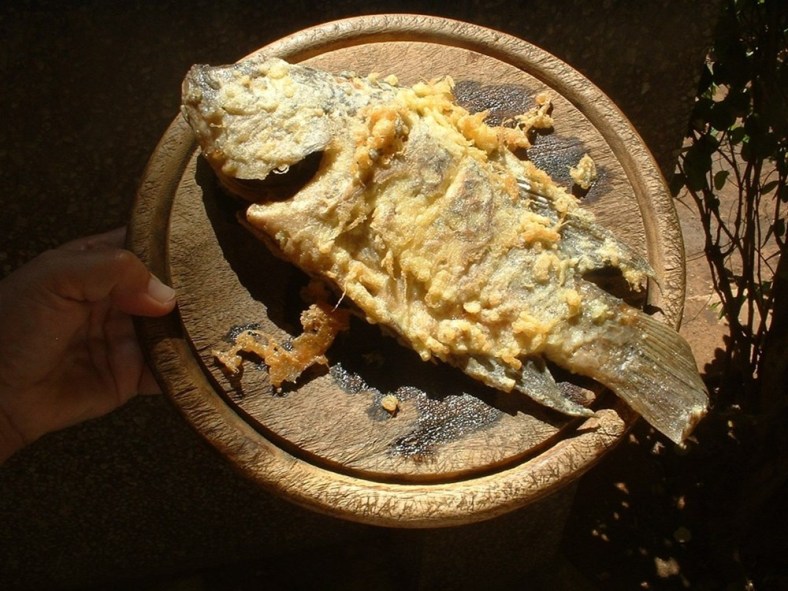
In his resurrected body with uncanny new properties, he appeared behind locked doors and offered his wounds for inspection.  He ate a piece of broiled fish to prove he wasn’t a ghost, and in so doing, as Debi Thomas wrote, he turned their trauma into communion.

We need the Resurrection.  We need an embodied Jesus because we are embodied.  Tielhard de Chardin said, “We are not human beings having a spiritual experience, we are spiritual beings having a human experience.”  I love how Debi Thomas expressed this:  

“I know that it might be unfashionable to ‘need’ the resurrection.  Isn’t this the criticism so often leveled at Christians?  That our faith is a crutch, an opiate, a refusal to face the harsher aspects of reality?  But here, too, I will bear witness and insist that I need Jesus’s bodily resurrection precisely because I, too, am embodied.  As the ancient Psalmists and prophets so beautifully describe it, my spiritual life is inseparable from my physical one: my heart melts like wax, my throat grows parched, my bones go out of joint, my tears cover my pillow, and my groans, sighs, and moans reach wordlessly for God.  Every experience I have of the holy is grounded in my body.

“And so I need a Savior with a body like mine — a body that adores, worships, and celebrates, but also a body that fails, ages, aches, breaks, and dies.  A body that carries wounds and scars, visible and invisible, fresh and faded.  A body that is profoundly and often terrifyingly vulnerable to forces beyond my ability to mitigate or control.  A body that is, for the most part, defenseless against injury, violence, illness, injustice, and cruelty.  A body that might die — as Jesus himself died — too soon, out of season, away from loved ones, in random, inexplicable, cruelly traumatic circumstances too frightening to contemplate.  I need a God who resurrects bodies.”[2] 

I know I need Resurrection.  Eleven years ago when I was diagnosed with prostate cancer I found myself confronting my mortality, especially since both my mom and my dad died of cancer.  My surgeon assured me that my chances of coming through the surgery and radiation were probably good.  Don’t you love the language doctors use once the “C” word has been spoken?  You hear the word “probably” a lot.  The point is, once the word “cancer” has been spoken, it sharpens your focus.  Things that had been theoretical either become the life raft you cling to or they get discarded.  I realized during that time that, while I’m willing to entertain and discuss all kinds of ideas and theories about Resurrection, for me personally a psychological or philosophical or solely spiritual understanding isn’t enough to carry the weight of my hopes and fears.  I need something with some bones in it, some skin on it.  And I’m not alone in that.

I have seen a lot of death in my decades as a pastor.  I have accompanied people up to death’s door and held their hands as they crossed the threshold.  Resurrection is what has given many of them the courage to walk peacefully and fearlessly through that door.  And Resurrection is what has given me the courage and confidence to walk through the valley of the shadow with them.

And that’s the point.  Resurrection gave the earliest followers of Jesus the courage to risk hostility and danger so they could carry on his work of proclaiming that there was a better way to live, a better way to be community, a way to oppose all the dehumanizing, competitive pettiness of empire, a way to live in mutual support of each other in the commonwealth of God’s justice and kindness.

Jesus was a real physical person who was tortured to death in a first-century lynching.  The state and the religious authorities colluded to crucify him, to physically destroy him and in so doing to destroy his opposition to their power.  His crucifixion was a political statement.  What they failed to see and understand, though, was that in Jesus there was a power and authority that dwarfed any power or authority they imagined they had over him.

For that reason,  nothing less than a bodily resurrection would do to nullify their violence and call their power into question.  It was his physical body they killed.  It would have to be his physical body that would proclaim their work undone.  

The resurrection of Jesus was also a political statement.  It was God’s way of saying that violence will not have the last word.  Oppression will not have the last word.  Pain will not have the last word.  Fear will not have the last word.  Anger will not have the last word. Disease will not have the last word.  Suffering will not have the last word.  Death will not have the last word.

The Resurrection of Jesus was God’s way of saying that love, grace, forgiveness, kindness, generosity, hope and faith—these things will have the last word. 

The resurrection was God affirming that Life and Love will have the last word.  

And will be the last word. 

Through Jesus Christ, our risen Lord.


[1] The Resurrection of Jesus; Religion and Ethics Newsweekly; NPR/PBS, March 26, 1999

[2] Embodied; Debi Thomas, http://www.journeywithjesus.net; April 11, 2021

Something to Chew On

3rd Sunday of Easter

Every year there are certain things we look for in the early Spring, certain signs that tell us we are entering the season of Easter.  There may or may not be one last big snowfall in the mountains.  We may or may not get soaked by El Niño rains.  The dandelions may or may not suddenly show up in our front lawns and the lilies may or may not bloom in time for our Easter morning services.  But one thing you can absolutely count on as Easter approaches is that there will be a rash of articles showing up in our newspapers, our magazines and on social media debating whether or not Jesus actually rose from the dead.

In 1999, Marcus Borg and N.T. Wright collaborated on a book called The Meaning of Jesus: Two Visions.  In an Easter season interview that same year with National Public Radio’s Chris Roberts, the two well-respected scholars summarized their very different understandings of the Resurrection.  

Marcus Borg said, “I do believe in the Resurrection of Jesus. I’m just skeptical that it involved anything happening to his corpse… The truth of Easter really has nothing to do with whether the tomb was empty on a particular morning 2,000 years ago or whether anything happened to the corpse of Jesus. I see the truth of Easter as grounded in the Christian experience of Jesus as a living spiritual reality of the present.”

N.T. Wright responded by saying, “When [the early followers of Jesus] believed in Resurrection, they were talking about what we would call some kind of embodiment. A disembodied Resurrection is a contradiction in terms…We can be completely confident on Easter day that the things we’re saying in church are true. For the very good reason that, historically speaking, it’s actually impossible to explain the rise of early Christianity without it.” [1]

I have to tell you that I really resonate with what Borg says about the truth of Easter being grounded in the Christian experience of Jesus as a living spiritual reality of the present.  Yes.  That should be the Easter experience we carry with us every single day—Jesus as a living spiritual reality alive in our own physical bodies.  

But when all is said and done, I think that Wright is right.  We must explain why the earliest Christians believed in Jesus Christ’s bodily Resurrection and risked hostility and danger to rapidly spread the message that he had been raised from the dead and appeared to them in person.  

People have had doubts about the Resurrection of Jesus from the very beginning, and one of the things I really appreciate about the New Testament is that these early witnesses to the Resurrection take those doubts seriously and meet them head on.  

The original ending of the Gospel of Mark, the earliest of the gospels written sometime around 69 or 70 C.E. during the height of the Jewish rebellion against Rome, plays on that doubt.  The gospel ends with the women finding the tomb empty except for a young stranger clothed in white who tells them that Jesus is risen and that they are to meet him in Galilee.  They run away terrified, which leaves the reader hanging, but also leaves us with the implied message that the risen Christ is out there in the world and we need to go find him. (16:8)

The Gospel of Matthew ends with the disciples doubting even as Jesus gives them the Great Commission.  In Matthew 28:16-17 we read, “Now the eleven disciples went to Galilee, to the mountain to which Jesus had directed them.  When they saw him, they worshiped him, but they doubted.” 

In the Gospel of Luke when the risen Jesus appears suddenly in the midst of the disciples in the upper room, they believe they are seeing a ghost, so Jesus says to them, “’Why are you frightened, and why do doubts arise in your hearts?  Look at my hands and my feet; see that it is I myself. Touch me and see, for a ghost does not have flesh and bones as you see that I have.’  And when he had said this, he showed them his hands and his feet.  Yet for all their joy they were still disbelieving and wondering.”  To prove he is really physically, bodily there, he asks for something to eat.  Because ghosts don’t eat.

The Gospel of John, of course, gives us the story of Thomas who refuses to believe that Jesus is risen until he sees him with his own eyes and touches him with his own hands.  Thomas has become a paradigm for reasonable doubt but also for confession of the faith.  He is the one who first bows down before Jesus and says, “My Lord and my God.”

But the very earliest testimony to the Resurrection comes from the Apostle Paul, and he, too, directly addresses those who doubt.  In 1 Corinthians 15, written about 15 years before the Gospel of Mark, Paul wrote: “I handed on to you as of first importance what I in turn had received: that Christ died because of our sins . . . and that he was buried and that he was raised on the third day . . .  and that he appeared to Cephas, then to the twelve.  Then he appeared to more than five hundred brothers and sisters at one time, most of whom are still alive, though some have fallen asleep.  Then he appeared to James, then to all the apostles. Last of all, as to one untimely born, he appeared also to me. For I am the least of the apostles, unfit to be called an apostle, because I persecuted the church of God.” 

Paul testified to his own encounter with the risen Jesus, and to the experience of a surprising number of others.  It’s almost as if he is saying, “If you don’t believe me, fine.  There are lots of others who have seen him, too.  Go ask one of them.”  

Paul goes on to speak to the doubt that some in Corinth are experiencing when he writes, “Now if Christ is proclaimed as raised from the dead, how can some of you say there is no resurrection of the dead?  If there is no resurrection of the dead, then Christ has not been raised,  and if Christ has not been raised, then our proclamation is in vain and your faith is in vain.  We are even found to be misrepresenting God, because we testified of God that he raised Christ . . . If for this life only we have hoped in Christ, we are of all people most to be pitied.  But in fact Christ has been raised from the dead, the first fruits of those who have fallen asleep.”

N.T. Wright wrote, “In the New Testament Gospels’ depiction, the risen Jesus was no ghost, disembodied spirit or vision. Jesus did not have a merely resuscitated corpse but a body with uncanny new properties, yet a physical body nonetheless.”

In that resurrected body, which was the same but not quite the same as the body he died in, Jesus cooked fish on the beach for his friends.  He left footprints on the dusty road to Emmaus as he walked, unrecognized, beside his friends and opened their minds to understand the scriptures so that they could see that everything that had happened to him was in perfect continuity with what God had been doing all along.  They recognized him when he broke bread with his wounded hands.

In his resurrected body with uncanny new properties, he appeared behind locked doors and offered his wounds for inspection.  He ate a piece of broiled fish to prove he wasn’t a ghost, and in so doing, as Debi Thomas wrote, he turned their trauma into communion.

We need the Resurrection.  We need an embodied Jesus because we are embodied.  I love how Debi Thomas expressed this:  

“I know that it might be unfashionable to ‘need’ the resurrection.  Isn’t this the criticism so often leveled at Christians?  That our faith is a crutch, an opiate, a refusal to face the harsher aspects of reality?  But here, too, I will bear witness and insist that I need Jesus’s bodily resurrection precisely because I, too, am embodied.  As the ancient Psalmists and prophets so beautifully describe it, my spiritual life is inseparable from my physical one: my heart melts like wax, my throat grows parched, my bones go out of joint, my tears cover my pillow, and my groans, sighs, and moans reach wordlessly for God.  Every experience I have of the holy is grounded in my body.

“And so I need a Savior with a body like mine — a body that adores, worships, and celebrates, but also a body that fails, ages, aches, breaks, and dies.  A body that carries wounds and scars, visible and invisible, fresh and faded.  A body that is profoundly and often terrifyingly vulnerable to forces beyond my ability to mitigate or control.  A body that is, for the most part, defenseless against injury, violence, illness, injustice, and cruelty.  A body that might die — as Jesus himself died — too soon, out of season, away from loved ones, in random, inexplicable, cruelly traumatic circumstances too frightening to contemplate.  I need a God who resurrects bodies.”[2] 

I know I need Resurrection.  Ten years ago when I was diagnosed with prostate cancer I found myself confronting my mortality, especially since both my mom and my dad died of cancer.  My surgeon assured me that my chances of coming through the surgery and radiation were probably good.  Don’t you love the language doctors use once the “C” word has been spoken?  You hear the word “probably” a lot.  The point is, once the word “Cancer” has been spoken, it sharpens your focus.  Things that had been theoretical either become the life raft you cling to or they get discarded.  I realized during that time that, while I’m willing to entertain and discuss all kinds of ideas and theories about Resurrection, for me personally a psychological or philosophical understanding isn’t enough to carry the weight of my hopes and fears.  I need something with some bones in it, some skin on it.  And I’m not alone in that.

I have seen a lot of death in my decades as a pastor.  I have accompanied people up to death’s door and held their hand as they crossed the threshold.  Resurrection is what has given many of them the courage to walk peacefully and fearlessly through that door.  And Resurrection is what has given me the courage and confidence to walk through the valley of the shadow with them.

And that’s the point.  Resurrection gave the earliest followers of Jesus the courage to risk hostility and danger so they could carry on his work of proclaiming that there was a better way to live, a better way to be community, a way to live in the commonwealth of God’s kindness and justice.

Jesus was a real physical person who was tortured to death in a first-century lynching.  The state and the religious authorities colluded to crucify him, to physically destroy him and in so doing to destroy his opposition to their power.  His crucifixion was a political statement.  What they failed to see and understand, though, was that in Jesus there was a power and authority that dwarfed any power or authority they imagined they had over him.

For that reason,  nothing less than a bodily resurrection would do to nullify their violence and call their power into question.  It was his physical body they killed.  It would have to be his physical body that would proclaim their work undone.  

The resurrection of Jesus was God’s way of saying that violence will not have the last word.  Pain will not have the last word.  Fear will not have the last word.  Anger will not have the last word. Disease will not have the last word.  Suffering will not have the last word.  Death will not have the last word.

The Resurrection of Jesus was God’s way of saying that love, grace, forgiveness, kindness, hope and faith—these things will have the last word.  

The resurrection was God affirming that Life will have the last word.  

And will be the last word. 

Through Jesus Christ, our Lord.


[1] The Resurrection of Jesus; Religion and Ethics Newsweekly; NPR/PBS, March 26, 1999

[2] Embodied; Debi Thomas, http://www.journeywithjesus.net; April 11, 2021

Whom Are You Looking For?

John 20:1-18

         Whom are you looking for?   It’s the question Jesus asks Mary Magdalene as she stands weeping in the garden…  Whom are you looking  for?  The last voice she expected to hear that morning, the last living person she expected to see standing in front of her was Jesus, alive and asking questions.  

She came to the tomb expecting to prepare his corpse for its long, final rest.  When she found the tomb empty, she assumed that someone had moved his body.  Peter and the other disciple who came rushing to the empty tomb went right back home again to figure out what this all meant. Yes, Jesus had told them that he would rise from the dead—in rather veiled terms sometimes—but they hadn’t really understood him.  They clearly didn’t expect to see it happen.

         Whom are you looking for this morning?  What do you expect to find as you stare into this empty tomb, this “hole in all assumptions” at the heart of all our history?   

Did you come to see a mythic metaphor for springtime, for the perpetual renewing and rebirth of life in this new season of the year?  Well, certainly that is at work here.  But then what do you do with the formerly dead person who so many earnest, intelligent people claim to have encountered?  What do you do with all of those people who have put their lives on the line throughout history because they claim to have encountered a risen Jesus?  Springtime alone does not inspire that kind of faith, that kind of fervor, that kind of determination.  Springtime and metaphors of renewal don’t give one the courage to face martyrdom.

         Maybe, like some contemporary scholars, you want to frame this day, this celebration, in terms of a “Resurrection Event”—a kind of scholarly shorthand which says that there was no actual physical resurrection, but that after the disciples recovered from the devastating shock of Jesus’ crucifixion, they began to have visionary experiences as they remembered his teaching in powerful new ways, that he became alive for them in their hearts and minds and inspired them to spread his message of God’s overwhelming love as expressed in the alternative social and political reality he had called the kingdom of God.   

Well certainly that Jesus is alive, too.  Certainly Jesus is alive in the hearts and minds of those who follow him, those who proudly wear his name, those who seek to follow his teaching and do his will to the best of their understanding and look for God’s kingdom on earth as it is in heaven.  And yes, even today some people do have visionary experiences of Jesus. That’s no small thing.  But is it the complete picture?  Is it the resurrection described in the gospels?

What do you do with all these troubling physical things that keep insinuating themselves into the resurrection story?  What do you do with the disciples on the road to Emmaus who share a meal with Jesus and watch him break the bread in that singular, customary way of his?  What do you do with the Jesus who asks his shocked disciples for a piece of fish to eat?  Who insists on showing his very physical wounds to them?  What do you do with the writers of the gospels who wanted to make it absolutely clear that his disciples and others testified to a tangible, physical Jesus who stood before them against all hope and possibility?

         Maybe you are seeking Jesus of the re-animated body.  Maybe you are seeking in the resurrection of Jesus a validation that your own body will be raised to new life.  And certainly that Jesus is here, too.  But you’ll notice that there’s something very different about his resurrected body. Yes, the wounds are still there.  Yes, he eats with his disciples.  But there is something almost ethereal about his physicality.  He tells  Mary not to hold on to him, as if too long a connection between his resurrected physical nature and her ordinary physical nature might set off sparks or open a hole in the universe.   He appears suddenly behind closed and locked doors.  When people see him, it takes them a moment to recognize him—in fact they often don’t recognize him until he speaks or breaks bread or reveals himself through some other personal habit or mannerism.

         Whom do you seek?   Do you seek the Jesus who will validate your politics?  That’s fair.  In spite of what some people think, Jesus was very political.  He was crucified at the intersection of politics and religion.  But is the resurrection of Jesus from the dead just a validation of his political stance on the side of the poor and oppressed?  Or is there a message in this empty tomb about a power that transcends both politics and religion?  Does it stand there in the vortex of history as an open invitation for us to enter a new kind of life altogether, a life that transcends power and manipulation?

         Do you seek a Jesus who will endorse your sense of morality?  Well certainly Jesus is moral­­–– the most moral person who has ever lived.  But Jesus does morality differently than most of us.   Jesus made it clear that the heart of our morality and ethics must be a deep and abiding love for all God’s people and all God’s creation, and not merely a mindless adherence to law or shifting cultural standards of propriety.  Don’t forget that it was the guardians of morality, propriety and law who literally nailed him because he challenged their standards.  And it was the God of righteousness who raised him to life out of love.

Whom do you seek?  Be careful that you don’t settle for a partial Christ, because it is the whole Christ who is risen.  It is the whole Jesus, physical, spiritual, mythical, mysterious, emotional, intelligent, rational, divine and human–– it is the whole Christ who has endured the ugliest, most vicious violence that humanity can dish out and has been raised above it to show us the depths of God’s love and God’s commitment to a new way of being in the world. 

 Christ is alive.  Alive now.  More alive than you or I have ever been.  Alive in the mystery of the Trinity and alive in the body.  Alive in the world.  Alive for you and me and for each and every human created in the image of God.  Alive so that we, too, can experience new life as whole human beings.  Alive to transform us, to change us, to move us, to inspire us, and to help us.  Alive to make us fully human, when all our lives we’ve mostly settled for being something a little less than fully human.  Alive to free us from the fear of death.  Alive to resurrect us out of the thousand little deaths we die over and over again.  Alive to roll away the stones that seal us in shadowy tombs of despair and grief and anxiety and loss and pain.  Alive to pull us out of  whatever personal death or darkness we’re enduring and lift us into life in all its fullness.

In spite of the odds, in spite of all human experience to the contrary, Christ is risen.  Jesus is alive.  

I know that not everybody believes in the resurrection of Jesus.  I know that even some Christians have their doubts.  Some very devoted followers of Jesus look for ways to reframe the resurrection language of the gospels.  I don’t judge them.  I’ve had moments of doubt, too.  

Saint Paul devoted a whole chapter of 1 Corinthians to addressing our very understandable doubts.  Apparently there were some skeptics even in the congregation that he, himself, had founded.  In chapter 15 he gives us the earliest account of the resurrection, written long before the gospels, and he focuses on speaking to those who had doubts.  Here’s what he had to say as translated by Eugene Peterson in The Message:  

“Now, let me ask you something profound yet troubling. If you became believers because you trusted the proclamation that Christ is alive, risen from the dead, how can you let people say that there is no such thing as a resurrection?  If there’s no resurrection, there’s no living Christ.  And face it—if there’s no resurrection for Christ, everything we’ve told you is smoke and mirrors, and everything you’ve staked your life on is smoke and mirrors.  Not only that, but we would be guilty of telling a string of barefaced lies about God, all these affidavits we passed on to you verifying that God raised up Christ—sheer fabrications, if there’s no resurrection.

   If corpses can’t be raised, then Christ wasn’t, because he was indeed dead.  And if Christ wasn’t raised, then all you’re doing is wandering about in the dark, as lost as ever.  It’s even worse for those who died hoping in Christ and resurrection, because they’re already in their graves.  If all we get out of Christ is a little inspiration for a few short years, we’re a pretty sorry lot.  But the truth is that Christ has been raised up, the first in a long legacy of those who are going to leave the cemeteries. (1 Cor 15:12-19)

    We are not “a pretty sorry lot.”  Christ is alive.  The whole Christ, the entire Jesus, is walking this earth in unexpected guises, waiting to encounter each and every one of us to give us the power to become Children of God. 

Child of God,  may the God who raised Jesus from the dead resurrect all that is dead or dying in you.  May the risen Jesus restore your sense of wonder and beauty and hope and joy in life.  May the risen Christ open your eyes to understand the immense and eternal value of Life in every life you encounter.  May Christ be risen and alive in your mind, in your heart, in your soul. But more than that, may you see the risen, living Christ who stands beside you and invites you to walk into the world with him. 

Christ is risen!

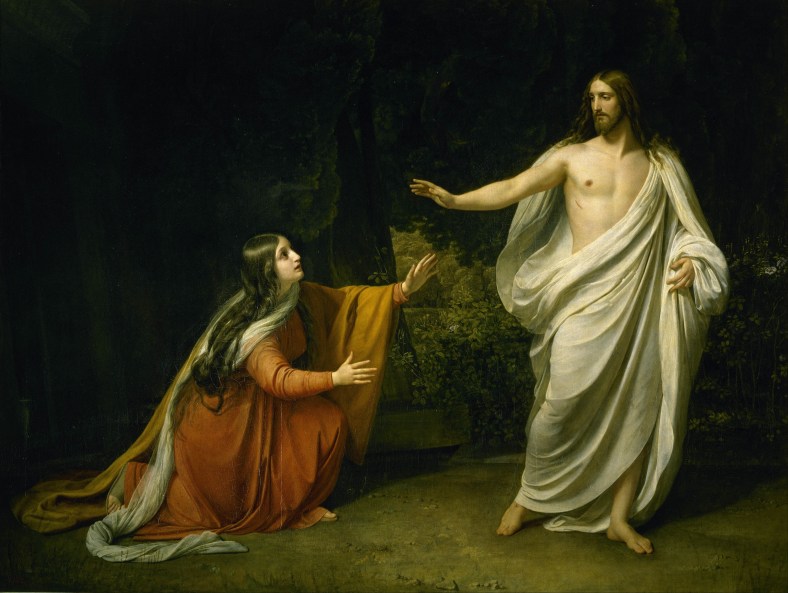
Painting: The Resurrected Christ Appears to Mary Magdalene, by Alexander Ivanov (1835)

…And the Life

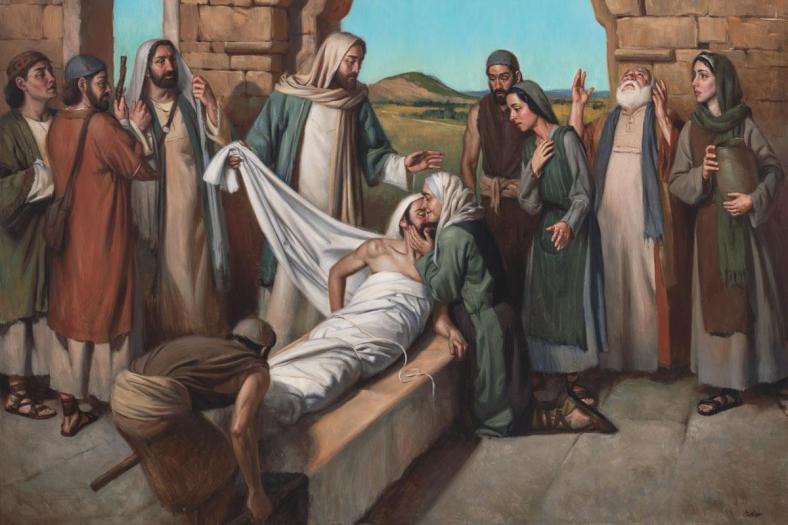
John 11:1-45

If you look at a full moon when it’s rising, sometimes it looks much closer and larger than usual.  The curvature of the earth at the horizon seems to magnify it, and it may look yellowish or have a tinge of orange as its light is filtered through layers of moisture or dust or pollution in the atmosphere.  If you see it rise during the day, it may look illusory and distant, a faded disc projected against a fathomless blue sky.  If you see the full moon through a telescope, you suddenly see it as a world in its own right and not merely as Earth’s bright companion.  You see its long story spelled out in craters and mountain ridges.  Sharp outcroppings of rock hint at moments of violent upheaval and plains of dust speak of eons of silence and solitude.  But if you are holding the hand of someone you love as you watch the full moon rise, it looks like a different thing altogether.  It becomes a benevolent entity from heaven full or romance, mystery, and poetry riding across the field of stars just for you and your love.

Sometime reading the scriptures is like looking at the moon.  So much of what you see depends on where you stand,  who your reading companions are, what clouds you’re looking through and what lenses are clarifying or distorting your understanding, and what you’re looking for to begin with.  

I read two very well written and well-reasoned articles by noted scholars earlier this week that helped me see this familiar story of the raising of Lazarus in a new way.  These articles made a strong case that Lazarus was the actual author of the Gospel we know as John.[1]  That idea has had me reading this week’s gospel in a different light, reading it as if it might be a memoir.  

One of the things you notice when reading John is that for much of the gospel Jesus seems to be slightly aloof or distant.  As one scholar puts it, he seems to be walking two feet above the ground.  But when you get to chapter 11, suddenly everything is very down to earth and the emotions come spilling out.  This chapter has all the feels.  It’s not hard to imagine that this is Lazarus telling his own story.  

The story starts out with a certain distance, but it quickly becomes more immediate, more personal, more emotional.  The disciples were fearful about returning the Judea because they knew that there was a certain contingency among the Jewish elders who wanted to find a way to eliminate Jesus.  When Thomas says, “Let us also go, that we may die with him” it feels a bit like nervous bravado.   

We’re told that Lazarus has already been in the tomb for four days when Jesus finally arrives.  The Jews believed that the spirit stayed near the body for three days after death.  This is a way of telling us that Lazarus was well and truly dead.  This will be reinforced toward the end of the story when Jesus asks them to remove the stone that sealed the tomb.  Martha says, “Lord, there is already a stench because he’s been in there for four days!”  I love the way the King James version puts this:  “Lord, he stinketh!”

When Martha runs out to meet Jesus, the first thing she says to him sounds almost like an accusation: “Lord, if you had been here, my brother would not have died.”  Mary will say the same thing to him just a few verses later.

How many times have we felt that way?  

Where were you, Jesus?  Why weren’t you here when life was falling apart, when worse came to worst and everything went to hell in a handbasket?  What was so important that you couldn’t be here when we needed you most?  What kind of friend are you?  

When we are grieving, the littlest thing can trigger us to spill our pain all over everyone around us, especially on those closest to us.

“Jesus,” said Martha, “if you had been here my brother would not have died.”  But then she catches herself.  She takes a breath and says, “But even now I know that God will give you whatever you ask of him.”  Martha is hinting very broadly that she expects him to do something.  God will give you whatever you ask… so ask already!  That’s what’s hanging in the air.

But Jesus is reluctant.  “Your brother will rise again,” he says.  And it feels like he would maybe have preferred for things to stop right there.  It feels like he’s reluctant to say or promise anything more, as if he’s hesitant to promise any immediate relief for their grief.

Martha hears his reluctance but prods him further:  “I know that he will rise again in the resurrection on the last day.”  I know he’ll rise again.  Eventually.  Everybody knows that.  But her unspoken question is still hanging in the air:  I know he will rise again on the last day, but what are you going to do right now?”  And haven’t we all felt like that, too, when we’ve lost someone we love?

Jesus said to her, “I am the resurrection and the life. Those who believe in me, even though they die, will live, and everyone who lives and believes in me will never die. Do you believe this?”  She said to him, “Yes, Lord, I believe that you are the Christ, the Son of God, the one coming into the world.”

It’s important to say a word here about what it means to believe.  In our world, in our time, we often use the word believe as a synonym for think.  It tends to be a cerebral word for us.  But in their world and their time, it was a much more visceral word.  You believed things in your guts, not in your head.  The essential meaning was trust.  Jesus is saying, “Those who trust me to the depths of their guts, even if they die, they will still live, and those who live with that kind of trust in me will never die.”  And then he asks Martha, “Do you have that kind of visceral faith and trust in me?”  

When Martha says, “Yes, Lord, I believe that you are the Christ, the Son of God, the one coming into the world,” what she is saying is not, “Yes, I intellectually accept the idea that you have a unique relationship with God.”  What she is saying is, “Yes, I trust to the depth of my very being that you are the Christ, the Son of God, the one we’ve waited for throughout all of history.  That understanding of who you are, Jesus, is part of who I am.  It flows in my veins.”

When Mary came out to meet Jesus, she fell at his feet.  The NRSV says she knelt at his feet, but the Greek text is more emotional and expressive than that.  It says she fell at his feet.  Her grief is so acute that she collapses at his feet.  And she echoes Martha’s words.  If you had been here, my brother would not have died.

Jesus sees her weeping.  Jesus sees the people who came with her weeping.  And he gets caught up in their pain.  The Greek text says that he was deeply moved in his spirit and greatly distressed.  He was agitated.  He was a wreck.  He asked them where they had laid his friend to rest.  And then he began to weep.

Jesus wept.  Jesus wept because he loved his friend and felt the pain of his death.  Jesus wept for Mary and Martha’s pain and the grief of everyone around him.  Jesus wept for all the pain and loss we experience in the world.  Jesus wept out of frustration.  Jesus wept because he knew that restoring Lazarus to life would be the thing that would set his own painful death in motion.

When Jesus came to the tomb he was greatly agitated and disturbed.  The Greek word that’s used here, embriómenos, indicates an emotional mix of deep frustration and anger.  It’s another one of those deeply visceral words.

Jesus was angry at death.  Jesus was angry at loss and pain.

 He told them to take away the stone that sealed the tomb and then he prayed in a way that allowed those around him to listen in on his conversation with the Father.  “Father, I thank you for having heard me.  I know that you always hear me, but I have said this for the sake of the crowd standing here, so that they may believe that you sent me.”

When he had said this, he cried with a loud voice, “Lazarus, come out!”  Lazarus came out, his hands and feet bound with strips of cloth and his face wrapped in a cloth. Jesus said to them, “Unbind him, and let him go.”

“I am the resurrection and the life,” said Jesus.  We tend to put the emphasis on resurrection, but the real promise is life.  Life in all its fullness.  Life eternal.

“In him was life, and that life was the light of all humanity.” (1:4)  Jesus, the light of the world, called Lazarus out of the darkness of death and into the light of life.  In chapter 10, the chapter that leads into this story,  Jesus said, “My sheep hear my voice.  I know them, and they follow me.”  Lazarus heard the voice of the Good Shepherd and followed him out of death into life. 

When we weep, Jesus weeps with us.  But weeping is not the end of the story.  Ever.  The Good shepherd calls us out of death and into life in all its fullness.


[1] http://benwitherington.blogspot.com/2007/01/was-lazarus-beloved-disciple.html

The Days of Our Lives

I was reading through the Book of Genesis, as one does, when a repeated phrase in chapter 5 made me pause. The phrase was “all the days of” as in “Thus all the days of Seth were nine hundred twelve years.”  As I noted, the phrase gets repeated: “all the days of Enosh;”  “all the days of Kenan,”  and so on.  Adam, Seth, Enosh, Kenan, Mahalalel, Jared, Enoch, Methuselah, Lamech—each of them was given lots and lots of days, according to Genesis 5,  but after telling us how many years of days they lived, each account ends with a stark “and he died.”  Well, except for Enoch, but he was a special case.  

Apparently God thought this kind of longevity was excessive.  Right out of the chute in chapter 6 we read, “Then the Lord said, “My spirit shall not abide in mortals forever, for they are flesh; their days shall be one hundred twenty years.”  It looks like that was meant to be an upper limit and not a prescription for everybody because almost nobody actually gets that old.  The longest verified human lifespan in recent times is that of Jeanne Louise Calment of France (1875–1997).  Genesis would say the days of Jeanne Louise were one hundred twenty-two years and 164 days; and she died.  So she got a couple of bonus years on top of the 120.  Good for her. 

In Psalm 90 that upper limit gets a few more years lopped off.  “The days of our life are seventy years, perhaps 80 if we are strong,” we read in verse 10.   Tradition says that Psalm 90 was written by Moses.  If so, then Moses was in a pretty dark mood that day. It’s not a happy Psalm, Psalm 90, and the curtailed life span is the least of its gloominess.  Oy.

The point of all this is that our days on this earth are numbered.  Frankly, I’m okay with that, even though I’m indisputably closer to the end than to the beginning.  C’est la vie, as Jeanne Louise would say if she were still here.  I’m okay with going on to what comes next, especially since I’m pretty sure that time will be experienced in a very different way—if we experience it at all. It’s all in God’s hands, so it’s all good.

Here’s what’s not good and what I’m not okay with: if we don’t clean up our act, then life on earth, at least life as we know it, is in real trouble.  If we don’t make some major changes starting yesterday, then our days as a species are numbered…and we’ll take a lot of other species with us.  Scientists are already calling our age the Anthropocene. They give names like that to bygone eras of mass extinction.  Anthropocene.  From anthropos, the Greek word for human.  When they call this current era the Anthropocene, they are saying that this is the era in which humanity has caused the extinction of massive numbers of other species.  Not our proudest moment.

I don’t care so much about my own personal extinction.  Don’t get me wrong, I’m not in any hurry to shuffle off this mortal coil, but I’m also not worried about it.  It will come when it comes.  On the other hand, I care quite a lot about the threat of extinction to the various biomes of this beautiful planet, and all the other creatures that share the earth with us.  I quite like dogs,  for instance.  And cats and horses and frogs and dolphins and owls and even crows.  And octopuses, who, it turns out, are quite smart!  They didn’t have a say in the damage we’ve created with our massive carbon footprints.  They weren’t given a vote when our plastics were swept into the waters of the world.  I rather suspect they would have objected.  Strenuously.  I also care quite a lot about my children and grandsons and their potential progeny.  I would like for them to live in a world at least as nice as the one I’ve lived in.

Helen Caldicott once wrote, “We didn’t inherit the earth from our parents, we have borrowed it from our children.”   She has a really good point.  We did inherit some things from our parents, especially attitudes and habits that can have a profound effect on what the world will be like when we hand it over to those who come after us.  It would do us all a world of good if we treated the world as if we were renting it from the future and wanted to return it in better shape than when we entered it so we can get our security deposit back.

We are Easter people.  We believe that God can and will give all of creation a new birth, a resurrection life.  But let’s leave the timing of that up to God, shall we?  Killing the planet simply because we believe that God can un-kill it would not reflect well on us.  It’s not a good look and it will upset our grandkids.

There is a lot of amazing work being done to develop new energy and transportation sources as quickly as possible (see https://www.sciencedaily.com/news/matter_energy/batteries/.)  The world of science and technology has finally realized that we’re on a pretty serious deadline here and that there’s more at stake than impressing their colleagues.  There is really is hope for the future.  It’s slim, but it’s there.  We can help is if we all figure out how we can conserve and contribute less to the problem.  You’re all using LED lightbulbs, right?  

Your days and my days are numbered, but let’s do what we can to make sure that the world God loves (John 3:16) has a much longer and healthier run.

While There Is Still Time

1 Kings 17:17-24; Acts 9:36-42; Luke 7:11-17

“What if you wake up some day, and you’re 65 or 75, and you never got your memoir or novel written; or you didn’t go swimming in warm pools and oceans all those years because your thighs were jiggly and you had a nice big comfortable tummy; and you were just so strung out on perfectionism and people-pleasing that you forgot to have a big juicy creative life of imagination and radical silliness and staring off into space like when you were a kid?  It’s going to break your heart.”  That arresting thought is from Anne Lamott who has an uncanny way of getting right to the heart of things.

In our traditional Confession of Sin we confess that we have sinned by things we’ve done and by things left undone.  I’ve been thinking a lot this week about things left undone.  I’ve got a list as long as my arm.  I’ve been thinking about things undone because it was brought home to me this week in the starkest way possible that we have no guarantees about being able to get to it later—that thing we really want or need to do or say.

When I opened A Women’s Lectionary on Monday morning to take my first look at the texts assigned for today, the 7th Sunday after Epiphany,  my heart sank a little.  I suppose that’s a strange reaction to three stories about resurrection, three stories about someone being raised from the dead, but honestly, it just felt like the Holy Spirit was getting all up in my face.  Mocking me a little, even.  

Here’s the thing—I had just learned on Saturday that Joe, one of my oldest and closest friends, was on hospice care.  His Significant Other, Allison, had contacted me with this news, and asked me if I could come see him and pray with him while there was still time. 

While there was still time.

On Monday morning Allison suggested that 3 o’clock would be a good time to come see Joe.   That left me with several hours to fill so I turned my attention back to the texts for Sunday.  But I couldn’t concentrate.  It felt so incongruous to be thinking about biblical accounts of resurrection while at the same time trying to prepare myself mentally and spiritually to anoint my friend and pray for him as he passed from life into life.  

Over the years, I have stood in the room with Death more times than I can remember.  It’s part of what we do as pastors.  We accompany people to the door between this life and life eternal.  We give them a last anointing to remind them that they are in God’s protective care and if they’re able to receive it, one last taste of the eucharist to remind them that they are part of the communion of saints on both sides of that door.  More often than you might think, we give them permission to let go, to fall upward and outward into the grace of God and the beauty of what comes next.  

I deeply trust the promises of our faith.  I deeply trust that, as St. Paul said, if we have been united with Jesus Christ in a death like his then we will certainly be united with him in a resurrection like his. (Romans 6:2).  I trust what Paul says in Romans 8—that the law of the Spirit of life in Christ Jesus has set us free from the law of sin and death, and that nothing can separate us from the love of God in Christ Jesus our Lord.  I believe that life is eternal and love is immortal and death is only a horizon at the limit of our sight.  I believe that death is not the end of the story, but rather the opening of a new chapter in a far more amazing story.  I deeply believe these things, so I’ve always been able to stand in the presence of death with my pastoral tools and a certain degree of confidence.

This time, though, was different.  This time it was Joe, my long-time friend who was dying, my friend with whom I had worked in the recording studio as we produced commercials and jingles and even a recorded version of the Bible in those years before I became a pastor.  This time it was Joe who, because he was my friend, drove long miles from Huntington Beach to Riverside every Sunday for four years to play keyboards for our little start-up congregation.  This time it was Joe, who had performed with me and others in our impromptu band and with whom I had had deeply personal conversations over the course of decades.  

As I stood there beside his bed and anointed him for the journey we will all eventually take, I felt the poverty of my words and a profound sense of loss.  I began to realize that, while Joe was about to enter another dimension of life altogether, I was about to enter a world without him in it.  He wouldn’t be there for long lunches of fish tacos and conversation.  He wouldn’t be only a phone call away anymore.  I began to feel the space of him, the shape of the place he held in my life, and I know it was like that for everyone else who was in the room as he died.

Richard Rohr has said that “to hold the full mystery of life is always to endure its other half, which is the equal mystery of death and doubt.  To know anything fully is always to hold that part of it which is still mysterious and unknowable.”  I could tell you that after forty plus years as friends I knew Joe well, but honestly, there is always more to know.  There is always more to know about each and every one of us.  We participate in the life and love of God, so there is no bottom to that well that is Joe.  Or you.  Or me.

We place so much emphasis on trying to understand things…and people.  It’s one way we try to protect ourselves from pain and disruption.  The truth is, though, that some of the most important things in life are mysterious and unknowable.  They can only be experienced.  The great mysteries—life, death, love, God, our own souls, friendship—these are things that go beyond understanding.  They are mysteries that must be entered into, embraced, endured, journeyed through, carried, danced with, and wrestled with, all the while knowing that our understanding of these things will always be partial at best.  Now we see dimly. 

These mysteries are our teachers.  Death, in particular, can teach us more about the value of life and love and our need for each other than anything else. 

And in an odd way, that brings us back to the three resurrection stories in this week’s readings.  The thing each of these resurrection stories have in common is that the dead person was raised back to life for the benefit of someone else.  That applies to every resurrection story in the Bible, by the way, including the resurrection of Jesus.  The dead person is raised for the benefit of others.  That means that these stories are all about God’s compassion for those who are left behind. 

For the widow of Zarephath in 1 Kings who had been allowing the prophet Elijah to stay in her home, her son was her social security.  It would be his duty to provide for her in her old age, and without him she might become destitute.  That’s just how the world worked in those days.  The same thing holds true for the widow in Nain in the gospel of Luke.  When Jesus raised her dead son to life, he was actually saving two lives.   

The raising of Tabitha in the Book of Acts is a little different, but it’s still a story of someone being raised for the benefit of others.  The text tells us that Tabitha “was abundant in good works and benevolent giving.”  She was a woman of means and her little Christian community in Joppa depended on her generosity.  When Peter restored her to life, he was also restoring the community that depended on her.

We don’t always realize how dependent we are on each other.  “Don’t it always seem to go that you don’t know what you’ve got ‘til it’s gone?”

“You will lose someone you can’t live without, and your heart will be badly broken,” said Anne Lamott, “and the bad news is that you never completely get over the loss of your beloved.  But this is also the good news.  They live forever in your broken heart that doesn’t seal back up.  And you come through.  It’s like having a broken leg that never completely heals perfectly—that still hurts when the weather gets cold, but you learn to dance with the limp.”  

We all will go through that kind of loss at one time or another if we haven’t already.  We all, if we’ve loved at all well, learn to dance with a limp.  But more importantly, we learn to lean on each other and support each other as we walk each other home.  

Death is never very far away.  But God’s compassion is always right there embracing us.  If we’re even half awake, Death teaches us to really appreciate life—our own lives and everyone else’s.  That’s grace.  Death tells us to use the time while we have it,  to go ahead and go swimming in warm pools and oceans, to dive in and have a big juicy creative life of imagination and radical silliness and staring off into space.  Death reminds us that Christ has given us life in all its fullness and the promise of resurrection.  And each other.  Christ has given us each other.  Death is telling us to do the loving things not yet done and say the loving things not yet said.  While there is still time. 

The Resurrection of the Body

Luke 24:36b-48

Since many have undertaken to set down an orderly account of the events that have been fulfilled among us, just as they were handed on to us by those who from the beginning were eyewitnesses and servants of the word,  I too decided, after investigating everything carefully from the very first, to write an orderly account for you, most excellent Theophilus, so that you may know the truth concerning the things about which you have been instructed.[1]

 This is the beginning of the Gospel of Luke.  It is, in his own words, an orderly account.  He is reporting what has been told to him by those “who from the beginning were eyewitnesses and servants of the word.”  Luke wants you to know that he investigated everything carefully. So if Luke tells you that shepherds watching their flocks at night heard angels singing and that an angel told them to go to Bethlehem to see a baby in a manger, Luke wants you to know that he is reporting the story exactly as it was told to him by at least one reliable person.

Luke likes details.  Luke locates the story of Jesus in history.  It began when Tiberius was emperor.  When Quirinius was governor of Syria.  When that first census was taken—you know the one everyone hated so much, the one that stuck us with that annual tax of one denarius per person.  

Luke keeps things physical and human.  This gospel doesn’t spiritualize practical or justice issues.  It’s “Blessed are the poor,” not “blessed are the poor in spirit” for Luke.  Yes, Luke does emphasize the presence and work of the Holy Spirit–Jesus is conceived by the Spirit (1:35), and anointed with the Spirit (3:22; 4:1, 14, 18),  

people are filled with the Spirit (1:15, 41, 67) and inspired by the Spirit (2:25–27), 

God gives the Holy Spirit to all who ask(11:13), and Jesus promises the disciples that they will be “clothed with power from on high”(24:49)—but for all that, the Spirit seems more practical than ethereal in Luke.

And then there’s the eating. 

Luke’s gospel seems to have an unusual interest in food.

In the Magnificat, Mary sings that the poor will be fed and in Luke’s telling of the Beatitudes, Jesus says those who hunger will be fed.  In Luke’s gospel, Jesus talks about table etiquette three times. There are five banquet parables.  Jesus is present at nineteen meals.  Five times he is criticized for eating too much and with the wrong people.   But it is after the resurrection that food plays its most important role in this very pragmatic gospel.

On the afternoon of the resurrection, the risen Jesus joins a couple of heartbroken travelers who are returning to their home in Emmaus from Jerusalem.  These two, let’s call them Mr. and Mrs. Cleopas, are two people who know Jesus well.  In fact, if Cleopas is the same person as Clopas mentioned in John 19, then these two Emmaus travelers might be Jesus’ aunt and uncle.  So they know him,  but they aren’t aware of who he is as he walks with them and talks with them.  It’s not until he sits down with them and breaks bread that they recognize him.   Breaking bread, food, becomes the sign of recognition.

Mr. and Mrs. Cleopas rushed back to Jerusalem to tell the disciples huddled in the upper room about their encounter with Jesus.  But just as they started to tell their story, Jesus himself stood among them and said to them, “Peace be with you.”  

And here is where Luke, the realist, the reporter, is at his best.  He tells us, “They were startled and terrified, and thought that they were seeing a ghost.”  Well you would be, wouldn’t you.  Startled. And terrified.  If you had seen someone killed in a brutal and horrific way, and then seen them buried, but suddenly that person was was standing right in front of you, you would think you were seeing a ghost.  Or maybe you would question your own sanity.  

Before their minds could be blown too much or wander too far into the fog of speculation, Jesus brought them sharply to the reality of the moment.  “He said to them, ‘Why are you frightened, and why do doubts arise in your hearts?  Look at my hands and my feet; see that it is I myself. Touch me and see; for a ghost does not have flesh and bones as you see that I have.’ And when he had said this, he showed them his hands and his feet.”  

Once again Luke puts emphasis on the physical.  Touch me and see.  A ghost does not have flesh and bones.  Luke is making a point. 

Naturally the friends of Jesus when suddenly confronted with his unexpected, risen presence feel a jumble of emotions.  And once again, Luke is the realistic reporter.  He tells us they were joyful and disbelieving and wondering all at the same time.  So Jesus asks for something to eat and they give him a piece of broiled fish.  This is the physical proof that seals the deal and silences all doubts.  Ghosts don’t eat.

The realism is important here.  This is not merely a “spiritual” resurrection.  This is not some metaphor for springtime.  This is flesh and bones Jesus returned to life. Luke wants us to make it absolutely clear that Jesus is physically, bodily raised from the dead. 

Why does Luke make such a point of this and why does it matter for us?

In the original ending of Mark’s gospel, there are no resurrection encounters.  There is an empty tomb and the cryptic message that he has gone ahead of you.  It has been suggested that the empty tomb in Mark symbolizes that ultimate love in our lives, the love of God, cannot be crucified or killed.  

Well okay.  That’s not a bad message as far as it goes.  It’s an easy idea to carry in your head.  It sounds somewhat sophisticated and enlightened.  But does it move your heart?  Can that symbolic interpretation carry the full weight of your hopes and fears when you’re faced with a real crisis?

We are called to share the Good News of Christ risen, Christ alive, Christ with us, Christ at work in the world.   We are called to bring hope.  We are called to bring a real hope that speaks to the real needs of the real people who live in real crisis in our real world.  Does “the empty tomb is the triumph of love in the midst of suffering” do that?

And again, that’s not a bad message.  It is part of our message.  But is it enough?

Seven years ago when I was diagnosed with prostate cancer I found myself rethinking my mortality, especially since both my mom and my dad died of cancer.  My surgeon assured me that my chances of coming through the journey okay were probably good.  Don’t you love the language doctors use once the “C” word has been spoken?  You hear the word “probably” a lot.  The point is, once the word “Cancer” has been spoken, it sharpens your focus.  Things that had been theoretical either become the life raft you cling to or they get discarded.  I realized during that time that, while I’m willing to entertain and discuss all kinds of ideas and theories about resurrection, for me personally a psychological or philosophical understanding isn’t enough to carry the weight of my hopes and fears.  I need something with some bones in it, some skin on it.  And I’m not alone in that.

I have seen a lot of death in my decades as a pastor.  I have accompanied people up to death’s door and held their hand as they crossed the threshold.  I will tell you right now that the ones who have gone most easily, most readily, and most willingly have been those who believed in the actual physical resurrection of Jesus.

I will also tell you that those I’ve known who can proclaim their faith most convincingly have also usually been those who have believed in the physical resurrection of Jesus.  Though I’ve read his words many times, Frederick Buechner’s words of faith still move me:

I can tell you this: that what I believe happened and what in faith and with great joy I proclaim to you here is that he somehow got up, with life in him again, and the glory upon him. And I speak very plainly here, very un-fancifully, even though I do not understand well my own language. I was not there to see it any more than I was awake to see the sun rise this morning, but I affirm it as surely as I do that by God’s grace the sun did rise this morning because that is why the world is flooded with light.

The testimony of faithful people is a good and powerful reason to believe in the bodily resurrection of Jesus.  That’s why Luke, at the beginning of his gospel, makes it clear that he is reporting events  just as they were handed on to us by those who from the beginning were eyewitnesses and servants of the word.  

But there is also another good reason to trust the accounts of the physical resurrection of Jesus, a reason that’s both practical and theological.

Jesus was a real physical person who was tortured to death in a first-century lynching.  The state and the religious authority colluded to crucify him, to physically destroy him and in so doing to destroy his opposition to their power.  His crucifixion was a political statement.  What they failed to see and understand, though, was that in Jesus “all the fullness of God was pleased to dwell” as it says in Colossians.  There was a power and authority in him that dwarfed any power and authority they imagined they had over him.

For that reason,  nothing less than a bodily resurrection would do to nullify their violence and call their power into question.  It was his physical body they killed.  It would have to be his physical body that would proclaim their work undone.  

The resurrection of Jesus was God’s way of saying that violence will not have the last word.  Pain will not have the last word.  Fear will not have the last word.  Anger will not have the last word. Disease will not have the last word.  Suffering will not have the last word.  Death will not have the last word.

The resurrection of Jesus was God’s way of saying that love, grace, forgiveness, hope and faith—these things will have the last word.  The resurrection was God affirming that Life will have the last word.  

Through Jesus Christ, our Lord.


[1] Luke 1:1-4 NRSV

He Is Going Ahead Of Us

Martin Luther once spent three days in a deeply gloomy mood because of something that had gone wrong.  On the third day his wife, Katie, came downstairs dressed in mourning clothes.  “Who died?” asked Martin.  “God,” replied Katie.  Luther rebuked her, saying, “What do you mean, God is dead? God cannot die.” “Well,” she replied, “the way you’ve been acting I was sure he had!”

The thing is, God did die once, and Martin Luther would be the first to tell you that.  God, in Jesus the Christ, was crucified, died and was buried.  And on the third day rose again.  That’s what we’re celebrating this morning:  the resurrection of Jesus from the dead.

The four gospels each tell the story of the resurrection a little differently.  Those differences really shouldn’t bother us too much.  Each writer was writing to a different audience and relying on different sources.  On the main points, though, they are remarkably consistent.  Jesus was crucified.  He was thoroughly and decidedly dead.  His body was not properly prepared for burial when he was laid in the tomb because the Sabbath did not allow enough time for that.  The tomb was sealed with a large stone.  On the third day the women of his company came to prepare his body and found the stone removed and the tomb empty.  They were addressed by an ethereal messenger (or two?) who informed them that Jesus had risen as he told them he would.  On these things all the gospels agree.

The Gospel of Matthew’s resurrection account is the most theatrical.  There’s an earthquake and an angel comes down to roll the stone away from the tomb which is already empty.  The angel then sits on the stone.  Matthew says that the soldiers guarding the tomb “shook and became like dead men.” The astonished women who had come to prepare the body of Jesus witness all this and later encounter the risen Jesus as they rush to tell the disciples what they have seen.  

Luke’s description of the resurrection is more subdued, but the story continues beyond the empty tomb to describe encounters with the risen Jesus on the road to Emmaus and in the upper room where the disciples have been laying low.  

John’s account is probably the best known and best loved with its touching description of the encounter between Mary and Jesus when she mistakes him for the gardener then realizes who he is when he speaks her name.  

It’s not surprising that in years when the Gospel of Mark comes up in the lectionary cycle, most preachers opt to go with the Gospel of John instead. The resurrection account in Mark is so haunting.  So uncomfortable.  The angel—or young man dressed in a white robe—is there in the empty tomb.  He makes the announcement we expect to hear: “Do not be alarmed; you are looking for Jesus of Nazareth, who was crucified. He has been raised; he is not here. Look, there is the place they laid him.”  And then he adds, “But go, tell his disciples and Peter that he is going ahead of you to Galilee; there you will see him, just as he told you.” 

So far so good.  But it’s the ending that leaves us off balance. 

“So they went out and fled from the tomb, for terror and amazement had seized them; and they said nothing to anyone, for they were afraid.” That’s the original ending of the resurrection account in the Gospel of Mark, in fact, it’s the original end of the whole gospel.  

That ending is so disconcerting that by the late 3rd or early 4th century someone decided to add on a section.  These unknown editors wanted the ending of Mark, the oldest and earliest of the gospels, to be more consistent with the other three gospels and, frankly, happier.

But Mark had his reasons for ending the resurrection account and the gospel the way he did.  

Jesus, in the Gospel of Mark, has come to proclaim that the kingdom of God is beginning, that it is time for it to become a reality and not just a dream of the prophets.  In his teaching, in his sermons, in his healings and his exorcisms, he teaches his followers to confront the social structures, political structures, the religious structure that oppress and exclude people.  More than that he invites his disciples to begin to build an alternative way of life built on inclusiveness, generosity and equality.

When Jesus is crucified, it looks like all this has come to an end.  But now an empty tomb leaves questions hanging in the air.

It’s as if Mark is saying, “Christ is risen!  What are you going to do about it?  What are you going to do with that news?”

He has gone ahead of you to Galilee.  Back to where all this began.  Are you willing to go meet him where he is?  Are you willing to go back to the beginning?  Are you willing to start over?  Are you committed to building the kingdom of God on earth as it is in heaven?

N.T. Wright wrote, “Jesus’s resurrection is the beginning of God’s new project not to snatch people away from earth to heaven but to colonize earth with the life of heaven. That, after all, is what the Lord’s Prayer is about.  The resurrection completes the inauguration of God’s kingdom. . . . It is the decisive event demonstrating that God’s kingdom really has been launched on earth as it is in heaven. The message of Easter is that God’s new world has been unveiled in Jesus Christ and that you’re now invited to belong to it.”  

One of the important themes in the Gospel of Mark is “let those who have eyes, see.”  Jesus, in Mark, is forever trying to get his disciples to understand what they are seeing him do and hearing him say.  Now he wants them and us to understand what it means that he has been resurrected.

If death cannot hold Christ, then it cannot hold you, either.  Not forever.  God is, by nature, eternal.  We were created in the image of God, so we share in that divine nature (2 Peter 1:4).  God is love (1 John 4:16), and the Holy Spirit has planted the love of God in our hearts (Romans 5:5, 8:9).  Christ is in, with, and under every fiber of our lives.  Life is eternal, love is immortal.  Because Christ rose, we, too shall rise.  “For if we have been united with him in a death like his, we will certainly be united with him in a resurrection like his (Romans 6:5).”  That is  what his resurrection means for us.

We have all been through a year like nothing we’ve ever experienced before.  Because of the pandemic, we’ve faced trials and challenges no one anticipated.  Our way of life was radically changed.  We have laid dear friends and family into the hope that springs eternal, trusting in this promise of resurrection.

Now, with the vaccines and the virus numbers going in the right direction, people are talking about getting “back to normal.”  But wouldn’t it be better for us to be talking about resurrection?  Wouldn’t it be better for us to talk—not about resuming our old life—but about new life, and what that will look like and be like, and how we will do it, and how it will be different?

Jesus rose to new life.  We are being invited to rise to new life, too. He is going ahead of us, back to the starting point and inviting us to follow, and to join him in the continuing work of building the kingdom of God.  

Christ is risen!  We have a chance to start over!  What are you going to do about it?

In Jesus’ name.