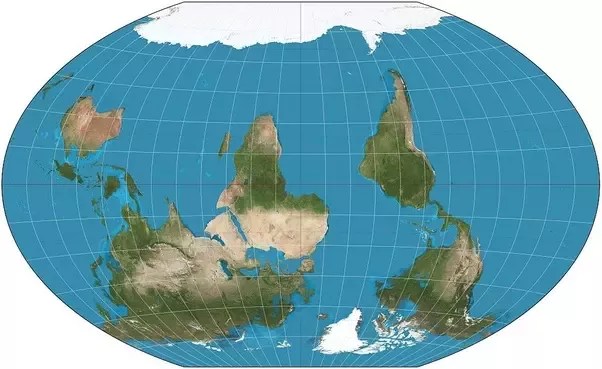
There is an episode in seventeenth chapter of Acts that tells the story of how Paul and Silas were arrested in Thessalonica because their preaching in the synagogue had resulted in a number of influential converts which upset the old guard and gatekeepers so much that, according to the text, they hired local ruffians to stir up a small riot, then blamed Paul and Silas for the fracas. When they dragged Paul and Silas before the city authorities this was their accusation: “These are the men who are turning the world upside down… They are all acting contrary to the decrees of the emperor, saying that there is another king named Jesus.”
Turning the world upside down. Getting into “good trouble.” Acting contrary to custom and law. Claiming that they answer to a higher authority named Jesus.
For a very long time this was the portrait of the Church: faithful people turning the world upside down, banding together in beloved community to worship and to take care of each other as a sign that God’s love was at work in them in the name of Jesus. When the empire was cruel, they protested with prayer and patience and, often, by being its victims so that the empire’s cruelty would be on full display. When the empire showed no compassion, they provided the missing safety nets, feeding the hungry, sheltering the homeless, binding up wounds, caring for the sick even in times of plague.
In a world that lionized strength, they were led by the Spirit who had said through the Apostle Paul, “My grace is sufficient for you, for power is made perfect in weakness.”(1 Cor. 12:9) In a era driven by wealth, they bowed to the one who had said, “Blessed are you who are poor for yours is the kingdom of God.” (Luke 6:20) In a world where their faith and fellowship was declared illegal and their ideas branded as subversive, they quietly grew in numbers and strength.
And then something happened. After three centuries of being illegal, three centuries of subverting the dominant paradigm, three hundred years of quiet protest as the alternative realm within the empire’s domain, three hundred years of living and practicing their faith sometimes quite literally underground, they did, indeed, turn the world upside down.
The emperor became one of them. Flavius Valerius Constantinus, also known as Constantine the Great, became a Christian.
And suddenly priorities changed. Suddenly it became vitally important for followers of Jesus to clarify what they believed so they could make sure that all these churches in all these cities in this vast empire were seeing things the same way, were talking about God the same way, and were teaching the same things. Because now it was the empire’s church.
In 325, the emperor called for a great council to meet. Bishops came from all corners of the empire. After intense debate the Doctrine of the Trinity was established as the first official doctrine of the official catholic (universal) Church. A Creed was written to ensure allegiance to what the Council had decided was the true faith.
In a blink of history’s eye, the focus of the followers of Jesus shifted. Now the emphasis was more on what people believed and less on what they were doing. Now the weight was more on what the faithful thought about Jesus and not as much on how they followed him. Now the more organic ecclesia, the beloved community of those living in companionship with Jesus, became the organized Church.
Almost overnight the world had turned the Church upside down. And while the empire adopted some of the values of the Church, much more did the Church fall in line with the empire.
And so it has been, more or less, for seventeen centuries.
Now we live in a time of crisis. We are still recovering from a pandemic where more than a million persons in our country and nearly seven million world-wide have died from the Corona virus. Economic tensions are high. Political tensions are higher, and sociological tensions are higher still. Empire is unstable within and without. And the Church…
If you were to judge by what you see in the media, it would look like the Church is fading into invisibility and irrelevance except for a few noisy, high-profile segments who get all the wrong kinds of attention. It’s true that membership numbers are shrinking. It’s true that there are fewer congregations in all denominations. It might look like the world has turned the Church upside down to such an extent that it’s all spilling out and becoming empty.
But I think it would be a mistake to believe that. I think, if you look closely and in the right places, especially in the margins of society, you’ll see something else happening. I think what you’ll see is that the Church is being quietly reformed, reshaped and repositioned so it can get back to the business of following Jesus more than just intellectually believing in Jesus. I think, if you can learn to see it, you’ll see that the Church is being reshaped to proclaim the kin-dom of heaven by showing examples of that kin-dom at work on earth as it is in heaven.
I think, if you look closely, you’ll find followers of Jesus standing firm in the protests against racism. You’ll find followers of Jesus working to protect voting rights. You’ll find followers of Jesus feeding the hungry and trying to stop evictions during a time of quarantine. You’ll find followers of Jesus in the courts trying to overturn wrongful convictions.
If you look, you’ll find people like Steve Taylor making movies like Blue Like Jazz that show people wrestling with issues of faith instead of immersing themselves in an unsustainable certainty. If you listen you’ll find music from followers of Jesus like Carrie Newcomer and poetry and prose from people like Parker Palmer and Ann Lamott who show us how to reach deep into our souls and touch the hearts of others without off-putting piety. If you look If you look beyond the historic antagonism between science and theology, you’ll find people like Ilia Delio writing a new kind of groundbreaking theology rooted in a cosmic interpretation of evolution and quantum physics. If you look, you’ll find followers of Jesus in every walk of life bringing light into the shadows and healing into the brokenness of the world.
If you look, I think you’ll find that the followers of Jesus are being repositioned so we can get back to doing what we did in the beginning…turning the world upside down.

 “The thing I love most about Advent is the heartbreak. The utter and complete heartbreak.” –Jerusalem Jackson Greer; A Homemade Year: The Blessings of Cooking, Crafting, and Coming Together
 Thoughts Along the Way