How Far Will You Go?

Luke 14:26-33

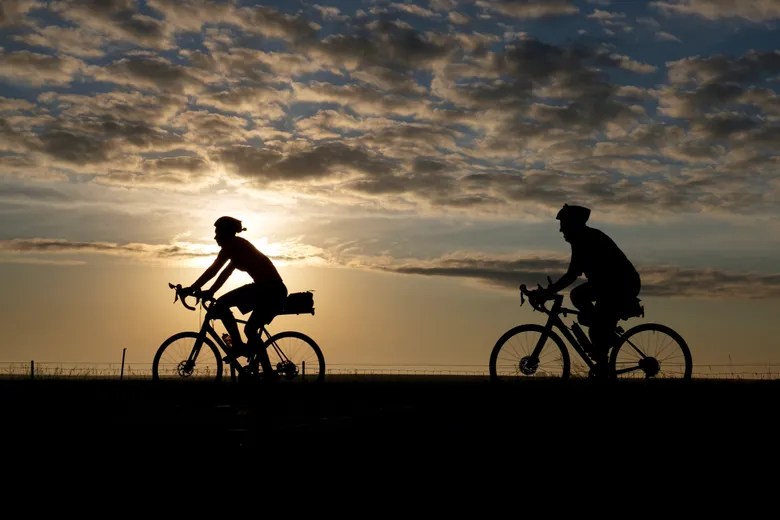
In the summer of 1972, when I was 19, my best friend, Mackay, and I decided that it would be all kinds of fun to ride our bicycles from Long Beach, California to Ensenada, Mexico.  And so one sunny morning in June, we set off pedaling down the Pacific Coast Highway with sleeping bags and a few other necessities strapped to our bikes. 

The miles flew by through Seal Beach, Huntington Beach and Newport Beach.  The hills of Laguna slowed us down a bit more than we had anticipated, but it was still too early for lunch when we reached San Clemente, so we decided to push on and have lunch in Oceanside.  But at the south end of San Clemente, we ran into a very big obstacle that we had not planned on.  Camp Pendleton Marine Base.  

We knew we wouldn’t be able to ride through Pendleton on the freeway, but we thought we could ride through the base on the old highway, which, according to our maps, still ran alongside the freeway.  The very nice Marine guard at the entrance to the base told us that that was not going to happen–  because the old highway was long gone.  

After some begging and pleading and a few choruses of “Gosh, We’ve Ridden All This Way,” he got on the phone and managed to get permission for us to ride through the base.   He sketched out a map for us and gave us very strict instructions to stay on the route he had outlined for us,  making it clear that straying off that route could have grave consequences, including but not limited to death, dismemberment or being imprisoned.  

An hour and a half later, we were utterly lost on a winding dirt road when a very perturbed Marine officer in a jeep came roaring up to us and asked us what the H-E-DOUBLE-Q we thought we were doing.  He also told us that we were perilously close to a live-fire range, then threatened to throw us in the stockade or make us enlist or both before finally deciding to guide us down to the southern end of the base.  He sent us off with a warning that if we ever set foot or bicycle tire on the base again there would be dire consequences unless, of course, we were in a Marine uniform.  

We had lost a lot of time on the confusing roads of Pendleton, so we powered through Oceanside and into San Diego without stopping for lunch.  Then came the ordeal of getting through San Diego on surface streets which proved to be far more complicated and took much longer than we had planned.  And just so you know, not even the military had GPS yet in those days, so we were at the mercy of outdated gas station roadmaps.  

The sun was getting ready to call it a day by the time we crossed the border into Tijuana.  We grabbed a couple of tacos from a taco cart then raced the sun for the last 14 miles to Rosarito Beach where we camped for the night.

The rest of the trip was pretty uneventful.  The ride from Rosarito to Ensenada on the old road up across the mountain—the only way bicycles were allowed to go—was a challenging but beautiful ride.  After a night in Ensenada, we turned around and headed for home.  

We spent the night at Rosarito Beach again, had a good breakfast at the cantina, then set out for the border.  We made good speed and got to Tijuana at about three in the afternoon which gave us plenty of time to make it to Silver Strand State Beach in San Diego where we were planning to pitch our tent for the night.

And that’s when we ran into another obstacle we hadn’t planned on.  There were three long lines of cars waiting to cross the border into California.  We rode our bikes up between the lines of cars to the state line expecting that the border guard would just wave us through—after all, where would a couple of guys on bicycles hide anything?   But the guard at the border wasn’t having it.  He gave us a lecture about trying to cut the line then told us to go all the way back to the end of the line.  Two hours later after standing in the heat astride our bicycles and breathing exhaust fumes from all the cars, we finally got back to the border where the same guard just waved us across without even asking for our I.D.   

At that point, we pulled over to the side of the road and took stock of where we were and what lay ahead of us.  We were exhausted, hot and sweaty.  Our legs were trembling and aching.  We didn’t even want to think about trying to get through Pendleton again.  What we wanted most was a good shower, a long, cold drink and a good meal. What we wanted was to be home.  

The bicycle ride that we had thought would be all kinds of fun had turned out to be all kinds of challenging.  Our stamina had evaporated in the exhaust fumes and unrelenting sunshine while we waited at the border.  We were fresh out of  possibility.  Our ride was over.  We made our way to the airport and, grateful for small miracles, managed to snag seats on a flight back to Long Beach.  

“Who would build a tower without first figuring out how much it’s going to cost?” asked Jesus.  “What king would go to war without first figuring out if he has a chance of winning?”  Who would ride a bicycle to Ensenada without making sure that they could actually get there and back?

Luke tells us that large crowds were traveling with Jesus as he made his way toward Jerusalem.  They had been watching him heal people.  They had been listening to him as he taught them about the kingdom of God and how radically different it is from the empire of Caesar.   The crowd was drawn to him.  They liked him.  They liked the different world he described, the better world that he told them is possible.  A lot of them were probably wondering what it might be like to be part of his inner circle—to be his disciple.

But there’s a big difference between being a fan and being a disciple.  

Jesus wanted to make it clear to the crowd that becoming a disciple means putting him and the kingdom of God first.  Jesus wanted them to understand that  becoming a disciple means you join him in making the kingdom of God, the commonwealth of God’s justice and kindness, a reality on earth as it is in heaven.  And Jesus wants us to understand that the other kingdoms of this world are going to resist you when you do that.  

The kingdom of family may be perfectly happy for you to be a fan of Jesus, even for you to embrace some of the things he teaches.  But they may not be so happy when you start giving away time and resources that they feel they have a claim to.  “Whoever comes to me and does not hate father and mother, wife and children, brothers and sisters, yes, and even life itself, cannot be my disciple,” said Jesus.  And no, he did not mean a disciple has to have some kind of intense animosity toward family, but he did mean that you, as a disciple, have to be willing to turn away from them, to let them go, when what they want is trying to pull you away from where Jesus is leading you.

The kingdoms, the empires of this world will resist you when you become a disciple of Jesus and set to work in earnest to make God’s reign a reality in your life and in the world.  

The kingdom of consumerism will sneer at you for not having the newest, shiniest, most fashionable, most advanced everything—clothes, gadgets, house, car or whatever when you, as a disciple of Jesus, learn to be satisfied with what you have and to give away what you don’t really need. 

The kingdom of capitalism will call you a socialist or maybe even a communist when you, as a disciple of Jesus, insist that those who have more should contribute to the well-being of those who have less.  When you remind them, as Jesus did, that God did not intend for the bountiful resources of the earth to enrich only a few, they will call you a radical and try to silence you.

The empire of power will oppose you when, as a disciple of Jesus, you stand up for the powerless, take the side of the marginalized and speak for the voiceless.  They will combat you when you  work to liberate the oppressed, fight for the dispossessed and lobby to set the captives free.  When you, as a disciple of Jesus, insist that all people are equal and beloved in God’s sight so the opportunities and benefits of life together in a civil society should be equal, too, regardless of race or gender or color or sexuality or country of origin.  They will call you a trouble-maker and try to put a stop to you…one way or another.

“Whoever does not carry the cross and follow me cannot be my disciple,” said Jesus, and those people in the crowd, especially the wannabe disciples, knew he wasn’t just using hyperbole.  They knew that the cross he was talking about wasn’t a metaphor.  He was telling them there would be a real cross with real nails and real pain…because when you try to establish the reign of God in the midst of the empire of coercive power, coercive power will try to stop you.  Brutally.  

If you want to be my disciple, says Jesus, then stop and think about what that might cost you.  There’s no shame if you can’t go that far.  There’s no shame if you just want to follow in the crowd and listen from a safer distance.  But you should know, eventually that won’t be enough.  

Eventually the Word of God will bring you to a place where either you will summon up the stamina and will to finish the ride… or call it quits.  Eventually either the vision of the kingdom of God will become all-consuming for you, or you will dismiss it as a nice but unobtainable ideal—or maybe some kind of prize in the afterlife if you are nice enough to qualify.

Traveling with Jesus sounds like all kinds of fun.  And it does have its rewards.  There are healings along the way.  He’s a marvelous teacher and the Way of life he envisions is beautiful.  He loves you and isn’t shy about making that known.   Jesus loves the crowd… but not everyone in the crowd is ready to go all the way to discipleship.  

Lots of people can ride a bicycle.  Comparatively few can ride it all the way to Ensenada and back.

How far will you go?
That Reasonable Voice

Luke 4:1-13;  Matthew 4:1-11

————-

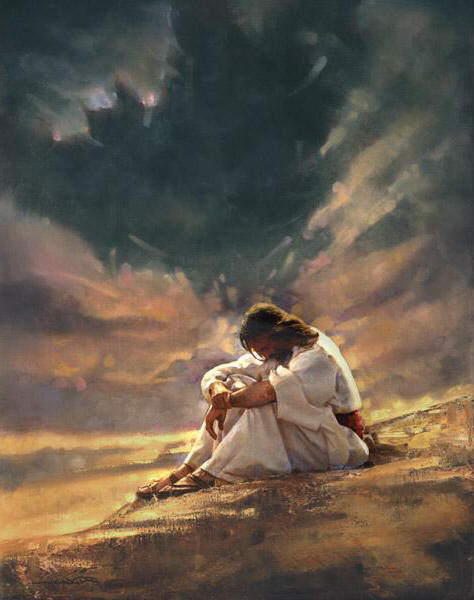
By the end of the third day his hunger pangs began to fade.  He had fasted before and expected this, and thanked God for this small blessing that made the discipline easier.  A little easier.  But he knew, too, that his craving for food could come roaring back unexpectedly, that his body’s impulse to survive would mean that no stray lizard or bug or mouse or even scorpion would be safe from his appetite unless he harnessed his will and tuned his physical hunger to the feast of his spirit. 

He had fasted many times for a day, several times for three days, and once even for seven days.  He knew what to expect and how to prepare for such fasts.  But this time was different.  Very different.  He had not prepared for this fast.  He had been led to it… led here, to this parched, eerie, yet providential place in the wilderness.  Led by a dove.  A snow-white dove who had fluttered down out of nowhere, out of everywhere, out of heaven to land on his dripping, baptized shoulder and nuzzle his cheek, then raised its face to the sunlight, eyes closed, head cocked and listening for a moment before taking wing and beckoning him to follow. 

            By the fourth day he had realized that here in the wilderness it would be very easy to lose track of the days, so every morning when the first light began to tinge the sky he made a mark on the sandstone face of the wadi with a sharp stone to count the days.  Then he would splash water on his face and his head and drink a sip from the small, clear pool that seemed to almost miraculously refill itself every night from a tiny trickle of stream.  He supposed there must be a spring somewhere uphill or, perhaps a larger oasis.  But this place and this water were enough for him, this small gash in the hillside with its pool and its single scrub tree and its long view across the desert.  

            And the days went by, each one like the day before.  Every morning the splash of water on his face—and with each splash hearing again, so fresh in his memory, that voice he had heard from heaven at his baptism:  “You are my son. The beloved.  I am well pleased with you.”  And he would stop and raise his wet face to the sky as the water from the pool mingled with his tears of joy.  And he would stand still like that until he felt the sunlight on his face.

He would recite the morning prayer as the sun crested the horizon.  Then he would sit, lean back against the canyon wall,  and pray.  And meditate.  And listen.  Listening to his body.  Listening to his breath.  Listening to the sounds of the wilderness.  Listening to the earth.  Listening to the night sky.  Listening for God.  And he would watch.  Watching the dust devils dance across the desert.  Watching the plants sway and bend in the wind.  Watching, sometimes, the endless dance of predator and prey, things hunting and things hunted.  Watching things rest.  Watching the stars move across the night.  Watching the moon slip through its phases.  Watching his own dreams.

            By the tenth day he would have had no clear idea of how long he had been there if it had not been for the marks he made on the wadi wall.  By the twentieth day he hardly moved.

He had vivid dreams when he slept and vivid visions when he meditated so that day and night began to blend together.   He began to slip fluidly from one state of consciousness to another with little or no space in between, from wakeful alertness to vision to dream so that it all seemed as one to him.  His thoughts and his prayers blended into a single thing, a constant conversation with God who had affirmed him at the Jordan.   He thought, he prayed about creation.  He thought, he prayed about humanity.  He thought, he prayed about his mission.  He prayed for clarity.  And when clarity came to him he sat with it and examined it, too, in his thoughts, his prayers.

            And often, often the devil would come to him.  To test.  To tempt.  To assault with phantasms of the imagination.  To ask leading questions.  To challenge.

            On the very first night he heard the maniacal gibbering of hungry hyenas prowling through the darkness not far from him and a great shadow of fear came moving up the wadi toward him.  But he just kept gazing at the stars and sang aloud from Isaiah, “The Lord is my light and my salvation.  Whom shall I fear?  The Lord is the stronghold of my life. Of whom shall I be afraid?”  And in the face of his smile and his song,  the fear evaporated.  And as the hyenas moved off into the darkness their gibbering sounded more like laughter.  But the devil didn’t give up

            Often the devil would come with questions.  Usually the same questions or accusations or challenges repeated ad nauseum…  

     Are you really the Son of God?  What does that even mean?  

     This mission of yours, is it really worth it?  

     Are they even worth saving?  And what makes you think you can do it?  

     You don’t think people are really going to understand what you’re trying to teach them, do you? 

     You know how this turns out, don’t you?

     Why are you even doing this…this fasting, this mission… any of it?   

Constant seeds of doubt insinuated, whispered in the spaces between his own thoughts in a voice that sounded almost like his own or like the Spirit.  Almost, but not quite.  

            He would sit and listen, sometimes marveling at the devil’s persistence but in the end he would tire of it and simply say, quoting Isaiah again, “The Lord called me before I was born.  In my mother’s womb he named me. The Lord said I will give you as a light to the nations that my salvation may reach to the end of the earth.”  And then the devil would leave him for a while. 

            On the fortieth day his body’s reserves were utterly spent.  He knew that one way or another this day would be the end of his fast.  He had seen angels in the night.  Or had he dreamed them?  He had often sensed them nearby like the hyenas.

            As the first light of morning seeped into the sky he had no strength to move the few steps to the pool for a splash of water and a drink.  Still, when the edge of the sun blushed across the horizon he managed to croak out the morning prayer of his people:

Blessed is the One who spoke and the world came to be. Blessed is the One!

Blessed is the One who continually authors creation.  Blessed is the One whose word is deed:  blessed is the One who is compassionate towards the world; blessed is the One who is compassionate toward all creatures. Blessed is the One who rewards the reverent.  Blessed is the One who exists for all time.  Blessed is the One who redeems and saves.

As he finished the prayer a large dust devil came spiraling lazily toward him and as it reached the apron of the hill released a tendril to blow its hot, gritty breath into his canyon, into his face.   And in that tendril of wind came the voice.  That voice so much like his own, so much like the Spirit, but not, insinuating itself between his thoughts. That voice with its poisonous seeds of doubt.  That horrible voice.  That reasonable voice.  

Why are you starving yourself?  You’ve fasted for forty days.  You’ve made your point.  You can’t do anyone any good if you die of starvation out here in the wilderness.  If you are the Son of God, command this stone to become a loaf of bread.

And there it is, he thought.  Two things.  Three things.  But so cleverly hidden in that reasonable little speech.  If you are the Son of God… this evil wants me to doubt not just myself, but God.  God who proclaimed me the beloved Son.  And then this evil suggests that I should prove my identity.  Prove it to whom?  To myself? To God?  To this voice of evil, this hot wind blowing through the canyon, through the delirium of my hunger?  And it would have me deny my humanity.  Hunger is part of being human.  Yes, I could change the stone to bread, but others cannot.  Others must make do with the resources at hand or go without.  So the last thing evil suggests might be the worst. Command the stone to become bread.  Turn your back on your humanity.  And make the stone something it is not.  Refuse to see it for what it is.  Ignore its worth and value and history as a stone.  Coerce creation to satisfy my hunger.  Do violence to this thing God has made and to the workings and patterns God set at work in the world so that I can take a shortcut to feeding myself?  Simply because I can?  No.

And then, because it would not do to simply say it in his thoughts, because, oddly, he wanted the stone to hear it, too, he said it aloud in his starved, parched voice…  

“One does not live by bread alone.”

No sooner were the words out of his mouth than he slipped into a vision.  He was floating high above the world looking down on all its gleaming cities, its mountains and valleys, forests, farms and deserts and seas.  An angel of light was beside him but there was something not quite right about either the angel or the light.  It was a dark kind of light.  And the angel wore a mask.  And from behind the mask came the voice.  To the ears of his spirit it still sounded reasonable, but it also sounded imperious.  And hollow.

“Look at this world, these kingdoms.  This is what you came for, isn’t it?  Isn’t that the promise?  That you will be king of kings and lord of lords, that your kingdom will rule over all others?  Well,  I will give you authority over all of them right now, all the glory that comes from them, because it has all been given over to me and I can give it to anyone I choose.  All you have to do is worship me.  Bow down to me and it’s all yours.”

He looked down at the world for a long moment and thought of the difficult, painful path that lay ahead of him if he stayed obedient to the plan.  He knew there was some truth in what the devil said.  This malevolence did seem to have sway over so much of what happened in the world and for a moment the devil’s caustic words echoed in his soul.  “It’s all been given over to me.”  But then he thought, By whom?  Who gave it over to you?  People gave it over to you.  People you tricked.  People you seduced with your reasonable, poisonous premises and your false promises.  I’m here to win it back one person at a time because it was never rightfully yours to begin with.  And again you try to tempt me with a shortcut.  But it only shows how much you misunderstand.  I did not come to seize power.  I came to give love.  And you can’t order people to love.  You can’t coerce love.  If I took your path I would be just another dictator.  And worship you?  As we stand in this place between heaven and earth in your sickly, false light?  You clearly do not know me.  And then, to bring the vision back to earth, he said aloud…

“It is written, Worship the Lord your God and serve only him.”

And again his words, the words of Scripture, broke the spell and the scene shifted.  But instead of bringing him back to the reality of the canyon, he found himself standing on the highest point of the temple with the devil standing beside him robed like a priest, his face behind a veil.  And from behind the veil came that voice, that reasonable voice.

“I don’t know why you insist on making things so difficult for yourself.  I’m not clear on what your plan is, holy man, but whatever you’re trying to accomplish, you’re going to need followers.   You’re going to have to persuade a lot of people to believe in you, to trust you.  You seem to believe that you’re the Son of God, so you’re going to need them to believe it, too.  I suppose you could do a miracle here and there,  turn up your charisma a bit, impress a few people at a time.  But why not just do something big and dramatic?  There is a scriptural warrant for it, too.  If you are the Son of God, just throw yourself down from here, for it is written, ‘He will command his angels concerning you, to protect you.’  And it’s also written, ‘On their hands they will bear you up so that you will not so much as bruise your foot against a stone.’”

And there it is again, he thought.  That challenge.  If you are the Son of God.  Prove it.  And it occurred to him that he was making the devil uneasy.  No, he thought, I don’t need to prove anything.  God doesn’t need to prove anything.  You are my son.  You are beloved.  I am well pleased.  I did hear God’s voice.  I did follow the Spirit.  And I did it out of love.  And those who follow me will do so out of love.  And yes, it will be hard.  And yes, they will miss the point, over and over again.  They will get it wrong.  They will make mistakes.  But that’s what forgiveness is for.  And impressing people, even with angels catching me in midair, won’t convince them to keep following when things get really difficult.  Only love can carry them through those dark valleys, those dark days, and admiration and astonishment are not the same thing as love.  No, this is just another shortcut and one that would be short lived, at that.   And then, as he stood atop the temple, without looking at the thing in the priest’s robes, he said aloud…

“You shall not put the Lord your God to the test.”

And as he said it, he suddenly realized why the Spirit had led him out here into the wilderness to be tested in the first place.  The challenge, he realized, was not to see if he was capable of being the Son of God.  That was a given.  The challenge was to see if he was able to also be fully human.  The challenge was to see if he was able to experience and feel and endure in the same way as those he had come to save.

The hot wind stopped.  There was a moment, a breath, a hesitation, and then a cool breeze filled the canyon.  He opened his eyes and saw angels regarding him with that odd mix of concern and joy and wonder that seems to be their perpetual expression.  He closed his eyes, he wasn’t sure for how long, and when he opened them again, a traveling merchant was beside him, urging him to take some bread.  He smiled and laid his hand fondly on the warm stone beside him as he said a prayer of thanks.

When you hear that reasonable voice that insinuates itself between your thoughts, that entices you to take the shortcut, the easy way, remember to listen not just to what it offers, but to what it asks for in return… and most importantly, what it asks you to deny.