What’s In A Name?

Matthew 1:18-25

She will bear a son, and you are to name him Jesus, for he will save his people from their sins. – Matthew 1:21

In Act II, scene II of Romeo and Juliet, Juliet is on the balcony lamenting the long-running feud between her family, the Capulets, and Romeo’s family, the Montagues.  Some ancient grudge that no one remembers keeps the two families at each other’s throats.  If you are born a Montague, any Capulet is your enemy.  And vice versa.  Their names are at war.  So Juliet, mooning over Romeo, protests to the night air:

‘Tis but thy name that is my enemy;

Thou art thyself, though not a Montague.

What’s Montague?  it is nor hand, nor foot,

Nor arm, nor face, nor any other part

Belonging to a man.  O, be some other name!

What’s in a name? that which we call a rose

By any other name would smell as sweet;

In one sense, of course, Juliet is absolutely right.  If you took away their warring surnames they would still be basically the same people—a couple of infatuated adolescents making bad decisions.  

In another sense, though, she’s absolutely wrong.  A rose by any other name might smell as sweet, but its name has power.  If I ask you to imagine a flower, you might imagine a daisy or a carnation or any number of other flowers.  But if I ask you to imagine a rose, you will not only see a rose in your mind’s eye, you might even smell its fragrance.  Names have power.

Do you have a nickname?  Most of the time—certainly not always—but most of the time we’re kind of fond of our nicknames.  A good nickname is a kind of gift.  You can’t make up your own nickname.  You really can’t even ask for one.  Nicknames just sort of happen, organically, or spontaneously.  One day friends or family just start calling you Goober or Dobie or Winkie or Duke and it just sort of sticks.

Nicknames are often descriptive in some way or have a story behind them.  And very often the use of that nickname is reserved for a certain circle of people.

My sister has a nickname.  It’s the name we in the family have always called her, in fact I sometimes have to think twice to remember her actual name.  All her close friends from high school and college know her by that nickname, but everybody else just knows her given name.  Her business name.  Not too long ago she was Facetiming with her best friend from high school and one of her work colleagues overheard her friend call my sister by her nickname.  The colleague said, “Oh!  That’s a great nickname!  I’m going to call you that from now on.”   This left my sister in a quandary.  On the one hand, she likes this colleague well enough, but on the other hand, she’s not “that kind of friend.”  She’s not part of the circle that uses that name.  That nickname belongs to a particular group of people from a particular time in her life.  That nickname belongs to family and certain long-standing friendships that are basically extended family.

Names don’t just label us as individuals, they can also socially locate us.  They carry context.  My dad, for instance, was known to everyone in his work life and social life as John or J.B.  But his brothers and sisters and all his nieces and nephews called him Norman or Uncle Norman.  He was always known by his middle name among family and among all the people who lived in the rural area of the Ozarks where he grew up.  But the military and the government and the business world don’t make allowances for people who are known by their middle names.  All the standard forms that you have to fill out at one time or another ask for first name and middle initial.  Those forms essentially renamed my dad.  In doing so, they not only changed his official identity, they changed his self-understanding.

The names people use for us can shape us.  They say something about how we relate to each other, about who we are and what we do in the world.   My wife’s students call her Dr. B.  Her grandsons call her Nani.  Same person, different roles, different contexts.  

Titles are something like nicknames.  If I talk about Professor Studious or Doctor Pokenprobe or Senator Foghorn or Judge Fairheart,  for instance, their titles immediately tell you something about them.  If nothing else, you know something about their role and function in society.  It’s interesting that both officially and in common practice, the title becomes attached to the name and can even function as the name.   

Messiah is a title.  So is Christ—and let’s be clear, Christ is not Jesus’ last name.  Originally Messiah and Christ meant the same thing.  Anointed.  Messiah is Hebrew and Christ is Greek.  

Some of the oldest Greek manuscripts of Mathew 1:18 read, “This is how the birth of Messiah happened…”  These older manuscripts don’t include the name of Jesus at this point, but everyone understood that Jesus is who the writer was talking about.  Ever since Peter’s confession, those who followed Jesus knew him as Messiah or Christ.  The Messiah, the Christ, is Jesus.  When Matthew introduces this story with the title of Christ or Messiah he is not only telling us that this is a story about the birth of Jesus, but that it’s also a story about God’s mission in the world through the person of Jesus and those around him.  It’s a story of how God works through people like us—people with doubts, fears, misgivings, but also hope and grace and a willingness to trust, even if it means suspending disbelief to believe the unbelievable.  The name Messiah, Christ, carries all that weight.

This is how the birth of Messiah happened.  Mary was betrothed to Joseph.  It was named a betrothal, but it was in fact a marriage.  It just hadn’t been consummated yet.  “But before they came together,” Matthew tells us,  “she was found to have a child in her womb from the Holy Spirit.”  Mary is pregnant but she’s a virgin.  And that circumstance gave her a new name.  She will be known forever as Virgin Mary, and just saying her name brings the whole birth story of Jesus to mind.

Because the marriage isn’t consummated, Joseph plans to divorce her quietly and privately so as not to expose her to all the cruelty, ridicule and meanness that she might experience if he were to denounce her publicly.  Certainly it’s his right in these circumstance to shame her and her family along with her—that would be regarded as perfectly righteous and just according to their law, tradition, and culture.  According to the law, she could even be stoned to death—although that was almost never actually done.  But Matthew tells us that Joseph is a just man.  A righteous man.  And now Joseph has another name:  Joseph the Just.  Fortunately for both Mary and Jesus, Joseph understands that there is more to being just and righteous than simply adhering to the letter of the law or meticulously observing cultural traditions.  Joseph understands that real justice, real righteousness requires compassion, understanding and mercy. 

The fact that he is unwilling to expose Mary to public shame says something really touching about his affection for her.  What he decides to do is, in fact, an act of love in its own way.  He decides to divorce her—to release her—but quietly.  Privately.  He doesn’t want to see her punished. 

It’s a good plan.  A grace-filled plan, but before Joseph can act on it, an angel intervenes in a dream and tells him to go ahead with the marriage because the child Mary is carrying was conceived by the Holy Spirit.  So now the unborn child has an additional name, a title:  Holy.

Joseph agrees to proceed with the marriage as instructed.  But the angel wants more from Joseph than just his forbearance.  The angel tells Joseph to name the child.

Naming a child is an act of adoption.  Even before the baby is born, the instruction to name the child creates a new relationship between the boy and Joseph.  Joseph will be his adoptive father.  The baby will be Joseph’s adopted son.

Joseph is told to name the boy Jesus.  Yeshua.  Which means God Saves.  That name will guide his destiny.  That name will define his relationship to all who follow him throughout history.  God saves.  Jesus saves.

What’s in a name?  Identity.  Relationships. History.  Even destiny.  Messiah is the long-awaited liberator who fulfills the hopes of the Jewish nation.  Christ is the savior of all humanity but also the very presence of God in, with and under all things in creation.  Jesus bears in his very name the message that God saves.

But Mary’s child, Joseph’s adopted son, has yet another name, and that name may be the most important one for all of us who long for the presence of God.  Matthew tells us that he will be called Emmanuel, which means “God with us.”  

To my mind, there is no name more meaningful, no rose as sweet as that one.  Emmanuel.  God with us.
Advent. The Brokenhearted Season.

“The extraordinary thing that is about to happen is matched only by the extraordinary moment just before it happens. Advent is the name of that moment.” – Frederick Buechner, Advent

Waiting.  It’s about waiting.  It’s about holding your breath as you pause for what’s coming.  It’s about remembering to breathe so you’re awake to see it arrive.  It’s about closing your eyes so you can hold on to the dream of what is possible, what might be.  It’s about opening your eyes to the beauty and pain and joy and sorrow and harshness and gentleness and passion and peace of everything that already is and everything that is about to unfold.  It is the excited pins and needles of anticipation.  It is the queasy uneasiness of suspense. Waiting.  We live in a season of waiting.

“The thing I love most about Advent is the heartbreak. The utter and complete heartbreak.” –Jerusalem Jackson Greer; A Homemade Year: The Blessings of Cooking, Crafting, and Coming Together

Yearning.  Feel the yearning.  Let yourself fall into it for a moment.  Wallow in it for a moment.  Let it break your heart that the world is not yet made whole.  Let it break your heart that the promise is not fulfilled.  Let your eyes well with unshed tears for all the tears shed in this world. Stare hard at the reality that our species seems to forever be a painful work in progress.  Feel the weighty disappointment of our failure to be what God made us to be and balance it on the sharp pinpoint of the promise that we, all of us, feel—the promise of what we could be, the promise of what we’re supposed to be.  Let yourself feel that deep knowing that things are not now as they are intended to be.  

Let it break your heart.  Then understand that it is through the broken heart that God enters the world.  It is through the broken heart that the promise is revived.  It is through the broken heart that the vision of what should be moves forward toward what will be.  It is through today’s broken heart that we see tomorrow’s vision of the world that God is calling us to build together.  It is the light aglow in the broken heart that illuminates the faces of those around us whose hearts are also breaking.  It is in the yearning of the broken heart that we find the Advent of Emmanuel, God With Us.   

 “Advent is the time of promise; it is not yet the time of fulfillment. We are still in the midst of everything and in the logical inexorability and relentlessness of destiny.…Space is still filled with the noise of destruction and annihilation, the shouts of self-assurance and arrogance, the weeping of despair and helplessness. But round about the horizon the eternal realities stand silent in their age-old longing. There shines on them already the first mild light of the radiant fulfillment to come. From afar sound the first notes as of pipes and voices, not yet discernable as a song or melody. It is all far off still, and only just announced and foretold. But it is happening, today.” –Alfred Delp; Advent of the Heart: Seasonal Sermons and Prison Writings, 1941-1944 

Advent. Arriving, but not yet.  Almost.  Get ready.  It’s coming.  It’s on the way.  But we are still in the midst of everything and in the logical inexorability and relentlessness of destiny.  Keep moving toward the moment.  Keep moving toward the encounter.  Keep still in the not-yetness of it all.  

Decorate.  From decoratus in the old poetic Latin that still connects our thoughts and words with those who decorated long before us, who handed down their most important and enduring ornaments.  Decorare – the verb that tells us to adorn, to beautify, to embellish.  From decus—to make fit, to make proper so that we might be ready with decorum.  Decorate your house.  Decorate your heart.  Decorate your language.  Decorate your greetings, your symbols, your understanding.  Decorate your soul. 

And yes, we need to decorate.  Yes, we need to fill the space around us, to fill our homes, our souls, our hearts with brighter things, to see more solid and enduring visions than the everyday shadow parade of destruction and annihilation.  We need to fill our ears with more stirring and touching melodies than shouts of self-assurance and arrogance, we need songs that lift the heart above the drone of lamentation, the weeping of despair and helplessness.  We need to keep moving toward the music and the light.  We need to lift our eyes to that first mild light of radiant fulfillment to come.  We need to fill our ears with the first notes of pipes and voices no matter how faint and far they may seem.  

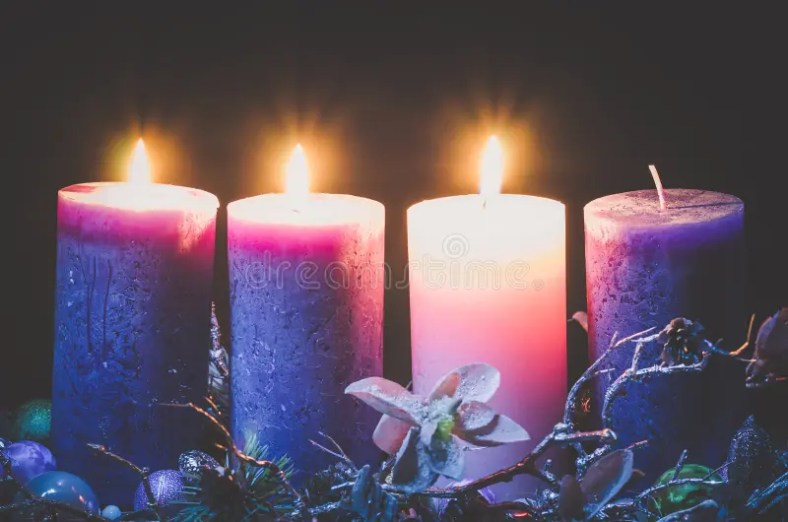
We need to hum and sing and play the old familiar songs that move our hearts to that softer, readier place where the True Song will be born.  We need to light the ancient candles one at a time to guide our steps down the long corridor of waiting, the pathway of arrival.  We need to bring each flame to the heart until the soul is aglow with the depth of its meaning and power.  

We need to reignite the flame of Hope to show us our way through the numbing fog of sameness.  We need to internalize the flame of Peace to quiet our anxieties and give us patience.  We need to swallow whole the flame of Joy to whet our appetite for the feast to come.  We need to embody the flame of Love to warm us as we journey together, to show us again that we are walking arm in arm, to remind us that our fates are intertwined, to illuminate the purpose of life, to lead us to the Light of the World.

“For outlandish creatures like us, on our way to a heart, a brain, and courage, Bethlehem is not the end of our journey but only the beginning – not home but the place through which we must pass if ever we are to reach home at last.” –Frederick Buechner, The Magnificent Defeat

Arrive.  But understand in your arriving that even after the meaningful journey of Advent we don’t arrive at Christmas.  Christmas arrives to us.  

The Gift comes to meet us on the road to take us to a place we could never attain on our own. We celebrate.  We ponder.  We dance and revel in the laughing lights of Hope and Peace and Joy and Love that carried us and that we carried with us, the lights that guided us to this place.  

We gaze amazed at the Gift before us, almost comically humble and plain, artlessly displayed and wiggling inside its wrappings, laid out on a bed of straw in a manger, and yet more artistically subtle, more beautiful and precious than the Magi gifts of gold, frankincense and myrrh.  And if you take a moment to think about what this Gift really is, what this baby really means to the world and what this baby means to you, in particular,  you may just hear the voice of Emmanuel saying, “Now the journey begins in earnest.  Be not afraid.  I’m coming with you.”

The Song of John

Matthew 3:1-11

Do you know about Wassailing?  Maybe you’ve heard the old Christmas season song that still gets some airplay this time of year:

Wassail! Wassail! All over the town,

Our toast it is white and our ale it is brown;

Our bowl it is made of the white maple tree;

With a wassailing bowl, we’ll drink to thee.

That song originated in Gloucestershire in the 18th century, but the tradition of wassailing in Great Britain goes back to ancient times.

  Most people today associate Wassailing with Christmas Caroling, and indeed there is a very old tradition called House Wassailing that is very much like Caroling.  You probably know the song Here We Come A-Caroling:

Here we come a-caroling among the leaves so green,

Here we come a-wandering so fair to be seen.

That song was originally Here We Come A-Wassailing and sometimes it is still sung that way.

In that old tradition of House Wassailing, the servants and tenants of wealthy landowners or wealthy townspeople would prepare a large bowl of Christmas Punch made from cider or ale and on Twelfth Night, January 5th, the last night of the Season of Christmas, they would gather outside the door of their landlord, sing a song to the good health and prosperity of their lords and ladies, and offer them a cup of punch to drink to their health.  In return, the lords and ladies would give the wassailers gifts of various kinds, fruit cakes, figgy puddings, and maybe even a year-end bonus of a few coins.

The Wassail song was a kind of Christmas blessing which you can still hear in the chorus of the familiar carol:

Love and joy come to you

And to you your wassail too;

And God bless you and send you

A Happy New Year

God send you a Happy New Year.

So, door-to-door Christmas Caroling evolved from House Wassailing.  But House Wassailing arose from an even older tradition called Orchard Wassailing which may have been brought to England by Danish Vikings.

The word Wassail comes from ves heill, which is Old Norse for “Be healthy!”  The Saxon version in Old English was Vas Hael, with the same meaning.  Be healthy. 

In the parts of ancient Britain where fruit trees were grown for producing cider, the ancient Saxons would go out into their orchards during the deep days of winter and sing to the sleeping trees to wake them up and bless them and encourage them to produce good and bountiful fruit in the coming year. 

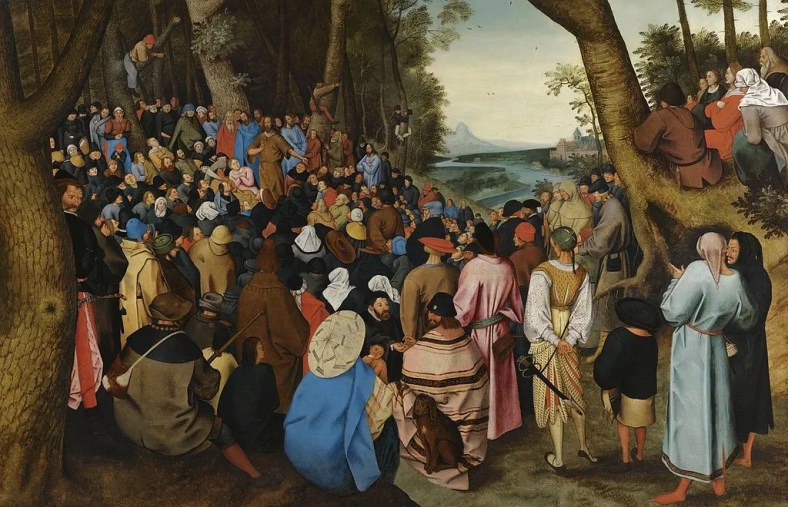
Our gospel text for this Second Sunday in Advent is Matthew’s version of the story of John the Baptist preaching and baptizing at the Jordan—the well-known “you brood of vipers” text.  It occurred to me that what John was doing in the wilderness by the Jordan was something like Orchard Wassailing—singing the people awake so they could produce good fruit for the coming kingdom.   And since I had the wassailing songs in my head, I began to play with what it might have sounded like if John had actually brought his message to the people in poetry or song.

When John Came A-Wassailing

In the fifteenth year of the sovereign rule of Emperor Tiberius,

a time of great oppression by the ruthless and imperious,

the Song of God fell into John, the son of Zechariah,

and he sang it out so strongly they thought he might be Messiah.

But he said, “No, I am not the one you all have been expecting.

I’m just the voice that sings out where our paths are intersecting.

I’m not worthy to receive him or to tie his sandal thong!

He’s the Maker of all Music.  I sing just one simple song.”

Like a-wassailing in the orchard to wake the cider trees,

the song of John cut through their pride and brought them to their knees.

As he showed them stark reality they began to realize

that the dream of God might now unfold before their very eyes.

So he sang them to the river, saying time was of the essence,

and immersed them in the cleansing flow of mercy and repentance.

His song filled up the wilderness with a tune to cleanse the heart

and wash away pretenses, and make hubris fall apart.

He sang, “Children of the covenant, you children of the promise,

you children of the circumstance and times that are upon us, 

all you questing, anxious seekers, all you folk both awed and flawed,

are you ready to stand naked in the searching gaze of God?

“All you tax-collecting schemers, all you servants of the sword,

all you noble trees and saplings in the orchard of the Lord,

sure, your roots go deep as Abraham and you’re clothed in your tradition,

but that’s not enough to save you on your pathway to perdition.

“O you brood of sneaky vipers, O you children of the snake,

Who warned you of the wrath to come? Who told you what’s at stake?

Did you think that life was something you could skate through or could fake?

Well, my sleeping trees of Zion, it’s time for you to wake.”

Then in dismay the people cried, “John, tell us what to do!

If our heritage means nothing is our fate left up to you?”

He said, “No that’s not in my hands, but it is somewhat in yours,

for the Winnower we’ve waited for is at the threshing floor.

“So now’s the time to change your ways, to make a course correction.

Now’s the time to turn around and go a new direction.

It’s time to change your heart and mind, not out of paranoia,

but because you’ve been immersed in the streams of metanoia.

“So give away your extra coat to the person who is shivering,

and give up half your sandwich to that hungry kid who’s quivering,

Don’t take more than what is rightful, do not lie, extort or cheat,

for the Winnower is coming and he’ll sift your soul like wheat.

“Look, the time has come to bear the fruit of new life and repentance

or you’ll reap the judgment that you’ve sown, you’re shaping your own sentence.

Even now the axe is at the root, even now your options dwindling,

so will you produce good cider?  Or will you be so much kindling?

“For the One who fashions every soul finds a use for each and all.

Will you be the cordial in the cup or the fire that warms the hall?

Will you be the sweet aroma drawing others to the table

or dissipate as so much smoke in a cautionary fable?

“And I know this all sounds frightening—to be assessed, appraised and weighed—

Every one of us has cause to fear, yet I sing, ‘Be not afraid!’

For the one who does the winnowing, the one who does the sifting,

Is the Soul of Grace and Love and Life, the Giver of all gifting.

“And I’m simply here to tell you in this wild and holy place

you have a chance to be made new, a chance to live in grace,

for the one who does the winnowing does not come to condemn

but to glean the seeds of love and good and make them grow again.

“So this song that sounds so ominous, it really is Good News!

for the God of second chances hopes that you will not refuse

to change your heart and mind and ways and show it by your fruits

with more loving and more honest and more generous pursuits.

The Word who will evaluate has not come to condemn

but to find the goodness in your soul and make it shine again,

for the one who does the winnowing, the one who does the sifting,

Is the Soul of Grace and Love and Life, the Giver of all gifting.

_____________

May the candles of Advent—Hope, Peace, Joy and Love—light our way to whole and healthy lives in a whole and healthy world. 

Vas Hael.

When the Men Are Silent

And he came to her and said, “Greetings, favored one! The Lord is with you.”  But she was much perplexed by his words and pondered what sort of greeting this might be. ­–Luke 1:28-29

When I was seven years old my parents sat me down and said, “We are moving to California.”  I was much perplexed by their words.  I mean, I understood all their words… individually… as words.  I even understood their words as they had assembled them together in that sentence: we are moving to California.  It conveyed coherent meaning to me.  But that was the problem.  

There was too much meaning in those five words strung together like that. They were heavy with meaning.  They meant that I would be saying goodbye to life as I knew it in Kansas City, Missouri, saying goodbye to my best friend Dennis who lived right next door and all my other friends and cousins and Daniel Boone Elementary School and the woods where we played and fireflies in the backyard in the summer and sledding down the little hill in front of our house in the snow in the winter and a million other things that were crowding into my seven year old mind all at once.  

Mom and Dad tried to make it sound like it was good news.  Beaches!  Disneyland!  New Friends!  Are there any scarier words in the world for a kid than “New Friends?”  Worse, while I was still feeling the shock of their words, still being perplexed and wondering in my seven-year-old mind if maybe I had somehow caused this terrible thing to happen, I realized that things were already in motion and there wasn’t a thing I could do to stop it.

“Greetings, highly favored one, the Lord is with you.”  When I read that Mary was perplexed by the Angel Gabriel’s words I can’t help but wonder if she wasn’t feeling something like what I felt that day when my parents told me that my life was about to change completely and utterly.  Perplexed is a pretty tame translation for the word that’s in Luke’s Greek text.  Perplexed sounds like she was a bit puzzled, perhaps a little confused.  Diatarasso, the verb in the original text means she was distressed, disturbed, disoriented and deeply troubled by the angel’s words.  

Mary apparently knew that the ones who are highly favored by the Lord, those whom the Lord was with, were not folk who tended to have quiet, easy, uneventful lives.  The Lord tends to use the “favored ones” to get things done.  The Lord tends to move them around like chess pieces.  If an angel shows up to tell you that you are favored by God and that God is with you, hold on to your wallet and make sure your passport is up to date.  It means that God has plans for you.  Mary may have only been a teenager, but she was smart and she knew the stories about those whom the Lord favored.  So she pondered what sort of greeting this might be and waited for the angel to say more.  What was God up to?  What was God planning to do with her?

After a long moment of Mary saying nothing, Gabriel cleared his throat.  He had a message to deliver.  God had given him a script and told him not to deviate from it.  So he launched back into his speech.  It’s a nice speech, a very formal speech, the kind of speech you’d expect from an archangel on a mission from God. 

He told her she would conceive—in her womb, just in case she was uninformed about where conception happened.  He told her that the child would be a boy and that she was to name him Jesus.  He would be great.  He would be called the Son of the Most High.  The Lord would give him the throne of David.  His kingdom will have no end.

Up to this point Mary had been silent, but now she interrupts.  “How can this be,” she asks,  “since I am a virgin?”  She’s got some moxie, this young woman.  She’s not afraid to stop an archangel in the middle of his spiel and say, “Excuse me, but you’re forgetting one very important technicality.  I don’t know how it’s done with angels, but for humans there’s a part of the process missing in your plan here.”

“Ah, yes,” says the angel.  “I’m coming to that.”  And he resumes his recitation.  He told her that the Holy Spirit would initiate the pregnancy, that the power of the Most High would overshadow her, so the child would be holy.  He told her that her relative, Elizabeth, who was getting along in years and had never had children was now pregnant because nothing is impossible with God.  And with that Gabriel reached the end of his script and stood there waiting for a response.

Finally Mary has a chance to speak again.  Our translations soften the impact of her words, I think.  “Here am I, the servant of the Lord; let it be with me according to your word.” That’s how it reads in the NRSV and our other English versions are in the same dynamic range.  They sound so docile compared to the force of the words in the original language.  Even the Latin toned it down from Luke’s original Greek where there are hints of both fierceness and resignation in her words that don’t come through in the niceties of our translations.

The first thing she says is rather startling, especially if you remind yourself that she is saying it to one of the seven archangels who stand at the throne of God.  The first thing she says, literally translated, is, “Look.”  She invites the angel to really see her.  “Look,” she says, “the slave girl of the Lord.  It will happen to me according to your word.”

“Look at me, angel, before you vanish back to heaven.  Really pay attention for a moment to the one who is highly favored, the Lord’s slave girl. Yes.  It will happen just as you have said.  How could it not?  I am a slave in heaven’s hierarchical eyes. Who am I to argue with God?  But before you go, see me.  And think about how your visit will change my life.  See me, and think about what it will cost me because the Lord is with me. Think about what it means to be the slave girl of God, even if the slave agrees to play her part.”

Then the angel departed from her.  The language is abrupt, so the departure probably was, too.  I wonder if the angel left so quickly because he suddenly realized that his announcement had been more than a little coercive.  Nothing in his message even hinted that Mary had any choice in the matter.  Maybe he realized this and was a bit embarrassed by his own imperious manner. Or maybe not.  Maybe he was just done.  Who can tell with angels?  They’re not like us.

The angel departed, and not long after that, Mary departed to see her relative, Elizabeth and her miraculous pregnancy.

Now here’s an interesting thing.  Have you ever noticed that in the original Advent, that time building up to the birth of both John the Baptizer and Jesus, the men in the story are silent?  Well, Gabriel talks a lot, but he’s an angel and everything he says is a message from God. Otherwise the male voices are almost entirely silent. 

Zechariah, Elizabeth’s husband doubts Gabriel when Gabriel tells him he’s going to be a father so late in life, so Gabriel makes him mute for the entire time of Elizabeth’s pregnancy.  Joseph is visited by an angel a few times in Matthew’s gospel, but Joseph never speaks. The women, though,  the women speak powerfully and prophetically.  

Elizabeth silences the gossipy busybodies of her community saying, “This is what the Lord has done for me when he looked favorably on me and took away the disgrace I have endured among my people.”

When Mary comes to see her, Elizabeth is filled with the Holy Spirit and blesses Mary with words so powerful that they have become embedded in the beads of the rosary and engraved on the psyche of our faith for all generations. “Blessed are you among women, and blessed is the fruit of your womb.” And then she affirms Mary for agreeing to her role in God’s plan: “And blessed is she who believed that there would be a fulfillment of what was spoken to her by the Lord.”   

Elizabeth speaks in the tradition of the five women prophets of the Hebrew Bible, Miriam, Deborah, Huldah, Noadiah, and the unnamed prophetess mentioned in Isaiah 8.  She speaks in the strength of Judith, the conviction of Tamar, and joyful mirth of Sarah. 

Moved by her words and stirred by the Spirit, Mary begins to sing a prophetic song full of joy and power to proclaim the work of God. Young, poor, unmarried and pregnant, she becomes a prophet.

“My soul magnifies the Lord, and my spirit rejoices in God my Savior,  for he has looked with favor on the lowliness of his servant.”  She rejoices that God isn’t transforming the world through the rich and the powerful, but instead is working through the poor, the humble, the disenfranchised and marginalized—through her and people like her. 

She sings of things to come as if they are already accomplished, a proleptic vision of God remaking the world from the bottom up.  “Prophets,” writes Barbara Brown Taylor, “almost never get their verb tenses straight, because part of their gift is being able to see the world as God sees it — not divided into things that are already over and things that have not happened yet, but as an eternally unfolding mystery that surprises everyone, maybe even God.”

“The song of Mary is the oldest Advent hymn. It is at once the most passionate, the wildest, one might even say the most revolutionary Advent hymn ever sung,” said Dietrich Bonhoeffer.   She sings of a sweeping change in the social order, a change so radical that her Magnificat has been regarded as politically dangerous in places where despots and tyrants have tried to maintain control.  It was banned in India during British rule.  When Guatemala was ruled by a military junta in the 1980s they outlawed her Magnificat, and it was outlawed again during the “dirty war” in Argentina when the mothers of disappeared children began papering the streets with posters of her song.  When you’re trying to rule people with an iron fist you can’t have them singing about power being overturned.

“He has shown strength with his arm; he has scattered the proud in the thoughts of their hearts.  He has brought down the powerful from their thrones, and lifted up the lowly;  he has filled the hungry with good things, and sent the rich away empty.”

In a time when her own land and her own her own people are burdened by the yoke of Rome, she sings of God’s faithfulness:  He has helped his servant Israel, in remembrance of his mercy, according to the promise he made to our ancestors, to Abraham and to his descendants forever.”

Mary sings an overture for the work of her son, The Son of the Most High.  She sings to proclaim God’s vision of justice.  She sings to remind us that we are called to share the vision and to share the work of making God’s commonwealth of justice and kindness a reality on earth as it is in heaven.

Look.  See the slave girl of the Lord.  An angel speaks to her and she is much perplexed.  But she is not silenced.  She sings the song of Advent, the song of God’s revolution.

When the men are silent, the women sing.  And their songs change the world.

The Light of Hope

The Light of Hope

Luke 21:25   

There will be signs in the sun, the moon, and the stars and on the earth distress among nations confused by the roaring of the sea and the waves.  People will faint from fear and foreboding of what is coming upon the world, for the powers of the heavens will be shaken.  Then they will see ‘the Son of Man coming in a cloud’ with power and great glory.  Now when these things begin to take place, stand up and raise your heads, because your redemption is drawing near.”

  Then he told them a parable: “Look at the fig tree and all the trees;  as soon as they sprout leaves you can see for yourselves and know that summer is already near.  So also, when you see these things taking place, you know that the kingdom of God is near.  Truly I tell you, this generation will not pass away until all things have taken place.  Heaven and earth will pass away, but my words will not pass away.

 “Be on guard so that your hearts are not weighed down with dissipation and drunkenness and the worries of this life and that day does not catch you unexpectedly,  like a trap. For it will come upon all who live on the face of the whole earth.  36 Be alert at all times, praying that you may have the strength to escape all these things that will take place and to stand before the Son of Man.”

Four years ago on the first Sunday in Advent, the Centers for Disease Control reported that 270,000 Americans had died from Covid 19.  That was 270,000 empty seats at the Thanksgiving table, enough people to fill every seat in Dodger Stadium five times.  By the end of December, that number had climbed to 350,831[1].  All in all, in the first four years of the pandemic more than 1.2 million Americans died.  Thanks to vaccines, increased awareness and improved health practices, only 43,360 people have died from Covid in the US this year.  But that is 43,000 reminders that the virus can still be a deadly threat.

Because of general economic disparity in our country, 47.4 million people live in households experiencing food insecurity.  17.9% of households with children under 18 were food insecure in 2024.  That’s actually a huge improvement over four years ago when 56% of such households were food insecure, but it still represents 14 million children who are at risk of going to bed hungry every night in a country that has more than enough resources to ensure that everyone has enough to eat.[2]  And sadly, it almost goes without saying that rates of food insecurity are higher  among people of color and in single-parent households headed by women.

Because of the high cost and shortage of housing, more than 25% of renters in California spend more than 50% of their income on housing, and more than 160,000 experience homelessness on any given night.

On the other side of the world, Israel’s war against Hamas has degenerated from a justifiable defense into genocide in Gaza and the violence has expanded into Lebanon.  Russia’s aggressive war against Ukraine has become more dire as Russia has deployed a new nuclear capable hypersonic missle.  

Turning back to home, here in the US we are living in a time of political tension and uncertainty which our recent election has exacerbated as we brace ourselves for what comes next.

In so many ways and for so many of us, this is a grim and precarious time.  The words of Isaiah ring in us like a bell:

O that you would tear open the heavens and come down,

          so that the mountains would quake at your presence—  

          When you did awesome deeds that we did not expect,

          you came down, the mountains quaked at your presence.[3]

Like the people of Israel in Isaiah’s day, we find ourselves crying out in fear and frustration.  O God, why won’t you do for us the kinds of things you did in the past?  Where’s our parting of the sea?  Where is our manna falling from the sky?   Where is our just and prophetic leadership?  Where is the “righteous Branch for David” that Jeremiah promised, the one who will “execute justice and righteousness in the land?”[4]

This feels like a grim and precarious time.  But then, it was a grim and precarious time for the people of Judah when Jeremiah spoke that promise.  It was a grim and precarious time when Isaiah begged God to break open the heavens and come down.  The people of the covenant were suffering under the harsh oppression of Babylon.  They wanted the same kind of divine intervention that so many of us are longing for right now.

It was a grim and precarious time when Jesus sat on the Mount of Olives and shared his apocalyptic vision of the temple’s destruction with his disciples. The people were chafing under the harsh and authoritarian governance of Rome.  And it was a grim and precarious time for Jesus, himself,  and for his disciples, even though at that moment the disciples seemed obtusely unaware of just how much danger they were facing.

As we read the story in the synoptic gospels of Mark, Matthew and Luke, Jesus is telling his disciples about the coming time of turmoil just days before Judas betrays him and he is crucified.  And it’s also a very perilous time when the writer of Mark, the earliest Gospel, records all this.  Biblical scholar Ched Myers has suggested that Mark was writing his account during the Jewish revolt against Rome, the rebellion that ended with the destruction of Jerusalem and the temple.  There is a haunting and prophetic prescience when Jesus says,

“But in those days, after that suffering,

         the sun will be darkened,

                  and the moon will not give its light, 

         and the stars will be falling from heaven,

                  and the powers in the heavens will be shaken.”

Luke expands on Mark’s words and broadens the reach of the calamity when he writes:

“There will be signs in the sun, the moon, and the stars and on the earth distress among nations confused by the roaring of the sea and the waves.  People will faint from fear and foreboding of what is coming upon the world, for the powers of the heavens will be shaken.   

These words of Jesus take on new weight on the first Sunday of Advent when you think of them being spoken during a time of violent political oppression, a time when any hint of opposition to the empire’s political or social order is quickly and decisively squashed.  These words have a sharper edge when you think of them being written down and preserved while the streets of the city are filled with the noise and bloodshed of battle between Roman soldiers and Jewish partisans, or when you think of the followers of Jesus being tortured and persecuted by the agents of the empire.  

Beware.  Stay alert.  Stay awake.  The advice Jesus gives is practical.  Keep your eyes open.  Don’t fall for false messiahs and conmen.  Don’t make yourself crazy trying to figure out God’s timetable because only God knows.  It’s going to be a bumpy ride.  There will be trying times.  Stay awake.

Advent is a time for pragmatism and preparation. 

Advent is a time to walk into the turmoil and the pain of life with your eyes wide open.  In an age and a season when it is all too easy to live in denial, when we would love to jump straight to Christmas, Advent calls us to take a hard look at the world around us.  Advent calls us to see the world as it really is, to see ourselves as we really are, to open our eyes to things that we maybe don’t want to see, to listen to things we might prefer not to hear.  Advent calls us to be realistic…about the world and about ourselves. 

In 1952, as the Korean War was dragging on and the Cold War between the United States and the Soviet Union was becoming more intense, William and Annabeth Gay wrote a haunting and profound hymn that, to my mind, perfectly captures the spirit of Advent for our age.  The title that Annabeth gave it is Carol of Hope, but you might know it by its first line which is how it’s titled In most hymnals, a line that sounds anything but hopeful:  Each Winter As the Year Grows Older.[5]

Each winter as the year grows older, 

we each grow older, too.  

The chill sets in a little colder; the verities we knew

seem shaken and untrue.

When race and class cry out for treason, 

when sirens call for war, 

they overshout the voice of reason and scream till we ignore

 all we held dear before.

Yet I believe beyond believing that life can spring from death,

that growth can flower from our grieving, 

that we can catch our breath

and turn transfixed by faith.

So even as the sun is turning to journey to the north,

the living flame, in secret burning, 

can kindle on the earth

and bring God’s love to birth.

O Child of ecstasy and sorrows, O Prince of peace and pain,

brighten today’s world by tomorrow’s,

renew our lives again;

Lord Jesus, come and reign!

Advent calls us to be realistic about the shadow side of life, to mark where we’ve not only grown older but colder, to notice where the verities we knew seem shaken and untrue.  Advent calls us to identify those voices that overshout the voice of reason so we can be more attentive to reason and to the Prince of peace and pain.  

But Advent doesn’t simply ask us to dwell in gloom and shadows.  Advent also calls us to bring light—four lights to restore brightness and health to a self, a nation, a world stumbling in murky clouds of doubt and fear—four lights to prepare the way for the true light of Christ. 

And the first light is Hope.

“Genuine hope is not blind optimism,” said Jürgen Moltmann.  “It is hope with open eyes, which sees the suffering and yet believes in the future.” And perhaps Barack Obama was thinking of Moltmann when he said, ““Hope is not blind optimism. It’s not ignoring the enormity of the task ahead or the roadblocks that stand in our path. It’s not sitting on the sidelines or shirking from a fight. Hope is that thing inside us that insists, despite all evidence to the contrary, that something better awaits us if we have the courage to reach for it, and to work for it, and to fight for it. Hope is the belief that destiny will not be written for us, but by us, by the men and women who are not content to settle for the world as it is, who have the courage to remake the world as it should be.”

Hope is that thing inside us that insists, despite all evidence to the contrary, that something better awaits us.

“The very least you can do in your life is figure out what you hope for,” wrote Barbara Kingsolver. “And the most you can do  is live inside that hope.  Not admire it from a distance but live right in it, under its roof.”[6]

On this first Sunday of Advent, as we begin a new year in the calendar of the Church, we light the candle of Hope.  If the sun is darkened and the moon will not give its light and the stars seem to be falling, light the candle of hope.

If we are suffering now because of politics and war and the erosion of truth and trust, Saint Paul reminds us that, “suffering produces endurance,  and endurance produces character, and character produces hope,  and hope does not disappoint us, because God’s love has been poured into our hearts through the Holy Spirit that has been given to us.”[7]  “If we hope for what we do not see,” he said, “we wait for it with patience.”[8]

So if it looks like the sun has been darkened and the moon won’t shine and the stars are falling and the world is more or less metaphorically ending, in the spirit of Advent, let’s be realistic and honest about it.  Let’s stay awake and aware.  And then let’s light a candle of Hope.  Because Hope is that thing inside us that insists, despite all evidence to the contrary, that something better awaits us.

May the God of hopefill you with all joy and peace in believing, so that you may abound in hopeby the power of the Holy Spirit.[9]


[1] CDC National Center for Health Statistics;  2020 Final Death Statistics: Covid 19 as an Underlying Cause of Death vs. contributing Cause

[2] Food Research and Action Center https://frac.org/news/usdafoodsecurityreportsept2024

[3] Isaiah 64:1-2

[4] Jeremiah 33:14-16

[5] Each Winter As the Year Grows Older, William Gay, 1920-2008;

  Tune: Carol of Hope, Annabeth Gay, 1925-2020;  Evangelical Lutheran Worship, #252

[6] Barbara Kingsolver, Animal Dreams

[7] Romans 5:4-5

[8] Romans 8:25

[9] Romans 15:13

Light a Candle

You find yourself glancing at the calendar and the clock with a slight sense of panic. So much to do and the days are rushing by. Busyness blinds you to the presence and the present of the Present. Decorating. Shopping. Wrapping. Mailing. Visiting. Hosting.

Stop. Light a candle.

You find yourself constantly wondering just how much Christmas you can afford. You feel as if you dare not shut off your mental calculator and the joys of the season are clouded by the Ghost of Bills yet to come. Every gift becomes a bit of addition which, in turn, becomes an anxious subtraction.

Stop. Light a candle.

You find yourself lost in a lonely daydream as the Ghost of Christmas Past fills your thoughts with scenes of happier holidays from days gone by. An old familiar song reminds you of friends and family no longer near at hand and your heart aches more than just a little.

Stop. Light a candle.

You find yourself dizzy from trying to steer your way through the year-end collision of events. Reformation. Halloween. Election. Veterans Day. Christ the King. Advent. Christmas. New Year. Taxes. Fiscal Planning.

Stop. Light a candle.

You find yourself simply feeling as if something is missing, as if you’re forgetting something, as if there must be something more.

Stop. Light a candle.

Five candles. Three blue and one pink for Advent. One white for Christmas.

First, ignite the flame of Hope, the Prophecy Candle. Let this flame remind you that God’s promises not only echo through the past but draw us toward the future. Let the light remind you that just as a feather will rise naturally above the heat of a single flame, so you, too, can be lifted without effort by the Spirit that warms and enlightens us all.

Next, light the flame of Peace, the Bethlehem Candle. Let this flame remind you that the peace of God is found in humble moments and humbler places. Let this light remind you that the real gift we all seek is something no amount of money can buy. Peace.

Then light the flame of Joy, the candle of a different color, the Shepherd’s Candle. Sing the old familiar songs of Joy and surround yourself with light and music. Dance with the Ghosts of your past and know that they are very much alive in your memories and in the presence of God. Watch the old movies, taste the old, familiar flavors. Let this light rekindle your senses and remind you that this song of Joy is eternal.

Now light the flame of Love, the Angels Candle. Let this light bring equilibrium to these days of celebration. Let it guide you through the maze of these impacted days. Let the flame of Love burn a pathway through the adiaphorous clutter. Let its warmth empower you to embrace the days. Swallow its light whole so that it shines through you.

Finally, sit in the presence of the light of Christ. Let the Candle of Christmas remind you that the most humble child born in the most unlikely circumstances bears the image and likeness of the Maker of Us All. Let it remind you that the thing that has been missing in our lives, the object of our unsettled yearning, is not a thing or an object at all, but the very Source of our Hope, Peace, Joy and Love.

O come, O come, Emmanuel.

A Way in the Wilderness

Mark 1:1-8

The beginning of the good news of Jesus Christ, the Son of God. 

2        As it is written in the prophet Isaiah,

         “See, I am sending my messenger ahead of you,

                  who will prepare your way; 

3        the voice of one crying out in the wilderness:

                  ‘Prepare the way of the Lord,

                  make his paths straight,’” 

4 John the baptizer appeared in the wilderness, proclaiming a baptism of repentance for the forgiveness of sins.  5 And people from the whole Judean countryside and all the people of Jerusalem were going out to him, and were baptized by him in the river Jordan, confessing their sins.  6 Now John was clothed with camel’s hair, with a leather belt around his waist, and he ate locusts and wild honey.  7 He proclaimed, “The one who is more powerful than I is coming after me; I am not worthy to stoop down and untie the thong of his sandals.  8 I have baptized you with water; but he will baptize you with the Holy Spirit.”

“The beginning of the good news…”

Those words take us somewhere, don’t they?  Right away they tell us we’re going to hear a story.  You might as well say Once Upon a Time. 

The beginning of the good news of Jesus, the Christ, the Son of God.  But Mark, the writer telling us this story, doesn’t start with Jesus.  He reminds us that the story started before Jesus.  Long before Jesus.  He reminds us that Advent, before it was a season in the Church calendar, was a long season of history, centuries of waiting for Emmanuel to come.  He reminds us that during that long Advent of history God would speak through the prophets from time to time to remind the people that the covenant and promises that God had made to Abraham and Sarah and to Moses and to David had not been forgotten.  The prophets would remind them that God was with them in their times of trouble, and the day was coming when God would be with them more powerfully and concretely than they dared to imagine.  

Mark reminds us that “the beginning of the good news of Jesus, the Christ, the Messiah, the Son of God”—that this story had its real beginning long before Jesus arrived.  “As it is written in the prophet Isaiah,” he writes, to remind us that even though Jesus is the title character of his story, he’s really not entering the stage until the second act.  The stage has to be set.  The way has to be prepared.

Even the announcement has to be announced. To give the prophetic voice extra weight, Mark gives Isaiah a preamble from Malachi and simply refers to them both as Isaiah because who said it is not as important as what is being said:

“See, I am sending my messenger ahead of you,

                  who will prepare your way;” – that’s Malachi–

         “the voice of one crying out in the wilderness:

                  ‘Prepare the way of the Lord,

                  make his paths straight” –that’s Isaiah.

But it isn’t Jesus the prophets are announcing.  Not here anyway.

First, there is another character we need to hear from.  Another prophet, some would say.  John, the Baptizer, dressed like Elijah and living off the land out in the wilderness where he can listen to God without distractions.  John the Baptizer who wants to be sure we’re ready, really ready for Jesus, the Christ, the Son of God.  So he prepares the way by “proclaiming a baptism of repentance for the forgiveness of sins” and announcing—wait for it—that someone even more powerful is coming. 

Repentance.  It’s not something you would think would draw a crowd.  But Mark tells us that “people from the whole Judean countryside and all the people of Jerusalem were going out to him, and were baptized by him in the river Jordan, confessing their sins.”  He must have been some preacher, that John.

Repentance.  In English it’s a smudged and leaden word filled with regret and contrition.  Repentance is a stinging backside, bruised knees and hunched shoulders.  I suggest we ban it and replace it with the Greek word: Metanoia.  Metanoia is climbing out of a dank hole into the sunlight.  Metanoia is being freed from the nasty habits that ruin your health and suck the life out of your wallet.  Metanoia is putting on new glasses with the right prescription and realizing that you had only been seeing a third of the details and half the colors in the world.  Metanoia  is shoes that fit right, have cushy insoles, perfect arch support, and take the cramp out of your lower back.  Metanoia is thinking new thoughts and behaving in new ways.  Metanoia is a change of mind, a change of heart, a change of life, a new direction.  

John came proclaiming a baptism of metanoia.  And to make sure the idea really stuck with people, he gave them an experience to go with it.  He dunked them in the river.  “There.  You were dry, now you’re wet.  You were going down the wrong road, now you’re on the right one.  You were dusty and crusty, now you’re clean.  You’re changed.  You’re new.  And just in time, too.  Because the One we’ve been waiting for is coming.  I’m just the warm-up band.  I dunked you in water.  He’s going to marinate you in the Holy Spirit.”

A voice cried out in the wilderness, “Prepare the way of the Lord!”

A voice cried out! “In the wilderness prepare the way of the Lord!”

There is no punctuation in the ancient languages.  So the translators try to make sense of it for us.

Is it a voice in the wilderness calling us to prepare?  Or is it a voice calling us to prepare a way in the wilderness?  Isaiah has it one way, Mark has it the other way.

Either way the message is clear: this is a time to prepare.

Sue Monk Kidd wrote about how when she was younger she would take time during Advent to sit next to the nativity set under her Christmas tree and think about the past year and then think about the coming of Jesus and what she might do to prepare herself for a meaningful Christmas.  One year she decided to visit a monastery for a day.  As she passed one of the monks she greeted him with, “Merry Christmas.”  He replied, “May Christ be born in you.”  His words caught her off guard and she found that she had to sit with them for a long time. It was in those words from that monk that she realized that Advent is a time of preparation and transformation.  A time of metanoia.  It is a time, she wrote, “of discovering our soul and letting Christ be born from the waiting heart.”

What kind of metanoia do you need to open the path for Christmas, to make way for Christ to be born anew in your waiting heart?   

This has in many ways been a wilderness year for all of us.  Sometimes it has seemed that the way of Christ, the way ahead is not clear.  Except for this: the way of Christ is the way of love.  Love God. And love our neighbors as ourselves. 

It’s been hard to love our neighbors when we can’t be with them in person, when we have to wear masks, when we can’t hug, when we have to maintain physical distance.  It’s been hard to understand that those things are, in fact, acts of love.  

It’s been hard to stand together when we have to stay so far apart.

But this, too, is part of our Advent.  This has been part of our wilderness where we have heard the voice cry out, calling us to prepare the way of the Lord.  This is where we are preparing the way for Christ be born in the waiting heart.  This is where we are transformed.  This is our metanoia.

We’ve all had conversations about “when things get back to normal.”  But maybe this Advent, this Prepare the Way of the Lord time, this metanoia time is a good time to ask if we really want things to get back to normal.

Sure, we want to be done with the pandemic and the restrictions and protocols.  But do we really want to go back to the kind of hectic lives we were living before?  What have we been learning during this time?  We have a chance to make things new, different, better.  So what is Christ calling us to make of this life?  As we make a new path through the wilderness, what is our collective metanoia?  What is our new way, our better way?

There’s an old John Denver song, Rhymes and Reasons, that I’ve had stuck in my head for weeks now.  Sometimes I think, “Oh there’s that dumb song again.”  But other times I just let myself fall into it.  And you know, it really has brought me more than a little hope and comfort.  For weeks now.  Especially at times when I’ve felt really sad.  Or really angry.  Or both.

So you speak to me of sadness and the coming of the winter

Fear that is within you now and it seems will never end

And the dreams that have escaped you and the hopes that you’ve forgotten

And you tell me that you need me now and you want to be my friend

And you wonder where we’re going, where’s the rhyme and the reason

And it’s you cannot accept it is here we must begin

To seek the wisdom of the children and the graceful way of flowers in the wind.

For the children and the flowers are my sisters and my brothers

Their laughter and their loveliness can clear a cloudy day

Like the music of the mountains and the colors of the rainbow

They’re a promise of the future and a blessing for today.

Though the cities start to crumble and the towers fall around us

The sun is slowly fading and it’s colder than the sea

It is written from the desert to the mountains they shall lead us

By the hand and by the heart and they will comfort you and me.

In their innocence and trusting they will teach us to be free.

For the children and the flowers are my sisters and my brothers

Their laughter and their loveliness can clear a cloudy day

And the song that I am singing is a prayer to nonbelievers

If you come and stand beside us, we can find a better way.

As I said, that song has been running through my head for weeks now.  In my more cynical moments I think it’s kind of insipid and puerile.  I mean really, “the children and the flowers are my sisters and my brothers.”  But then I stop and listen again.  And I realize that that cynical critic in me, that inner voice that wants to disparage the simple honesty of these lyrics and even the healing joy of my own experience of the song is one of the places where I need metanoia.  This is where I need to clear a path in the wilderness.  My own internal wilderness.

So.  This is the beginning of the good news of Jesus, the Christ, the Son of God.  This is the beginning of the story.  Get ready.  Jesus is coming.  Christmas is coming.  Prepare the way.

This Is The Time

It’s time.  

Time to get out the boxes with the special decorations, each one with its own story and all of them together part of the bigger story.  It’s time to deck the halls, to fill the home with light and music.  It’s time to dig out recipes and to bake.  It’s time to prepare.

I loved Christmas as a kid.  I still do.  What I didn’t realize for years, though, was how much I loved Advent.  I loved all the preparation. I loved the anticipation.  I loved the way the house looked when it was all decorated.  I loved the way the kitchen smelled when it was full of baking and roasting.  I loved how everyone, even though they were a bit frazzled, still managed to be in a pretty cheery mood.  

I love the honesty of Advent.  I love the sense of longing in the texts and prayers.  “Stir up your power, Lord Christ, and come.”  And yes, Christ has already come to us, but no, Christ has not yet returned, and we surely do feel sometimes like he’s overdue.  There is an honest yearning for things to be better, especially in this year when everything has been scrambled and turned sideways by the pandemic.  “Oh that you would tear open the heavens and come down!”  Isaiah shouts for us.  We’re in over our heads.  “Restore us, O God of hosts; let your face shine, that we might be saved!” the Psalmist cries out for us.  But we also hear, “Comfort, O comfort my people, says your God… Every valley will be lifted up.  Every mountain and hill made low.  The uneven ground shall be made level and the rough places a plain.”  Things will be smoother.  Something better, something brighter is coming.  Help is on the way.  A new day will dawn.  

I love the way Advent, if we pay attention to it, sets the scene for Christmas by reminding us that we are not the first ones to live in a time of shadows hoping for light.  “During the rule of King Herod of Judea…” we read in the first chapter of Luke.  This is the same King Herod who, in Matthew’s gospel, murdered all the male babies in Bethlehem under age two.  This is the Herod who killed two of his own sons because he suspected them of plotting against him, the Herod who killed his wife Mariamne, the Hasmonean princess, along with her brother and her mother.  This is the Herod who replaced the High Priest in the temple with a Sadducee who would be more inclined to do things the way he wanted them done.  This is the same Herod who, according to Josephus, as he lay dying, ordered that one member of every family in Judea should be slain so that the whole country would be in mourning when he died. Fortunately the order was never carried out, but the people never forgot that it had been issued.  

This is the time, Luke reminds us, when Quirinius is appointed legate of the expanded Roman province of Syria with the specific mandate to carry out a census, something forbidden by Jewish law, so that Tiberius can impose a new tax.  This is a time when Rome’s domination of Judea is iron-clad and iron-fisted with no velvet glove to make it less harsh.  This is a time when work is hard, taxes are heavy, and freedom is limited.

But this is also the time when an angel appears to an aged childless couple, Elizabeth, whose name means “God keeps promises” and to Zechariah, whose name means “God remembers.”  The angel promises them that they will have a child and that they are to name him Yochanan, John, which means “God is gracious,” and that many will rejoice because of him and he will be filled with the Holy Spirit.

This is the time when a kinswoman comes to visit Elizabeth, a young, unmarried kinswoman named Mary, who is also pregnant with a miraculous child.  And when Elizabeth sees her, her unborn child leaps in her womb.  This is the time when Mary sings a prophetic song of joy and rebellion that has been bringing hope to people on the margins for two thousand years.  My soul magnifies the Lord and my spirit rejoices in God my Savior, for he has looked with favor on the lowliness of his servant… He has scattered the proud in the thoughts of their hearts.  He has brought down the powerful from their thrones, and lifted up the lowly; he has filled the hungry with good things, and sent the rich away empty…”

This is the time to sit with the candles of hope, peace, joy, and love.  This is the time to remember.  And to look forward.  This is Advent.  And soon, Christmas.

The King shall come when morning dawns and light triumphant breaks, when beauty gilds the eastern hills and life to joy awakes.

Waiting

“The extraordinary thing that is about to happen is matched only by the extraordinary moment just before it happens. Advent is the name of that moment.”– Frederick Buechner, Advent

Waiting.  It’s about waiting.  It’s about holding your breath as you pause for what’s coming.  It’s about remembering to breathe so you’re awake to see it arrive.  It’s about closing your eyes so you can hold on to the dream of what is possible, what might be.  It’s about opening your eyes to the beauty and pain and joy and sorrow and harshness and gentleness and passion and peace of everything that already is and everything about to unfold.  It is the excited pins and needles of anticipation.  It is the queasy uneasiness of suspense. Waiting.  We live in a season of waiting.

waiting“The thing I love most about Advent is the heartbreak. The utter and complete heartbreak.” –Jerusalem Jackson Greer; A Homemade Year: The Blessings of Cooking, Crafting, and Coming Together

Yearning.  Feel the yearning.  Let yourself fall into it for a moment.  Wallow in it for a moment.  Let it break your heart that the world is not yet made whole.  Let it break your heart that the promise is not fulfilled.  Let your eyes well with unshed tears for all the tears shed in this world. Stare hard at the reality that our species seems to be forever a painful work in progress. Feel the weighty disappointment of our failure to be what God made us to be and balance it on the sharp pinpoint of the promise we, all of us, feel—the promise of what we could be, the promise of what we’re supposed to be.  Let yourself feel that deep knowing that things are not now as they are intended to be. Let it break your heart.  Then understand that it is through the broken heart that God enters the world.  It is through the broken heart that the promise is revived.  It is through the broken heart that the vision of what should be moves forward toward what will be.  It is through today’s broken heart that we see tomorrow’s vision of the world God is calling us to build together.  It is the light aglow in the broken heart that illuminates the faces of those around us whose hearts are also breaking.  It is in the yearning of the broken heart that we find the Advent of Emmanuel, God With Us.

“Advent is the time of promise; it is not yet the time of fulfillment. We are still in the midst of everything and in the logical inexorability and relentlessness of destiny.…Space is still filled with the noise of destruction and annihilation, the shouts of self-assurance and arrogance, the weeping of despair and helplessness. But round about the horizon the eternal realities stand silent in their age-old longing. There shines on them already the first mild light of the radiant fulfillment to come. From afar sound the first notes as of pipes and voices, not yet discernable as a song or melody. It is all far off still, and only just announced and foretold. But it is happening, today.”–Alfred Delp; Advent of the Heart: Seasonal Sermons and Prison Writings, 1941-1944

 Arriving.  But not yet.  Almost.  Get ready. It’s coming.  It’s arriving.  But we are still in the midst of everything and in the logical inexorability and relentlessness of destiny.  Keep moving toward the moment.  Keep moving toward the encounter.  Keep still in the not-yetness of it all.  Decorate. Decorate your house.  Decorate your heart.  Decorate your language.  Decorate your greetings, your symbols, your understanding.  Decorate your soul—from decoratusin the old poetic Latin that still connects our thoughts and words with those who decorated before us, who handed down their most important and enduring ornaments.  Decorare – the verb that tells us to adorn, to beautify, to embellish.  From decus—to make fit, to make proper so that we might be ready with decorum.  And yes, we need to decorate.  Yes, we need to fill the space around us, to fill our homes, our souls, our hearts with brighter things to see, more solid and enduring visions than the shadow parade of destruction and annihilation.  We need to fill our ears with more stirring melodies than shouts of self-assurance and arrogance, songs that lift the heart above the drone of lamentation, the weeping of despair and helplessness.  We need to keep moving toward the music and the light.  We need to lift our eyes to that first mild light of radiant fulfillment to come.  We need to fill our ears with the first notes of pipes and voices no matter how faint and far they may seem.  We need to hum and sing and play the old familiar songs that move our hearts to that softer, readier place where the True Song will be born.  We need to light the ancient candles one at a time to guide our steps down the corridor of waiting, the pathway of arrival.  We need to bring each flame to the heart until the soul is aglow with the depth of its meaning and power.  We need to reignite the flame of Hope to show us our way through the numbing fog of sameness.  We need to internalize the flame of Peace to quiet our anxieties and give us patience. We need to swallow whole the flame of Joy to whet our appetite for the feast to come.  We need to embody the flame of Love to warm us as we journey together, to show us again that we are walking arm in arm and our fates are intertwined, to illuminate the purpose of life, to lead us to the Light of the World.

“For outlandish creatures like us, on our way to a heart, a brain, and courage, Bethlehem is not the end of our journey but only the beginning – not home but the place through which we must pass if ever we are to reach home at last.”–Frederick Buechner, The Magnificent Defeat

 Arrive.  But understand in your arriving that even after the meaningful journey of Advent we don’t arrive at Christmas.  Christmas arrives to us.  The Gift comes to meet us on the road to take us to a place we could never attain on our own. We celebrate.  We ponder. We dance and revel in the laughing lights of Hope and Peace and Joy and Love that we carried with us, that brought us to this place.  We gaze amazed at the Gift before us, almost comically humble and plain, artlessly displayed and wiggling inside its wrappings, laid out on a bed of straw in a manger, and yet more artistically subtle, more beautiful and precious than the Magi gifts of gold, frankincense and myrrh.  And if you take a moment to think about what this Gift really is, what this baby really means to the world and what this baby means to you, in particular, you may just hear the voice of Emmanuel saying, “Now the journey begins in earnest.  Be not afraid.  I am with you.”

The Broken Hearted Season

“The extraordinary thing that is about to happen is matched only by the extraordinary moment just before it happens. Advent is the name of that moment.” – Frederick Buechner, Advent

Waiting. It’s about waiting. It’s about holding your breath as you pause for what’s coming. It’s about remembering to breathe so you’re awake to see it arrive. It’s about closing your eyes so you can hold on to the dream of what is possible, what might be. It’s about opening your eyes to the beauty and pain and joy and sorrow and harshness and gentleness and passion and peace of everything that already is and everything about to unfold. It is the excited pins and needles of anticipation. It is the queasy uneasiness of suspense. Waiting. We live in a season of waiting.

“The thing I love most about Advent is the heartbreak. The utter and complete heartbreak.” Jerusalem Jackson Greer; A Homemade Year: The Blessings of Cooking, Crafting, and Coming Together

Yearning. Feel the yearning. Let yourself fall into it for a moment. Wallow in it for a moment. Let it break your heart that the world is not yet made whole. Let it break your heart that the promise is not fulfilled. Let your eyes well with unshed tears for all the tears shed in this world. Stare hard at the reality that our species seems to be forever a painful work in progress. Feel the weighty disappointment of our failure to be what God made us to be and balance it on the sharp pinpoint of the promise we, all of us, feel—the promise of what we could be, the promise of what we’re supposed to be. Let yourself feel that deep knowing that things are not now as they are intended to be. Let it break your heart. Then understand that it is through the broken heart that God enters the world. It is through the broken heart that the promise is revived. It is through the broken heart that the vision of what should be moves forward toward what will be. It is through today’s broken heart that we see tomorrow’s vision of the world God is calling us to build together. It is the light aglow in the broken heart that illuminates the faces of those around us whose hearts are also breaking. It is in the yearning of the broken heart that we find the Advent of Emmanuel, God With Us.

“Advent is the time of promise; it is not yet the time of fulfillment. We are still in the midst of everything and in the logical inexorability and relentlessness of destiny.…Space is still filled with the noise of destruction and annihilation, the shouts of self-assurance and arrogance, the weeping of despair and helplessness. But round about the horizon the eternal realities stand silent in their age-old longing. There shines on them already the first mild light of the radiant fulfillment to come. From afar sound the first notes as of pipes and voices, not yet discernable as a song or melody. It is all far off still, and only just announced and foretold. But it is happening, today.” –Alfred Delp; Advent of the Heart: Seasonal Sermons and Prison Writings, 1941-1944

 Arriving. But not yet. Almost. Get ready. It’s coming. It’s arriving. But we are still in the midst of everything and in the logical inexorability and relentlessness of destiny. Keep moving toward the moment. Keep moving toward the encounter. Keep still in the not-yetness of it all. Decorate. Decorate your house. Decorate your heart. Decorate your language. Decorate your greetings, your symbols, your understanding. Decorate your soul—from decoratus in the old poetic Latin that still connects our thoughts and words with those who decorated before us, who handed down their most important and enduring ornaments. Decorare – the verb that tells us to adorn, to beautify, to embellish. From decus—to make fit, to make proper so that we might be ready with decorum. And yes, we need to decorate. Yes, we need to fill the space around us, to fill our homes, our souls, our hearts with brighter things to see, more solid and enduring visions than the shadow parade of destruction and annihilation. We need to fill our ears with more stirring melodies than shouts of self-assurance and arrogance, songs that lift the heart above the drone of lamentation, the weeping of despair and helplessness. We need to keep moving toward the music and the light. We need to lift our eyes to that first mild light of radiant fulfillment to come. We need to fill our ears with the first notes of pipes and voices no matter how faint and far they may seem. We need to hum and sing and play the old familiar songs that move our hearts to that softer, readier place where the True Song will be born. We need to light the ancient candles one at a time to guide our steps down the corridor of waiting, the pathway of arrival. We need to bring each flame to the heart until the soul is aglow with the depth of its meaning and power. We need to reignite the flame of Hope to show us our way through the numbing fog of sameness. We need to internalize the flame of Peace to quiet our anxieties and give us patience. We need to swallow whole the flame of Joy to whet our appetite for the feast to come. We need to embody the flame of Love to warm us as we journey together, to show us again that we are walking arm in arm and our fates are intertwined, to illuminate the purpose of life, to lead us to the Light of the World.

“For outlandish creatures like us, on our way to a heart, a brain, and courage, Bethlehem is not the end of our journey but only the beginning – not home but the place through which we must pass if ever we are to reach home at last.” –Frederick Buechner, The Magnificent Defeat

Arrive. But understand in your arriving that even after the meaningful journey of Advent we don’t arrive at Christmas. Christmas arrives to us. The Gift comes to meet us on the road to take us to a place we could never attain on our own. We celebrate. We ponder. We dance and revel in the laughing lights of Hope and Peace and Joy and Love that we carried with us, that brought us to this place. We gaze amazed at the Gift before us, almost comically humble and plain, artlessly displayed and wiggling inside its wrappings, laid out on a bed of straw in a manger, and yet more artistically subtle, more beautiful and precious than the Magi gifts of gold, frankincense and myrrh. And if you take a moment to think about what this Gift really is, what this baby really means to the world and what this baby means to you, in particular, you may just hear the voice of Emmanuel saying, “Now the journey begins in earnest. Be not afraid. I am with you.”