Scattering Seeds

Mark 4:26-34

With what can we compare the kingdom of God…  

What do you think of when you hear or read that phrase: the kingdom of God?  I think it’s hard for us to really grasp what Jesus was talking about when he talked about the kingdom of God not only because he described it in metaphors and parables, but because a kingdom, itself, is a thing entirely outside of our experience for almost all of us.

Most of us think of kingdoms in terms of either physical territory or fairy tales, but clearly Jesus is talking about something that transcends mere physical boundaries and is a lot more real than fairy tales.  A kingdom can simply be a territory ruled over by a king or queen, but it can also mean a sphere of authority or rule, and that might be closer to what Jesus is getting at:  the rule of God.  The authority of God.  But even that is something most of us can’t relate to too well because we have never lived under the authority of a monarch or a lord or a master, and those monarchies that are still active in our world are either almost entirely symbolic or wildly dysfunctional or utterly dictatorial.  And I don’t think we want to attribute any of those qualities to God.

Also, words like authority and rule can have a coercive edge to them, and the kingdom, as Jesus describes it, seems to be much more about influence, persuasion and cooperation.  It’s more organic.  It’s something that grows in us and around us and among us.  

I have often used the phrase “kin-dom of God” for that reason—to try to capture some of the cooperative, love-based nature of God’s sovereign rule as Jesus describes it in the beatitudes and parables.  Diana Butler Bass has called it the Commonwealth of God’s justice and mercy, and I think that might be even more in the right direction.  Maybe.  But it’s also important to remember that the kingdom of God is not a democracy.  God is sovereign.  God’s rule is absolute.  Fortunately for us, so is God’s love, and that love is the very fabric of this thing Jesus is trying to describe as “the kingdom of God.”  The kin-dom of God.  The Commonwealth of God’s kindness.

When Jesus told these parables, and thirty-some years later when Mark wrote them down, trouble was brewing in Galilee and Judah and pretty much throughout all of Palestine.  Landowners were putting pressure on tenant farmers for rents they could barely pay.  Scribes from the temple in Jerusalem were demanding a crushing and complex levy of tithes from those same farmers.  Herod Antipas was demanding taxes from the landowners because Rome was demanding taxes from him.  Unemployment was high.  Bandits roamed the highways.  Soldiers patrolled everywhere.  Rome’s colonial government was heavy-handed and oppressive to the point of brutality.  People wanted a heavenly anointed messiah to step in and fix things before they exploded—or maybe to light the fuse and set off the explosion that everyone felt was coming. It’s no wonder that the disciples kept asking Jesus, “Is this the time when you will bring in the kingdom?”

Jesus kept trying to tell them and all the crowds following him, “No, the kingdom of God is not like that.  It’s not what you’re thinking.  It won’t do any good to simply replace one coercive external system with another one even if the ruler is God!”  

The change has to be internal.  It has to be organic.  Seeds have to be planted.  Human hearts and minds have to be changed. It’s not about imposing a new kind of law and order.  It’s about implanting a new kind of love and respect.  That’s what will fix the world.

“The kingdom of God is as if someone would scatter seed on the ground, and would sleep and rise night and day, and the seed would sprout and grow, he does not know how.”

For generations we had a family farm in Kansas—my  mother’s family farm—where we grew winter wheat.  Winter wheat is planted in late September or early October, depending on the weather.  Not long after it’s planted, it starts to sprout.    Beautiful little shoots that look like blades of grass start to poke their heads up out of the soil.  And then just as they’re getting started, the cold hits them.  And it looks like it’s killed them.  They slump back down to the dirt and go dormant, and they’ll just lie there all through the winter.  The ground will freeze.  Snow will drift and blanket over them.  And there’s nothing you can do.  

All winter long you go about your business.  You sleep and rise night and day.  And then you get up one spring morning and notice that the weather is a bit warmer, and the snow is patchy or mostly gone, and you look out the window to see that you suddenly have a field full of beautiful green wheat starting to rise up out of the ground.  It’s an amazing thing to see, and if you have half a sense of wonder, you thank God for the natural everyday miracle of it and marvel at it for at least a moment before you get on with your chores.  

The kingdom of God is like that, says Jesus.  It is seeds scattered on the earth.  Seeds of ideas and vison. And sometimes it looks like they’ve died.  Or been crushed.  Or been frozen out or buried.  Or simply forgotten.  But they are still there, just waiting for their moment.  

The kingdom of God is seeds of ideas and vision and understanding.  They are ideas about fairness and justice and cooperation.  They are an understanding about fuller and more generous ways to love each other and take care of each other.  The kingdom is a resolve to make a world that is healthier for everyone.  It’s a resolution to embrace God’s vision for how the world is supposed to work—a world where everyone is housed and everyone is fed and everyone can learn and everyone is safe and everyone is free to be their true self.  The kingdom is a determination to repair the damage we’ve done and restore creation so that we and all the creatures who share this world with us can breathe clean air and have clean water.

The kingdom of God, the rule of God, the reign of God, the kin-dom of God, the Commonwealth of God’s justice and mercy is a commitment to let justice roll down like water and to show each other kindness and to walk humbly with God and with each other.  It is a continual correction of our vision so we keep learning how to see the image and likeness of God in each other—in each and every face we face so that racism and classism and every other kind of ism evaporate from the earth.  It is the seed of courage taking root in our hearts and minds so that we learn not to be afraid of something or someone simply because it or they are different from us or from what we know or what we expect or what we are used to.

“With what can we compare the kingdom of God, or what parable will we use for it?,” said Jesus.  “It is like a mustard seed, which, when sown upon the ground, is the smallest of all the seeds on earth; yet when it is sown it grows up and becomes the greatest of all shrubs, and puts forth large branches, so that the birds of the air can make nests in its shade.”

The mustard seed!  That tiny seed that produces the most egalitarian, most democratic of plants!  That’s what God’s kingdom is like.  It freely and bounteously shares itself and all that it has.  Given half a chance it spreads itself everywhere.  The mustard plant doesn’t care if you are rich or poor.  You don’t have to buy one.  It will come to you and give you and your family food and medicine and spices for your cuisine and healing oils for what ails you.  A most amazing, versatile and humble plant.  And it starts as just a little tiny seed.

The kingdom of God is the planting of seeds. The seeds don’t have to be eloquent preaching or brilliant explanations of theology—probably better most of the time if they’re not.  “Preach the gospel at all times,” said St. Francis. “When necessary, use words.”  At a time when the city of Assisi was a rough and dangerous place, Francis would walk through the town from the top of the hill to the bottom and say as he went, “Good morning, good people!”  When he got to the bottom of the hill he would turn to the brother who accompanied him and say, “There.  I have preached my sermon.”  What he meant was he planted a seed—he had reminded the people that the day was good and that they had it in themselves to be good people.

The seeds of the kingdom may be little acts of habit, like bowing your head for a moment to say grace before a meal in a restaurant, even if you don’t say it out loud.  That simple thing might remind those around you to pause, to be thankful, to remember all the connections that bring food to our tables, to remember the goodness of the earth and the sweat of the farmers, to remember the presence of God.

The seeds of the kingdom might be small acts of kindness.  When Oscar Wilde was being brought down to court for his trial, feeling more alone and abandoned than he had ever felt in his life, he looked up and saw an old acquaintance in the crowd.  Wilde later wrote, “He performed an action so sweet and simple that it has remained with me ever since.  He simply raised his hat to me and gave me the kindest smile that I have ever received as I passed by, handcuffed and with bowed head. Men have gone to heaven for smaller things than that. It was in this spirit, and with this mode of love, that the saints knelt down to wash the feet of the poor, or stooped to kiss the leper on the cheek. I have never said one single word to him about what he did … I store it in the treasure-house of my heart … That small bit of kindness brought me out of the bitterness of lonely exile into harmony with the wounded, broken, and great heart of the world.”

The seeds of the kingdom might be a word of affirmation and encouragement when it’s needed most.  Helen Mrsola was teaching ninth graders new math years ago.  They were struggling with it.  The atmosphere in the classroom was becoming more tense and irritable every day.  So one Friday afternoon Helen decided to take a break from the lesson plan.  She told her students to write down the name of each of their classmates on a piece of paper, then to also write down something nice about that student.  She collected the papers, and over the weekend Helen compiled a list for each student of what the other students had written. On Monday, she gave each student a paper with list of what the other students liked about them.  The atmosphere in the class changed instantly; her students were smiling again. Helen overheard one student whisper, “I never knew that I meant anything to anyone!” 

Years later, a number of the students, all young adults now, found themselves together again at a school function.  One of them came up to Helen and said, “I have something to show you.”  He opened his wallet and carefully pulled out two worn pieces of notebook paper that had obviously been opened and folded and taped many times.  It was the list of things his classmates liked about him.  “I keep mine in my desk at work,” said another classmate.  Another classmate pulled hers out of her purse, saying she carried it with her everywhere she went.  Still another had placed his in his wedding album.

The kingdom of God.  The rule of God.  The reign of God.  The kin-dom of God.  The Commonwealth of God’s kindness. . . 

To what shall we compare it?

It’s like seeds scattered on the earth, says Jesus.  It’s like mustard seeds.  Seeds of righteousness.  Seeds of justice. Seeds of vision.   Seeds of help.  Seeds of hope.  Seeds of mercy.  Seeds of peace.  Seeds of affirmation.  Seeds of goodness.  Seeds of kindness.   Seeds of love.  

You don’t know how they grow.  But oh, they do grow.

On earth as in heaven.

When Mom Doesn’t Like Your Job

Mark 3:20-35

Question:  What do Katy Perry, Kris Kristofferson, Florence Nightingale, Edouard Manet, Miles Davis, Alfred Nobel, Edgar Allen Poe and Robert Zemeckis have in common?   Answer: Their parents objected to the careers they chose.

Family can have a profound influence on the path we follow in life.  Alex Haley said that in every conceivable way, the family is a link to our past and a bridge to our future.  Your family can inspire, you, guide you, and cheer you on as you find and pursue your vocation, or they can misguide, misdirect, discourage and just plain thwart you.

I first felt called to become a pastor when I was fifteen years old.  My parents did not like the idea, and that is one of the main reasons I didn’t begin seminary until I was almost forty.  They loved me.  But they had a different future in mind for me than the future that chose me.

In today’s gospel reading from Mark we find two groups who would be happier if Jesus were to pursue a different career.  They would like nothing better than for him to stop the healings and exorcisms and the preaching and teaching and go do something more normal. Like be a carpenter, maybe.  On the face of it, these two groups wouldn’t seem to have much to do with each other, but the one big thing they have in common is that Jesus scares them.

Jesus had been busy traveling around the Galilee, announcing the arrival of the Reign of God, or, as Diana Butler Bass calls it, the Commonwealth of God’s Justice and Mercy.  In his preaching and teaching he had been describing a very different way of life that comes with God’s reign, and he had been demonstrating what this Commonwealth of Kindness looks like with healings and exorcisms and other acts that restore people to community.  In doing all this, he had also butted heads with the religious establishment because he was continuously reinterpreting Torah in ways that undermined the hierarchical authority of the scribes and the piety of the Pharisees.

Mark tells us that the crowd following him had become so large that it was almost unmanageable.  People were coming from as far away as Jerusalem, Idumea, Tyre and Sidon.  And then one day his family showed up, lingering somewhere at the edge of that great crowd that was following Jesus everywhere he went.

The NRSV translation says that his family had come to restrain him.  That’s a fair enough translation, but it doesn’t really capture the force of krateo, the Greek word that Mark uses, unless you imagine them using actual restraints.  To be clear, they had come to seize him and take him home by force if necessary because they thought he had lost his mind.

They were afraid for him.  They were afraid for him because they didn’t understand him.  They were afraid for him because it was hard for them to believe that this kid who grew up in their house had turned out to be so much more than the kid who grew up in their house.  They were probably a little bit afraid for themselves, too.  After all, having a crazy, radical preacher in the family can be hard on a family’s reputation.

But mostly they were afraid for him because they loved him.  He was family, after all.  So they worried about him, especially when they overheard this other group that wanted to rein him in.  Or worse.

Some scribes had come down from Jerusalem to see Jesus for themselves and to begin to form some kind of official opinion of him and his actions.  And their official opinion was that he made them nervous.  They wouldn’t have said it in so many words, but they were afraid him.  They were afraid because he called their privilege—their role and status and authority into question.  But mostly they were afraid of him because the crowd loved him.  And the crowd kept growing.  Big crowds would make their Roman overlords pay attention, and the things Jesus was saying, his language about “the Kingdom of God,” might sound like a call for revolution. . . which, to be fair, it was.  And is.  

“It is by Beelzebul, the ruler of the demons, that he casts out demons,” said the scribes.  “Well how does that make any sense?” asked Jesus.  “How can Satan cast out Satan?  If a kingdom is divided against itself, that kingdom cannot stand!” He may have had his family in mind when he added, “And if a house is divided against itself, that house will not be able to stand. And if Satan has risen up against himself and is divided, he cannot stand, but his end has come.”

Finally, to make it crystal clear just what his mission was all about he said, “No one can enter a strong man’s house and plunder his property without first tying up the strong man; then indeed the house may be plundered.”  

But Jesus wasn’t finished.  In one last note of caution for the scribes, Jesus said something that should give all of us pause, especially when we are about to speak judgmentally about people or things happening in our world that we don’t like or that make us uncomfortable.  “Truly I tell you,” he said, “people will be forgiven for their sins and whatever blasphemies they utter, but whoever blasphemes against the Holy Spirit can never have forgiveness but is guilty of an eternal sin.”

He said this because the scribes had accused him of being possessed by Beelzebul. But Jesus, of course, was actually intimately connected with the Holy Spirit.  

I have thought of this passage often over the years when I have heard others say that something they are opposed to is evil or demonic. During the years when our denomination was debating whether it was okay or not to ordain lesbian and gay and trans people, I more than a few times heard people describe our efforts at being more inclusive as being evil when it seemed clear to me and others that it was the work of the Spirit.

How many times in history have we been trying to hold a door shut that the Holy Spirit is trying to open?  How many times in history has the Church called something demonic only to realize in retrospect that it was the work of the Spirit trying to broaden our minds and horizons?  God’s embrace is always bigger than ours and God’s vision always sees farther than ours.

God’s perspective is broader than ours.  Jesus sees things differently than we do, and sometimes that can be unsettling.  I still find the last segment of this episode with the scribes and his family disconcerting.   

Jesus’ mother, Mary, stood outside the house with his brothers and sisters, calling out to him.  The crowd that surrounded him made sure he knew they were there.  Someone spoke up and said, “Your mother and your brothers and sisters are outside asking for you.” 

The way Jesus responded can sound cold and heartless, but it’s important to remember that everything Jesus said or did in this Gospel of Mark was calculated to reveal the values and vision of the Reign of God—the Commonwealth of God’s justice and mercy.  

Jesus posed a rhetorical question: “Who are my mother and my brothers?” he asked.  Then, looking at all those people who were crowded around him, he gave the Reign of God answer to that question.  “Here are my mother and my brothers! Whoever does the will of God is my brother and my sister and my mother.”

In one sentence, Jesus undermined the coercive and restrictive potential of the biological family and at the same time expanded the definition of family.  As cold as his answer might sound to us, Jesus did not actually disown or repudiate his biological family, but he wanted to make it clear that in God’s eyes family goes far beyond being biologically related.  In the Commonwealth of God’s justice and kindness, family is whoever does the will of God.

Sometimes the imagery in the gospels can be confusing or opaque.  More often, though, I suspect that the problem isn’t so much that the words of scripture are puzzling as that they make us uncomfortable, so we move past the troubling parts without taking time to really deal with them.  As Mark Twain once said, “It ain’t those parts of the Bible that I can’t understand that bother me, it is the parts that I do understand.”

According to Ched Myers, author of Binding the Strong Man, which has become pretty much the go-to commentary on the Gospel of Mark, this gospel was probably written somewhere in Palestine between 68 and 71 CE during the height of the Jewish revolt against the Roman occupation.  Myers tells us that this gospel, in which Jesus is gritty, uncompromising, down-to-earth, and scathingly direct—this Gospel of Mark is, in fact, a manifesto for nonviolent revolution, written to serve as an alternative path for the followers of Jesus who are being pulled into the violence of the uprising against Rome.  

In Mark, the followers of Jesus, then and now, are truly being called to subvert the dominant paradigm—to challenge and deconstruct and then reconstruct the systems by which our world operates until there truly is liberty and justice and peace and health and wholeness for all.  Anywhere there is coercion, the followers of Jesus are called to stand up to it with nonviolence.  

In other words, the gospel that Jesus proclaims, the living and uncompromising assertion of the Commonwealth of God’s justice and kindness, is nothing short of a nonviolent revolution.

Almost every pastor I know has stories about times we have been accused of being too political.  I have had people say to me that they come to church to hear about spirituality and not politics.  I get it. We humans have this very unfortunate tendency to compartmentalize our lives.  We organize our hearts and minds in little boxes: spirituality in this box, politics in this box, everyday life in this box over here.  The problem is that that these things really are not separate.  Our politics and economics are a barometer for our spirituality.  Our everyday life and the way we conduct our business puts our real beliefs on display.  

If we are sincere about following Jesus, then we can’t avoid politics because the gospel that Jesus proclaims is a kind of revolution and revolution is political.  Jesus wasn’t crucified for being a spiritual teacher.  He was crucified at the intersection of religion and politics because he was proclaiming a revolution that seeks to transform and restructure the entire world, to unite and unify all of life, and to redefine what it means to be human.  But before you can do that, you have to undo life as it is.  You have to take apart coercive systems and deconstruct business as usual.

Jürgen Moltmann, the great German Lutheran theologian who died this past week wrote, “Those who hope in Christ can no longer put up with reality as it is, but begin to suffer under it, to contradict it. Peace with God means conflict with the world, for the goad of the promised future stabs inexorably into the flesh of every unfulfilled present.”[1]  God calls us to take up the tools of Christ to bring that promised future into the unfulfilled present.  But our tools are nonviolent tools.  Following the model set by Jesus, we use logic and common sense instead of violence.  Our first tool for reshaping the world is a stubborn resistance rooted in love and compassion and kindness and truth and hope.  And our hope is rooted in a vision of a healthy world where we all live in peace and cooperation with each other and with our God-beloved, God-made planet in a harmonious and generous balance.

Jesus came to bind the strong man, to take down all the human, religious and demonic forces that bully and constrict God’s children and crush our souls. Empire.  Coercive religion. Even family when it becomes too rigid and authoritarian.  People who are deeply vested in unhealthy systems don’t like to read the gospel this way.  They prefer to keep things “spiritual” which, in the end, means that neither Jesus nor his words ever touch the ground.  Or the depths of the heart.  And they certainly don’t change the world.

Jesus came to plunder the house of the strong man, to liberate every person who will follow his Way so that together we can build the Commonwealth of God’s justice and kindness and make it as visible on earth as it is in heaven.  


[1] Jürgen Moltmann, Theology of Hope: On the Ground and the Implications of a Christian Eschatology

Human Values vs. Legal Values

Mark 2:23-3:6

How do you deal with people when their obsessive focus on something good leads them to use that good thing in a way that is manipulative or domineering?  How do you get through to people whose attention to the details of something good and beautiful leads them to treat people in a way that is harsh or even cruel?

There was a letter that appeared in Amy Dickinson’s advice column the other day that really brought that question home to me.  The letter writer was concerned because one particular house in their neighborhood had become an eyesore because of deferred maintenance.  

“Dear Amy,” they wrote. “I live in an affluent neighborhood of expensive although older homes. The vast majority of homes are well maintained and manicured. Many have had major remodels. 

However, there are a couple of homes that are in serious need of a facelift! One home in particular is a complete eyesore. 

Although it is worth more than a couple million dollars, the lawn is dead, paint doesn’t match and/or is faded in places, wood facia is rotting, along with other significant cosmetic problems.  There do not seem to be any code violations. I am not aware of the owners’ financial situation, but they’ve been there long enough that there should be significant equity to refinance and get money for repairs — or sell and move to a less expensive home.  Other neighbors have left notes, to no avail.  Any suggestions on how to get this family to fix up their house, or even move?”

The letter was signed, “Frustrated Neighbor,” and Amy’s response to this Frustrated Neighbor was pure gold:

“Dear Frustrated,” she wrote.  “It is so generous of you to provide such a detailed list of repairs to be made to this property! You’ve obviously inspected the house quite closely. 

“What a neighborhood! People leaving notes and developing repair punch lists and investment advice — and not one finding out who these neighbors are and asking if they need a hand. 

“I suggest you approach this by putting human values ahead of property values. Changing your orientation and approach should improve the neighborhood.”

Putting human values ahead of property values.  Or legal values.   Or economic values.  That’s exactly what Jesus was doing when he began his nonviolent campaign to confront the traditions and  institutions and the political and religious authorities and laws that were squeezing the life out of the people of Galilee.

In today’s Gospel reading from Mark, we see two episodes where Jesus is confronted by self-appointed guardians of Sabbath piety, men—and they were all men—whose  strict interpretation of Sabbath codes was impairing the quality of life for the very people whose quality of life they were supposed to be safeguarding.  Their pious concern for every jot and tittle of the very good gift of God’s law in Torah had led them to treat God’s people with harsh inflexibility.

The first confrontation comes when Jesus and his disciples “made their way” through the grain fields on the Sabbath.  As they forged a pathway through the field, the disciples were plucking and eating heads of grain.  This didn’t sit well with the Pharisees who were observing them.  “Look,” they said, “why are your disciples doing what is not lawful on the Sabbath.”  

The Law of Moses permitted poor people in Israel, or travelers, or aliens to glean enough grain for a meal from the crops in a landowner’s fields. Deuteronomy and Leviticus both make it clear that you were allowed to pluck grain by hand in a neighbor’s field or pick some grapes from your neighbor’s vines as long as you didn’t use a tool to cut the stalks or collect your gleanings in a basket.  The open question, though, was can you do this on the Sabbath?  

The Torah did not specifically say one way or the other, so the Pharisees, who were always inclined to err on the side of strictness, had concluded that, while it might be okay to do a little personal harvesting on the other six days of the week, it was definitely not okay on the Sabbath.  This, of course, could leave poor people in a real bind.  If you can’t use a basket to collect enough for tomorrow and you can’t come back to the field on the Sabbath, you’re pretty much stuck with going hungry on the day of rest.

Jesus, of course, took the opposite view.  Hunger doesn’t know or care what day it is.  Hunger doesn’t know or care about Sabbath laws.  Human values override religious legal values.

Jesus tried to get the Pharisees to discuss this issue by referring to an incident from the life of King David.[1]  “Have you never read what David did when he and his companions were hungry and in need of food,” he asked them,  how he entered the house of God when Abiathar was high priest and ate the bread of the Presence, which it is not lawful for any but the priests to eat, and he gave some to his companions?”  When the Pharisees responded with stony silence he added, “The Sabbath was made for humankind and not humankind for the Sabbath.”  The point Jesus was trying to make is that some human needs take precedence over other human needs.  The need for food takes priority over the need for rest or Sabbath observance.  

Since Mark’s account immediately moves to the next confrontation, we are left to assume that the Pharisees simply were not open to debating this issue with Jesus.

“Again he entered the synagogue, and a man was there who had a withered hand.  They were watching him to see whether he would cure him on the Sabbath, so that they might accuse him.”    

The way Mark’s gospel describes it, this looks like a setup for entrapment, but Jesus sees right through the Pharisees’ scheme and decides to put them on the spot. “Is it lawful to do good or to do harm on the Sabbath?” he asks them.  “To save a life or to kill?”  Jesus turns the issue into a clear binary decision.  The implication in his question is that there really is no moral middle ground between compassion and legalism.  If you fail to do good when you have the chance then you are doing harm.  If you do not act to save a life in peril when you have the chance, then you are complicit in the killing.  

The Pharisees responded to Jesus once again with silence.  Jesus, we are told, “looked around at them with anger.  He was grieved at their hardness of heart.” 

With all that tension simmering in the air, Jesus healed the man’s withered hand. And the Pharisees?  “The Pharisees went out and immediately conspired with the Herodians against him, how to destroy him.”

The Pharisees in these incidents are like a homeowners association who are so concerned about maintaining the curb appeal of the houses in their neighborhood that they completely ignore the lives of the people who live in those houses.  When they see a house that is not in compliance with their standards, rather than seeking to understand the situation or even provide assistance, they add to the burdens and difficulties of their neighbors with their notices of noncompliance and their threats of fees and legal action.

Standards are good.  Laws are necessary.  But people are more important.

In chapter 12 of Mark’s gospel a scribe asks Jesus, “Which is the first of all the commandments?” Jesus replied by combining a quote from Deuteronomy with a quote from Leviticus. “The first is,” he said, “is ‘Hear, O Israel: the Lord our God, the Lord is one; you shall love the Lord your God with all your heart and with all your soul and with all your mind and with all your strength.’ The second is this, ‘You shall love your neighbor as yourself.’ There is no other commandment greater than these.”

In reflecting on this Greatest Commandment, Father Richard Rohr said, “Imagine how different the world would be if we just obeyed that one commandment—to love our neighbor as we love ourselves. It would be the most mighty political, social upheaval imaginable. The world would be radically different if human beings really treated other people as they would like to be treated. We can take this as a simple rule of thumb: What would I want from that person right nowWhat would be helpful for me to receive? Well, there’s our commandment. There’s our obligation to do to others!  

“It’s so simple that we can see why we put all our attention on the Ten Commandments, or the hundreds of other regulations culture and religion place on us. It’s much easier to worry about things that keep us ‘pure,’ so to speak, but are of little consequence.  

“After all is said and done, it comes down to loving God and loving our neighbor—and that implies loving ourselves. If I said this without quoting Jesus, I could be accused of oversimplifying or ignoring some of the important commandments, but thank God Jesus said it first. He taught that it’s all about love, and in the end, that’s all we’re all going to be judged for. Did we love? Did we love life? Did we love ourselves? Did we love God and did we love our neighbor? Concentrating on that takes just about our whole lifetime and we won’t have much time left over to worry about what other people are doing or not doing. Our job is to love God, love ourselves, and love our neighbor.”[2]

The Pharisees love God and they love Torah, God’s law—that’s a good thing—and in their own way they love their neighbor because they believe that their neighbor will benefit if everybody rigorously obeys Torah.

Jesus loves God and also loves Torah, but Jesus interprets the law differently because he understands that, to paraphrase what he said about the Sabbath, the law was intended to serve people; people don’t exist to serve the law.

The way Jesus interprets Torah is consistent with the way the prophets understood the law.  The prophet Micah summed it up very succinctly when he wrote, “God has told you, O Mortal, what is good.  And what does the Lord require of you but to do justice, to love kindness, and to walk humbly with your God?”

To love kindness.  The Hebrew word that Micah uses here is chesed.  It means kindness.  Or steadfast lovingkindness. Or, sometimes, mercy.

In rabbinic tradition, the world is said to stand on three things:  Torah, divine service, and chesed—acts of kindness.  Chesed, kindness, is considered “boundless” because a person can never do too much of it.  It is behavior that goes above and beyond the letter of the law, a one-sided giving that brings goodness to the neighbor.

Chesed, kindness, strengthens mutual relationships.  It reinforces the bonds of our implied covenant with each other, our social contract.  Chesed, kindness, is one of the attributes of God.  At the end of Psalm 23 the psalmist is speaking of God’s steadfast lovingkindness when he says “Surely goodness and chesed, kindness, will pursue me all the days of my life and I will dwell in the house of the Lord forever.”

Kindness acknowledges that we are of the same kind.  We have the same needs.  We have the same fears.  We face the same pitfalls.  We have the same hopes.  We are of a kind.  Kindness acknowledges that what is good for you is good for me, or to put it another way, I will be kind to you and trust that you will be kind to me because we are all in this together.

What kind of world might we see if we made chesed, kindness, the central pillar our politics our economics and our laws?  That’s the question Jesus wants us to consider as he moves through our world announcing that the Kingdom of God, the Commonwealth of God’s justice and kindness, is within reach.  It can be our reality on earth as it is in heaven.

Standards are good.  Laws are necessary.  But people are more important.  


[1] 1 Samuel 21

[2] Adapted from Richard Rohr,“613 Commandments Reduced to Two,” homily, November 3, 2012. 

The Dawn of a New Day in the Middle of the Night

John 3:1-17

Nicodemus came to Jesus by night.  Some have suggested that Nicodemus came to see Jesus at night because he didn’t want to be seen talking to Jesus.  The Gospel of John tells us that Nicodemus was a Pharisee and an archon, a leader or ruler of the people and a highly respected teacher.  He was also fairly wealthy.  He had standing in the community as a righteous man, blessed by God, so he had a reputation to protect, and he was putting all that at risk by meeting with a man who many of his fellow Pharisees regarded as a troublemaker.  

Nicodemus came to see Jesus at night because it was less risky.  Nicodemus came at night so he could avoid the crowds.   Nicodemus came at night because it would be easier to have an open and honest conversation away from the judging eyes and oppositional expectations of his fellow Pharisees.  That’s how this meeting of the minds is often framed, and, in fact, that might all be true.  But there is more going on here that we might miss if we simply accept this very practical and prosaic explanation then go charging ahead to our favorite verses later in this passage.  I’m looking at you, John 3:16.

Nicodemus came to Jesus by night.  Night, nyx in the Greekmeans darkness.  Nicodemus came in darkness.  Figuratively, night can be symbolic of blindness, especially spiritual blindness. Metaphorically, night can also mean a state of incomplete or defective spiritual understanding.  But night is also a time for revelations, especially in dreams.  

The dynamic tension between light and darkness is an important recurring theme in the Gospel of John.  One of the first things this gospel says about Jesus, the Logos, is, “In him was life, and the life was the light of all people.  The light shines in the darkness, and the darkness has not understood it.” (John 1:3-4)  Later, in chapter 3, we will read that light has come into the world but people loved darkness. . . “For all who do evil hate the light and do not come to the light so that their deeds may not be exposed.  But those who do what is true come to the light, so that it may be clearly seen that their deeds have been done in God.” (John 3:19-21)

Nicodemus came to Jesus by night.  He came in the darkness of an incomplete or faulty understanding of God and how God works and what God was doing in the world.  No judgment there.  If we’re honest, we’re all in the dark to one degree or another.  But he came into the light of Jesus, who could illuminate and broaden his understanding.

Nicodemus came to Jesus by night… and night has yet one more meaning that might surprise us.  For the Jews, the new day begins at sunset.  That means that night is the beginning of a new day.

When Nicodemus sat down with Jesus, it was, for him, the beginning of a new day.  He was moving out of darkness and into the light.  Nicodemus reminds us that faith is a process.  He reminds us that understanding unfolds by degrees.

The first thing Nicodemus said to Jesus when they sat down to talk was, “Rabbi, we know that you are a teacher who has come from God; for no one can do these signs that you do apart from God.” It’s kind of sad, really, but in our time and our culture, when we see a greeting like that we think it’s just flattery, and our first impulse is to hold onto our wallets.  But Nicodemus wasn’t trying to schmooze Jesus.  He was simply stating his confusion.  It’s as if he was saying, “Look, I can see that you have a direct connection to God, but you are just so different from what we’re used to, from what we expect.”

His confusion and doubt notwithstanding, Nicodemus showed Jesus great respect. He called him rabbi and acknowledged not just the powerful things Jesus had done, but the source of his power.  Nicodemus acknowledged the relationship Jesus shared with the one he called Father, though he couldn’t possibly have understood the true nature of that relationship.

But then, who does?  Oh, we have no shortage of doctrinal formulas and illustrations now to describe that relationship—relationships, really, because the Holy Spirit is part of that eternal dance of love we call the Trinity.  But when you get right down to it, who can really understand the relationship between the Maker, the Christ and the Spirit?  Saint Augustine said that trying to understand the Trinity is like trying to pour the ocean into a seashell.  

We recite the illustrations and restate the formulas and then think that because we found some language to corral it, we understand the mystic communion of love that is God.  But our language, itself, betrays our lack of real understanding.  In naming them Father, Son, and Spirit, or Creator, Redeemer and Sustainer we insert a separateness between them and ascribe roles for each person which is the antithesis of their relationship, their existence, their being, their unity, where they cannot and will not be separate.    

Frederick Buechner described the Trinity as the Mystery Beyond us, the Mystery Among us, and the Mystery Within us—and it’s all one deep and eternal Mystery that gives us life, the Mystery in which we live and move and have our being.  The best we can do is enter into the Mystery and experience it—and understand that we will never completely understand.  

Right now we stand at a perilous moment in our history.  Our planet, our only home, is sick from pollution that we released into the air we breathe and the waters that sustain us.  Our economies are dominated by greed.  There are political forces at work in our country and our world that are bent on authoritarianism and oligarchy.  At the same time there are those who want to flex their moralizing muscles to invade everyone’s privacy and codify what you may or may not do with your own body, or tell you who you may or may not love, or even deciding what you may or may not be allowed to read.  Ironically, some of these power-hungry people call themselves Christian.  And let’s not forget our seemingly relentless fear of anyone who is different, a fear that endlessly reasserts itself in unreasoned hatred and violence.  And on that note, I would be remiss if I didn’t note that yesterday marked the 4th anniversary of the death of George Floyd. 

The world is a mess, and it seems sometimes that all of creation is crying out to the heavens saying, “I can’t breathe!”

Fortunately for us, God’s love and grace is patient and kind and the Holy Spirit, the Breath of Life, continues to draw us into the dance of Trinity.  The Mystery Within us leads us to the Mystery Among us who forever points us to the Mystery Beyond us.  In the light of Christ our eyes are opened to see the promise of the new day, the possibility and promise of the Reign of God—the Commonwealth of God’s justice and kindness—becoming a reality on earth as it is in heaven.  

When the Spirit draws us into the perichoresis, the circle dance of love that is God, it’s like being born anew, being born from above, and it can happen to us at any age.  

Love can change us.  Love can change us as individuals, it can change us as a people, it can change us as a nation, and it can change the world.

When we are captivated by God’s love for the world, for all of creation.  We see each other and the world with new eyes, we hope with a hope that is greater and deeper than our practical assessments allow, and we love with a love that’s beyond our capacity.  

This is how God has loved the cosmos—the world—all of it, everything: God gave God’s unique son so that everyone who lovingly trusts him need not be destroyed or lost in the endless waves of chaos but may instead have eternal life.  God did not send Christ into the world to judge the world, but so that the world might be healed and made whole through him.  

That’s what love does.  Love heals.  Love unites.  Love makes things whole.  That’s the point.  God loves.  God loves everything God has made.  The dance of Trinity embraces all of creation and says that it is good.  

Jesus reminds us repeatedly that the Reign of God—the Commonwealth of God’s justice and kindness—is in reach.  It’s doable.  The Spirit, in love, is calling us to embrace God’s vision of a whole and healthy world and to join the work of making it our reality.

As the Spirit draws us to the light and love of Christ, in the middle of the night may we find the dawn of a new day.  

(S)mothered in Prayer

John 17:6-19

It’s Mother’s Day today, so naturally, I’ve been thinking about my mom.  I bought my mom a mug that said, “Happy Mother’s Day from the World’s Worst Son.”  I forgot to give it to her.

I’ll never forget one Mother’s Day—we had a big family meal at Mom and Dad’s house but right after dinner Mom kind of disappeared.  I found her in the kitchen getting ready to wash a sink full of dirty dishes.  I said, “Mom, it’s Mother’s Day!  Go sit down and relax.  You can do the dishes tomorrow.”

My mom told me once that I’d never amount to much because I procrastinate too much.  I said, “Oh yeah?  Well just you wait.”  

Mother’s Day was first proposed by feminist activists after the Civil War.  They originally envisioned it as a day of peace to honor and support mothers who had lost sons and husbands to the carnage of the war.  

  In 1914, President Woodrow Wilson signed a proclamation officially designating the second Sunday in May as Mothers Day.

And here’s an odd but important note:  originally there was no apostrophe in Mother’s Day.  Julia Howe and Anna Jarvis envisioned it as a day to honor allmothers.  Plural.  But the greeting card industry, the florists, and the candy makers quickly figured out a way to monetize the holiday.  They individualized it and idealized it, and began promoting it as a day for you to honor your mother.  In their advertising, Mothers Day (plural/all mothers) quickly became Mother’s Day with an apostrophe, as in your mother’s day (singular/possessive).  Needless to say, the idea of it being a day to promote international peace pretty much vanished with the arrival of that apostrophe.

Mother’s Day became so commercialized that in 1943, Ann Jarvis, one of the women who had lobbied long and hard to make it a national holiday, tried to organize a petition to rescind Mother’s Day, but her efforts went nowhere.  Frustrated, and literally at her wits’ end, Anna Jarvis died in 1948 in a sanitarium.  Her medical bills, ironically, were paid by a consortium of people in the floral and greeting card industries.

Mother’s Day is one of those holidays that can be a great joy for some and a cringe-worthy day for others.  In her annual Mother’s Day column Anne Lamott wrote: “This is for those of you who may feel a kind of sheet metal loneliness on Sunday, who had an awful mother, or a mother who recently died, or wanted to be a mother but didn’t get to have kids, or had kids who ended up breaking your hearts…”  Lamott went on to acknowledge many of the ways that this Greeting Card holiday can be painful for many women…and also for many children.

Most pastors I know are ambivalent at best when it comes to Mother’s Day.  It’s something of a minefield for us.  We don’t dare let it go unmentioned, but at the same time we are very aware of those in our congregations who for one reason or another will be feeling that “sheet metal loneliness” that Anne Lamott described.

I said at the beginning of all this that I have been thinking about my mom.  One of the great gifts she gave me was that she taught me to pray.  She insisted that we give thanks before our meals and she sat next to me and listened as I prayed at bedtime.  Sometimes she would pray with me.  She also taught me that I could pray anytime and anywhere because God is always with me and always listening.

I was thinking of her as I read through the so-called High Priestly Prayer that Jesus prayed for his disciples in John 17, and it occurred to me that Jesus is “mothering” his disciples in this prayer as he prays for their safety and protection.

I’ve been blessed to know many people who are disciplined, devoted and powerful in their prayer life.  I’ve also known quite a few who find prayer daunting and mystifying. 

Robert McAfee Brown said that prayer, for many, is like a foreign land.  “When we go there, we go as tourists.  Like most tourists, we feel uncomfortable and out of place.  Like most tourists, we therefore move on before too long and go somewhere else.”

If you’ve ever felt even a little bit uncomfortable or awkward about praying, if you’ve ever felt like a “tourist in a foreign land” when you pray, you might be able to find some comfort in the prayer Jesus prays here in the 17th chapter of John.  

Jesus is clearly praying from the heart here.  He knows the end is near.  There is a lot to say and not much time left to say it.  He prays for protection for these friends who have been his travel companions and students for three years and are heading into more difficulty than they can begin to imagine.  He prays for their unity.  That has to be comforting for them, and there is comfort here for us, too, because his request for protection and unity for his followers travels down through the ages to include us here and now.  But there is something else in this prayer that might make us more at ease in our own prayers.

Jesus rambles.  I mean no disrespect or sacrilege when I say that.  In this prayer, Jesus rambles.  We could, of course, ascribe that rambling to the writer of the Gospel.  But we can’t deny it.  In this wonderful, passionate, heartfelt prayer for the unity and protection of his disciples, Jesus rambles.  A bit.

I, for one, find that very comforting.  Because I ramble in my prayers.  Often.   I talk to God a lot, and it’s a rare blue day when I come into the conversation with all my thoughts completely organized.  I suppose there are people who do, but that’s just not my personality type.  

Over the years of my ministry I’ve been asked a number of times to teach a class or workshop on prayer.  I confess it always catches me by surprise.  Part of me wants to say, “How do you not know how to pray?”  But I realized years ago that a lot of people think there is a proper method for praying and they suspect they’re not doing it right.  Or they think that if they learn some secret formula for prayer they have a better chance of their prayers being answered the way they want them answered.  

Here’s the thing.  Prayer is not that complicated.   There really aren’t any secrets.

Billy Graham said that prayer is simply a two-way conversation with God.  And since God doesn’t talk all that much, that means that you can simply share your thoughts and feelings with God.  That’s prayer.  You don’t have to kneel or fold your hands—although if doing that helps you pray, then by all means do so.  

If you’re the kind of person who likes more structure than that, you can try the ACTS model for prayer.  A-C-T-S.  A for Adoration, C for Confession, T for Thanksgiving, S-for Supplication.  

Start by telling God all the wonderful things you’re seeing and experiencing and how much you love God for filling the world with such goodness.  When’s the last time you said, “I love you” to God?  You might be surprised at how much that simple act can change you.  

So, Adoration.  Then Confession.  Take a moment for a little introspection and Confess your mistakes and shortcomings.  You don’t have to beat yourself up.  Don’t dwell on them, just acknowledge them.  And remember: God is in the forgiveness business.

Follow that by Thanking God for all that’s good in your life, all the ways you’ve been protected and cared for, for the food on your table, for, well, everything that makes your life livable.  Meister Eckhart said, “If the only prayer you ever say in your life is thank you, that will be enough.” 

After you’ve said “thank you,” then you can ask for things.  That’s the time for Supplication. Unless it’s an emergency, of course.  If someone or something is bleeding or broken—and that includes your heart—you can lead with Supplication.

Adoration, Confession, Thanksgiving, Supplication.  ACTS.  The nice thing about this model is that it keeps you from hitting up God with your requests before you’ve even said a proper hello.  It keeps us from treating God like Santa Claus or a celestial vending machine.

The point of prayer, after all, is not to get things from God or keep giving God your wish list. Remember, Jesus told us, “Your Father knows what you need before you ask.” (Matthew 6:8)  The real point of prayer is to develop and deepen your relationship with God.  “Prayer,” said Theresa of Avila, “is nothing else than being on terms of friendship with God.”  Henri Nouwen said, “Prayer is the most concrete way to make our home in God.”  Richard Rohr suggested, “What if instead of prayer, we used the word communing?  When you’re communing with someone, it isn’t long before you’re loving them.”

As for doing it right…there are as many ways to pray as there are people praying.  “Those who sing pray twice,” said Martin Luther.  So singing is an option.  So is dancing.  You can pray while walking.  You can pray while exercising.  Saint Ignatius said, “Bodily exercise, when it is well ordered, is also prayer and pleasing to our Lord.”  So there you go!  Pray while you’re at the gym!  

Back before I lost most of my hearing I used to lose myself in improvising on my guitar and I would offer that time to God as a kind of prayer.  Kelsey Grammer said, “Prayer is when you talk to God.  Meditation is when you’re listening.  Playing the piano allows you to do both at the same time.”  I think most musicians have had that kind of experience.  There are times in music when you experience a  holy presence that goes beyond words.  You can experience that even when you’re just listening if you really immerse yourself in the music.

“The Glory of God is the human being fully alive;” said Irenaeus, “the life of a human being is the vision of God.”  So if you’re singing or you’re dancing or riffing on your bagpipes, let that flow to the perichoresis of the ever-dancing Holy Trinity as a communion of Adoration, Confession, Thanksgiving and Supplication.  Let that activity speak for your heart and don’t worry about impressing God with churchy-sounding words and phrases.  “In prayer,” said Gandhi, “it is better to have a heart without words than words without heart.”  Or as Martin Luther put it, “The fewer the words, the better the prayer.” In fact, some of the best prayers you will ever pray will be when you sit in silence in the presence of God who speaks in silence.

And don’t worry about whether you should address God as Father, or Jesus, or Spirit, or Lord.  It’s all one to the Three-in-One.  When you speak to one of them you speak to all three.  In my own prayer life, I have begun using the Jewish tradition of addressing God as HaShem, which means “the Name.”  For me it’s a way to remain deeply personal with God and at the same time honor the holiness of God.

Prayer is a powerful way to center yourself in difficult times.  Adolfo Perez Esquivel, the artist and sculptor who won the Nobel Peace Prize in 1980 for organizing and leading the opposition to Argentina’s military dictatorship said, “For me it is essential to have the inner peace and serenity of prayer in order to listen to the silence of God, which speaks to us, in our personal life and the history of our times, of the power of love.”  Such an extraordinary thing—to find through prayer the strength and resolve to love in the face of brutal opposition.  

“Prayer,” said Myles Monroe, “is our invitation to God to intervene in the affairs of the world.”   “Prayer is not an old woman’s idle amusement,” said Gandhi.  “Properly understood and properly applied, it is the most potent instrument of action.”  “To clasp the hands in prayer,” said Karl Barth, “is the beginning of an uprising against the disorder of the world.”

Prayer is a powerful tool for difficult times.  We tend to turn to it automatically in times of crisis. But we shouldn’t wait for a crisis to turn to God.  As I said earlier, the main purpose of prayer is to deepen and strengthen our relationship with God.  “The moment you wake up each morning, all your wishes and hopes for the day rush at you like wild animals,” wrote C.S. Lewis.  “And the first job each morning consists in shoving it all back; in listening to that other voice, taking that other point of view, letting that other, larger, stronger, quieter life come flowing in.”  

That, in the end, is what prayer is all about:  letting that other, larger, stronger, quieter life come flowing in.  And letting our lives flow more deeply into the life of God in whom we live, and move, and have our being.

And that brings us back around to the original intent for Mothers Day.  It was intended to be something to strengthen the community and bring peace to the world.  This Mothers Day, I invite you, through your prayers, to do just that.

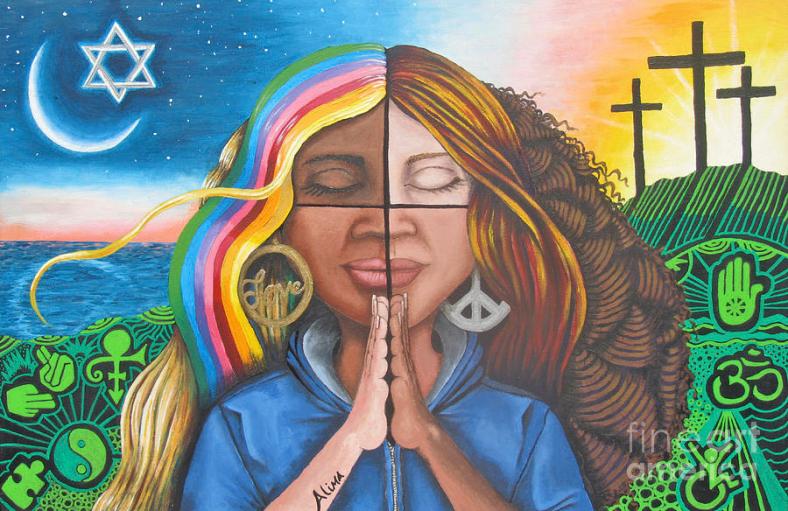
*Image © Alima Newton

What the World Needs Now

John 15:9-17

“What the world needs now is love, sweet love.  It’s the only thing that there’s just too little of.”  Jackie DeShannon was absolutely right when that song reached the top of the charts back in 1965.  And the Beatles were right, too, when they had a megahit with All You Need Is Love in 1967.  But Jesus said it first.  A long time before John Lennon and Paul McCartney or Burt Bacharach and Hal David.

Love is a powerful force.  It creates relationships.  It can overcome fear and hate.  Love is what created the universe.  It can sometimes transform things instantaneously, but more often it builds and changes things slowly.  Over time. Because love is patient and kind.

Love can improve your health.  It can even make you more successful, although that is entirely a side-effect.

In 1938, during the Great Depression, a group of doctors at Harvard Medical School began a long-term study to determine what factors contributed most to long-term health and well-being in men.  The Study of Adult Development has been ongoing for more than 80 years now.  Once selected, participants are followed for the rest of their lives.  They fill out a questionnaire every other year covering their physical and mental health, financial status, relationship status, and general level of happiness.  Every five years some of the men are selected at random for more in-depth study.  

Some of the findings in the study haven’t been all that surprising.  For instance, they’ve verified that alcoholism is destructive.  It has been the primary cause of divorce among study participants and it strongly correlates with neurosis and depression.  So, no big surprise there.  But here’s one that is surprising:  financial success depends more on warm relationships than on intelligence. In fact “warm relationships” play a huge role in lifetime satisfaction, wealth, and well-being.

A warm childhood relationship with your mother makes a difference long into adulthood:

  • Men who had warm childhood relationships with their mothers earned considerably more per year than men whose mothers were uncaring.
  • Men who had poor childhood relationships with their mothers were much more likely to develop dementia in later life.
  • In professional life, a man’s boyhood relationship with his mother—but not with his father—was associated with greater effectiveness at work.

But a warm relationship with your father is important, too. Warm childhood relationships with fathers correlated with:

  • Lower rates of adult anxiety.
  • Greater enjoyment of vacations.
  • Increased life satisfaction at age 75.

When George Vaillant, the former director of the Study, was interviewed by The Atlantic, his main conclusion was that “warm relationships” throughout life had a greater positive influence on “life satisfaction” than anything else—greater than money, greater than achievement, greater than acquisition and accumulation of things.  Warm relationships, he said, were the greatest predictor of happiness.  By far.  “Put differently,” Vaillant says,  “The study shows happiness is love. Full stop.”[1]  When a Canadian broadcaster suggested that his statement was overly broad and sentimental, Vaillant looked down at his data then looked up and replied,  “The answer is L-O-V-E.”[2]

“As the Father has loved me, so I have loved you,” said Jesus.  “Abide in my love. If you keep my commandments, you will abide in my love, just as I have kept my Father’s commandments and abide in his love.”

The word “love” here is agape which is a particular kind of love.  This isn’t a sentimental or emotional love, although it can develop into warm feelings.  But agape doesn’t start that way.  Agape is a decision.  It starts in the head before it moves to the heart.  Madeleine L’Engle described it this way:  “Agape love is…profound concern for the well-being of another, without any desire to control that other, to be thanked by that other, or to enjoy the process.”   

Dr. Martin Luther King said, “Agape does not begin by discriminating between worthy and unworthy people, or any qualities people possess.  It begins by loving others for their own sakes… Therefore, agape makes no distinction between friend and enemy; it is directed toward both. It is redemptive goodwill for all people.  It is a love that asks nothing in return.  It is an overflowing love…And when you rise to love on this level, you begin to love people not because they are likeable, but because God loves them.”   

When Saint Paul writes that Love is patient and kind, that love is not envious or boastful or arrogant or rude, that it doesn’t insist on its own way, that love it is not irritable or resentful, that it does not rejoice in wrongdoing, but rejoices in the truth…when he writes that love bears all things, believes all things, hopes all things, endures all things, when he writes that love never quits, he is describing agape.  

When Jesus says, “As the Father has loved me, so I have loved you,” that’s the kind of love he is talking about, the decision to act for the well-being of others.  So what about those warm feelings that can have such a positive effect?  Well, agape love may start in your head as a decision, but it often moves to the heart because when you love with agape love, you make yourself vulnerable.  That’s part of the decision.  That’s why, right after Jesus reminds his disciples that he loves them, he goes on to call them his friends.

“Abide in my love,” says Jesus.  Most of us don’t use the word “Abide” too often.  The Greek word that’s at work here is meno, which means to stay, to remain, to continue, to continue to exist.  It’s in the imperative form here, so Jesus says it as a command.  Continue to exist in my love.  Stay in my love.

There are two ways to think about that.  One is that Jesus surrounds us with his love and commands us to stay inside the parameters of that love as we act and interact with each other and the world.  This might be what Saint Paul means when he talks about being “in Christ.”  

The other way to understand it is to see that our lives have been infused with the love of Jesus and we are now commanded to continue to regenerate that love for those around us, to keep spreading it out into the world.  Both understandings work.  Both keep the love of God flowing.  And Jesus assures us that if we keep the commandment to love, we will continue to abide, to exist, within the love of God.

“I have said these things to you,” said Jesus, “so that my joy may be in you, and that your joy may be complete.” This statement always catches me by surprise.  

I’ll be honest, I don’t usually think of Jesus as joyful.  You certainly don’t see him depicted that way very often in the gospels.  We see him arguing with scribes and Pharisees or impatient with his disciples when they’re being dense. We see his generosity, especially when he’s healing.  We see his power when he’s casting out demons, there’s certainly something energetic about that.  But joyful?  

When you think about it, the episodes of cranky or serious Jesus that we see depicted in the gospels are brief and they’re probably very much the exception rather than the rule.  We do see him dining with tax collectors and sinners.  Those were probably fun times.  He does tell the occasional joke—you know, a camel through the eye of a needle?  And joy would explain why huge crowds came to see him.  Joy is attractive!  Joy is charismatic!

So Jesus commands us to continue to exist in his agape love so that his joy may be in us and so that our joy may be complete.  And then to make it crystal clear that he’s serious about this—joyfully serious—he makes love a commandment.  “This is my commandment, that you love one another as I have loved you.”

As I have loved you.    

“No one has greater love than this,” continues Jesus, “to lay down one’s life for one’s friends.”  He’s referring to the cross here, of course, hinting at just how far he will go to demonstrate his agape love for all of us.  He will lay down his physical life.

But he might be referring to even more if we dive down below the surface.  The word that’s translated as “life” here is psyche.  It means living soul, inner self, mind.  It can also mean what we refer to as “ego.”  Richard Rohr has said that in order to learn how to fully and truly love we have to learn how to get our egos out of the way.  No one has greater love than this, to lay down one’s ego for one’s friends.

“Authentic Christianity,” says Rohr, “is not so much a belief system as a life-and-death system that shows you how to give away your life, how to give away your love, and eventually how to give away your death.  Basically, how to give away—and in doing so, to connect with the world, with all other creatures, and with God…Here the primary language is unlearning, letting go, surrendering, serving others, and not the language of self-development—which often lurks behind our popular notions of salvation.[4]

Paul Tillich once wrote about meeting a Swedish woman who had spent time in a prison camp for giving aid and comfort to prisoners and orphans during World War I.  He found in her a personification of that “greater love.”  “It is a rare gift to meet a human being in whom love – this means God – is so overwhelmingly manifest,” he wrote. “It undercuts theological arrogance as well as pious isolation. It is more than justice and greater than faith or hope. It is the very presence of God in the form of a human being. For God is love. In every moment of genuine love we are dwelling in God and God in us.”

When you let God’s love flow through you, you begin to love, as John Duns Scotus says, things in themselves and for themselves, and not for what they do for you.  That’s when you begin to love your spouse.  That’s when you begin to really love others—when you start seeing them detached from you or what they do for you or how they make you look or what they can get for you. 

When we love, we manifest God.  It’s as simple as that.  As it says in Ephesians, “I pray that you may be strengthened in your inner being with power through his Spirit and that Christ may dwell in your hearts through faith as you are being rooted and grounded in love.  I pray that you may have the power to comprehend, with all the saints, what is the breadth and length and height and depth and to know the love of Christ that surpasses knowledge, so that you may be filled with all the fullness of God.”[1]

When you love things and people in themselves, you are looking out at the world with the eyes of God.  When you look out from those eyes, you see that it’s not about you.  And you will see things that will give you joy.  Simple things will make you happy. Reality will start giving you joy, inherently.  And you will start overcoming the gap between you and everything else.

Abide in Christ’s love.  Be a friend of Jesus.  Build those warm relationships in the world.  So that Christ’s joy may be in you.  And your joy may be complete.


[1] Ephesians 3:16-19

The Stranger on the Way

Acts 8:26-40

There is an idea in Franciscan thinking called Mirroring.  Like so many Franciscan ideas it’s built on a chain of other ideas, so stay with me as I try to explain this.  

One of the things we are called to do as followers of Jesus, as people of Christ, is to reteach everything its loveliness.  We are called to reteach each other our loveliness.  

The world finds a lot of ways to tell us that we’re less than lovely and less than loveable, that we’re flawed and unacceptable in one way or another.  Even a lot of our theology does that, unfortunately.  So much of Christianity has adopted Augustine’s idea of Original Sin.  You hear it in a lot of our church language.  “We are born children of a fallen humanity.” “We confess that we are in bondage to sin and cannot free ourselves.”  To quote Richard Rohr, if you start with a negative anthropology, you’re going to end up with a negative theology. 

The Franciscans don’t ignore sin.  They just don’t think it’s the defining factor of human nature, at least not in God’s eyes.  They don’t start with Original Sin.  They start with Original Blessing.  Genesis says that God saw everything that God had made, and behold it was good.  They say that Christ has come to remind us that we were created good, and to help us recapture that goodness.  

We are, in fact, children of God.  That is such an enormous idea with such far-reaching implications that I can’t generate a complete understanding of it in my own mind.  The idea that I, Steve Beckham, born in Missouri, of limited intelligence, and sinful like everyone else, am a beloved child of God is so momentous that my mental circuitry just can’t handle it properly.  I’ll either undervalue it or overinflate my ego with it.   No one can properly process the idea that we are, in fact, children of God.  I can’t.  You can’t. 

So we need people who, little by little, mirror it to us.  We need people who reflect back to us the image of God that is in us.  We need people who show us that we’re beloved—they mirror God’s love and image to us.  They reflect the image of God that’s in us back to us.  One hopes it starts with parents when we’re babies and that it continues as we grow.  And one hopes that you are mirroring it to others.  So when you read in the scriptures that you are a beloved child of God, you’ve already got a template in place to help you believe it and process it. 

We mirror the image of God to each other to show each other our nobility, to remind each other of our worth and loveliness.  

I came upon a great example of mirroring in a letter that a woman named Erin Poulson wrote to Chadwick Boseman, the actor who played The Black Panther in the 2018 movie from Marvel Studios.  Here’s what she wrote: 

“In May 2018, I was newly Queen of Newcastle at the Georgia Renaissance Festival.  Black Panther had come out just three months before and it was on everyone’s mind.

“I was still learning how to Queen, as the shoes before me were large, and pavilion time was always a time when I felt particularly inadequate.  It was one of my insecure days when I had a young black girl and her dad come and visit the Royal Court.  I introduced myself as Queen of England and the girl said, ‘I’m a princess!!’  And then she got shy.

“I wanted her to keep talking so I said, ‘Oh, are you a Princess of England?’  She shook her head.  ‘Are you a Princess of France?’  Another head shake.  I don’t know why, I’d never done it before, but I thought I’d take a chance.  ‘Are you a Princess of Wakanda?’

“Her eyes grew so big.  Her father jumped with excitement.  And she nodded regally.

“I crossed my arms over my chest.  ‘Wakanda Forever, my Princess.  We are so honored to have you in our Kingdom!’  Now she stood a hundred feet tall, and her dad nearly trembled behind her.

“I touched Joshua Miller’s shoulder, who had been carrying on a very different conversation as King Henry, and said, ‘My dear Henry, we have a visiting guest from Wakanda!’

“Without missing a beat, his arms crossed over his chest.  ‘Wakanda forever, dear Princess!!  And welcome to England!!’

“That shy girl walked out of the pavilion with her head held high like an empress.  And I remember her dad just dancing next to her, whispering, ‘Wakanda, baby!! They know you’re from Wakanda!!  You’re royalty too!!’  

“Mr. Boseman, I’ve worked Renaissance festivals for almost twenty years now.  Since that point, I have seen dozens of black boys and girls accept themselves as royalty in a way that I’m not sure they would have before.  The doors you opened echo throughout time like Arthur pulling the sword from the stone.

“Thank you,  Wakanda Forever”

Mirroring,  reflecting someone’s essential goodness back to them can be transformative and can send ripples farther out into the world than you would dare to imagine.

In chapter 8 of the Book of Acts we read the story of the Apostle Philip who is suddenly told by the Holy Spirit to “Get up and go toward the south to the road that goes from Jerusalem to Gaza.”  Philip obeys this prompting of the Spirit which must feel like some kind of mad impulse and promptly heads off for that road in the wilderness.  And there he encounters one of the most unexpected characters in all the Bible.  

“Now there was an Ethiopian eunuch, a court official of the Candace, queen of the Ethiopians, in charge of her entire treasury. He had come to Jerusalem to worship and was returning home; seated in his chariot, he was reading the prophet Isaiah.”

This is such a unique person, this eunuch.  He personifies all the margins of his world.  He has rank and privilege as a member of the queen’s court, but what power does he have here on the wilderness road?  And as a eunuch, where does he fit into the social structure of the world he is exploring?  He may be Jewish or a Jewish proselyte—there were Jews in Ethiopia—or he may simply have been drawn to know more about the God of the Jews.  Either way, Deuteronomy 23 states that neither a eunuch nor a foreigner is allowed in the assembly, so after all his long journey from Ethiopia to Jerusalem he wasn’t allowed inside the temple.  At best he would have had to worship from the Court of the Gentiles.  His heart was drawing him closer to God but the rules of admission were keeping him at arm’s length.

As he travels he is reading the scroll of Isaiah, reading about the sheep who is led to slaughter, about the one who is denied justice, whose life was taken away from the earth.  He is lingering over that passage when Philip approaches him and asks if he understands what he is reading.  “How can I, unless someone guides me?” replies the eunuch.  So Philip tells him who that passage is about.  Philip tells him  about Jesus. 

He tells him about travelling with Jesus throughout Galilee and Judea and everywhere else they went.  He tells the eunuch about Jesus’s confrontations with the scribes and the Pharisees because Jesus expanded his circle of friends to include “sinners and tax collectors.”  He tells the eunuch about all the trips back and forth across the Sea of Galilee so Jesus could heal and feed and preach to gentiles and include them in the community he was forming.  Philip tells the eunuch about the Kingdom of God as Jesus was building it.  The Commonwealth of God’s kindness and mercy.  The Kin-dom of God.  Philip tells the eunuch that in that Kin-dom envisioned by Jesus, there are no outsiders.   He tells the eunuch that Jesus was building a community for all the people, including and especially for those in the margins, all those who don’t quite fit in so nicely and neatly.  He tells the eunuch about their last week in Jerusalem, about the arrest and crucifixion when Jesus was the lamb led to the slaughter, silent before the shearer, when he was denied justice and his life was taken away from the earth.  That’s who Isaiah was talking about, he tells the eunuch.  And then he tells him about the resurrection.  He tells the eunuch how Jesus has given him a new life, has reflected the image of God back to him so he could see it in himself,  how Jesus has shown him that he, too, is a child of God, that he has value.  That he is loved.

As they were going along the road, they came to some water; and the eunuch said, “Look, here is water! What is to prevent me from being baptized?”

“What is to prevent me?”

Do you hear the eagerness in that question?  Do you hear the anxiety–the hope mixed with a realistic anticipation of disappointment?  This is a question being asked by a person who had travelled a very long way to encounter God at a place that, when he finally arrived, wouldn’t let him come all the way inside.  So now he stands at the edge of an altogether new kind of intimacy with God, the doorway to a new kind of holiness.  And he asks the gatekeeper, “What is to prevent me from being immersed in this new way of being?  What is to prevent me from diving under all the barriers that have kept me separated from God all my life?  What is to prevent me from being part of the community of Jesus?  What is to prevent me from being baptized?” 

Philip doesn’t say a word.  The Holy Spirit answers the eunuch’s question with a silence that echoes across the water and leaps across the wilderness.  Nothing!  Nothing!  Nothing, nothing, nothing is to prevent you from entering the community of Jesus!

“He commanded the chariot to stop, and both of them, Philip and the eunuch, went down into the water, and Philip baptized him.”

Philip mirrored the imago dei to the eunuch as he told him the story of Jesus.  He reflected back to him the image of God within him.  He reminded him of something he had always known even though the world had tried to tell him otherwise, especially at the doors of the temple.  This man who spent his working life in a court of nobility was reminded that he, too, was noble, and he immersed himself in that new identity as a child of God, a prince of the kingdom.

How many times in the history of Christ’s church have we put up barriers at the font?  How many times have we made criteria for who is acceptable and welcome at the table and who is not?  How many times have we set boundaries around who is and who is not acceptable for the anointing and ordination to proclaim the word of God and the grace of Christ—boundaries that have taken generations to break down?   

How many times have we been trying to close a door that the Spirit is trying to open?   

How many times have we been focused on someone’s sin when Jesus has called us to help them find their original goodness, truth, and beauty?

The question is not about the wideness of God’s embrace.  God’s arms are always open wider than ours.  The Spirit is always running ahead of us and calling us to catch up somewhere on the wilderness road.  The question is whether we can polish our own understanding of what it means to be a child of God so it shines clearly enough to mirror the image of God back to others. The question is whether we are bold enough to trust our own nobility as baptized children of God so we more fully participate in Christ’s resurrection work of re-teaching the world its goodness, truth, and beauty.

Look, here is water.  What is to prevent us from diving in?

To Know By Heart

John 10:11-18

You are one of a kind.  Even if you have an identical twin there is a lot about you that is unique.  Your fingerprints are unique, of course, but did you know that your toeprints are, too?  Your voiceprint is also unique and can be used to identify you.  The patterns in the irises of your eyes are yours and yours alone, and so are the patterns of the blood vessels in your retinas.  Your gait when you walk is uniquely yours and can be used to pick you out from a crowd.  You can be singled out from a multitude of other people online by patterns in the way you type on your keyboard or move your mouse, a little trick that’s been used, apparently, in espionage.  But here’s a new one—at least it was new to me.  Did you know you have a distinctive cardiac signature?   That’s right.  Your heart beats in a way that is unique to you and can’t be disguised.  The Pentagon has recently developed a laser-based tool called Jetson that can read your cardiac signature through your clothes from 200 meters away.  So now if somebody says they know your heart you might want to ask exactly what they mean by that.

“I know my own and my own know me,” said Jesus, “just as the Father knows me and I know the Father.”   Jesus knows your heart, although clearly not in the same way that the Pentagon’s invasive new toy does.  More importantly, though, we know the heart of Jesus.  We know he loves us and he cares for us enough to lay down his life for us.

Jesus calls himself the Good Shepherd.  I wonder how many of us really understand what he means by that.  I think what comes to mind for a lot of us when we hear “Good Shepherd” is a kind of greeting card image or something from a stained glass window.  We picture Jesus looking pristine in a white robe with a gentle, pure white lamb draped across his shoulders.  Gentle Jesus, meek and mild.  But that image is a far cry from what the people listening to Jesus on that long-ago day in Jerusalem would have been picturing when Jesus described himself as the Good Shepherd.

When Jesus was talking to people two thousand years ago in Galilee and Judea, he used metaphors that were part of their everyday lives.  Many of these metaphors also echoed their scriptures and history.  That’s one of the things that made him such an effective teacher, but it also made him controversial sometimes.  

Even people who had never been outside of Jerusalem’s walls knew about shepherds.  They were a common sight.  They had all seen shepherds bringing sheep into the city for the markets and for sacrifices in the temple.  

The Shepherd was also an image from their faith heritage.  Joseph, one of the 12 sons of Jacob, had been a shepherd.  Jacob worked as a shepherd for Laban so he could marry Rachel and Leah who had also tended sheep.  Zipporah, the wife of Moses, had tended flocks with her sisters.  Moses tended sheep before God called him to lead his people out of Egypt.  King David started out as a shepherd.  

The prophets spoke of the kings and religious leaders or Israel as shepherds—sometimes good, but sometimes not so much.  The prophet Jeremiah wasn’t pulling any punches when he wrote, “Woe to the shepherds who destroy and scatter the sheep of my pasture! says the Lord.  Therefore thus says the LORD, the God of Israel, concerning the shepherds who shepherd my people: It is you who have scattered my flock and have driven them away, and you have not attended to them. So I will attend to you for your evil doings, says the LORD.”

God was regarded as the ultimate shepherd and, through the prophets, often spoke of the people of Israel as “my flock.”   In Psalm 80, the Psalmist cries out, “Give ear, O Shepherd of Israel, you who lead Joseph like a flock! You who are enthroned upon the cherubim, shine forth!”  And, of course, there is Psalm 23 where David sings of his reliance on God with the words, “The Lord is my shepherd.”

When Jesus called himself the Good Shepherd, it brought a particular image to mind for those listening to him, but it wasn’t stained glass and greeting cards.  There was nothing particularly pristine in their picture of a shepherd.  They knew that shepherding was a very physical, dirty, and smelly job.  But they also knew that good shepherds were strong and  brave and tough when they had to be to protect the sheep.  When David was still young, he told  King Saul that he was tough enough to take on Goliath because, as a shepherd in the field, he had already killed a bear and a lion.  

At night, when a shepherd would bring the sheep in from the pasture into the safety of the fold, he would recline across the opening of the sheepfold, making his own body the gate of the sheep pen, a barrier between the sheep and any predators or thieves, so that anything or anyone that tried to get at the sheep would have to do it across his body.

Often several shepherds would bring multiple flocks into a large sheepfold for the night.  When it was time to lead them out again to pasture in the morning, each shepherd would simply start calling out to their sheep with a call that was familiar to their own flock.  Each flock knew their own shepherd’s distinct voice and would follow him and only him out to pasture.  So again, when Jesus says, “My sheep know my voice,” he is using a metaphor that’s familiar to all his listeners.  

So why is Jesus using this powerful image in that time and place?  He’s in the precincts of the temple.  He is already in hot water for healing on the sabbath, bringing sight to a man born blind.  This is all happening during the Feast of the Dedication, Hannukah, the feast that commemorates the rededication of the temple after the victory of the uprising led by Judas Maccabeus over Antiochus Epiphanes in 164 BCE.  Judas Maccabeus was a national hero, someone whom the Jews thought of, historically, as a good shepherd.  The temple was the place that more than any other symbolized the people’s covenant relationship with God.  So with all that as background, the Pharisees and temple authorities are listening to Jesus very carefully.  And what Jesus says is, to their ears, very provocative.

“I am the Good Shepherd,” says Jesus.  Just what is he saying?  Is he comparing himself to Moses?  To David? To Judas Maccabeus? Was he comparing himself to their great prophets and kings, the revered political and military leaders or the past, the heroes who had freed them from their oppressors and enemies? 

Was Jesus equating himself with God, the ultimate Good Shepherd?   Just what did he mean when he said, “I am the Good Shepherd.” They had to be wondering.  

And then he said this: “I have other sheep that do not belong to this fold. I must bring them also, and they will listen to my voice. So there will be one flock, one shepherd.”  Who was he talking about?  Could he be talking about gentiles?  Was he talking about bringing them into the covenant?  Into the temple?  This was both unsettling and provocative to the Pharisees and temple authorities.

Who would those other sheep be for us today?  Who are those who are “not of this sheepfold”—or not of this church, maybe?—who Jesus intends to bring into the flock?

“There will be one flock,” said Jesus.  One flock.  One shepherd.  None of the artificial distinctions we’re so fond of making.  No us.  No them.  The Good Shepherd has gone outside the sheepfold to call in all the sheep who know his voice.  All of them.  All of us.  Are we ready to be one big happy flock with sheep we don’t know? Even if some of them have different kinds of wool?  One flock.  One shepherd.

“I know my own and my own know me.”   I wonder about that statement.  Is it always that straightforward?  Especially the second part—“my own know me”?  The other day I saw a video on Facebook that made me really think about what happens when the sheep don’t really know the shepherd, when they’re not really attuned to the shepherd’s voice.  

The video was shot by a man who was taking a nice leisurely hike through a forest in France.  As he came around a bend in the trail he saw a woman in red shorts jogging toward him and behind her was a fairly sizable flock of sheep.  When she got up to the man, who captured all this on his phone, she stopped to talk to him and the sheep came to a full stop behind her.  He asked her if she always led her sheep through the forest and she told him that they were, in fact, not her sheep.  These sheep had all just been milling around near the beginning of the trail and when she jogged by them, they all just turned and began jogging along right behind her.  When she stopped, they stopped.  When she ran, they ran.  When she finished explaining this to the man, she started jogging back down the trail and the sheep swept past him, the whole flock, running along behind the woman they had mistaken for their shepherd. 

“I know my own and my own know me.”  We think we know our Shepherd, but sometimes we make mistakes.  Sometimes we go jogging off behind other shepherds.  

I know I’ve sometimes been misled into following other voices.  It’s easy to follow the voice of politics or partisanship or moralism or prestige or money.  It’s easy to get caught up by voices that try to flock us together around national or racial or cultural or generational or religious identity.  

It’s easy to follow someone who looks like they know where they’re going or sounds like they know what they’re doing.  It’s easy to be misled out into a forest  full of unseen dangers.  

It’s easy, sometimes, to think you’re following the Good Shepherd when it’s actually someone else mimicking his voice or borrowing his name for their own purposes.  We all saw those “Jesus” signs at the January 6th Capitol Insurrection.  I’m pretty sure that wasn’t really the Good Shepherd inspiring that activity.  We’ve all seen politicians standing in front of churches or holding up Bibles to buttress their authority or polish their image

“My own know me,” said Jesus.  Well, with practice, yes.  I think that’s our never-ending homework—to keep listening, to keep learning to hear the voice of the Good Shepherd in a world that so noisy with other voices, to discern the voice of Christ above all the pretenders and the racket and the misguided or misleading “shepherds” that try to distract us.  

“My own know me.”  Maybe Jesus states this so positively, so affirmatively, so that we have to take it as a goal and not make a liar out of him.  “My own know me.”  Okay, Jesus.  I will do everything I can to make that’s true, to make sure I know you.  

But that first part—that part where Jesus says “I know my own,” –-that’s where the good news is for us.  Even when we have wandered off through the forest following the wrong voice or our own stubborn inclinations, Jesus still knows us. Jesus still says to us, You belong to me.  You are mine.  I know you.  I know your going out and your coming in.  I know your fingerprints and your toeprints and the pattern of your irises.  I know your heart.  I have your cardiac signature.  You are mine.

There will be one flock.  One shepherd…who knows the heart of each and every one of us.  A Shepherd who has laid down his life for us.  That’s the Shepherd we can follow.  That’s the voice we can trust. 

Something to Chew On

3rd Sunday of Easter

Every year there are certain things we look for in the early Spring, certain signs that tell us we are entering the season of Easter.  There may or may not be one last big snowfall in the mountains.  We may or may not get soaked by El Niño rains.  The dandelions may or may not suddenly show up in our front lawns and the lilies may or may not bloom in time for our Easter morning services.  But one thing you can absolutely count on as Easter approaches is that there will be a rash of articles showing up in our newspapers, our magazines and on social media debating whether or not Jesus actually rose from the dead.

In 1999, Marcus Borg and N.T. Wright collaborated on a book called The Meaning of Jesus: Two Visions.  In an Easter season interview that same year with National Public Radio’s Chris Roberts, the two well-respected scholars summarized their very different understandings of the Resurrection.  

Marcus Borg said, “I do believe in the Resurrection of Jesus. I’m just skeptical that it involved anything happening to his corpse… The truth of Easter really has nothing to do with whether the tomb was empty on a particular morning 2,000 years ago or whether anything happened to the corpse of Jesus. I see the truth of Easter as grounded in the Christian experience of Jesus as a living spiritual reality of the present.”

N.T. Wright responded by saying, “When [the early followers of Jesus] believed in Resurrection, they were talking about what we would call some kind of embodiment. A disembodied Resurrection is a contradiction in terms…We can be completely confident on Easter day that the things we’re saying in church are true. For the very good reason that, historically speaking, it’s actually impossible to explain the rise of early Christianity without it.” [1]

I have to tell you that I really resonate with what Borg says about the truth of Easter being grounded in the Christian experience of Jesus as a living spiritual reality of the present.  Yes.  That should be the Easter experience we carry with us every single day—Jesus as a living spiritual reality alive in our own physical bodies.  

But when all is said and done, I think that Wright is right.  We must explain why the earliest Christians believed in Jesus Christ’s bodily Resurrection and risked hostility and danger to rapidly spread the message that he had been raised from the dead and appeared to them in person.  

People have had doubts about the Resurrection of Jesus from the very beginning, and one of the things I really appreciate about the New Testament is that these early witnesses to the Resurrection take those doubts seriously and meet them head on.  

The original ending of the Gospel of Mark, the earliest of the gospels written sometime around 69 or 70 C.E. during the height of the Jewish rebellion against Rome, plays on that doubt.  The gospel ends with the women finding the tomb empty except for a young stranger clothed in white who tells them that Jesus is risen and that they are to meet him in Galilee.  They run away terrified, which leaves the reader hanging, but also leaves us with the implied message that the risen Christ is out there in the world and we need to go find him. (16:8)

The Gospel of Matthew ends with the disciples doubting even as Jesus gives them the Great Commission.  In Matthew 28:16-17 we read, “Now the eleven disciples went to Galilee, to the mountain to which Jesus had directed them.  When they saw him, they worshiped him, but they doubted.” 

In the Gospel of Luke when the risen Jesus appears suddenly in the midst of the disciples in the upper room, they believe they are seeing a ghost, so Jesus says to them, “’Why are you frightened, and why do doubts arise in your hearts?  Look at my hands and my feet; see that it is I myself. Touch me and see, for a ghost does not have flesh and bones as you see that I have.’  And when he had said this, he showed them his hands and his feet.  Yet for all their joy they were still disbelieving and wondering.”  To prove he is really physically, bodily there, he asks for something to eat.  Because ghosts don’t eat.

The Gospel of John, of course, gives us the story of Thomas who refuses to believe that Jesus is risen until he sees him with his own eyes and touches him with his own hands.  Thomas has become a paradigm for reasonable doubt but also for confession of the faith.  He is the one who first bows down before Jesus and says, “My Lord and my God.”

But the very earliest testimony to the Resurrection comes from the Apostle Paul, and he, too, directly addresses those who doubt.  In 1 Corinthians 15, written about 15 years before the Gospel of Mark, Paul wrote: “I handed on to you as of first importance what I in turn had received: that Christ died because of our sins . . . and that he was buried and that he was raised on the third day . . .  and that he appeared to Cephas, then to the twelve.  Then he appeared to more than five hundred brothers and sisters at one time, most of whom are still alive, though some have fallen asleep.  Then he appeared to James, then to all the apostles. Last of all, as to one untimely born, he appeared also to me. For I am the least of the apostles, unfit to be called an apostle, because I persecuted the church of God.” 

Paul testified to his own encounter with the risen Jesus, and to the experience of a surprising number of others.  It’s almost as if he is saying, “If you don’t believe me, fine.  There are lots of others who have seen him, too.  Go ask one of them.”  

Paul goes on to speak to the doubt that some in Corinth are experiencing when he writes, “Now if Christ is proclaimed as raised from the dead, how can some of you say there is no resurrection of the dead?  If there is no resurrection of the dead, then Christ has not been raised,  and if Christ has not been raised, then our proclamation is in vain and your faith is in vain.  We are even found to be misrepresenting God, because we testified of God that he raised Christ . . . If for this life only we have hoped in Christ, we are of all people most to be pitied.  But in fact Christ has been raised from the dead, the first fruits of those who have fallen asleep.”

N.T. Wright wrote, “In the New Testament Gospels’ depiction, the risen Jesus was no ghost, disembodied spirit or vision. Jesus did not have a merely resuscitated corpse but a body with uncanny new properties, yet a physical body nonetheless.”

In that resurrected body, which was the same but not quite the same as the body he died in, Jesus cooked fish on the beach for his friends.  He left footprints on the dusty road to Emmaus as he walked, unrecognized, beside his friends and opened their minds to understand the scriptures so that they could see that everything that had happened to him was in perfect continuity with what God had been doing all along.  They recognized him when he broke bread with his wounded hands.

In his resurrected body with uncanny new properties, he appeared behind locked doors and offered his wounds for inspection.  He ate a piece of broiled fish to prove he wasn’t a ghost, and in so doing, as Debi Thomas wrote, he turned their trauma into communion.

We need the Resurrection.  We need an embodied Jesus because we are embodied.  I love how Debi Thomas expressed this:  

“I know that it might be unfashionable to ‘need’ the resurrection.  Isn’t this the criticism so often leveled at Christians?  That our faith is a crutch, an opiate, a refusal to face the harsher aspects of reality?  But here, too, I will bear witness and insist that I need Jesus’s bodily resurrection precisely because I, too, am embodied.  As the ancient Psalmists and prophets so beautifully describe it, my spiritual life is inseparable from my physical one: my heart melts like wax, my throat grows parched, my bones go out of joint, my tears cover my pillow, and my groans, sighs, and moans reach wordlessly for God.  Every experience I have of the holy is grounded in my body.

“And so I need a Savior with a body like mine — a body that adores, worships, and celebrates, but also a body that fails, ages, aches, breaks, and dies.  A body that carries wounds and scars, visible and invisible, fresh and faded.  A body that is profoundly and often terrifyingly vulnerable to forces beyond my ability to mitigate or control.  A body that is, for the most part, defenseless against injury, violence, illness, injustice, and cruelty.  A body that might die — as Jesus himself died — too soon, out of season, away from loved ones, in random, inexplicable, cruelly traumatic circumstances too frightening to contemplate.  I need a God who resurrects bodies.”[2] 

I know I need Resurrection.  Ten years ago when I was diagnosed with prostate cancer I found myself confronting my mortality, especially since both my mom and my dad died of cancer.  My surgeon assured me that my chances of coming through the surgery and radiation were probably good.  Don’t you love the language doctors use once the “C” word has been spoken?  You hear the word “probably” a lot.  The point is, once the word “Cancer” has been spoken, it sharpens your focus.  Things that had been theoretical either become the life raft you cling to or they get discarded.  I realized during that time that, while I’m willing to entertain and discuss all kinds of ideas and theories about Resurrection, for me personally a psychological or philosophical understanding isn’t enough to carry the weight of my hopes and fears.  I need something with some bones in it, some skin on it.  And I’m not alone in that.

I have seen a lot of death in my decades as a pastor.  I have accompanied people up to death’s door and held their hand as they crossed the threshold.  Resurrection is what has given many of them the courage to walk peacefully and fearlessly through that door.  And Resurrection is what has given me the courage and confidence to walk through the valley of the shadow with them.

And that’s the point.  Resurrection gave the earliest followers of Jesus the courage to risk hostility and danger so they could carry on his work of proclaiming that there was a better way to live, a better way to be community, a way to live in the commonwealth of God’s kindness and justice.

Jesus was a real physical person who was tortured to death in a first-century lynching.  The state and the religious authorities colluded to crucify him, to physically destroy him and in so doing to destroy his opposition to their power.  His crucifixion was a political statement.  What they failed to see and understand, though, was that in Jesus there was a power and authority that dwarfed any power or authority they imagined they had over him.

For that reason,  nothing less than a bodily resurrection would do to nullify their violence and call their power into question.  It was his physical body they killed.  It would have to be his physical body that would proclaim their work undone.  

The resurrection of Jesus was God’s way of saying that violence will not have the last word.  Pain will not have the last word.  Fear will not have the last word.  Anger will not have the last word. Disease will not have the last word.  Suffering will not have the last word.  Death will not have the last word.

The Resurrection of Jesus was God’s way of saying that love, grace, forgiveness, kindness, hope and faith—these things will have the last word.  

The resurrection was God affirming that Life will have the last word.  

And will be the last word. 

Through Jesus Christ, our Lord.


[1] The Resurrection of Jesus; Religion and Ethics Newsweekly; NPR/PBS, March 26, 1999

[2] Embodied; Debi Thomas, http://www.journeywithjesus.net; April 11, 2021

The Final Truth

John 12:20-33

As some of you know, I used to be a musician.  But I don’t listen to music anymore.  I can’t, really, since I have lost so much of my hearing. Music just doesn’t sound the same to me, and it’s frustrating because I know what it’s supposed to sound like.  So I don’t listen to music anymore.  Except in my memory.  

I do have a very good memory for music, and I can still hear a lot of pieces quite well in my mind’s ear, so to speak.  And in my dreams.  I dream in music a lot.  Sometimes in my dreams I hear pieces I wrote.  Sometimes I compose new pieces.  And quite often in my dreams I hear favorite pieces that have been part of the soundtrack of my life.  When that happens, I usually figure that it’s a kind of message from me to me, something my subconscious wants to tell me or remind me of.  Or… it could be the Holy Spirit.  Just saying.

The other morning, as I was still in that lovely place between sleeping and waking—you know, that place where you’re no longer fully asleep but you’re not really awake yet either—while I was still in that dreamy place, my mental mixtape began to play the song Nightingale by Judy Collins, a song that has always had a special place in my heart.  Joshua Rifkin’s orchestration of that song and Judy Collins’ voice are simply exquisite.  But her lyrics—her lyrics in that song are nothing short of profound.

Jacob’s heart bent with fear,

Like a bow with death for its arrow;

In vain he searched for the final truth

To set his soul free of doubt.

Over the mountains he walked,

With his head bent searching for reasons;

Then he called out to God

For help and climbed to the top of a hill.

Wind swept the sunlight through the wheat fields,

In the orchard the nightingale sang,

While the plums that she broke with her brown beak

Tomorrow would turn into songs.

Then she flew up through the rain

With the sun silver bright on her feathers.

Jacob put back his frowns and sighed and walked

Back down the hill.

God doesn’t answer me and

He never will.

As I lay there in bed, slowly waking up while the words and music of Nightingale faded, I thought about how often we are like poor Jacob in that song, our hearts bent with fear, searching in vain for some final truth that will set our souls free of doubt. 

I thought of how often, like Jacob, we walk across the beauty of God’s creation with our heads bent down as we search for some kind of enlightenment in the dark recesses of our own reasoning. 

Or maybe on our phones.  

I imagined Jacob calling out to God for help as he climbed to the top of the hill.  I thought of him watching the wind sweep the sunlight through the wheat fields, how he heard the nightingale sing from the orchard then watched as she flew up through the rain with the sun silver bright on her feathers.  

Lying in my bed, half awake, I thought about how Jacob, in the song, saw and heard all that beauty… and utterly failed to see or hear God’s presence, the answer to his prayer, the final truth that could set his soul free of doubt.

And as I rested in the gentle beauty of that music and the powerful imagery of those lyrics, I suddenly found myself thinking about those Greeks in the Gospel of John who wanted to see Jesus.

Now among those who went up to worship at the festival were some Greeks. They came to Philip, who was from Bethsaida in Galilee, and said to him, “Sir, we wish to see Jesus.”  (John 12:20-21)

We don’t really know anything about the Greeks who made this request.  Were they Greek proselytes preparing to convert to Judaism?  Were they tourists who had come to see the temple?  After all, it was one of the wonders of the world at that time, and what better time to see it than during one of Israel’s most important festivals?  Had they heard that Jesus could work miracles and were maybe hoping to see one for themselves?  Were they interested in becoming disciples?  

Those are all possibilities, but I can’t help but think that maybe they wanted to have some kind of philosophical discussion with Jesus.  Greeks, after all, had a reputation of being philosophical by nature.  As St. Paul noted in 1 Corinthians, “Jews ask for signs and Greeks desire wisdom.”  So maybe that’s what they were looking for.  Maybe they wanted some time with Jesus the teacher of wisdom.  Maybe they were looking for the final truth to set their souls free of doubt.

We don’t really know anything about these Greeks or their motives.  But we surely can understand their request: We would like to see Jesus.  

I would like to see Jesus. Wouldn’t you?  Oh, I know I see him all the time in a Matthew 25 kind of way.  I see him in people in need.  I see him in people enduring injustice.  I see him in people pushed to the margins.  I see him in people whose lives are disrupted by religion or politics or violence or war or the economics of greed.  I see him.  

I do.  

And I see him in a 1 Corinthians 12, Body-of-Christ kind of  way, too.  I see him in the kindness of friends and strangers.  I see him in the ways we support each other and lift each other up and work together to dial up the love and grace and dial down the anger and fear and hate.  

I see Jesus in you.  

I see Jesus in you and that keeps me going.

But sometimes I would like to see Jesus the way Philip and Andrew saw him.  Face to face.  Wouldn’t you?

A few years ago, on the website Journey with Jesus, Debi Thomas wrote,  “I know what it’s like to want Jesus in earnest — to want his presence, his guidance, his example, and his companionship.  I know what it’s like to want — not him, but things from him: safety, health, immunity, ease.  I know what it’s like to want a confrontation — a no-holds-barred opportunity to express my disappointment, my sorrow, my anger, and my bewilderment at who Jesus is compared to who I want him to be.”[1]  

It stings to read that, but it’s so honest.  “I know what it’s like to want—not him, but things from him.”  It makes me think of that African American spiritual we sing sometimes, I Want Jesus to Walk With Me.  “I want Jesus to walk with me; all along my pilgrim journey, Lord, I want Jesus to walk with me;  In my trials, Lord, walk with me; when my heart is almost breaking, Lord, I want Jesus to walk with me;  When I’m in trouble, Lord, walk with me; when my head is bowed in sorrow, Lord, I want Jesus to walk with me.”

I want to see Jesus.  I want Jesus to walk with me.  But am I ready to walk with him? That, right there, is a pivot point of spiritual growth.  Why do I want to see Jesus?  How do I want to see Jesus?  Do I want to see Jesus because I want something from him?  Do I want to see Jesus because my faith is wavering?  Do I want Jesus to tell me some final truth to set my soul free from doubt?

Am I willing to let Jesus be the final truth that sets my soul free of doubt?

Do I want to see Jesus because I want to surrender to him?  Do I want to see Jesus so I can follow him and serve him?  

Those are the kinds of questions we need to ask ourselves when we feel that powerful yearning to see Jesus.  And let’s be clear.  There are no wrong answers here… except dishonest answers.  

We don’t know why those Greeks at the Festival wanted to see Jesus.  What we do know is that as soon as Philip and Andrew came to Jesus with their request, Jesus began to talk about the cost of discipleship and about his own coming death.  

We might be singing “I want Jesus to walk with me,” but Jesus responds with, “Fine.  Walk with me. But this is where I’m going. You might not like it.”

When Peter and Andrew told Jesus that the Greek visitors wanted to meet him, Jesus answered, “Time’s up. The time has come for the Son of Man to be glorified.’”[2]  That’s how Eugene Peterson paraphrased it in The Message Bible.  Time’s up. 

The time for sightseeing is over.  The time for spectator discipleship is over.  Now the Human One will be glorified.  Glorified.  As in martyred.  As in putting the cost of God’s love on full display.

“Listen carefully,” he says. “Unless a grain of wheat is buried in the ground, dead to the world, it is never any more than a grain of wheat. But if it is buried, it sprouts and reproduces itself many times over.  In the same way, anyone who holds on to life just as it is destroys that life. But if you let it go, reckless in your love, you’ll have it forever, real and eternal.”[3]  

Jesus is telling his disciples, then and now, a message that disciples are always reluctant to hear.  If you cling to your life just the way it is, you will destroy it.  If you loosen your grip on life as you know it, if you let go of it in reckless love, you’ll have it forever.  

Reckless love.  Reckless love of God.  Reckless love of yourself.  Reckless love of others.  Reckless love is eternal.  Reckless love is the final truth.  

“If any of you wants to serve me, then follow me,” said Jesus. 

We would like to see Jesus.  But do we want to see him so we can serve him?  Do we want to see him so we can learn to be better followers?  Are we willing to be buried…like seeds…so we can grow into something more amazing than we can even begin to imagine?  

The language that Jesus uses here as he talks to the Greek visitors and his disciples and the crowd and us is all imagery and metaphor. The time has come to be glorified. When a seed is planted.  When I am lifted up.  But all that poetic language is euphemism for the horrifying reality of the cross.  Are we willing to go there to see Jesus?

Beginning next Sunday we will observe again the events of Holy Week, a week that builds to the brutal torture and crucifixion of Jesus on Good Friday.  Attendance at worship on Good Friday is always low.  We want to see Jesus…but we don’t want to see Jesus on the cross.  We don’t want to see Jesus die, especially not in such an ugly, helpless, bloody and brutal way.

We don’t want to see Jesus willingly take on the hatred, the contempt, the violence, even the sheer indifference of this world—taking it all into his own body.  We want to see Jesus, but we don’t want to see Jesus there.  Like that.  

We want to see Jesus in a hundred other ways—muscular super-hero Jesus, miracle-worker Jesus, wisdom Jesus, justice radical Jesus (my personal favorite), social worker Jesus, American Jesus wrapped in a flag.  But Jesus on the cross?

That’s where reckless love takes Jesus.  That’s what he is saying in all that poetic language.  The seed will be buried and dead to the world.

If we want to see Jesus, really see Jesus, we need to look to the cross… because that’s where, in reckless love, he opens his heart and his arms to you.  

And me.  

And the whole world.  

And that’s the final truth.


[1] Debi Thomas, Journey With Jesus, 14 March 2021

[2] The Message, John 12:23

[3] The Message, John 12:24-25

[4] The Message, John 12:26