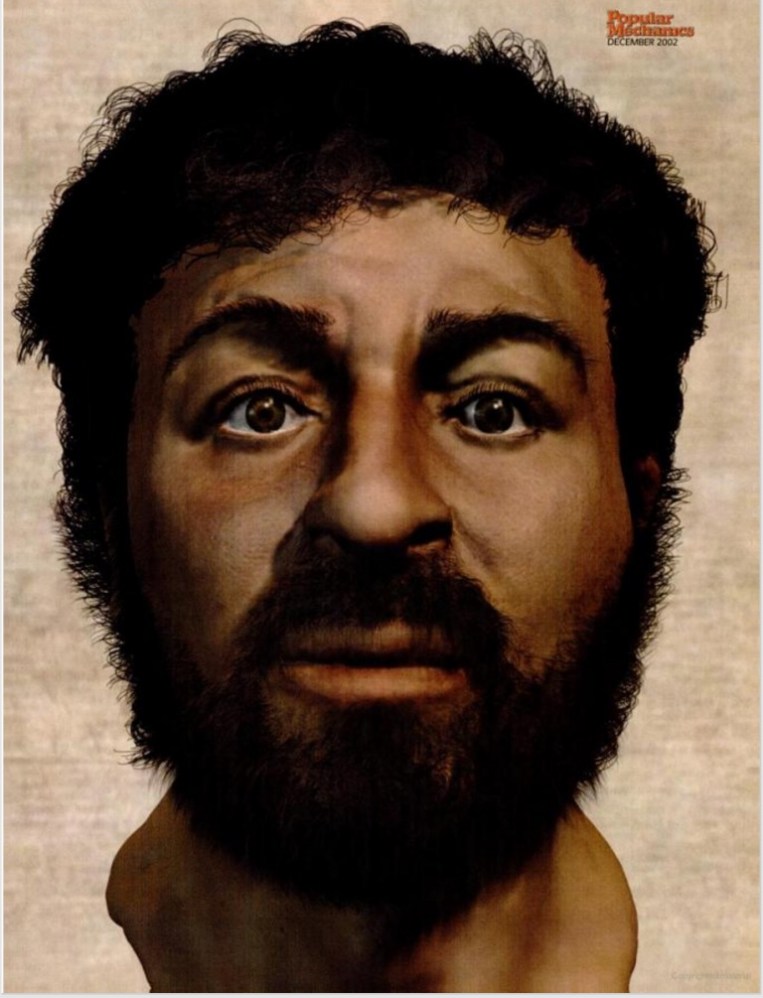
Turning the World Upside Down

There is an episode in seventeenth  chapter of Acts that tells the story of how Paul and Silas were arrested in Thessalonica because their preaching in the synagogue had resulted in a number of influential converts which upset the old guard and gatekeepers so much that, according to the text, they hired local ruffians to stir up a small riot, then blamed Paul and Silas for the fracas. When they dragged Paul and Silas before the city authorities this was their accusation: “These are the men who are turning the world upside down… They are all acting contrary to the decrees of the emperor, saying that there is another king named Jesus.”

Turning the world upside down.  Getting into “good trouble.” Acting contrary to custom and law.  Claiming that they answer to a higher authority named Jesus.

For a very long time this was the portrait of the Church:  faithful people turning the world upside down, banding together in beloved community to worship and to take care of each other as a sign that God’s love was at work in them in the name of Jesus.  When the empire was cruel, they protested with prayer and patience and, often, by being its victims so that the empire’s cruelty would be on full display.  When the empire showed no compassion, they provided the missing safety nets, feeding the hungry, sheltering the homeless, binding up wounds, caring for the sick even in times of plague.  

In a world that lionized strength, they were led by the Spirit who had said through the Apostle Paul, “My grace is sufficient for you, for power is made perfect in weakness.”(1 Cor. 12:9)  In a era driven by wealth, they bowed to the one who had said, “Blessed are you who are poor for yours is the kingdom of God.” (Luke 6:20)  In a world where their faith and fellowship was declared illegal and their ideas branded as subversive, they quietly grew in numbers and strength.

And then something happened.  After three centuries of being illegal, three centuries of subverting the dominant paradigm, three hundred years of quiet protest as the alternative realm within the empire’s domain, three hundred years of living and practicing their faith sometimes quite literally underground, they did, indeed, turn the world upside down. 

The emperor became one of them.  Flavius Valerius Constantinus, also known as Constantine the Great, became a Christian.

And suddenly priorities changed.  Suddenly it became vitally important for followers of Jesus to clarify what they believed so they could make sure that all these churches in all these cities in this vast empire were seeing things the same way, were talking about God the same way, and were teaching the same things.  Because now it was the empire’s church.  

In 325, the emperor called for a great council to meet.  Bishops came from all corners of the empire.  After intense debate the Doctrine of the Trinity was established as the first official doctrine of the official catholic (universal) Church.  A Creed was written to ensure allegiance to what the Council had decided was the true faith.

In a blink of history’s eye, the focus of the followers of Jesus shifted.  Now the emphasis was more on what people believed and less on what they were doing.  Now the weight was more on what the faithful thought about Jesus and not as much on how they followed him.  Now the more organic ecclesia, the beloved community of those living in companionship with Jesus, became the organized Church.

Almost overnight the world had turned the Church upside down.  And while the empire adopted some of the values of the Church, much more did the Church fall in line with the empire.

And so it has been, more or less, for seventeen centuries. 

Now we live in a time of crisis.  We are still recovering from a pandemic where more than a million persons in our country and nearly seven million world-wide have died from the Corona virus.  Economic tensions are high. Political tensions are higher, and sociological tensions are higher still.  Empire is unstable within and without.  And the Church…

If you were to judge by what you see in the media, it would look like the Church is fading into invisibility and irrelevance except for a few noisy, high-profile segments who get all the wrong kinds of attention.  It’s true that membership numbers are shrinking.  It’s true that there are fewer congregations in all denominations.  It might look like the world has turned the Church upside down to such an extent that it’s all spilling out and becoming empty.

But I think it would be a mistake to believe that.  I think, if you look closely and in the right places, especially in the margins of society, you’ll see something else happening.  I think what you’ll see is that the Church is being quietly reformed, reshaped and repositioned so it can get back to the business of following Jesus more than just intellectually believing in Jesus.  I think, if you can learn to see it, you’ll see that the Church is being reshaped to proclaim the kin-dom of heaven by showing examples of that kin-dom at work on earth as it is in heaven.

I think, if you look closely, you’ll find followers of Jesus standing firm in the protests against racism.  You’ll find followers of Jesus working to protect voting rights.  You’ll find followers of Jesus feeding the hungry and trying to stop evictions during a time of quarantine.  You’ll find followers of Jesus in the courts trying to overturn wrongful convictions. 

If you look, you’ll find people like Steve Taylor making movies like Blue Like Jazz that show people wrestling with issues of faith instead of immersing themselves in an unsustainable certainty.  If you listen you’ll find music from followers of Jesus like Carrie Newcomer and poetry and prose from people like Parker Palmer and Ann Lamott who show us how to reach deep into our souls and touch the hearts of others without off-putting piety.  If you look If you look beyond the historic antagonism between science and theology, you’ll find people like Ilia Delio writing a new kind of groundbreaking theology rooted in a cosmic interpretation of evolution and quantum physics.   If you look, you’ll find followers of Jesus in every walk of life bringing light into the shadows and healing into the brokenness of the world.

If you look, I think you’ll find that the followers of Jesus are being repositioned so we can get back to doing what we did in the beginning…turning the world upside down.


Does Your Eye See Evil Because I Am Good?

Matthew 20:1-16

In this week’s gospel lesson, Jesus says that the kingdom of heaven is like a landowner who hired workers at different times of the day to go work in his vineyard.  At the end of the day, he pays the workers who have labored all day in the hot sun the same wage as those who have only been working for an hour.  This is one of the more challenging parables of Jesus and, as is so often the case, we may miss the point entirely if we over spiritualize it or try to turn it into an oversimplified allegory.

There’s a line at the end of this parable that I keep coming back to over and over.  The landowner is speaking to a disgruntled all-day worker who doesn’t think it’s fair that he was paid the same as the workers who only worked one hour.  Most English translations have the landowner saying to the unhappy worker, “Are you envious because I am generous?”  What it actually says in the Greek, though, is “Is your eye evil because I am good?”

Is your eye evil because I am good?

That’s an amazing question, and I think it’s more to the point than “are you envious?”.  It can be taken two ways:  One is, “Are you looking for something bad here?  Are you looking for something to be upset about because I did a good thing?” The other, if you want to get really old school, is “Did someone put the evil eye on you?  Are you cursed so that you only see bad where there is good happening?” 

So how are you seeing this parable?  

Who do you identify with in this story?

The all-day laborer?

The mid-day laborer?

The end-of-day laborer?

The owner of the vineyard?

The way we see this story depends a lot on our point of view—on where we stand when we’re looking at it.  The way you interpret this story depends a lot on your own socio-economic position and life circumstances.

I think most of us tend to identify with the all-day laborers—those first guys hired early in the morning.  We resonate with them, don’t we, when they say, “What’s the deal here?  We were out there working our tails off all day in the hot sun and you’re paying these guys who showed up an hour ago the same as us?!?  That’s not fair!”

That’s a natural response.  Let me tell you just how natural.

In 2003, researchers at Emory University in Atlanta did an experiment with Capuchin monkeys.  The monkeys were taught to complete a simple task, and when they did the task successfully, they were given a slice of cucumber as a reward.  They liked cucumber, and they were all perfectly happy being rewarded with a piece of cucumber.  Until one of them was given a grape.  Then cucumber wasn’t good enough anymore.  They all wanted a grape for completing the task and if they didn’t get it, they rebelled in all the loud and messy ways that monkeys can rebel.

Even monkeys want to make sure they’re getting the same deal as the other monkeys.  Even monkeys seem to have a built-in idea of what’s “fair.” So it’s natural, I think, for us to identify with the workers who feel slighted after laboring all day in the vineyard.   

Because of that, this parable makes a lot of us uncomfortable.  The kingdom of God is like a landowner who paid his workers on a grossly uneven scale.  So what is Jesus saying here?  Is God…unfair?

The traditional way to get around all that discomfort has been to say, “Well this parable is all about Grace.  Jesus is talking about getting into heaven and the point is that the Johnny-come-latelies will get in just like those who have been working in the church their whole lives.” 

Maybe.  But what if he’s really talking about economics?  What if the point he’s making is about the practical duties and responsibilities that come with having assets at your disposal?  What if he’s talking about the duty that the rich have to the less well off?  What if he’s talking about the kind of economic dynamics that keep a whole community healthy—not so much trickle-down as flow-through?  

What if this really is about wealth, every day dollars and cents and community economics?  What if Jesus is giving us God’s model for the administration and stewardship of wealth?

And before you dismiss that idea, note where this parable comes in the book of Matthew.  Just before this parable, a rich young man has come up to Jesus and asked what he has to do to inherit eternal life.  In addition to keeping the commandments, Jesus tells him to sell everything he has, give the money to the poor and then to come and follow him.  The young man “went away grieving, for he had many possessions.”  When he saw the young man’s response Jesus said, “It’s easier for a camel to go through the eye of a needle than for someone who is rich to enter the kingdom of God.”  That’s what leads into this parable.

Remember too, that Jesus is talking to a Jewish audience and this gospel is written to a community of Jewish Christians.  They have laws and traditions and customs that are all about making sure that the less fortunate are provided for.  

Leviticus 23:22 tells us, “When you reap the harvest of your land, you shall not reap to the very edges of your field, or gather the gleanings of your harvest; you shall leave them for the poor and for the alien: I am the Lord your God.”

In Deuteronomy 15:11, we read ‘Since there will never cease to be some in need on the earth, I therefore command you, ‘Open your hand to the poor and needy neighbor in your land.’

The audience who first head this parable were even familiar with other stories that are quite similar to this.   Rabbi Shimon ben Eliezar told a story about a king who hired two workers.  The first worked all day and received one denarius.  The second worked one hour and received one denarius.  Which one, asked the rabbi, was the more beloved?  Not the one who worked only one hour, he explained.  The king loved them both equally! 

In her amazing book Short Stories by Jesus, Amy-Jill Levine wrote:

 “The parable does not promote egalitarianism; instead, it encourages householders everywhere to support laborers, all of them.  More than just aiding those at the doorstep, those who have should seek out those who need.  If the householder can afford it, he should continue to put others on the payroll, pay them a living wage (even if they cannot put in a full day’s work), and so allow them to feed their families while keeping their dignity intact.  The point is practical, it is edgy, and it is a greater challenge to the church then and today than the entirely unsurprising idea that God’s concern is that we enter, not when.

   “Jesus is neither a Marxist nor a capitalist.  Rather, he is both an idealist and a pragmatist.  His focus is often less directly on ‘good news to the poor’ than on ‘responsibility of the rich.’  Jesus follows Deuteronomy 15:11, ‘Since there will never cease to be some in need on the earth, I therefore command you, ‘Open your hand to the poor and needy neighbor in your land.’” —Short Stories by Jesus, p. 218

Because we are who we are in our culture, I think we tend to hear this story through the filter of our Lutheran theology of Grace and we read it through the lens of a Calvinist work ethic.  We want to make it about Grace and Heaven and the rewards of hard work, so we make some assumptions about the characters in the story that probably aren’t what Jesus had in mind at all.  

But maybe we can see it differently if we slow down and ask the text some questions.

Why are those other workers in the marketplace looking for work in the middle of the day?  

Verse 3 in the NRSV says that when the landowner went out about 9 o’clock “he saw others standing idle in the marketplace.”  ‘Standing idle’ is a legitimate translation, but it’s not the only translation.  I don’t know about you, but when I hear ‘standing idle’ it has a connotation of laziness.  But the Greek word, agrou, the word that gets translated as ‘standing idle’ can also mean simply ‘without work’ or ‘not working.’

There could be any number of reasons why they weren’t working.  There could be all kinds of reasons why they showed up late to the day labor pool.

They might be caring for an elderly relative in the morning, which would be fulfilling both a family duty and a scriptural obligation. They might be caring for a sick spouse.  And maybe they simply weren’t hired by other landowners.

Jesus’ story makes no judgment on them for being late to the marketplace or simply being there “without work.”  So why do we?

We tend to focus on the workers, but the landowner needs some scrutiny, too.  Is the landowner a bad manager?  Is he clueless about how many workers he needs for his harvest?  Is that why he keeps returning to the marketplace?  Or is there something else going on here?

Timothy Thompson wrote a play based on this parable in which he depicts two brothers waiting in the marketplace, hoping for work. John is strong and capable; Philip is just as strong and willing but has lost a hand in an accident. When the landowner comes, John is taken in the first wave of workers, but Philip is left behind.  Later, other workers are brought to the field, but Philip is not among them.  John is glad to have the work, but he’s worried about his brother.  He knows Philip needs the work just as much as he does. Finally, the last group of workers arrives, and John is relieved to see that Philip is with them.  He’s glad to know that Philip will get paid for at least one hour. So imagine John’s surprise when the owner of the vineyard pays Philip a full days’ wage!  John is overjoyed, knowing that Philip – his brother – will have the money necessary to feed his family.  And when it’s his turn to stand before the landowner and receive his pay, instead of complaining as the others have, John throws out his hand and says with tears in his eyes, “Thank you, my lord, for what you’ve done for us today!”

The kingdom of heaven is like that.

God’s justice arises out of a sense of community in which we see the “eleventh hour” workers as our brothers and sisters whose needs and dignity are every bit as important as our own. 

When the landowner hired the workers he said, “I will give you whatever is right.”  What is right.  It might not be what looks “fair” to everybody else, but it will be what is right and just.  It will be what is needed.

Maybe in this parable beyond giving us a story about grace or qualifying for eternity, Jesus is giving us a model to follow.  Maybe he’s telling us how to do what is right even if it doesn’t look particularly fair.

I suppose it depends on how you see it.  

Time to Wake Up

Time to Wake Up

Romans 13:8-14; Matthew 18:15-20

At the end of August in 2018 in the small town of Actlán, Mexico, a “community alert” message began pinging from phone to phone on WhatsApp.  According to the message, a gang of criminals were kidnapping children and eviscerating them in order to sell their organs on the black market.  

No one knew exactly where this grisly story was coming from or even if it was true.

On the 29th of August, as this horrid rumor about child abduction was sweeping through the area, Ricardo Flores and his uncle, Alberto, came into town to buy supplies for the cinderblock water well they were building on Alberto’s ranch in the countryside.  Since Ricardo and Alberto did not live in town, the local rumor monger did not recognize them and began spreading the word that they were the feared child abductors.  Francisco Martinez began livestreaming into his phone saying, “People of Actlán de Osorio, Puebla, please come give your support, give your support. Believe me, the kidnappers are now here.”

Ricardo and Alberto quickly found themselves surrounded by a mob. The police arrested the two men for disturbing the peace, but since they had no real reason to hold the them, they let them go.  Sadly, the moment Alberto and Roberto walked out of the police station they were seized by an angry mob who beat them, doused them with gasoline and burned them to death.

It turned out, when it was all over, that the rumor about child abduction was fake news.[1]

“A lie can run around the world before the truth has got its boots on,” wrote Terry Pratchett, and in 2018 three researchers from MIT proved the truth of that observation by carefully tracking the spread of both rumors and facts on Twitter.  “We found that falsehood diffuses significantly farther, faster, deeper, and more broadly than the truth, in all categories of information, and in many cases by an order of magnitude,” said Sinan Aral, a professor at the MIT Sloan School of Management and co-author of the study.[2]

Rumors can be fiercely destructive.  Even deadly.  Rumors can even be weaponized.

Because rumors and misinformation can be so destructive, in 1942, as World War II was rapidly and utterly transforming life in the US, psychologists Gordon Allport and Robert Knapp set up the first Rumor Clinic at Harvard University.  Their goal was to stop pernicious rumors that could undermine the war effort or upset public morale.  They also wanted to understand why rumors are so attractive to us.

Knapp noted that rumors arise to express the public’s feelings in a time of crisis or instability.  Rumors supply the illusion of information when real information is unavailable or unsatisfying.  They can give a sense of having some measure of control when things seem out of control.  

Knapp identified three kinds of rumors and the psychological functions they serve.  

The wedge driver rumor expresses hostility in a time of frustration and allows us to find a scapegoat.  The rumor that the Corona virus originated in a Chinese lab is a good example of a wedge driver rumor.  

Pipe dream rumors express our hopes and wishes.  The debunked rumor that hydroxychloroquine is a cure for Covid was an obvious pipe dream rumor.  

Bogie rumors express our fears.  For instance the rumor that hospitals were not going to treat Covid patients over 60 which spread through social media in April of 2020 was a bogie rumor.

When we’re living in highly uncertain circumstances where even day-to-day decisions can have unforeseen outcomes, rumors will be rampant.  They provide an outlet for our precarious collective emotional life.  But they can have dire consequences.

One of the most common negative consequences of rumors is that they can damage relationships.  Let’s say Gomer tells Wanda that he heard that eating bleu cheese can keep you from getting the flu.  Two weeks later Wanda is in bed with the flu, feeling miserable, despite eating bleu cheese every day since she first heard about it from Gomer.  Now she’s going to be skeptical about anything Gomer tells her.

Or let’s say Wanda doesn’t buy the idea of the bleu cheese cure for a minute.  Now she’s going to take anything Gomer says with a grain of salt because she’s pretty sure his elevator doesn’t go all the way to the top floor.

The easy way to avoid the mistrust and skepticism that inevitably arises from this kind of thing is simple: don’t pass along anything unless you are absolutely certain that it’s true.

There’s a very wise rule that has been attributed to Socrates or sometimes to the Buddha: “Before you speak, let your words pass through three gates.  Is it true?  Is it kind?  Is it necessary?”  For those of us who are followers of Jesus, who are trying to live in and sustain the beloved community, I would add one more gate:  Is it loving?

We’re living in a very conflicted time.  Information and misinformation is flying around us at lightspeed—information and misinformation about science, about political figures, about political parties, about nations, about issues, about factions.  A lot of that information and misinformation is sent out with an agenda.  And some of those agendas are destructive.  

If ever there was a time when we needed to double and triple check the truth, the agenda, and the sources of the information that comes to us, this is it.

I think we all know that not everything we hear is true.  But we’re not always diligent about taking time to verify sources and facts before we pass things along.

As St. Paul says in today’s epistle reading from Romans, “You know what time it is, how it is now the moment for you to wake from sleep.”  There’s a lot at stake—in our country, in our communities, in our church, in our personal lives, in our relationships.  We need to be wide awake and thoughtful about what we hear and what we share.

But as St. Paul also says in that same passage, the one thing we owe each other above everything else is to love each other.  All the commandments “are summed up in this word, ‘Love your neighbor as yourself.’ Love does no wrong to a neighbor; therefore, love is the fulfilling of the law.”

Loving each other with agape love means that we tell each other the truth.  No rumors.  No fake news.  No gossip.  It means we check our sources.  If necessary, it means we check our sources’ sources.  

As it says in Ephesians:

“We must no longer be children, tossed to and fro and blown about by every wind of doctrine, by people’s trickery, by their craftiness in deceitful scheming.  But speaking the truth in love, we must grow up in every way into him who is the head, into Christ,  from whom the whole body, joined and knit together by every ligament with which it is equipped, as each part is working properly, promotes the body’s growth in building itself up in love.”[3]

But what do you do if something does happen to damage your relationship with someone else in the community, if some rumor or misinformation or half-truth or something worse insinuates itself between you?

Fortunately, in Matthew 18 we have a formula in the words of Jesus, himself, for dealing with exactly that situation.

The first step is to go to the person who you feel has wronged you and talk to them one-on-one, alone.  Jesus said, “Where two or three are gathered in my name, I am there among them.”  So when you go to talk to that person, just the two of you, it’s not just the two of you.  Jesus is there, too.  So, what are you going to say if Jesus is right there listening to the conversation?  How are you going to say it?  How are you going to navigate this in the presence of Jesus?  How are you going to show faith and love?

Speak your truth in love.  If that person listens to you, all well and good.  Your relationship can begin healing.  I should note here that the Greek word translated as “listens,” (akouō) implies not just listening but understanding.  So the hope that you will come to an understanding is built into the text.

Unfortunately, too often our typical way of dealing with our grievances is to triangulate; we go looking for someone else to hear our tale of how we’ve been wronged.  As Brian Stoffregen describes it, 

“When we have been wronged, we often don’t confront the person. Instead, we create triangles. We go and tell two or three or more of our friends, ‘Do you know what so-and-so did to me?’ Jesus did not say: ‘Go tell everybody what that stupid jerk did to you.’ Jesus told us: ‘Go and talk to that stupid jerk about the hurtful actions s/he has done,’ although Jesus didn’t quite use those words. We are to go and talk to the person, not to go around telling everybody else. We are to be so concerned about the breach in the relationship, that we are willing to do whatever is possible to restore it.”[4]

So that’s the first step.  Go talk to the person.  If that doesn’t work, try step two.  Bring two or three others into the conversation.  Listen to what they have to say about it.  And here’s a caveat:  Be prepared to be told that you are in the wrong.  And if that happens, be prepared to be gracious about it.

Remember, this is the ideal way of dealing with disagreement or injury within the beloved community, and this part with two or three witnesses is also completely consistent with dispute resolution as it is described in Torah.[5]

If you’ve tried steps one and two, the additional witnesses think you’re in the right, and the other person still won’t listen or try to understand, then Jesus says to take it to the whole congregation.

This may seem a little radical to us, but it really is wise in two very important ways.  First, it brings everything out in the open and puts a dead stop to any scuttlebutt that might be circulating.  It stops the rumor mill dead in its tracks.  Most importantly, though, it acknowledges that relationships are important in the beloved community, that, in fact, the community is built on relationships.  One fractured relationship can collapse the community as surely as one fractured beam can bring down the roof. 

So you’ve tried to resolve your differences by talking one on one.  You’ve tried with one or two others sitting in.  You’ve tried with the whole church.  But you still can’t seem to reach that other person.  Now what?  

“If the offender refuses to listen even to the church,” says Jesus, “let such a one be to you as a Gentile and a tax collector.”  

That sounds so harsh.  But is it?  On the one hand, it seems clear that at this point the offender has made themselves an outsider, separated from the rest of the church.  On the other hand, it’s important to note that, especially in Matthew’s gospel, Jesus made a special point of reaching out to Gentiles and tax collectors.  

So yes, that person is now on the outs for a while.  But you —you have a new special focus for outreach.  You have a mission to find a way to bring that person back into the community.  You don’t get to wash your hands of them and say good riddance.

In a world and a time where so much is falling apart, now more than ever the beloved community needs to do everything we can to keep it together.

We need to remember that we owe each other love.  Love that is patient and kind.  Love that is not arrogant or boastful or rude.  Love that is not irritable or resentful or self-seeking.  Love that rejoices in truth.  And speaks truth.

We need to remember that, as much as we might like to have everything spelled out, as far as God is concerned, the entire law is spelled out in “love your neighbor as yourself.”  

We need to remember to speak the truth in love.  To pass our words through the three gates—is it true, is it kind, is it necessary—before we let them run out of our mouths our through our typing fingers.  

Besides this, you know what time it is, how it is now the moment for you to wake from sleep. For salvation is nearer to us now than when we became believers;  the night is far gone, the day is near.  In Jesus’ name.


[1] BBC News, 12 Nov 2018, Marco Martinez

[2] MIT News, March 8, 2018

[3] Ephesians 4:14-16

[4] Brian Stoffregen, Exegetical Notes, Matthew 18:15-20

[5] Deuteronomy 19:15

Thought Pollution

Matthew 15:21-28

Are there stories or sayings in the Bible that make you uncomfortable?  This story of Jesus and the Canaanite woman has really bothered me for a long time, mostly because at first reading Jesus come off as a bit of a jerk.   

But here’s the thing:  I think this story is supposed to be disturbing.  It’s supposed to bother us.  This story is begging us to do our homework, because we won’t even begin to understand what Jesus is up to here unless we dig into some history and social context.  I’m pretty sure that Jesus was aiming for a particular reaction from his disciples and I think he wants that same reaction from us.  But for us to get to the “aha moment” here, we really need to go back.  Way back.  All the way back to Noah.

But before we set the Wayback Machine for Noah, let’s go back to what happened just before Jesus encountered this bothersome and determined Canaanite woman. 

At the end of the previous chapter, after a stormy night on the lake where Jesus walked on water and Peter tried to, they landed at the little town of Gennesaret.  As always, a crowd gathered and Jesus started teaching.  But before he got very far some Pharisees and scribes started to give him a bad time because his disciples didn’t wash their hands before eating.  So Jesus tells the crowd to gather round then says, “Listen and understand:  it is not what goes into the mouth that defiles a person.  It’s what comes out of the mouth that defiles.”  This offended the Pharisees.  And it probably offended them even more when Jesus called them blind guides of the blind.  

But Peter wanted to hear more about what goes into the mouth versus what comes out.  I really like how Eugene Peterson rendered this bit of dialogue in The Message:

“Peter said, ‘I don’t get it. Put it in plain language.’

“Jesus replied, “You too? Are you being willfully stupid?  Don’t you know that anything that is swallowed works its way through the intestines and is finally defecated?  But what comes out of the mouth gets its start in the heart. It’s from the heart that we vomit up evil arguments, murders, adulteries, fornications, thefts, lies, and cussing.  That’s what pollutes. Eating or not eating certain foods, washing or not washing your hands—that’s neither here nor there.’”

So keep all that in mind—those things that come out of the heart by way of the mouth to pollute life—keep all that in the back of your mind because suddenly the story shifts and in one brief sentence Jesus walks about fifty miles to the region of Tyre and Sidon.

Why?  Why Tyre and Sidon?  Did he just want to put some distance between himself and the Pharisees and scribes?  Why does he suddenly head off for Gentile territory?  Why, of all places, Sidon?

Well to answer that, we go all the way back to Noah.  

After Noah left the ark he planted a vineyard.  He grew some grapes and made some wine.  And then he got drunk and fell asleep naked in his tent.  Like you do.  Noah’s son, Ham, wandered by, noticed that his father was naked, and covered him up which actually seems like a pretty decent thing to do.  But when Noah woke up things got weird. He was furious that Ham saw him in such a state, so he cursed Ham with a curse that would apply to all of his descendants.  

They took cursing very seriously in those days, especially being cursed by your father.  Being cursed was devastating.  It was the opposite pole of blessing.  A blessing could give you a bright vision of your future and a big dose of optimism to help make it come true.  A curse would make your life a living nightmare. It would haunt you and hang over you like a shadow.  

So Ham was cursed.  And so was his son, Canaan.  And so was Canaan’s son, Sidon.  And on down the line.

Sidon, Noah’s grandson, inheritor of the curse, ended up having a lot of sons and grandsons and great-grandsons and so on until Sidon became a great nation.  And because Sidon’s territory butted right up against Israel, and because  the two nations were somewhat less than friendly, the nation of Sidon shows up fairly often in the history and scriptures of Israel.  

In the Book of Judges, the Sidonians conquer and oppress the Israelites.  King Solomon married several Sidonian women who then induced him to worship their goddess, Ashtoreth.  King Ahab married a Sidonian Princess.  You’ve probably heard of her.  Her name was Jezebel and she caused all kinds of trouble, especially when she kept trying to kill the prophet Elijah.  Jeremiah, Ezekiel and Isaiah all predicted judgment and doom for Sidon because of their idolatry.  When the Assyrians and later the Babylonians conquered Israel, they launched their ships from Tyre and their armies from Sidon.  

For devout and even slightly patriotic Jews, the region of Tyre and Sidon was not a friendly place.  In their eyes, the people there were cursed.

So why did Jesus go there?  

Jesus went there to put some distance between himself and the Pharisees and scribes.  Physical distance, cultural distance, and historical distance.  And also to make a point about God’s love and grace.  But we’ll get to that.

They had no sooner arrived than a woman ran up and started screaming at them. The NRSV and other translation say she shouted, which sounds slightly nicer, but the Greek word Matthew uses is ekrazen which has a sense of both screaming and crying.  It’s a very emotional word.  

So this Canaanite woman—Mark specifies that she was Syrophoenician—comes rushing up to them and with tears and wailing pleads with Jesus to free her daughter from a demon that is  tormenting her.  “Have mercy on me, Lord, Son of David; my daughter is tormented by a demon!”  Kyrie eleison. 

And Jesus . . . ignores her.  

So she starts to plead with the disciples and pesters them to do something.  And no matter how they try to put her off, she won’t give up.  Because she’s a Mom.  A good Mom.  So finally they come to Jesus and beg him to intervene. “Send her away!” they said.  “She’s driving us crazy!”  

And this is where Jesus says the first thing that makes him sound like a jerk.  Jesus turns to this desperate woman who is frantic with fear for her demon-assaulted daughter and says, “I was sent only to the lost sheep of Israel.”

What!!???  Jesus! What the…???

But she comes and kneels down in front of him and begs him.  “Lord, help me.”  

And this is where Jesus doubles down and says something truly ugly, something that makes him sound like a complete bigot.  “It’s not right to take the children’s food and throw it to the dogs.”

He calls her a dog.  

And there is no way to translate that that takes away any of the sting and insult.


How does this make any sense at all?  Did Jesus, the same Jesus who was criticized for hanging out with tax collectors and “sinners,” the same Jesus who crossed all kinds of boundaries to embrace all kinds of outcasts, the same Jesus who touched lepers! did this Jesus trek all the way to the heart of Sidon just to insult this poor woman with a racial slur?

Yes.  Yes he did. Jesus schlepped all the way to Sidon to create a teaching moment that his disciple and all his followers forever after would not forget.

In this moment with this desperate woman, Jesus is saying aloud what his disciples are thinking.  He wants them to hear the ugliness of their attitudes out loud.  He has led them to the neighborhood of “those people,” the ones who they think are inferior, the one who they think are cursed.  The ones who, in their understanding, God doesn’t much care for. 

I am not for one moment suggesting that the disciples in particular or Jews in general were xenophobic.  I’m suggesting that almost all of us are to one degree or another.   We humans have a bad tendency to “other” each other.

Jesus wants us to hear what our othering attitudes sound like to someone on the receiving end.  He wants us to hear the ugliness of even our most benign bigotries expressed out loud in the presence of someone who is “not one of us,” not our clan, not our race, not of our culture or religion or denomination or neighborhood. Someone who doesn’t speak our language.  He wants us to hear what overt othering sounds like to someone we are prepared to dislike or disregard or even hate for no reason at all except for a long-nurtured history of othering and mistrust handed down through the generations.  He wants us to hear just how brutal inherited ill will can really be.  He wants us to understand that it has consequences.

It’s not what goes into the mouth that pollutes, it’s what comes out of the mouth. What comes out of the mouth comes from the heart. It’s from the heart that we vomit up evil arguments, murders, adulteries, fornications, thefts, lies, blasphemies, bigotries, othering and racism.  That’s what pollutes us.  That’s what poisons us generation after generation.  

“It’s not right to take the children’s food and throw it to the dogs,” said Jesus.  “Yes Lord, she said, but even the dogs get to eat the scraps that fall from their master’s table.” “Woman, great is your faith!” said Jesus. “Let it be done for you as you wish.” And her daughter was healed instantly.

Such faith.  Such amazing faith to let herself be ignored then insulted and degraded all in the hope of some kind of help for her daughter, all for a scrap from the table of God’s healing love and grace.  All for a lesson that far too many of us still seem all to reluctant to learn.  

The Greatest Miracle

Matthew 14:13-21

There are six accounts in the gospels of Jesus feeding thousands of people from almost nothing: two in Matthew, two in Mark, one in Luke and one in John.  The accounts are similar in most details.  In each one Jesus is moved by compassion for the crowd and uses the very meager resources at hand, five loaves and two fish in some accounts or seven loaves and a few fish in others, to provide so much food that baskets of leftovers are collected afterward.  In John’s version, the loaves and fish are provided by a young boy who has been watching Jesus from the edge of the crowd.  

In a world where 783 million people will go hungry today—34 million of them in our own country—in a world where 45% of all child deaths are caused by hunger or hunger-related illness, these stories of Jesus feeding multitudes serve to remind us that we have a responsibility to feed a hungry world and we’re not doing a very good job of following his example.  

Hunger in our world and in our country is a solvable problem.  The US Department of Agriculture estimates that 130 billion pounds of food is wasted every year in this country alone—that’s more than 200 pounds per person being dumped into landfills while 34 million people go hungry. 

Each of the gospel accounts of Jesus miraculously feeding thousands begins by telling us that he was moved by compassion for the hungry crowd, and I can’t help but think that maybe that’s the thing we’re missing when it comes to feeding our hungry world.  When grain shipments bound for food-insecure nations are blown up at the dock by the misguided missiles of a needless war, it’s hard to believe that food production is the problem.  When voices in Congress are trying to reduce or eliminate the Supplemental Nutrition Assistance Program, also known as food stamps, it’s hard to believe that inflation of food prices is the main reason people are going hungry.  When 67 counties in our country are food deserts that don’t have a single grocery store because the big grocery corporations decided that a supermarket in those counties would not be profitable, it’s hard to believe that the high rate of food insufficiency in those same 67 counties is because people are uninformed about the importance of healthy nutrition. 

The six gospel accounts of Jesus feeding thousands of hungry people are a clear invitation for us to consider how we are or are not following his example in feeding hungry people today, but there are other dynamics in these miracle stories, and if we only focus on the food we may miss something else that’s equally important.  

It’s also easy to miss something important by wandering down the rabbit hole of trying to rationally explain the miracle.  Some think that the people in the crowd were so inspired by seeing Jesus and the disciples passing out their measly 5 loaves and two fish that they all decided to share the snacks they had stowed away in the sleeves of their robes.  Sure.  That works.  Maybe.  I suppose it would be a small miracle in its own way and certainly a good example of sharing what we have to make sure everyone has something.  But the Gospel writers don’t even hint that that’s what’s happening in these accounts.  They seem to think that something much more impressive happened. 

I, for one, have no problem believing that Jesus made food appear where none had been before.  After all, God has been creating something out of nothing since the beginning of . . . everything.  

Nothing seems to be God’s favorite material to work with.  Nature abhors a vacuum.  Emptiness is meant to be filled.  There are more things in heaven and earth than are dreamt of in our philosophy, Horatio.  And just for fun, do a Google search on Miracles and Quantum Physics sometime.  That’ll glaze your donut.

There are a lot of similarities in the 6 miracle feeding stories, but the context for each one is different, and the context is particularly important in Matthew 14.

When the disciples of John the Baptist came to tell Jesus that John had been murdered by Herod Antipas, Jesus “withdrew from there in a boat to a deserted place by himself.”  It’s easy to imagine that Jesus wanted some privacy for his grief, some time to pray, some time to think about what this meant for the message of the kingdom of heaven that both he and John had been proclaiming.  But when he got to that lonely spot at the end of the lake, instead of a private retreat there was a multitude waiting for him.

When the crowds heard that John had been killed, they went looking for Jesus.  John had been important to them, and if anyone could speak to their fear, their loss, their broken hearts and their shattered hopes, it would be Jesus. 

“They followed him on foot from the towns.  When he went ashore, he saw a great crowd; and he had compassion for them and cured their sick.”

When Jesus saw the crowd he went to work.  He prayed.  He laid hands on the sick.  He hollowed himself out so all the power of the Holy Spirit could flow through him.  

And he let himself feel their hunger.  Spiritual hunger.  Intellectual hunger.  Hunger for a better life.  Hunger for justice.  Hunger for independence. Hunger for healing.  And just plain, old physical hunger.  He felt all of it.  From all of them.  A great chasm of hunger from the thousands on the hillside in front of him.

He loved them in all their hunger and his compassion moved him to do the impossible.  He took what he had, five loaves and two fish, which by every worldly measure was obviously insufficient, then he looked up to heaven, and he blessed it.  Eulogesen is the Greek word in Matthew’s text.  It quite literally means that he said good things about it.  “Thank you.  This is good.”  Then he broke the bread and told his disciples, his students, to hand it out to the crowd, trusting that in this God-made, God-blessed world, on that God-blessed hillside with all its God-blessed hunger what they had to share was good, and that by God’s power and presence and grace there would be enough.  More than enough.

“And all ate and were filled,” Matthew tells us, “and they took up what was left over of the broken pieces, twelve baskets full. And those who ate were about five thousand men, besides women and children.”

Jesus fed five thousand men, besides women and children—such a weird way for Matthew to say that women and children were also there but not included in the count.  Jesus fed all those people from five loaves and two fish, but the food that fed them wasn’t the only thing that Jesus created out of almost nothing that day.  He also created a community.  A community of companionship.

Meals were not merely utilitarian in first century Palestine.  Sharing a meal was a way to affirm kinship, friendship and good will. Sharing a meal was also a way to affirm or elevate one’s status in a world where status was important.  To put it plainly, it was a way to show that those gathered together for the meal recognized each other as “acceptable” in a world where some were regarded as clearly “unacceptable” or “unclean.” 

Jesus, had been criticized by some Pharisees for eating with “sinners” and tax collectors, people considered unacceptable in good company.  But in this feast on the hillside at the end of the lake, he included everyone, regardless of their social standing or ritual acceptability.  In that great crowd of all kinds of people, no one was turned away.  No one was excluded.  Everyone was equal in their hunger.  Everyone was equal in being fed.

In the book After Jesus Before Christianity, the authors tell us that meals were the primary social engagement for the early followers of Jesus.  During the first two centuries, the people who were loyal to Jesus commonly organized themselves into something that, to us, would look like supper clubs.  They would gather once, twice or even several times a week in someone’s home to share a meal, to sing, to pray together and to remember the stories of Jesus. 

In an era when the Church is in rapid decline, I can’t help but wonder what might happen if we followed the example of those early Jesus people today.  What would happen if we transformed our pews into long tables and benches and converted our sanctuaries into dining halls then gathered each week to throw open our doors and invite our neighbors in for a hearty meal, some prayer and some singing?   Who knows what kinds of hunger we might feed?  Who knows what kind of emptiness Christ might fill?

Those of us who come to church come with hungers of our own.  We also come to share a meal— a meal that reminds us that we are in Christ and Christ is in us—a meal that fills us with Christ’s compassion as we taste and see the goodness of the Lord.  We come to share a meal that calls us to trust that in this God-made, God-blessed world, that in this God-blessed place with all its God-blessed hungers what we have is good.  We come to learn again that we can share what we have even if when it doesn’t seem to be enough, and that by God’s power and presence there will always be enough.  More than enough.  

About Those Weeds…

Matthew 13:24-30, 36-43

[Jesus] put before [the crowd] another parable: “The kingdom of heaven may be compared to someone who sowed good seed in his field;  25 but while everybody was asleep, an enemy came and sowed weeds among the wheat, and then went away.  26 So when the plants came up and bore grain, then the weeds appeared as well.  27 And the slaves of the householder came and said to him, ‘Master, did you not sow good seed in your field? Where, then, did these weeds come from?’  28 He answered, ‘An enemy has done this.’ The slaves said to him, ‘Then do you want us to go and gather them?’  29 But he replied, ‘No; for in gathering the weeds you would uproot the wheat along with them.  30 Let both of them grow together until the harvest; and at harvest time I will tell the reapers, Collect the weeds first and bind them in bundles to be burned, but gather the wheat into my barn.’” 

36  Then he left the crowds and went into the house. And his disciples approached him, saying, “Explain to us the parable of the weeds of the field.”  37 He answered, “The one who sows the good seed is the Son of Man;  38 the field is the world, and the good seed are the children of the kingdom; the weeds are the children of the evil one,  39 and the enemy who sowed them is the devil; the harvest is the end of the age, and the reapers are angels.  40 Just as the weeds are collected and burned up with fire, so will it be at the end of the age.  41 The Son of Man will send his angels, and they will collect out of his kingdom all causes of sin and all evildoers,  42 and they will throw them into the furnace of fire, where there will be weeping and gnashing of teeth.  43 Then the righteous will shine like the sun in the kingdom of their Father. Let anyone with ears listen!

In 1965, William Youngdahl, the pastor of Augustana Lutheran Church in Omaha, Nebraska became convinced that racism was a pernicious evil, a spiritual cancer destroying the soul of America.  As he thought about how he might address this in his parish, it dawned on him that most of the people in his all-White congregation simply didn’t know any Black people—that many had never had an actual conversation with a Black person.  Youngdahl thought that a logical first step in confronting racism and White Supremacy would be for White people and Black people to simply meet and talk to each other.  To introduce the idea to his community, he invited youth from nearby Calvin Memorial Presbyterian Church, a nearly all Black congregation, to join in worship with his congregation.  That went reasonably well so he prepared to move to the next step in his plan which was to ask couples from his congregation to have dinner at the homes of couples from the Presbyterian congregation.  That’s when polite smiles faded and attitudes surfaced.  He quickly discovered that while the Presbyterians were willing, the members of his own congregation were resistant—passively at first, but then more actively.  At first they simply said they didn’t think people would be comfortable dining at the homes of their Black hosts.  Then they said they didn’t think “our people” were quite ready for such a big step.  The more Youngdahl encouraged them to try the idea, the more his Council and other members of the congregation found reasons to object.  They began to accuse him of being divisive and revolutionary.  In the end, they forced him out of his position as pastor.  They saw him as a weed in their field.[1]

If you spend much time discussing religion, you’re almost certain to find someone who thinks you are a weed.  And, of course, you will also find people whom you think are weeds. It seems that there are always people ready and eager to pull the weeds… or at least what they think are the weeds.  

“In Matthew’s day and in every generation,” wrote Robert Smith, “it takes little talent to finger members of the community who look like bad seed.  Where do they come from?  It is easy to lose confidence in the way God runs the universe.”[2]  

The weed that Jesus refers to in this parable is almost certainly darnel, Lolium temulentum, a poisonous grain that looks so much like wheat that it’s also called “false wheat.”  It’s easy to mistake it for wheat and vice versa if you’re not trained to spot the differences, especially when the plants are just beginning to grow.

Jesus says to let the weeds grow.  The reapers will take care of them when the time comes.  But almost from the beginning, the church seems to have not been listening to that particular instruction.

The word “heresy” has cropped up pretty frequently in the history of the church.  It comes from the Latin haresis which means “a school of thought or philosophical sect.”  The Latin comes from the Greek heiresis which means “to take or choose for oneself.” In Greek debate it was used to describe “a differing opinion.”  In church use, the conventional meaning of heresy is “a belief or opinion that is contrary to orthodox doctrine.”  Historically in the church, however, heresy” seems to have meant, “Look!  Here’s a weed!  Quick, let’s pull it!”

In 431, at the Council of Ephesus, the teachings of the British Monk and theologian, Pelagius, were condemned as heresy.  Fortunately for Pelagius, he had died in 418 or he might have been in for a rough time, not that he hadn’t been roughed up a bit while he was still alive.  After all, you don’t go toe-to-toe with powerful bishops like Augustine and Jerome without getting a few bruises to your reputation.  Or your body.  Theologians played rough in those days.

And what was the great sin of Pelagianism?  Pelagius had dared to question St. Augustine’s idea of Original Sin, the idea that all of humanity was perpetually polluted by Adam’s sin.  

Augustine said that from birth we are in bondage to sin and cannot free ourselves. No, said Pelagius, we are born innocent.  True, we are born into a world where sin is nearly inescapable, but we have the gift of free will which is one of the gifts of grace!  We can choose to move toward the love of Christ and Christ’s grace brings us the rest of the way in.  No, said Augustine, our human will is entirely corrupted.  The human will is not free.  If Christ had not freely given us God’s grace, no effort of ours would make us even want it.  Pelagius is a heretic, a weed that must be uprooted.

On the 6th of July in 1415, Jan Hus, a Czech academic theologian,  philosopher and priest was burned at the stake as a heretic for condemning indulgences and crusades.  He had also advocated, like Wycliffe before him, that the scriptures should be translated into the languages of the common people so that everyone could read them for themselves.  The Church said that was heresy.

On May 30, 1431, Joan of Arc was burned at the stake for heresy and cross dressing. The case against her for heresy was weak, and Joan answered the inquisition’s questions with such pious intelligence that the English bishops hearing her case were ready to dismiss the theological heresy charges. But they had her dead to rights on the charge of dressing like a man.  Plus, they felt she needed to be punished for being such an inspiring military leader and a brilliant military strategist, talents that were not appreciated in a woman.

In 1521, Martin Luther was condemned as a heretic and sentenced to death for his widely circulated writings insisting on church reform.  Some of the reforms he advocated had been proposed by Jan Hus a hundred years earlier.  Luther had developed a large popular following and his denunciation of indulgences hit the church right in the wallet.  Fortunately, because he was under the protection of Frederick the Wise, the powerful duke of Saxony, Luther’s opponents were never able to capture him and execute him.

In 1633, Galileo Galilei was declared a heretic and forced to recant his assertion that the earth moves around the sun and not the other way around.  He died under house arrest 9 years later, but 359 years later in 1992 he was vindicated when Pope John Paul II admitted that Galileo was right, the earth does move around the sun.  And in the year 2000, a mere 8 years after admitting that Galileo was right, the Church held a ceremony in which they issued him a formal apology.  Galileo, who had been dead for 358 years at that point, was unable to attend.

In his book Parables of the Kingdom, Robert Farrrar Capon reminds us that the enemy who sows the weeds doesn’t have any real power over goodness. The wheat in the parable is already sown.  The reign of God is already in the world and there’s nothing the enemy can do about it.  But, “he can sucker the forces of goodness into taking up arms against the confusion he has introduced, to do his work for him. That is why he goes away after sowing the weeds. He has no need to hang around. Unable to take positive action anyway—having no real power to muck up the operation—he simply sprinkles around a generous helping of darkness and waits for the children of light to get flustered enough to do the job for him.”

All these heretics, all these persons with differing views, were seen in their time as weeds in the field.  Some were pulled and burned, ignoring the advice of Jesus: Let both of them grow together until the harvest.  He tells those who are eager to yank up the weeds that they’re likely to pull up the wheat, too.  Jesus also leaves a cautionary question hanging in the air, a question that echoes through this parable and our history: What makes you so sure you know the difference between darnel and wheat? 

Today, Pelagius is being reevaluated. A fair number of theologians are thinking that maybe he wasn’t entirely wrong and maybe Augustine wasn’t entirely right.  Jan Hus is commemorated as a martyr whose ideas planted seeds that flourished in the Reformation.  Joan of Arc has been canonized as a saint and nobody much cares that she wore pants.  Martin Luther is acknowledge as a titanic figure who not only ignited the Reformation but set the stage for the Enlightenment.  And Galileo opened our minds to the notion that religious dogma should not stand in opposition to the empirical observations of science.  

Time and time again throughout our history, persons and ideas that were thought to be weeds in the field turned out to be wheat.

So if you think that some person or some group are weeds in the field and need to be uprooted because their theological ideas or practice or opinions differ from yours, maybe it would be best to leave them alone, to live and let live, and leave the judgment to the more far-sighted understanding of God.

Let both of them grow together until the harvest; and at harvest time I will tell the reapers, Collect the weeds first and bind them in bundles to be burned, but gather the wheat into my barn.

Do not judge and you will not be judged.  Don’t be in such a hurry to yank those ideas or persons you think are weeds out of God’s field.  Grow and let grow.  Because that’s what Jesus said to do.


[1] For a thought-provoking look at this story see the documentary A Time For Burning by William Jersey.  Available on YouTube

[2] Augsburg Commentary on the New Testament: Matthew; Robert H. Smith, 1998, p.178

This Seed That Was Scattered

Matthew 13:1-9, 18-23;  Isaiah 55:10-11

A sower went out to sow…  I wonder how many times you’ve heard this parable.

It’s in all three of the synoptic gospels, Matthew, Mark and Luke, so it seems clear that the early followers of Jesus thought it was important.

The parable is an allegory, and when his disciples ask him to explain it to them Jesus tells them what the different elements represent.

  • The seed, says Jesus, is the “word of the kingdom.”   In Luke he says it’s “the word of God,” and in Mark simply “the word”  But Matthew is more specific: the seed is “the word of the kingdom.”
  • The seed that falls on the path and is eaten by birds represents those who hear the word of the kingdom but don’t understand or take time to consider it “so the evil one comes and snatches away what is sown in the heart.”
  • The seed that falls on rocky ground represents those who are initially enthusiastic but there is no depth in their response.  The word of the kingdom can’t take root in their lives.
  • Some of the seed is choked by thorns.  Jesus tells his disciples that thorns and weeds represent the cares of the world, the lure of wealth, the busyness of maintaining a certain standard of living.  These things suck away all the energy that would sustain the word of the kingdom.
  • And then there’s the good soil which generates a bountiful yield.  But what is that exactly?  A rich spiritual life?  A pious life? A life devoted to religion and evangelism?  

It’s often suggested that it helps to understand a parable more fully if you try to place yourself in the story.  How would you see yourself in this parable?  Would you be the sower?  The seed? 

In all the years I’ve preached this parable, I’ve usually focused on asking us to reflect on what kind of soil we are.  Judging by commentaries and other sermons I’ve seen or heard, that’s a very common approach to this parable:  What kind of soil are you?

But that’s not the only possibility here.  We can place ourselves in the parable in other ways.  In fact, when I think about it, I know I have played other roles in this parable.

I think there have probably been times when I might have been a big, flat, underground rock in somebody else’s field.  I think of all the years I worked with young people and led youth events.  I remember the energy and enthusiasm of all those kids, and then I think about how few of them are still part of the church now, and I wonder—did we introduce them to a faith that was too shallow?  Did we give them too much flash and not enough substance?  Did we—did I— do something that somehow blocked their roots?

I know there were times when I was a weed.  I know there were times when my mere existence probably restricted someone else’s spiritual growth—if for no one else then at least for my parents.  I know that sometimes I was the “cares of this world” for them.   But maybe I imposed some care or busy-ness that stymied the growth of others, too.  It’s hard to live in any kind of interdependent relationship without bringing some of the cares of this world with you.  Relationships, especially family relationships almost always include pressures about time and money and other resources.  If you have kids or a spouse or a partner, then “the cares of this world” are just part of the package.  And once you get used to a certain standard of living and to making sure your loved ones enjoy certain advantages and opportunities, those things just become kind of automatically incorporated into your way of life and you don’t think too much about how all that might be affecting your relationship with the rest of the world or your relationship with God.  So maybe being the weeds or thorns in somebody’s field is just unavoidable if you have any kind of life at all with other people.

Then there’s the Sower.  We usually think of the Sower as God or Jesus.  That’s out of humility, perhaps, but it’s also a pretty effective way to make sure that our own role in this parable remains passive.  And I don’t think Jesus is calling us ever to be passive where the kingdom of God is concerned.

As I reread and rethink this parable, it occurs to me that Jesus could very well be inviting us to think of ourselves as the sower.  In fact, it really is our job as followers of Jesus to be spreading the word of the kingdom out there in the everyday world.  We’re supposed to be out there in the world scattering the seed everywhere we go.  It’s part of our discipleship.  In fact, you’ve probably already been the sower more times than you know.

Which brings us to the seed.  Just what is this seed that we’ve been sowing?

Assuming that in some way, shape or form you are indeed living out the gospel in your everyday life, just what Good News are you proclaiming?  What is the seed that you are sowing?

For the past 20+ years, religion in general but Christianity in particular has been in decline.  There has been a lot of analysis of why that’s happening, but one thing seems clear:  it’s not for a lack of Sowers sowing the seed.  There are still a lot of evangelists out there in the world using some of the most sophisticated tools in history.  There is no shortage of church outreach and church growth and church invitation programs.  So why aren’t we getting results?  Has the whole world turned into rocky or thorny soil?  Is it all one hard-packed foot-path of cares and worries and pursuit of wealth where the Good News simply can’t take root?

Maybe.  Certainly there seems to be a lot more of all that.  But maybe we have a different problem altogether. 

Maybe there’s a problem with the seed we’ve been sowing.

Let’s go back for a minute to all that seed that falls along the path.  People hear the word of the kingdom and they don’t understand it.  It doesn’t connect with them.  It doesn’t get their attention.  So it doesn’t take root.

Now let’s stretch the metaphor.  What if it’s the seed that’s the problem?  What if somewhere along the way we substituted a sack of hybrid seed for the original seed that Jesus was sowing.  

And let’s say, for the sake of argument, that that hybrid seed worked pretty well for a very long time but now it doesn’t.  What if, even when that seed is falling on fertile ground, people understand the message but it just doesn’t make sense to them anymore so they reject it.

For a long time, we’ve been sowing a seed of what Brian McLaren calls “carrot on a stick” theology—talking about our faith in Christ as if it’s primarily about going to heaven when we die.  Sometimes it’s called fire insurance theology.

Here’s Fire Insurance theology in a nutshell:  

  • We’re all doomed to Hell.   Hell is the default afterlife because “all have sinned and fall short of the glory of God.”  God is deeply offended by sin.  But sin is inescapable.  It’s part of the human condition.  So we’re all doomed.
  • God demands compensation for the offense of our sin and the way we have become a blight on the perfection of God’s original creation.  “The wages of sin is death.”  Jesus is sacrificed to appease God and save us.  He takes the punishment we deserve and pays the debt we owe for our sin.
  • If we accept what Jesus has done and invite Jesus into our hearts, then God forgives our sin and we get to go to heaven

You’ve all heard this theological story, right?

Fire insurance theology doesn’t work anymore.   It’s not that people don’t understand it, it’s that they do understand it and it doesn’t make sense to them anymore.   And truthfully, it never really did, even in a world where every culture and every religion practiced sacrifice in some way, shape or form because the gods needed to be appeased. 

Carrot-on-a-stick theology, fire insurance theology doesn’t work anymore because the flaws in its internal logic have been laid bare:  

  • It’s a theology that talks about a God of infinite love one moment but then sanctifies bloodshed and violence the next. 
  • It describes a God who is satisfied if we agree to an intellectual transaction rather than a God who is passionately interested in living with us, working through us, and loving us as we endure the troubles of life. 
  • It describes Jesus primarily as a cosmic dealmaker who goes through hell to buy our way out of eternal misery rather than as the very presence of Emmanuel, God with us, who teaches, inspires and leads us as we undergo a complete transformation of the heart, soul, and mind so that God’s vision of shalom for the world can become a reality “on earth as it is in heaven.” 
  • Carrot-on-a-stick/Fire Insurance Theology leads to what Dietrich Bonhoeffer called “cheap grace”—a way of thinking that says “since I’ve accepted Jesus as my personal savior and he’s forgiven my sins, then not only is nothing more expected of me, but anything I do from here on out is okay.  It’s all forgiven in advance.”  

Carrot-on-a-stick/fire insurance theology has been the church’s primary theological story for a long time now.  But that’s not the Good News that Jesus preached.  That’s not the seed he was sowing.

In v. 19, Jesus calls the seed “the word of the kingdom.”  That’s what the sower is sowing. In The Divine Conspiriacy, Dallas Willard wrote, “The Gospel is less about how to get into heaven after you die and more about how to live in the kingdom of heaven before you die.”

Have you noticed that in the gospels Jesus does four basic things:  

  • He announces that the kingdom of heaven is arriving.  It is within reach;
  • He teaches what that reign of God looks like and how it operates.  That’s what the beatitudes and all the parables are all about.  When Jesus preaches and teaches, he is casting a vision of a new reality, a reality that is achievable if we will live as he lives;
  • He liberates the spiritually oppressed so they are free to participate fully in this new reality; 
  • And he heals people.  He makes them whole.

When Jesus sends his disciples out on their mission he tells them to do those same things—announce the kingdom, cast out demons, heal the sick.

THAT’s the seed the Sower went out to sow.

That’s the seed we should still be sowing.

The gospel is not just about your personal salvation—or anyone’s personal salvation—but it does include our personal salvation if we really understand what salvation means.  

For too long we’ve understood “being saved” simply to mean “being rescued” –-having our fat pulled out of the fire.  But that’s only one of its meanings.  Its older, deeper meaning is “to be healed, to be made whole.”  So when St. Paul says, “Work out your salvation with fear and trembling,” another way to hear that is “work out your healing” or “work out your wholeness” with fear and trembling. (Phil. 2:12)  Oh, and by the way, “you” is plural here.  Work it out for all of you, all y’all.

Richard Rohr said, “When religion is not about healing, it really does not have much to offer people in this life.” 

Rohr goes on to say, “If there isn’t much of a relationship between our religion and our politics, I think it’s because we are not involved in healing ourselves. How can we understand the healing of the world?  Only whole people can call forth a more whole world.  Healing depends on relating with love and compassion.”

So here’s the Good News.  Here’s the seed we can sow, the seed Jesus was sowing:  

God loves you and wants to heal you.  You collectively and you individually.

God wants to heal your body.  I confess I don’t have much experience with that and don’t know much about how that works.  I do believe, however, that God is still in the physical healing business through medicine and the healing arts and prayer and every once in a while, through a miracle or two.

God wants to heal your soul.  God wants to heal your anger and your fear and your doubt and your brokenness.   God wants to find that place in you that’s turned hard and stony and soften it with love.  God wants to touch that place in your heart that feels like it will always be wounded and bathe it with compassion and joy.  God wants to heal your relationships.  And that includes your relationship with yourself.

God wants to heal you, body, mind and spirit.

But it’s even better than that. God doesn’t want to heal just you.  God wants to heal everything.  You.  Your family.  The community.  The culture.  The environment.  Our politics.  The nation.  The world.  

When John 3:16 tells us that God so loved the world, the Greek word that gets translated as world is Cosmos.  God so loved everything.

Here’s my own translation of John 3.16-17 – 

This is how much God loved the world and everything: God gave his unique Son so that no one need be destroyed or lost; by trusting in him, anyone can have a whole and lasting life.  God didn’t send this Son condemn us, but so that through him the world could be healed and made whole.

The good news of the kingdom—the seed that the Sower has been sowing—is that God is at work to heal the world.  To heal all of creation.  To heal us.  To heal our relationships.  To make us whole.  That’s really been the Good News all along.  That’s been the real seed we’re supposed to be sowing—a healthier, more peaceful and more loving vision for the life of all humanity. 

It’s true, the soil has changed.  Fields we thought were fertile might not be and the good soil might not be where we expect it—but then the Sower in the parable doesn’t go looking for fertile soil.  He just casts the good seed all around and trusts that some of it will land in fertile ground and grow.  

I believe that if we get back to sowing that original seed—announcing that God’s vision of a whole and healthy and fair world is within reach, if we get back to living in a way that shows the world around us that God is working with us and in us and through us to make God’s vision of justice and equity and God’s ethic of shalom a reality on earth as it is in heaven—I believe if we proclaim that the reign of God is within reach and live as if it is already our reality, then we will see it take root and grow in ways we can’t even begin to imagine.   We will see what Isaiah promised so long ago: 

As the rain and the snow come down from heaven

                  and do not return there until they have watered the earth,

         making it bring forth and sprout,

                  giving seed to the sower and bread to the eater,

         so shall my word be that goes out from my mouth;

                  it shall not return to me empty,

         but it shall accomplish that which I purpose

                  and succeed in the thing for which I sent it.

Sent Out

Note: Today, Pentecost Sunday, was my last Sunday as pastor of Gloria Dei Lutheran Church in Long Beach. I am retiring. What follows is both my Pentecost and my farewell sermon.

Acts 2:1-21; John 20:19-23

“When the day of Pentecost had come, they were all together in one place.”  Kind of like us.  Here.  Now.  Today.  They were all in one place and then all of a sudden a sound like a mighty blast of wind filled the place and tongues of fire appeared and came to rest on each of them.  And all of them were filled with the Holy Spirit.

That’s how the book of Acts describes the Holy Spirit coming upon the followers of Jesus.  The writer of Luke, who was also the writer of Acts, really likes special effects, especially the ones that seem to pierce the boundary between heaven and earth.  Just look at his Christmas story.  

The description of Pentecost in Acts is dynamic and inspiring, and I know that the Spirit still does show up in some pretty remarkable and breathtaking ways sometimes.  I think we should always be open to that kind of energizing experience of the Spirit, always praying for the Spirit to fire us up with a passion to speak about what God has done and what God is doing among us and in the world.

The story of Pentecost in Acts is knock-your-socks-off inspiring and it can speak to us very powerfully of hope and empowerment and mission.  But there’s another story about the giving of the Holy Spirit that can speak to us just as powerfully even though it is a much quieter story.

The Gospel of John tells us that it was evening on the first day of the week when the disciples received the Spirit, evening on the day of the resurrection.  The Jews have always understood evening to be a transition time, a time when one day is ending and a new day is beginning.  For them the new day begins at sunset.  John tells us that it was evening.  An in-between time.  And the disciples were all together, except for Thomas.  

They were all together behind locked doors.  They were tense.  They were confused.  They were apprehensive.  Their future was uncertain.  Kind of like us.  Here.  Now.  Today.  They were all in one place, smothered under the weight of their anxiety, when suddenly Jesus came and stood among them and said, “Peace be with you.”

He showed them his wounds.  He spoke peace to them again.  And then he told them they were going to be sent out.  And then he breathed on them and said, “Receive the Holy Spirit.  If you forgive the sins of any, they are forgiven; if you withhold forgiveness, it remains withheld.”

That’s how the disciples received the Holy Spirit in the Gospel of John.  It may not seem as theatrical as the fire and wind of Pentecost in the book of Acts, but it is no less dramatic.  It’s just a different kind of drama—a quieter and more personal drama, but no less life-changing.

As much as we might long for a blast of wind and tongues of fire, it has been my experience that most of us have received the Holy Spirit more in a Gospel of John way than in a Book of Acts way.  Most of us, I think, have experienced the Spirit as the quiet but revitalizing breath of Christ shared among friends in the beloved community.  The Spirit has come to us in hearing, studying and sharing the Word of God, in sharing the bread and wine of the table and in a splash of water at the font.  The Spirit has come to us in conversation and companionship, in words of comfort and whispers of prayer.  The Spirit has come to us in laughter and in singing.  And sometimes in tears.  

As long as we have gathered together in the name and presence and love of Jesus, the Holy Spirit has never stopped filling us and renewing us in our life of ministry, worship and faith.  Together.

When Jesus breathes on his friends he reaffirms the promise of peace.  Shalom.  “Peace I leave with you,” he had told them earlier. “My peace I give to you. I do not give to you as the world gives. Do not let your hearts be troubled, and do not let them be afraid.”(John 14:27) And now as he fills the room with his breath, the breath of the Holy Spirit, he says to them once again, “Peace be with you.”

They needed that peace.  We need that peace, because to receive  the Holy Spirit also means receiving a mandate to pass it along.  It means being sent out to carry the love, grace and joy of Christ into the world to transform the world.  

Jesus sends us into the world, empowered by the Spirit, to forgive sins.  Immediately after saying “receive the Holy Spirit,” Jesus says, “If you forgive the sins of any, they are forgiven them; if you withhold forgiveness of any, it remains withheld.”   Eugene Peterson in The Message said it this way, “If you forgive someone’s sins, they’re gone for good. If you don’t forgive sins, what are you going to do with them?”

We have been given the power and authority and responsibility to free people from the burden of sin.  Or to bury them under that burden if we neglect or fail to free them.  We’ve been given the Spirit to make the love of God tangible, to make God’s grace visible in the world.

This is the news of Pentecost:  God has a whole new way of being in the world.  God has chosen to work in the world in us, with us, and through us.   We cannot be afraid of change—because God has called us and empowered us to be the change that all of creation has been longing for.  (Romans 8) 

God, through us, is transforming the world, and that can be daunting.  But God has shown us the Way, the Truth and the Life in Jesus and empowered us with the Holy Spirit so we can walk that Way, speak that truth and live that Life.

“Peace I leave you,” said Jesus.  “My peace I give you. Do not let your hearts be troubled, and do not let them be afraid.” 

In his book, God’s Politics, Jim Wallis tells about the time he was attending worship in St. George’s cathedral in South Africa during the days of apartheid.  Bishop Desmond Tutu was preaching when suddenly the service was interrupted by South African security police who marched into the cathedral to intimidate Bishop Tutu so he would not speak out yet again against the apartheid government.  

When the Security Police filed into the building with weapons, tape recorders and cameras, Bishop Tutu stared them down then said to them, “You are powerful. Very powerful. But I serve a God who will not be mocked.” Then with a dazzling, warm smile he said to them, “Since you have already lost, I invite you today to join the winning side.” 

Immediately the congregation was transformed.  The spell of fear that had gripped them was broken and the people began to dance.  They danced out into the streets where even more security forces were waiting to intimidate them, but the police ended up standing aside and letting the people dance in the joy of the Spirit.

When the forces of intimidation showed up at church, Bishop Tutu stared them down with a dazzling smile and the Fruit of the Spirit.  That’s our weapon.  That’s our most powerful tool in the God Family Business—the business of transforming the world:  a dazzling smile fully loaded with all the fruit of the Spirit—love, joy, peace, patience, kindness, generosity, faithfulness,  gentleness, and self-control.  And also grace, which is often the same thing as forgiveness.  

And I would add one more characteristic of the Spirit: gratitude.

As I stand here this morning preaching my final sermon as pastor of the Little Church with a Big Heart, my heart is overflowing.  I am so grateful to God and to each and every one of you for the almost 12 years we’ve had together, for the love we’ve shared, for the joy we’ve shared, and even for the sorrows we’ve shared.  I am grateful for the way you have all been the Church.  I am grateful for your sense of mission that reaches far beyond this building.  I am grateful for your consistent stewardship of your time, treasures and talents.   I am grateful for the ways you have adapted to change. Most of all, though, I am grateful for the love you have given so freely to Meri and me as we have shared this life of faith together.

Thank you for calling me to be your pastor all those years ago.  

And now God is sending us out, me to retirement and you to continue being the Little Church with a Big Heart in new and different ways.  Be not afraid.  You have all the gifts you need.  You are the Body of Christ.  You are filled with the Holy Spirit.

God be with you.  As St. Paul said in Colossians: “Though I am absent in body, yet I am with you in spirit, and I rejoice to see your morale and the firmness of your faith in Christ.”  Peace be with you.  In the name of the Father, the Son and the Holy Spirit. 

Graduation

Acts 1:6-14; John 17:1-11

There is so much going on at this time of year.  The weather is warmer so it’s nice to get outside.  It’s a good time for gardening or deferred maintenance around the house—don’t forget to clean out your dryer vent, by the way.  Baseball, soccer and other sports are kicking into high gear.  Schools are having finals and graduations.  People are taking vacation or planning vacation.  Last week was Mother’s Day.  Next weekend is Memorial Day weekend—we’re already seeing ads for the sales.  When you add in Congregational Meetings, birthday celebrations and a retirement party it’s easy for something important to be overlooked.  Something like, say, the Ascension of Jesus.

The Solemnity of the Ascension of Jesus Christ, also called Ascension Day, was on Thursday.  It’s always on a Thursday because it always comes 40 days after Easter.  Because it’s always on a Thursday, it often gets overlooked.  Fortunately, we have the option of commemoration the Ascension on the 7th Sunday of Easter.

The Gospel of Luke and the Book of Acts are written by the same author—let’s just go ahead and call him Luke—and Luke thought that the Ascension was so important that he wrote about it twice.  The Gospel of Luke ends with the Ascension as a kind of preview of coming attractions, and the Acts of the Apostles begins with the Ascension.  By ending his gospel with the Ascension, Luke was telling us that this event marked the end of the earthly ministry of Jesus.  By beginning the book of Acts with the Ascension, Luke is telling us that the Ascension marks the beginning of the mission of the followers of Jesus.

The 7th Sunday of Easter/Ascension Sunday is a transition point between the energizing excitement of the resurrection and the energizing empowerment of the Holy Spirit at Pentecost.  It’s a time to stand for a moment with the disciples as they stood at a transition point between their work of learning from Jesus to their work of teaching the Way of Jesus.  

It’s a good time to remember the power and importance of transitions.

In today’s gospel lesson from John 17, Jesus prays for his disciples, and by extension for us.  He says that we belong to him, that we are a gift the Father has given him.  We belong to him and we also belong to the Father, which Jesus would have us understand is one and the same thing.  

Jesus says that he is glorified in his followers.  The Message translates it as “my life is on display in them,” and I think that’s a useful way for us to think about what it means for Jesus to be glorified in us.  His life is on display in us.  He asks the Father to protect us.  And then he ends this part of his prayer by asking that we may be one as he and the Father are one.

“Holy Father, protect them in your name that you have given me, so that they may be one, as we are one.”

In today’s reading from the first chapter of Acts, we get Luke’s fuller account of the Ascension.  The Message nicely captures the clueless confusion of the disciples as they stand at a transition point that will radically change their lives:  “When they were together for the last time they asked, ‘Master, are you going to restore the kingdom to Israel now? Is this the time?’” 

Isn’t that just so like us.  You would think that after all they’ve seen, all they’ve been through, they might have learned to sit tight and see what comes next, but they can’t let go of their pet vision, their favorite idea, their fondest hope.  We have that same problem sometimes, don’t we?  We bring up our agenda before Jesus has a chance to show us what comes next.

Jesus is surprisingly blunt in his response to them.  He wants them to know that God’s agenda is broader than restoring Israel as an independent earthly kingdom.  He wants them to be ready to move out into the whole world.  He wants them to get the whole idea of the “Kingdom of Israel” –Israel as another political and military world power—out of their heads to make room for the world-wide Kin-dom of God.  He wants their minds and hearts free for what comes next, for the work he’s calling them to do.  

Once again, Eugene Peterson captures not just the words but the mood of Jesus’ response in The Message:  “He told them, ‘You don’t get to know the time. Timing is the Father’s business.  What you’ll get is the Holy Spirit. And when the Holy Spirit comes on you, you will be able to be my witnesses in Jerusalem, all over Judea and Samaria, even to the ends of the world.’”

“These were his last words. As they watched, he was taken up and disappeared in a cloud. They stood there, staring into the empty sky. Suddenly two men appeared—in white robes! They said, ‘You Galileans!—why do you just stand here looking up at an empty sky? This very Jesus who was taken up from among you to heaven will come as certainly—and mysteriously—as he left.’”

You Galileans!  Why do you just stand there looking up at an empty sky?  You Galileans.  You People from anywhere and everywhere… why do you just stand there looking up at an empty sky?  Jesus will be back.  In God’s own good time.  In the meantime, there’s work to do…and it’s not up there in the sky.

So why did the resurrected Christ ascend to heaven and leave us here to slog on without him, especially knowing that sometimes it was going to be so difficult and so painful?

Maybe we can think of Ascension Day as Graduation Day.  If he had simply stayed with us here forever, maybe it would have stunted our growth.  We would always be waiting for him to identify every problem and propose every solution.  We would always be asking him what we should think.  We would be like the spoiled kids who never develop any life skills who end up living the rest of their in their parents’ spare room or basement.  

The Ascension is Graduation Day.  It’s the day Jesus hands us the keys.  It’s the day we become adults in the faith and responsible partners in the mission and ministry of healing the world.

Jesus taught us everything we need to know.  He gave us the Holy Spirit—so we’re not really ever without him at all.  And now, with the knowledge Christ gives us, with the love he instills in us, and with the guidance of the Spirit, he wants us to master our own lives and take on God’s work.  

We are now God’s tools for transforming the world so that God’s reign may come on earth as it is in heaven.  Christ’s work has become our work.  Rebuilding the world on Christ’s ethic of love, grace and forgiveness is our priority.  

That means that we have to be clear about what Christ’s ethic of love looks like in practical terms in this world.  How do we live out the beatitudes of Matthew 5?   How do we learn to see Christ in the needs of our neighbor as in Matthew 25?   How do we embrace the mission of Luke 4 and Isaiah 61: “the Spirit of the Lord is upon me, the Lord has anointed me to bring good news to the poor”?  How do we live out the values Luke 6, “blessed are the poor, but woe to those who are rich” in our personal lives, and in our life together as the church, and in our life as a society, a culture and a nation?  How do we witness to our Ethic of Love, compassion and caring for the neighbor and even instill these values into our systems without imposing our religion on others, but at the same time being clear that our faith is, for us, the source of these values?   

Figuring this out, answering these questions, takes prayer and discernment.  It takes time and discussion.  It takes time together beyond Sunday worship and coffee.  If we’re really going to live as witnesses to the love, the power, and the Way of Christ it means we take time together to examine our church, our community, our world and our nation through the lens of Christ’s commandment to love one another.

I mentioned earlier that Memorial Day is coming up.

I remember Memorial Day picnics at Salemsborg Cemetery in Kansas when I was a kid.  There would be a prayer and a brief speech by the pastor and a hymn or two.  People would visit the graves of their loved ones and plant flags on the graves of veterans.  Special attention was given to those who had died while serving.   I remember how my dad, who was usually pretty talkative in large gatherings, was quiet and introspective at these Memorial Day picnics, and I imagine he was thinking of all his friends in his B-24 Bomber group, especially the ones who never came home from the war.  

“Greater love has no one than this,” said Jesus. “To give up your life for your friends.” 

That truth was old even when Jesus said it.  He was applying it, of course, to his own sacrifice for all of us and the sacrifice we should all be willing to make for each other.  But it was something every soldier already knew and took to heart because soldiers have been giving up their lives for their friends for millennia—for crown, country and cause, of course, too, but deep at the root of it, mostly because they have believed that it’s what is necessary to protect family and friends.

That is the root that Jesus taps into with his Ethic of Love—that God-instilled instinct within us to give ourselves to each other and for each other in a cause that’s greater and more noble than our own selfish interests.  When Jesus calls us to “love one another even as I have loved you,” he’s asking us to find that God-given well of instinctive altruism inside ourselves and to drink deeply from it.

Every gravestone of a soldier or sailor or flyer killed in service is a marker both of the triumph and the failure of this Ethic of Love.  It is a triumph because it stands as a witness to ultimate self-sacrifice.  And as Jesus said, there is no greater love.  It is a failure because we have not yet succeeded in creating a world where we care about each other enough to free each other from the devastation of armed conflict and violence.  

“You will be my witnesses,” said Jesus.  You will be my witnesses that there is a better way.  You will bring love and grace and forgiveness to a world filled with violence, greed and fear.  You will meet the world’s anger and hate with forgiveness, peace and love.  You will meet the world’s fear and greed with grace, hope and generosity.

You Galileans… you people… you followers of Christ, why are you staring up at the empty sky?  There’s work to do.  In Jesus’ name.

Loving Jesus

John 14:15-21

A new student asked her yoga instructor, “Can you teach me to do the splits?” “Hmmm,” said her instructor.  “How flexible are you?”  “Well,” said the student, “I can’t come on Tuesdays.”

A man called the obstetrician in a panic and yelled into the phone, “My wife is pregnant, and her contractions are only two minutes apart!”  “Is this her first child,” asked the doctor.  “No, you idiot!” yelled the man.  “This is her husband!”

The way we hear things is important.  The way we hear things can make a huge difference in how we understand and how we respond. 

In his wonderful book The Magnificent Defeat, Frederick Buechner wrote:

“WHEN A MINISTER reads out of the Bible, I am sure that at least nine times out of ten the people who happen to be listening at all hear not what is really being read but only what they expect to hear read. And I think that what most people expect to hear read from the Bible is an edifying story, an uplifting thought, a moral lesson—something elevating, obvious, and boring. So that is exactly what very often they do hear. Only that is too bad because if you really listen—and maybe you have to forget that it is the Bible being read and a minister who is reading it—there is no telling what you might hear.”

“We don’t see things as they are,” said Anais Nin, “we see things as we are.”  

The same goes for hearing.  We don’t always hear what someone is actually saying.  Sometimes that’s because we don’t really want to hear it.  Sometimes it’s because we think we’ve heard it before.  And sometimes it’s because we’re already thinking about our own reinterpreted version of what we think they’re saying.

“If you love me,” said Jesus, “you will keep my commandments.

How do you hear that?  What does it mean to love Jesus?  What does it look like for you—to love Jesus?  

Mark Allen Powell wrote a profound little book called Loving Jesus which takes seriously the idea of what it means to love Jesus.  The title is kind of a giveaway.  In the forward to Loving Jesus, he wrote this:  

“Becoming people who love God is the only reliable path to being more spiritual.  Loving God transforms people from within and connects them to something eternal and ultimate.

“The Christian faith is not just a religion (a system of rituals and beliefs), but a relationship—a relationship of love with Jesus Christ who is risen from the dead.  When this basic point is missed, the Christian religion becomes hollow and staid.

“When Christianity is not, first and foremost, a relationship of love, it becomes a matter of works and toil and patient endurance—all worthwhile, perhaps, but a far cry from the spiritual experience of joy and peace that it is supposed to be.”

What does it mean to love Jesus?  What does that look like?

How much is your love for Jesus affected by the picture of Jesus you carry in your head and in your heart?  And how does that picture affect the way you hear Jesus?

In May of 2017, the cover of Living Lutheran magazine featured 16 different pictures of Jesus, sixteen depictions of how people from different eras, cultures and ethnic groups imagine or imagined Jesus.  https://www.qgdigitalpublishing.com/publication/?i=617964

Do any of these look like the Jesus you’re talking to when you pray?

Can you hear the words “I am in my Father, and you in me, and I in you” from any of these faces?  Is it easier to hear it from some than from others?

Here’s what Jesus looked like to me as a kid—the classic Warner Sallman painting of Jesus standing at the door and knocking. https://www.warnersallman.com/collection/images/christ-at-hearts-door/

That’s what Jesus looked like in my childhood mind.  That’s who I talked to when I prayed.  And in my mind he sounded like Victor Mature.  A serious baritone voice with ponderous music in the background.  And, of course, he spoke in King James Bible English because that’s what we heard in Sunday School, even though we didn’t understand half of it…  “Philip saith unto him, Lord, shew us the Father, and it sufficeth us.”  How’s that again?

Later we switched to the RSV in Sunday School and I saw other pictures of Jesus, so I began to hear him differently, too.

As time went on, more new translations were published—The New English Bible, The Good News Bible, The NIV, the NLT, the NRSV, The Message—and with each translation the words changed, usually just a little, but sometimes a little change in wording meant more than a little difference in meaning and understanding.

When I was a teenager, other pictures of Jesus began to emerge.  Sometimes we saw him depicted as younger and hipper looking.  Sometimes he looked a little more rugged, like someone who really might be walking everywhere he went and living out in the elements.  

Sometimes he was even laughing.

It didn’t occur to me until years later, though, that in all of these pictures he was pretty much Anglo.  White.  Like me.  And my dad and my mom and almost everybody I knew and went to church with.  He might have a good tan from being outdoors so much. 

But give him a haircut and dress him for church and he’d fit in just about any pew in any predominantly white church in America.  In fact, starting in the late ‘70s you wouldn’t even have to give him a haircut.

How does “Blessed are the poor” sound coming from Jesus in a suit?  

There’s been an increasing trend over the past few decades for different cultures and groups to portray Jesus as one of their own.  Black Jesus, Asian Jesus, Latino Jesus… 

On the one hand, this can be a useful way for people to hear Jesus speaking to them more clearly and directly within the context of their own life and culture, especially since so many of the images of Jesus have, for so long been kind of white, Northern European looking.  It’s easier for people to relate to and embrace a Jesus who looks like them.  That’s why a northern European church made so many images of a northern European-looking Jesus to begin with, and the wide dispersion and normalization of those images had everything to do with colonialism and nothing at all to do with how Jesus actually looked.

So yes, culturally diverse images are a good and necessary thing.

On the other hand, it’s easy for any culture to commit the same kind of small idolatry that white America has committed and white Europe before us.  It’s easy to fashion Jesus in our own image.  When we do that, when we appropriate him to our race and our culture, some of the things he says, especially the things that critique us most directly, may lose some of their power.  Many of the things he said resonate all the more powerfully because he spoke as a member of a marginalized class in a nation of oppressed people.

And that brings me to this image.  https://www.christianpost.com/news/forensic-science-reveals-most-real-face-of-jesus-ever.html

In 2001 a team of Israeli and British forensic anthropologists and computer programmers used skeletal remains from first century Galilean peasant men to construct a composite portrait of Jesus. Let’s be clear NOBODY is saying that this iswhat Jesus looked like.  What they are saying, though, is that he probably looked a lot more like this than like any of the other painting or depiction we’ve ever seen.

Look at that face.  Dark olive skin.  Curly, somewhat kinky hair.  Dark brown eyes.  If he was typical for the region, he probably stood somewhere between 5’1” tall to maybe as tall as 5”7”, and weighed about 110 pounds.  He would have been short, wiry, spare and strong—and most likely nothing special to look at.  

Now… can you hear him saying, “If you love me, you will keep my commandments?”

Are you willing to let him give you a commandment—even a gentle, grace-filled commandment?  

Can you love him?  

Can you see him as Emmanuel—God with us?

I ask you this because this portrait has been haunting me since the first time I saw it. When I first saw it, I confess that I recoiled from it a little bit.  More than a little bit.  This face is so different from the Jesus I had always imagined.

But then I remembered Isaiah 53:2-3 —“He had no form or majesty that we should look at him, nothing in his appearance that we should desire him.  He was despised and rejected by others…and we held him of no account.”

This face haunts me.  This is the face that I see more and more in my mind’s eye when I read the words of Jesus in the gospels.  This face challenges me.

Can I love him?  Can I see him as Emmanuel? 

When I see this face speaking the familiar words of the gospel, the words themselves are no longer familiar.  They are new.  They have sharp edges.  They penetrate my expectations in extraordinary ways and surprising places.  This Jesus also comforts me more than any of the Jesus pictures I knew as a child.  There’s an earnest sincerity in that face, the kind of sincerity that we tend to experience a little more readily from those who have “nothing in their appearance” to otherwise distract us.  His words feel more personal.

If you love me you will keep my commandments.

And what are those commandments?

Well there’s just one, really, but he repeats it twice:

John 13.34 – I give you a new commandment, that you love one another. Just as I have loved you, you also should love one another. 

John 15.12 – “This is my commandment, that you love one another as I have loved you. 

The way we show that we love Jesus is to love one another.  He gives us the Holy Spirit, the Spirit of truth, to give us the courage and will to love each other.  He gives us the Holy Spirit to help us get over ourselves so we can see Christ in each other.

It’s a true thing in life that some faces are harder to love than others.  

Some of the faces we face stir up unpleasant memories for us.  Some of them express unpleasant attitudes.  Some just seem unapproachable.

But in every face we face, Jesus wants us to find their true face, the face he knows and loves—and beneath that, even in some way, to see in them the image of God. Which is why Jesus gives us the Spirit of truth to help us love him and find the face we love in each other.

Sometimes you have to look hard and deep into a face to find the face you can love, the face that remembers it was created in the image and likeness of God.  And sometimes you have to adjust the way you’re seeing.

There’s a wonderful scene in the movie Hook (1991) where Peter Pan, played by Robin Williams, returns to Neverland after having lived for years as a grownup in the grownup world.  At first the Lost Boys don’t recognize him and are downright suspicious of him.  But then Pockets, one of the smallest boys, gets up close to him, looks at him through Peter’s own upside down glasses, squinches up Peter’s face and suddenly recognizes the face of his old friend.  He sees the face of the boy who left Neverland hidden in the grownup face of the man who has returned.  And in that moment all the love comes flooding back.  https://www.youtube.com/watch?v=wt-O1ReOPOQ

Within every face we face, Jesus wants us to find that person’s true face, the face he knows and loves—and beneath that, even in some way, to see in them the image of God.  In every face we face, Jesus wants us to search for his face.

“Those who love me show it by loving others,” says Jesus. “And God loves those who love me. And I love them.  And I will reveal myself to them.”

Who could ask for more than that?