Between a Rock and the Devil

Matthew 16:21-28

Once upon a time there was a jester.  His job, of course, was to amuse the king, to tell him jokes and funny stories or even to find some comedy in affairs of state within reason.  Unfortunately, this particular jester loved puns.  Simply couldn’t resist them. “What did the grape say when it got crushed? Nothing, it just let out a little wine.”  “You should see my collection of candy canes.  They’re all in mint condition.”  “Time flies like an arrow. Fruit flies like a banana.”  That sort of thing. 

The king, for his part, hated puns.  Hated them.  And one day when there had been one pun too many he told the jester, “If I hear even one more pun out of you you’re a dead man.  I’m serious.  I’ll have you hanged.  Do you understand me?”  The jester could see that the king was serious,  so he simply said, “Yes, majesty. No more puns.  I promise on my life.”  

Just then the smell of smoke came wafting into the throne room through the open widow.  The jester looked out into the town and cried, “Oh no!  The bakery is on fire!”  Then without thinking added, “The poor baker.  His business is toast.”

The next morning as the jester stood on the gallows and the hangman slipped the rope over his head, a messenger came galloping up frantically.  “The king has decided to be merciful,” he called out to the jester.  “If you will swear never to utter another pun for as long as you live, he will spare your life.”

The jester looked out at the crowd who had come to witness his hanging, then with a wry little smile said, “Well, no noose is good noose.”  And that was the end of him.

I love that story because even with all its silliness it illustrates an important point about human nature:  we find it hard to change.  Even when the stakes are high, life-and-death high, we don’t like to change.  The jester in the story couldn’t bring himself to make a simple change even though his life was on the line.

We don’t like to change the way we do things.  And we are especially resistant to changing the way we think.  The way we think about ourselves.  The way we think about others.  The way we think about the world.  The way we think about God.

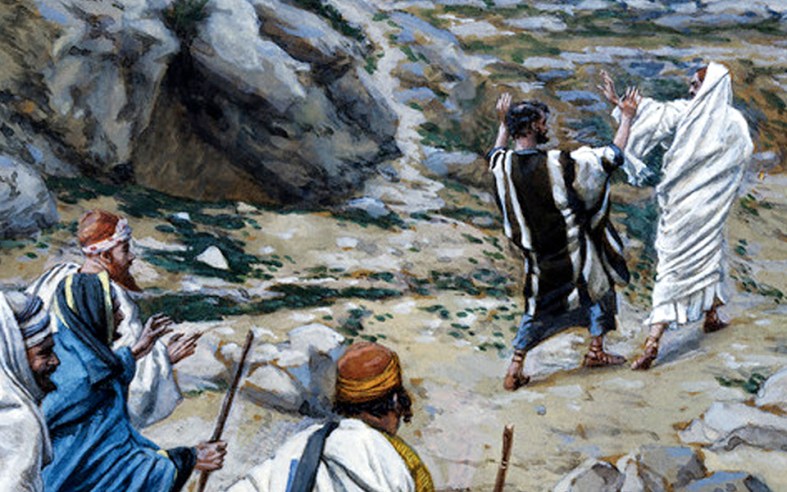
In this week’s gospel lesson, Simon Peter is having trouble changing his understanding of what it means for Jesus to be the Christ, the Messiah.  Jesus had asked him, “Who do you say that I am?”  In a flash of insight, Simon Peter had responded, “You are the Christ, the son of the living God!”  That’s when Jesus in a play on words, a kind of pun, affirms that Simon is Petrus, a Rock, and that he will build his church on the petra, the bedrock of Peter’s confession.  

For a glowing moment, Peter is the star.  He had the right answer.  He’s A Rock.  But then things turn sideways for him. 

From that time on, Jesus began to show his disciples that he must go to Jerusalem and undergo great suffering at the hands of the elders and chief priests and scribes, and be killed, and on the third day be raised.

This absolutely does not fit with Peter’s idea of Messiah.  Messiah may go to Jerusalem, but it won’t be to suffer and die.  Messiah, in Peter’s understanding, in is a conqueror.  Messiah will ride in at the head of an army, kick out the Romans, and restore the Kingdom of Israel.  Messiah will lead a revolution!  That’s how Peter understands it.  So he takes Jesus aside and rebukes him.  “God forbid it, Lord! This must never happen to you.”

I can sympathize with Peter.  I think we all can, at least to some extent.  He had this picture in his head of how he thought things should be and how he thought they should go.  But it wasn’t what Jesus had planned, what God had planned. 

Peter needed to change.  He needed to change his understanding of Messiah.  He needed to change his understanding of Jesus.  He needed to change his understanding of how God was working.  He needed to change his understanding of how the world works.  He needed to change his understanding of himself and his role in what was happening. 

We don’t like to change.  It’s not just that we don’t like it, we have all kinds of ways of resisting it, especially when it comes to changing our ideas, our understanding of things, the way we think.

We have all kinds of ways of resisting information we don’t want to hear.  Often we immerse ourselves in echo chambers so we only receive information that is consistent with our way of thinking.  We only watch certain news channels, only read certain papers and periodicals.  Surround ourselves with social media friends who think like us and screen out those who don’t.  Some simply close their minds and refuse to take in any new or different information. 

And then there’s what writer Julian Sanchez calls Epistemic Closure.  He describes it this way:

“An ‘echo chamber’ just means you never hear any contrary information. The idea of ‘epistemic closure’ was that you WOULD hear new and contrary information, but you have mechanisms in your belief system that reject anything that might force you to update your beliefs.[1]

Peter needed to update his beliefs.  But he resisted.  He pushed back.  “God forbid it, Lord! This must never happen to you.”

It must have cut Peter to the heart when Jesus turned to him and said, “Get behind me, Satan! You are a stumbling block to me.  You’re setting your mind not on divine things but on human things.”

Then Jesus told his disciples, “If any want to become my followers, let them deny themselves and take up their cross and follow me.  For those who want to save their life will lose it, and those who lose their life for my sake will find it.  

 How often do we try to get Jesus to follow our plans instead of committing ourselves to him and his plans? 

I wonder sometimes if we—and by we I mean a large segment of white American Christianity—I wonder if we haven’t created an epistemic closure version of Christianity.  We call ourselves Christian because we believe certain things about Jesus—that he’s the son of God, that he died for our sins, that by his cross and resurrection he saves us.  And if someone challenges our claim to the Christian label because of the way we treat poor people or hungry people or immigrants, or people of color, or people of differing sexuality, or because of our infatuation with firearms, our because of our less than generous politics, or simply because we’re not really doing much to change the world into something that looks more like the kin-dom of heaven, we  crank up the defense mechanisms of our epistemic closure to shield us from any pointed new information or hard questions.  We point to the creed or our church attendance or our giving to certain things.  We point to particular passages in our Bibles.  We point to our baptism.  We point to our claim that we’re saved.

 We forget sometimes what Jesus said in Matthew 7:21: “Not everyone who says to me, ‘Lord, Lord,’ will enter the kingdom of heaven, but only the one who does the will of my Father in heaven.”

Jesus had to shock Peter into the fact that he needed a makeover of the mind, heart and spirit.  He had to call him Satan.  The cosmic opponent.  Lord, that must have hurt.  Going from Rock to Devil in nothing flat.  Jesus had to shock Peter to get him to simply stop believing certain things about him in his head and to get him, instead, to start following him with all his heart.

What would he have to say to you to get through your defenses?  What would he have to say to me?  What would he have to say to turn us from mere believers into followers who carry a cross?

“If any want to become my followers, let them deny themselves and take up their cross and follow me.  For those who want to save their life will lose it, and those who lose their life for my sake will find it.”

There is so much in life that fragments us.  Not just things that fragment our unity with each other, but things that fragment our individual souls.  We try to wear layers of identities that don’t always fit well with each other.  The patterns clash.  They chip and chafe our psyches if we ever give half a thought to them.  It’s hard to love when you’re trying to hold the pieces of your soul together.  Better to let your self—your selves—fall away into the love of Christ.

That’s exactly what Jesus is asking us to do.  Deny ourselves—let go of our false selves—put down the beliefs and personas that don’t really fit well with the identity of follower of Christ.  And quit trying to make Jesus wear a costume that fits our ideas of who we might prefer him to be.  

Lay it all down.  Pick up a cross.  And follow.  That’s where we will find our lives, our souls, and be saved.  That’s where we will be made whole.  In Christ’s healing work.  In Jesus’ name.  Amen.


[1] Julian Sanchez@Normative

Questions in the Key of Rock

Matthew 16:13-20

What was it like for them I wonder?  What was it like for the disciples traveling from place to place with Jesus?  Did Simon the Zealot argue with Matthew the tax collector every step of the way?  Who assigned the chores when they camped somewhere?  Was Jesus responsible for all that or did he delegate that job to someone else?  How many of them were there?  Was it  just Jesus and the 12 when they were on the road or were there more?  At one point Jesus sends out 70 on a mission; were they all part of the touring company or did that larger group stay behind at Capernaum?  Luke’s gospel mentions a number of women; did they travel with Jesus, too?   

Have you ever been to a place that both frightened and fascinated you?  A place that filled you with both awe and maybe a little bit of dread?

About ten years ago I was backpacking in the Sierras above Sequoia when we came around the bend of the trail onto a broad, open space of bald granite like a great, slightly sloping observation platform.  The view was nothing short of stunning.  In front of us the cliff dropped away into a yawning canyon that opened into an expansive valley.  Off to the north we could see all the way to Half Dome in Yosemite.  It felt like we were standing quite literally on the edge of the world.

As I said, the view was stunning.  And part of me wanted to stay there as long as possible just to soak it all in and marvel at the beauty of it all.  But another part of me was mindful of the sloping granite beneath my feet, some of it loose and chipped and slippery beneath my boots.  I was a good safe distance from the edge where the granite curved over then plunged into the emptiness, but I couldn’t help noticing that there was nothing that one might be able to grab onto if one happened to find oneself sliding toward trouble,  because, you know, life is uncertain.  Teenagers horse around.  People stumble.  And even geology hiccups from time to time.  A slight fear of heights makes you think about these things. 

So I was fascinated, but also a bit uneasy.

I imagine that’s how the disciples felt when they came to Caesarea Philippi.  

Fascinated but uneasy.

They’re in foreign territory, a little more than twenty-five miles from the Galilee.  They’ve walked there, of course.  And now here they are, good Jews, every one of them, standing on the hill overlooking the city, and the most dominant buildings they see are the temple to the god Pan and the temple to the emperor.  The divine Caesar.  

The temple to Pan was built around the entrance to a natural cave called Pan’s grotto.  It was also called the Gate to Hades.  Pan was regarded as a fertility god.  The pagans believed that the fertility gods slept through the winter in Hades then reemerged in the spring to bring new life to the world.  They believed that this grotto was Pan’s passageway to and from Hades, the realm of the dead.  Inside the grotto there was also a gushing spring—it was gushing in ancient times but now it’s barely a trickle—that was one of the sources for the Jordan river. 

What did the disciples think as they were looking at this assortment of temples to these other gods, these gods who were not their God, even a temple to the emperor—and the administrative buildings of the tetrarchy?   What did the disciples feel as they stood in this place confronted by the structures of religion and politics, but not their religion or their politics?

Did the ground feel, maybe, a little slippery under their feet?   Did they wonder if their nervousness might be the influence of Pan?  After all fear is Pan’s weapon; the word panic comes from Pan’s name.

And it’s here, confronted by strange powers—strange religion and strange government—that Jesus asks his first important question:  “Who do people say that the Son of Man is?”

Why would he ask that here?  Why now?  Why not back in Galilee where he’s been doing most of his teaching and working wonders?  Why now in this foreign place?  Is he trying to distract them from feeling so out of place?  Is he showing them what they’ll be up against later when they take the message of the kin-dom out into the wider world?  

“Who do people say that the Son of Man is?”

The disciples make it clear that people are impressed with Jesus.  They identify him with the pillars of righteousness and prophetic justice in their tradition:  John the Baptist, Elijah, Jeremiah, one of the other prophets.  They understand that Jesus is someone who is somehow extraordinary.  But how, exactly?

Who do people say that Jesus is?  It’s still an important question for us.  

If you’re going to be a follower of Jesus, a representative of Jesus, you need to know how the rest of the world sees and understands Jesus, how they describe him, because that’s where conversation begins.  Who do they say he is?  You need to know that before you can make a good case for who you say he is.  

I imagine that Jesus thought a moment about their answers to his first question before he asked the next question: “But who do you say that I am?”

“You,” said Simon Peter, “are the Christ, the Son of the living God.”  

The Christ.  The Messiah.  The Anointed One.  I can’t help but wonder how Simon Peter understood his own words.

In his Commentary on Matthew my professor, the late Robert H. Smith wrote: “As the reality of the Son overwhelms mind and senses, people try to get a handle on him by fitting him into some convenient slot like prophet.  However, the Christ or Messiah is not a prophet but the goal of prophecy, not another promiser but the inaugurator of the promised time.  As Son of the living God his is the bearer of the presence of God and acts in the place of God, not as a renewer of old traditions, but as agent of God’s fresh creative work, bringer of new heavens and a new earth.”[1]

Who do you say that Jesus is?

Do you call him the Christ, the Messiah?  Do you understand him to be not merely a prophet but the goal of prophecy?  The one who was prophesied? 

Is he for you the Son of the living God?  Does he bear the presence of God in your life?  Do you see him not as the renewer of old traditions, but as the agent of God’s fresh creative work, the bringer of new heavens and a new earth?

Or has he become for you the centerpiece of old traditions?  Do the titles of Christ and Son of God simply echo memorized lines from the creeds that get repeated without much thought? 

Jesus is asking us the same question he asked Peter, James, John and the others as they stood overlooking the monuments built to idols and government:  “Who do you say that I am?”

We hear that question as we stare out into a world devoted to those same distractions and others even more powerful:  “Who do you say that I am?”

And it’s oh, so tempting for us to leap straight to the answer we memorized, the answer we have heard all our lives, without really thinking about the question or what our answer means. 

If you, like Peter, confess that Jesus is the Christ, the Son of the Living God, then you are also acknowledging that you have been invited to be part of his church, the ekklesia established on the bedrock of that confession.  You are acknowledging that you have been called to participate in Christ’s fresh, creative work of making the kin-dom of heaven a reality on earth as it is in heaven.  You are acknowledging that you have been invited to be part of the beloved community and to live by the ethic of grace and generosity that guides that community. 

In 1989, President George Bush was entering St. John’s Episcopal Church to attend Sunday worship when he was stopped by a homeless man, William Wallace Brown, Jr. who simply asked the president to pray for him.  President Bush  replied, “No. Come inside with us and pray for yourself.”  From that day on William Wallace Brown, Jr. attended church faithfully. He would sit in the pews in his street-dirty clothes alongside the rich and powerful and always put a dollar in the offering plate even when that dollar was all he had.

William Wallace Brown had been invited to come in to the beloved community, to encounter Jesus, the Christ, the Son of the Living God.  And to him that meant everything.

This community, this church built on the confession that Jesus is the Christ, is, in Robert Smith’s words, “well founded, not by human authority or ingenuity only, but by the exalted Jesus, Son of the living God.  This Jesus is not a figure of the past alone.  He is still present in the midst of the community, not as unseen observer only but with his authority and teaching.”[2]  

I would add that Jesus is still present with his love and compassion, and that these keys of the kin-dom will unlock the power in us to change the world.

In Jesus’ name.


[1] Robert H. Smith, The Augsburg Commentary on the New Testament: Matthew, pp.198-199; Augsburg Publishing House, 1989

[2] Ibid, 202-203

The Problem With Creeds

Steve Beckham's avatarThoughts Along the Way

Here we are almost at the end of the season of Epiphany and I can’t help but think of the epiphanies I’ve experienced.  I’ve had my share of “aha!” moments, but most of my epiphanies roll out slowly with the cover peeled back a bit at a time until I realize that I’m seeing or understanding things differently than before. What are your epiphanies like? How do they happen?  What new light of understanding illuminates your world so that you see something differently than you did a month ago, a year ago, a decade ago, a generation ago?  

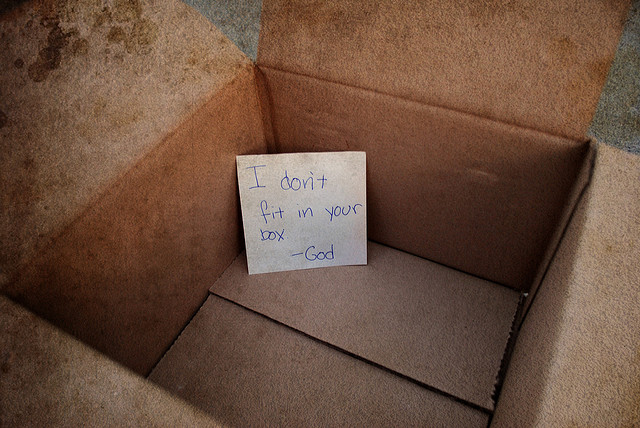
God won’t be boxed in.

God is almost entirely unpredictable.  I say almost entirely because the one thing we can predict is that regardless of circumstances, God loves us.  God will love us in, with, under and through all things, but trying to predict what that love will look like, what shape it will take, how it will…

View original post 745 more words

The Problem With Creeds

Here we are almost at the end of the season of Epiphany and I can’t help but think of the epiphanies I’ve experienced.  I’ve had my share of “aha!” moments, but most of my epiphanies roll out slowly with the cover peeled back a bit at a time until I realize that I’m seeing or understanding things differently than before. What are your epiphanies like? How do they happen?  What new light of understanding illuminates your world so that you see something differently than you did a month ago, a year ago, a decade ago, a generation ago?  

God won’t be boxed in.

God is almost entirely unpredictable.  I say almost entirely because the one thing we can predict is that regardless of circumstances, God loves us.  God will love us in, with, under and through all things, but trying to predict what that love will look like, what shape it will take, how it will work?  That’s crazy-making.  God won’t be boxed in.  

I’ve been reading a fascinating book called When Jesus Became God by Richard Rubenstein, which is about the fascinating theological and political battle surrounding the Council of Nicaea in 325 CE in which the first prototype of the Nicene Creed was formulated.  The Emperor Constantine called the Council to settle a raging theological dispute that pivoted around several theological questions:  Was Jesus divine?  What did that mean, exactly?  What was Jesus’ relationship to the Father?  And the Spirit?  Was Jesus subordinate to the Father?  Was Jesus co-eternal with the Father or was he created? 

These questions had simmered in the background since the very beginning of Christianity but most Christians were more or less content to live with differing opinions on these matters.  But when Emperor Constantine became a Christian, stopped the persecutions, and made the religion legal, suddenly it seemed important to find official answers and establish doctrine.   

The Council of Nicaea was supposed to settle these matters once and for all, but, even though the Trinitarians “won” the debate and formulated most of the language of the Creed, the Arians continued to push for their interpretation of the faith for more than a century and often were in the majority.  They believed that Jesus was created by the Father and was not co-eternal, that he had a kindof divinity as the son of God, but was not equal to the Father, was instead subordinate to the Father. And so on.  So while the Creed gave language to the first official doctrine of the Church, in practice it really failed to unify the Church in any meaningful way.

Creeds can be useful.  Up to a point.  They are useful to help clarify what we think.  They draw lines that determine the boundaries of what we understand about God and our relationship with God, and help us identify ideas that don’t seem consistent with what we’ve known and experienced of God.  They tell us who’s in and who’s out—who agrees with the official line and who does not. But that’s also part of their limitation.  God is bigger, deeper, wider and more innovative than any boundaries we draw.  God is not a cat.  God does not want to curl up inside our box.  

Another problem with creeds is that they emphasize some aspects of our faith over others, sometimes even ignoring things that are vitally important.  In both the Apostles’ and Nicene Creed, for instance, more and more Christian thinkers are calling attention to what’s being called The Great Comma.

“But have you ever noticed the huge leap the creed makes between “born of the Virgin Mary” and “suffered under Pontius Pilate”? A single comma connects the two statements, and falling into that yawning gap, as if it were a mere detail, is everything Jesus said and did between his birth and his death! Called the “Great Comma,” the gap certainly invites some serious questions. Did all the things Jesus said and did in those years not count for much? Were they nothing to “believe” in? Was it only his birth and death that mattered? Does the gap in some way explain Christianity’s often dismal record of imitating Jesus’ life and teaching?” –Diana Butler Bass, A People’s History of Christianity: The Other Side of the Story

Perhaps the greatest problem with our creeds, though, is that they focus on what we think about God and not what we’re doing to live out our relationship with God.  There is nothing in their language about service. There’s nothing about love. There is nothing about hope.  There is nothing in them about helping “the least of these brothers and sisters”, or life together in a family of faith.  Forgiveness of sins is mentioned but there is no actual call to forgive each other as we have been forgiven.  In fact, there is no call to action at all. The creeds are, instead, a historical snapshot of what the men who formulated them (and they were all men) understood to be the most important philosophical premises of their faith. And to be clear, these were the statements formulated by those who won the battles—battles that were sometimes physical and not just philosophical.  One can’t help but wonder how Jesus felt about that…or feels now, for that matter.

Yes, we do believe.  But more importantly, we are called to follow Christ and to live as the Body of Christ.  I wonder… what would a creed look like that focused on that?  What language would move our statement of faith out of our heads and into our hearts and hands and feet?

You’ve Got To Be Taught

Matthew  15:10-28

In 1953, the year I was born, during the height of McCarthyism and the Red Scare, a Broadway musical touring in Atlanta got the people of Georgia so upset that some state legislators introduced a bill to outlaw any entertainment having, in their words, “an underlying philosophy inspired by Moscow.”  What really got them going was one particular song in the musical.  State Representative David C. Jones said that a song justifying interracial marriage was implicitly a threat to the American way of life.  Oscar Hammerstein replied wryly that he was surprised by the idea that “anything kind and humane must necessarily originate from Moscow.” 

The musical that caused such a fuss was Rogers and Hammerstein’s South Pacific and the song that ignited such political and social anger was You’ve Got To Be Carefully Taught. 

You’ve got to be taught to hate and fear
You’ve got to be taught from year to year
It’s got to be drummed in your dear little ear
You’ve got to be carefully taught

You’ve got to be taught to be afraid
Of people whose eyes are oddly made
And people whose skin is a diff’rent shade
You’ve got to be carefully taught

You’ve got to be taught before it’s too late
Before you are six or seven or eight
To hate all the people your relatives hate
You’ve got to be carefully taught

When I was about 10 or so my aunt and uncle adopted a mixed race baby boy.  This was a highly unusual thing for a white couple to do in the early 1960s, especially in the kind of rural areas where my uncle and aunt served as Pastor and Church Organist.  

That baby, Jon, was a truly beautiful child with café-au-lait skin, curly brown hair tinged with blond, and the most unusual blue-green eyes.  I remember, though, that at the big family summer gatherings some of my mom’s and my aunt’s cousins would act a little differently around him—not exactly hostile, but a little stiff and stand-offish.  I wondered if it might be because he was adopted, but my little sister was adopted, too, and nobody treated her like that.  Nobody gave her sidelong glances and muttered little comments when they thought my mom and dad weren’t looking or close enough to hear.  

Then one day one of my second cousins, one of the kids my age, cleared up the mystery.  A bunch of us were playing by the barn and Jon wasn’t with us.  I don’t remember exactly why.  What I do remember is that my second cousin said some pretty ugly things about Jon and “his” kind of people.  I remember him using the “N” word to talk about Jon.  Our cousin.

You’ve got to be taught to hate and fear
You’ve got to be taught from year to year
It’s got to be drummed in your dear little ear
You’ve got to be carefully taught

“Listen and understand,” said Jesus.  “It is not what goes into the mouth that defiles a person, but it is what comes out of the mouth that defiles.  What comes out of the mouth proceeds from the heart, and this is what defiles. For out of the heart come evil intentions… These are what defile a person.”

And when those things come out of someone’s mouth, they tend to go right into someone’s ears.  Like, say, a child’s.

What is it about the human mind that makes it so easy to absorb negative, awful, malicious, even untrue things, and so hard to purge those things when you learn better?  Why is it so easy to pick up biases and prejudices and bigotries and so hard to unlearn them?

When my second cousin used that ugly, racist word to describe our other cousin it was there in his vocabulary with all the hideous ideas behind it because he had learned it somewhere.  It was a word he had heard his dad use while talking to other Kansas farmers.

Kurt Stroh, a K-4 teacher and librarian from Grand Rapids wrote in his blog a few years ago about something he observed on a trip to the movies:

“My wife and I decided to go to see The Greatest Showman. It was an afternoon showing and there were quite a few kids in the theater. In fact, there was a lady with her two kids, who looked to be 8-10 years old, sitting right next to us. As always, there were previews prior to the movie. In one of the previews, the teenage boy character was coming out to his parents. The family on the screen was having a loving, understanding conversation. The lady next to us loudly ordered her kids, ‘plug your ears…now!’ The kids looked confused, but did as they were told. Sadly, it didn’t end there. A minute or so later, when it looked as if the boy character might kiss another boy character, the lady actually reached over and covered her kids’ eyes. Ears plugged, eyes covered, she was bound and determined to make sure that her kids did not witness this preview…and quite honestly, make sure those around her knew exactly how she felt.

   As the feature movie started, I couldn’t help but notice that the eyes and ears of the children were not covered during violence. They were not covered during hatred. They were not covered during infidelity. In addition to being angry, my heart broke for these kids. They were being taught to be judgmental …carefully taught to hate.”

You’ve got to be taught before it’s too late
Before you are six or seven or eight
To hate all the people your relatives hate
You’ve got to be carefully taught

It’s so hard to unlearn the hate, especially when it doesn’t feel like hate, when you just grew up with it, when it’s part of your culture, the way of your people.  

It’s a constant struggle to silence the vocabulary, those ugly words that float up in your mind, those words you wish you had never heard in the first place, those unkind names for all those other people who are “those other people.”  

It’s a constant internal cleansing to flush out all those insidious bigoted ideas that infested your thinking before you were old enough and smart enough to prevent them.

It’s work. 

It’s work worth doing.  It’s work that makes you healthier and makes the world a healthier place.  But it’s still work.  You have to think about what you’re saying.  You have to think about what you’re thinking.  You have to think about how you’re thinking.

And sometimes, when you’re tired or distracted or both, you forget to do that thinking.  You forget to do the work.  And that’s when your culture, the unedited voices in your head and heart, the voices you grew up with, might suddenly pop up and do the talking for you.

I suspect that maybe something like that is what’s happening with Jesus when the Canaanite woman comes to him and begs him to heal her daughter.

He’s tired from travelling.  He’s in foreign territory.  She keeps shouting and won’t go away.  When he finally does respond to her, he’s abrupt and more than a little rude:

“I was sent only to the lost sheep of the house of Israel.”  But she came and knelt before him, saying, “Lord, help me.”  He answered, “It is not fair to take the children’s food and throw it to the dogs.”

For a moment he’s not the Jesus we’re used to.  For a moment he’s not the Jesus who feeds multitudes, heals everyone within reach, chastises Pharisees for their rigid piety, and welcomes all comers.  

For a moment he’s just another Jewish man talking down to a Canaanite woman, one culture and gender speaking disdainfully to the other.  

“What comes out of the mouth proceeds from the heart, and this is what defiles.”  Had he forgotten his own words?

“It is not fair to take the children’s food and throw it to the dogs.”

But she knows he’s better than this.  She knows she deserves better than this.

She said, “Yes, Lord, yet even the dogs eat the crumbs that fall from their masters’ table.”  Then Jesus answered her, “Woman, great is your faith! Let it be done for you as you wish.” And her daughter was healed instantly.

It takes work to change the heart.  Sometimes it even takes confrontation.   Sometimes someone has to hold a mirror up to you if you won’t hold it up to yourself.

Sometimes you need to be reminded of your own words. 

It takes work to flush out the bigotry we grow up with and replace it with a broader love and understanding.  It takes work to see the ways the world around us is trying to normalize the ugliness and division and keep us from making our own hearts more expansive.  We may not always get it right.  We may have lapses.  But it’s work worth doing.

After all, what comes out of the mouth proceeds from the heart.

Fear, Faith, and Foolishness

Matthew 14:22-33

Immediately [after feeding the multitude] Jesus made the disciples get into the boat and go on ahead to the other side, while he dismissed the crowds.  23 And after he had dismissed the crowds, he went up the mountain by himself to pray. When evening came, he was there alone,  24 but by this time the boat, battered by the waves, was far from the land, for the wind was against them.  25 And early in the morning he came walking toward them on the sea.  26But when the disciples saw him walking on the sea, they were terrified, saying, “It is a ghost!” And they cried out in fear.  27 But immediately Jesus spoke to them and said, “Take heart, it is I; do not be afraid.” 

28  Peter answered him, “Lord, if it is you, command me to come to you on the water.”  29 He said, “Come.” So Peter got out of the boat, started walking on the water, and came toward Jesus.  30 But when he noticed the strong wind, he became frightened, and beginning to sink, he cried out, “Lord, save me!”  31 Jesus immediately reached out his hand and caught him, saying to him, “You of little faith, why did you doubt?”  32 When they got into the boat, the wind ceased.  33 And those in the boat worshiped him, saying, “Truly you are the Son of God.”

How often has this happened to you?  You’re waiting in line to check out at the grocery store and you notice that the line just to your left only has one person in it!  So you push that cart like it’s NASCAR and you’re Bubba Wallace, and BOOM! before that lady who was just in front of you in the previous line has even noticed the opening, you’re offloading your Fig Newtons and frozen Chicken Piccata onto the conveyor belt.  You’re feeling pretty pleased with yourself  until you notice that the new line you’re in is… not… moving…  because the checker and the one customer ahead of you are apparently old friends who haven’t seen each other since the turn of the century, and they have decided that right here and right now at the checkout counter is the perfect place and time to catch up on the past two decades while your ice cream is getting squishy and you fidget behind them.  Oh, also the customer is writing a check…which the cashier has to stamp and initial and slide under the tray in the cash drawer as the customer enters all the details in the check register.  While… you… wait. Did I mention the ice cream?

And when it’s finally your turn with the cashier, as you glance up from entering your PIN number to pay for your seven items, you notice that the customer who was behind you in that first line you were in is already on her way out the door.

‘One moment of patience may ward off great disaster. One moment of impatience may ruin a whole life,’ says the oldChinese proverb.  

We are not a very patient people, by and large, and Covid-19 has been trying our patience mightily.  Here are a few tidbits from a survey conducted by Wakefield Research for Fifth/Third Bank that show just how impatient we are.  Bear in mind that all of this data comes from before the pandemic:

  • 96% of Americans will knowingly consume extremely hot food or drink that burns their mouth; 63% do so frequently.   
  • More than half of those surveyed hang up the phone after being on hold one minute or less.
  • 71% frequently exceed the speed limit to get to their destination faster.
  • Americans will binge-watch an average of seven TV episodes in a single sitting  –again, that was before the pandemic.  I wonder what it is now.
  • Nearly a third of respondents ages 18-24 wait less than one second before bypassing a slow walker.
  • 72% of us will push an elevator button that is already lit hoping it will come faster.  By the way, it doesn’t.

It’s not just Americans.  A survey by OnePoll of 2,000 people in the United Kingdom found that a large percentage became impatient after waiting…

  • 16 seconds for a webpage to load
  • 25 seconds for a traffic signal to change from red to green
  • 20 seconds for ink to dry on a greeting card
  • 22 seconds for a movie to start streaming
  • 18 seconds looking for a pen
  • 28 seconds for a kettle to boil
  • 30 seconds in a line; 
  • 13 minutes to pick up luggage after a flight
  • 90 minutes for a response to a work e mail

50% admitted they would probably move to another queue if the one they are in appears to be moving more slowly.  45 % confessed to losing their temper when having to wait an ‘excessive’ amount of time.  “Excessive” was not defined.

So what, you might be wondering, does all this have to do with Peter’s attempt to walk on water?  Hang on, I’m getting there.

Impatience and anxiety go hand-in-hand.  Anxiety can cause impatience and impatience can often cause or increase anxiety.  

Anxiety is about control.  

Control is about a lack of trust.

People deal with anxiety in different ways, but since anxiety is essentially a kind of elongated state of diffused fear, our responses to anxiety tend to be diffused or displaced versions of fight, flight or freeze. 

I think this is an important element in this story of Peter momentarily walking on water, and that too often we overlook it.

Most often when preachers come to this story they focus on Jesus saying, “Do not be afraid.”  There is a whole “no fear” theology that has sprung up around this and other “be not afraid” sayings in the Bible.  There are books and websites that will tell you that in various forms there are 365 “no fear” sayings in the Bible, one for each day of the year, and that this is one of the central messages from God to us.  I, myself, have preached that a time or two.

Well, that idea has its merits.  It’s easy to let our fears and anxieties get the better of us and stop us from doing what God has called us to do, or even just what we need to do to live a basic self-actualized life.  Fear can stop us from acting in faith…or acting at all, for that matter.

Some say that fear is the opposite of faith, and sometimes that’s absolutely true.  I would point out, though, that indifference can also be the opposite of faith.  I would also point out that there’s a difference between being fearless and being impulsive, reckless, or just plain stupid.

So, be not afraid.  But also, be not foolish.  Fear is not all bad.  Fear is the built-in mechanism God gave us for self-protection.  It’s our early warning system.  Fear is that built-in voice that tell us to keep our eyes open.  

So let’s run this scene from the top.  

Jesus sends the disciples off in the boat.  He sends the crowds home then goes up the mountain for some much-delayed time alone.  Meanwhile, the sun has set, it’s dark, and out on the lake, far from land, the wind and the waves are making things scary for the disciples out in the boat.  That’s when, in the wee small hours of the morning, they see Jesus walking toward them. On the sea.  Walking on the water, just to be clear.  Something pretty far out of the ordinary.  They think he’s a ghost and their fear meter jumps straight up to terrified.  But Jesus calls out, “Courage!  It’s me!  Don’t be afraid!”

Notice again:  they think he is a ghost.  Layered on top of their already high anxiety due to the dangerous situation they’re in, they now have a very specific fear.  Jesus speaks to them to address that specific fear.  He’s not telling them to adopt a lifestyle.  “Look!  It’s me, Jesus!  Don’t be afraid!”

But Peter goes off the rails.

Peter was anxious.  His anxiety created impatience.  His impatience created more anxiety, which in Peter usually results in something impetuous and rash which is why he says one of the dumbest things yet: “Lord, if it is you, command me to come to you on the water.”

I can just see Jesus rolling his eyes.  Oy.

Remember when Jesus was tempted by the devil?  How did the devil begin each challenge?  “If you really are the son of God…”  There’s an echo of that here in Peter’s strange challenge.  And do you remember how Jesus responded to the devil at the end?  “You shall not put the Lord your God to the test.”

“Lord, if it is you, command me to come to you on the water.”  Why would Peter say this?  The wind is howling.  The seas are roiling.  It’s dark and spooky. They’re all exhausted.  It’s a pretty strange time for an ordeal of faith.  And what if it had been an evil water spirit and not Jesus walking toward them—they did believe in such things, after all?  Wouldn’t such a being take delight in commanding Peter to come and then watching him drown?

Remember what I said about responses to anxiety and responses to fear—fight, flight or freeze?  From what we know about Peter, it seems pretty clear that his go-to response to anxiety is fight.  He’s a physical guy.  In this moment he needs to do something physical to fight his fear—something external to fight the fear that’s internal—and all the better if it can look like faith while he’s doing it.  So, impulsive as ever, Peter asks Jesus to command him to come to him, to walk to him across the water.

And to Peter’s credit, between the adrenaline, and his love for and faith in Jesus, for a few brief steps he manages to walk on water.  But have you noticed that Jesus doesn’t calm the wind and waves for Peter during his self-imposed test of faith?    

But when he noticed the strong wind, he became frightened, and beginning to sink, he cried out, ‘Lord, save me!’

Jesus immediately reached out his hand and caught him, saying to him, ‘You of little faith, why did you doubt?’  When they got into the boat, the wind ceased.

Why did you doubt?

This looks at first as if Jesus is suggesting to Peter that his doubts caused him to sink—maybe doubted himself, maybe doubted Jesus.  But suppose for a moment that Jesus is really asking Peter why he didn’t stay in the boat.  Why did you doubt that it was really me when I told you it was me?  Why did you need to put us both through that dangerous little test?  Why did you doubt that I was on the way to the boat to save everybody?

When they got into the boat, the wind ceased.

Impatience breeds anxiety.

Anxiety is about control.  

Control is about a lack of trust.

All over the country we’ve seen churches defying state health restrictions by worshipping in their sanctuaries or in large closely gathered crowds in spite of the still-rising numbers of Covid-19 infections. They claim that it is an act of faith, that they won’t be ruled by their fears.  But is this a faith that rests in and trusts in Jesus who is always coming to us across the troubled waters of our lives or is it an anxiety-driven need to prove faith?

They have claimed that their faith will protect them from the virus.  Sadly, that has too often proven not to be true.

Too many of us in this individualistic culture of ours have been trying to walk on water when all we’ve ever needed to do is stay in the boat.

As we sail on in this windy and turbulent pandemic sea, we need to let our faith, our trust, rest in Jesus who is walking toward our boat.  We need to remind ourselves that he will get here and calm the storm faster if we don’t slow him down with our impatient tests of faith.

In Jesus’ name.

Image credit: Melani Pyke

From Broken Heart to Blessing

Matthew 14:13-21

There is no shortage of horrible in the world.  There is disease and hunger, destruction and violence, accidents and natural disasters, greed, corruption, injustice, and just plain stupidity. Perhaps worst of all, there are people who feel a need to affirm their power by victimizing others.  There is no shortage of horrible.  There is no shortage of need.  Sometimes even when you try to get away from it all it seems to follow you.

Jesus had been moving from town to town, teaching in synagogues, teaching by the seashore, telling stories—parables–to help people understand what the kin-dom of heaven is like, to help them learn how to see it, and everywhere he went he ran smack into people’s needs and expectations.  He poured out his power healing people.  He was constantly challenged by the inflexible piety of the Pharisees.  He stretched his patience explaining things to obtuse disciples.  When he went to Nazareth, the town he grew up in, he was so walled in by the odd double-whammy of doubt and familiarity that he was unable to accomplish anything.  

And that’s when he learned that his cousin, his partner in ministry, John the Baptizer had been executed by Herod.  

Now when Jesus heard this, he withdrew from there in a boat to a deserted place by himself.

Jesus needed to retreat from the horrible.  He needed a break to mend his broken heart.  So he told his disciples where to meet him then got in a boat and set off for some alone time.

Somehow the crowds found out where he was going and when he stepped ashore they were waiting there to meet him.  So much for alone time.

The text says that when he saw the crowd he had compassion on them and cured their sick. There’s both urgency and intimacy in the language here.  The word compassion, especially in the Greek, sounds as if his heart is spilling over with a mixture of anguish and love for all these people, as if he is reaching out his healing hands to touch them even before his boat has ground itself against the pebbles on the shore.  

And then suddenly it’s evening.  The disciples, expressing a practicality that feels more than a little anxious, see a problem.  We’re in the middle of nowhere.  It’s getting late.  Send the crowds away so they can go to the villages and buy something to eat.  

Their suggestion sounds reasonable enough at first glance, but it raises a lot of questions.  Where, exactly, are these villages?  How far away?  Do these hypothetical villages have enough spare food that they could afford to sell some to a battalion of unexpected visitors who show up suddenly at the dark edge of dusk?  

For the disciples, the crowd is a problem.  It’s been a long day, people are getting hungry.  Hungry crowds are potentially dangerous.  Solution?  Send the crowd away.  The nameless, faceless, we-don’t-really-see-them crowd.  Send them away.  

And then Jesus says something that just stuns them:  There’s no need to send them away.  You give them something to eat.

But… but… but…  how are we supposed to do that?  All we have here are five loaves and two fish!  That’s our dinner!  

Jesus tells his disciples to bring him the five loaves and two fish.  He orders the crowds to sit down, which is as good as telling them to pipe down and pay attention, then he looks up to heaven and blesses the bread and the fish.

We’re not told exactly what Jesus prayed, but I like to think that maybe he prayed the traditional Hebrew blessings for bread and meat or fish.  These blessings are different from the mealtime prayers we usually pray.  Most of the time when we say a blessing over a meal, we are asking God to endow the meal with some special grace or benefit, or to bless us by way of the meal.  The Hebrew blessings, though, assume that the meal is already blessed by God, that it already a gift from God for our benefit, and so these mealtime blessings offer to God the blessing of praise.

This is the blessing for the bread: Blessed are you, Lord our God, Ruler of the universe, who brings forth bread from the earth.  

For the fish: Blessed are you, Lord our God, Ruler of the universe, at whose word all things came to be.

You know what happened next.  Jesus broke the bread and ordered the disciples to start handing out food.  Five loaves and two fish.  It couldn’t possibly be enough.  Yet somehow five thousand men plus women and children who had tagged along were fed, and twelve baskets of food were left over.  

I want to say right here and now that I believe it is entirely possible that when Jesus lifted his eyes to heaven and prayed something transformative happened to those loaves and fish that enabled them to somehow stretch to feed five thousand plus.  With God all things are possible.  Miracles can and do happen.

I also believe, however, that every bit as important as whatever may or may not have happened to the bread and fish, something transformative happened in the hearts of all those people sitting on the grass.   When they heard the voice of Jesus intone the blessing they all knew, they were reminded that all bread is a gift brought forth from the earth by God so that it may be broken and shared.  I suspect that when they heard “Blessed are You, Lord our God, Ruler of the universe, at whose word all things came to be” they were reminded that they were a people bound together with God and with each other in a relationship inherited from their forebears and passed on to their children in an ancient covenant of love and mutual protection.  They were transformed by the voice of Jesus praying the blessing they all knew.  They were reminded that they were bound by kinship in the kindom of heaven.  So now, that loaf that had been tucked up a sleeve and saved for the walk home, that loaf, too, was brought out and broken and shared.  The dried fish that had been wrapped in a cloth, stuffed in a pocket and saved for later, that, too was added to the feast.  Jesus had prayed the family prayer, so now this was a family meal and everything was brought out to be shared.

Transformation of the bread and fish or transformation of the people. One way or another, or maybe both, there were 12 baskets of leftovers.  Which, by the way, indicates that someone had brought baskets.

You give them something to eat.  When Jesus said that to the disciples all they could think of were all the reasons why it simply wasn’t possible.

We seem to have a built-in tendency to want to kick the can down the road when we are confronted with a situation that feels overwhelming.  We do it with healthcare.  We do it with food insufficiency.  We do it with homelessness.  We do it with systemic racism and injustice.  

There’s a universal hunger in the human soul to make the world a better place, a place where no child goes to bed hungry, a place where everyone has a roof over their head, a place where we truly have equality and equity and liberty and justice for all.  Too many of us, though, have been waiting for someone else to come fix everything.  We’ve been kicking the can down the road.

Well, we’ve run out of road.

Jesus says, “You feed them. You house them. You educate them. You build a more perfect union.”

And if you think the resources you have on hand aren’t enough to do the job, then look up to heaven, praise God for the goodness you do have in your hands and acknowledge where it came from, then start handing things out.  You might be amazed to find someone else has brought along baskets.

John Lewis, the great Civil Rights leader, Christian pastor, and  U.S. Congressman, didn’t have anything to give to the struggle for Civil Rights except for his body, his mind and his heart.  But he trusted that was enough.    

Lewis gave everything and suffered great abuse as he walked a path of nonviolence calling this country to live up to its own ideals, to continue becoming a more perfect union.  In his last hours, he took time to write a loving farewell to us all to encourage us to keep getting into “good trouble, necessary trouble” for the sake of what’s right.  

Toward the close of that letter, Lewis wrote,  “Though I may not be here with you, I urge you to answer the highest calling of your heart and stand up for what you truly believe. In my life I have done all I can to demonstrate that the way of peace, the way of love and nonviolence is the more excellent way… So I say to you, walk with the wind, brothers and sisters, and let the spirit of peace and the power of everlasting love be your guide.”

Sometimes it seems as if there is no shortage of horrible in the world.  But there is also no shortage of the goodness that sustains us if we will bless it and share it.  In Jesus’ name.

Church Without Walls

Now you are the body of Christ and individually members of it.—1 Corinthians 12:17

We are going to church.  Maybe we won’t be back in our building for a while, but we are going to church.  We might not sing in our sanctuary for some time yet, but we are going to church. Think of to church as a verb in its infinitive and infinite form.  To sing, to dance, to praise, to pray, to help, to uplift, to listen, to learn.  To church.  To gather as the body of Christ in whatever way we can even if it has to be in the catacombs of ZOOM.   To do whatever good we can even if it has to be organized through emails and texting.  To support each other in love and extend that love to others even if it is through phone calls and Instagram and Facebook and Messenger.  We are going to church.  We will church.  We are churching. 

So what if, for reasons of responsibility and maintaining everyone’s good health, we can’t gather in our sacred space just yet?  Our churching does not depend on our architecture.  Maybe—dare I say it?—our architecture has sometimes hampered our churching.  Maybe the sacred appearance of our doors, the religious statement of our whole building, has kept some people from crossing the threshold and stopped them from entering into the joy of churching with us.  Maybe since the outside affirms their preconceived notions, they figure that what happens inside will, too.  Maybe even we who are so comfortable on the inside have let our churching be molded by our packaging.  Thoughts?

In the Latinx communities of South Los Angeles and elsewhere in the Southwest they fandango.  Fandango is a centuries-old type of dance and style of music that originated in Andalusia.  In the Americas it has picked up some distinctive New World traits, blending old with new.  Fandango has also become the name for a kind of pop-up party, a neighborhood celebration centered around the dance and the music.  Someone will find a space then pass out flyers and at the appointed time people will come to dance and hear the band and sing the songs.

Martha Gonzalez, an Associate Professor at Scripps College, is also the lead singer of Quetzal, a band that organizes and performs at many fandangoes.  In a recent article in the L.A. Times she said,  “I think we always need spaces to gather, but it’s also the cultural work that needs to be done, creating culture so that even if the space disappears we can migrate to another space and we pick up where we left off because we worked on the culture mechanisms.  I think that’s the most important thing we can learn from having these spaces and then losing them.  The work and the culture we created continues to thrive.”

Take out fandango and put in church.  We need the spaces to gather but it’s really the cultural work that holds us together, the culture of being the body of Christ, the culture of being the hands and feet and heart of Jesus in this world.  We may love the building we have called church but we need to remember that it is only a facility.  It facilitates churching.  Even if the space disappears we can migrate to another space and pick up where we left off.  ZOOM, for instance.  The work, the worship, the bonding, the blessing, the loving, the welcoming, the praying, the generosity, the caring—the being the body of Christ—all continue to thrive.  Maybe we can’t gather in our building right now.  But come what may, we are going to church.